
Last updated November 17, 2026
 AC repair
 Furnace & heating
 Heat pumps
 Ductless mini splits
 Carrier
 Trane
 Goodman
Seasonal tune-up and full diagnostic on your Carrier, Trane, or Goodman system - readings shown to you before any repair is proposed
Diagnosis first, numbers second - you approve the repair price before a single part goes in.
Get your free estimateHVAC Warning Signs: An Enterprise Homeowner’s Reference Guide
A refrigerant leak and a dirty filter can both make your house feel warmer than the thermostat reads. One costs you $12 to fix. One costs you $800. We’ve watched plenty of Enterprise homeowners spend the $800 version of that mistake because nothing on the internet told them which symptom was which. So here’s the difference, sorted the way it actually matters: by how much time you have. By the end of this guide you’ll know which warning signs mean “fix it this weekend,” which mean “call tomorrow,” and which mean “hang up and call right now.”
Quick Answer
Most HVAC warning signs fall into one of three buckets: wait-and-watch symptoms like slight uneven cooling, call-tomorrow symptoms like a weak airflow or a rising electric bill, and call-right-now symptoms like a burning smell, a tripping breaker, or a system blowing warm air in July. The trick is reading the symptom correctly before you spend a dime. In Enterprise, the harsh desert swings between 105-degree afternoons and cold winter nights mean a system that’s trending downhill rarely gives you a slow, gentle warning.
Styles & brands we work with
- AC repair
- Furnace & heating
- Heat pumps
- Ductless mini splits
- Carrier
- Trane
- Goodman
Table of Contents
- The Three-Tier Urgency System
- The 90-Second Walkthrough That Catches Most Failures
- Warning Signs Sorted by Tier
- Why Enterprise Homes Built 2005-2015 Are Hitting the Danger Zone
- Signs That Sound Scary but Are Genuinely Minor
- The Quiet Symptoms You Should Actually Worry About
- What to Tell the Dispatcher So the Truck Arrives Prepared
- Common Mistakes to Avoid
The Three-Tier Urgency System
Every warning sign gets sorted into one of three tiers. Get the tier right and you save money. Get it wrong and you either pay emergency rates for a small problem or let a big one cook until your whole system fails.
Tier 1: Fix this weekend. The system still works, just not as well as it should. Slight temperature differences between rooms. A little more dust than usual. The fan running a few seconds longer than it used to. These are the notice-me-in-passing signs. You have days, sometimes a couple weeks, to get someone out. Anything in this bucket that’s still there after a week moves to Tier 2.
Tier 2: Call tomorrow. The system works, but it’s working hard or getting loud. Airflow is weak in one or two rooms. Your electric bill jumped $40 without a rate change. The system runs all afternoon and never fully catches up. These signs mean something is degrading. It’s not an emergency yet, but waiting a month is how a $200 capacitor replacement becomes a $900 blower motor job.
Tier 3: Call right now. Stop what you’re doing and pick up the phone. Burning or plastic smell from a vent. A breaker that trips every time the system comes on. Warm air blowing from the vents on a 110-degree Enterprise afternoon. Water pooling on the floor around the indoor unit. Ice on the refrigerant line with the system running warm. Any of these means call now, not in the morning.
The 90-Second Walkthrough That Catches Most Failures
We tell every customer the same thing: your system will tell you what’s wrong if you look before it quits. Here’s the walkthrough we walk people through on the phone. Ninety seconds, no tools required.
- Stand still in your coldest room. Put your hand over one supply register. How strong is the airflow? Is it the same as the register in your living room? Note any room that feels noticeably weaker.
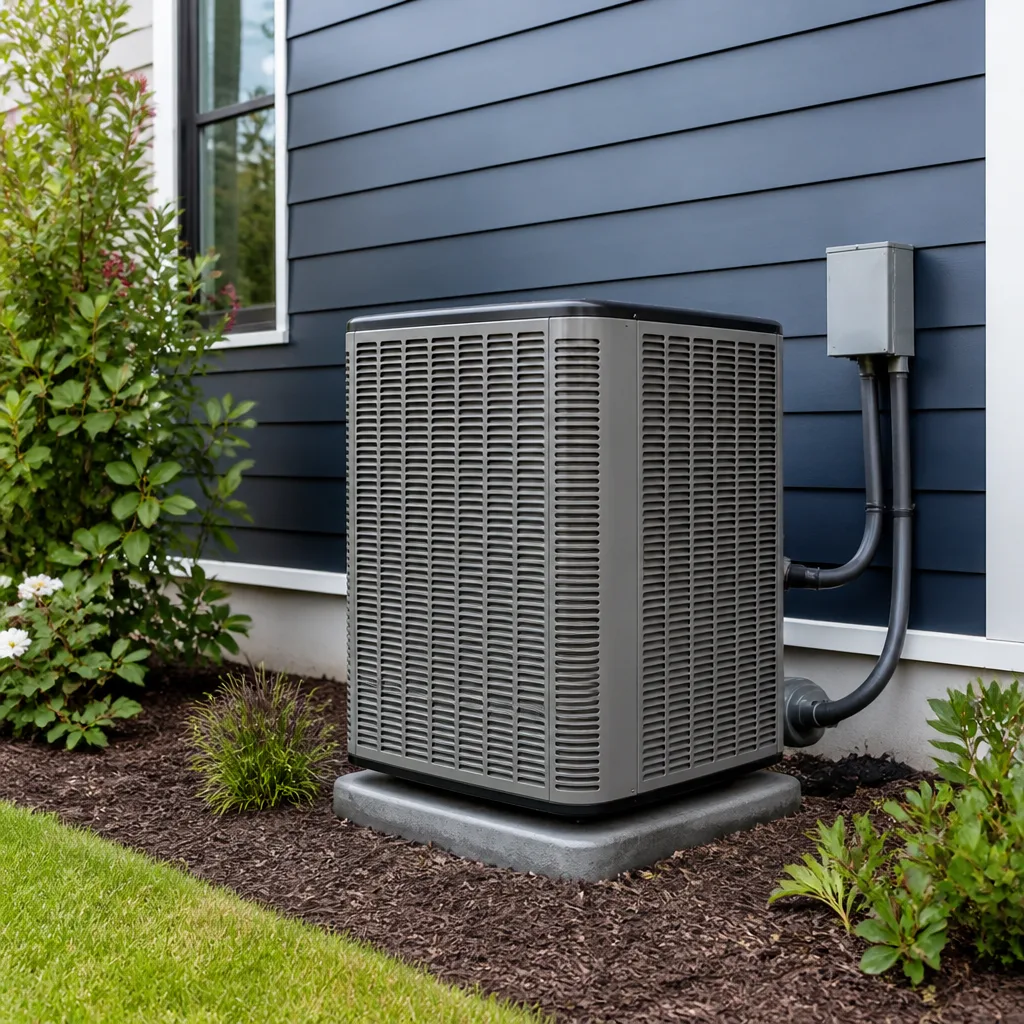
- Listen at the outdoor unit for 20 seconds. You should hear a steady fan and a quiet compressor hum. Rattle, buzzer, clicking, or a fan that speeds up and slows down is your cue to call.
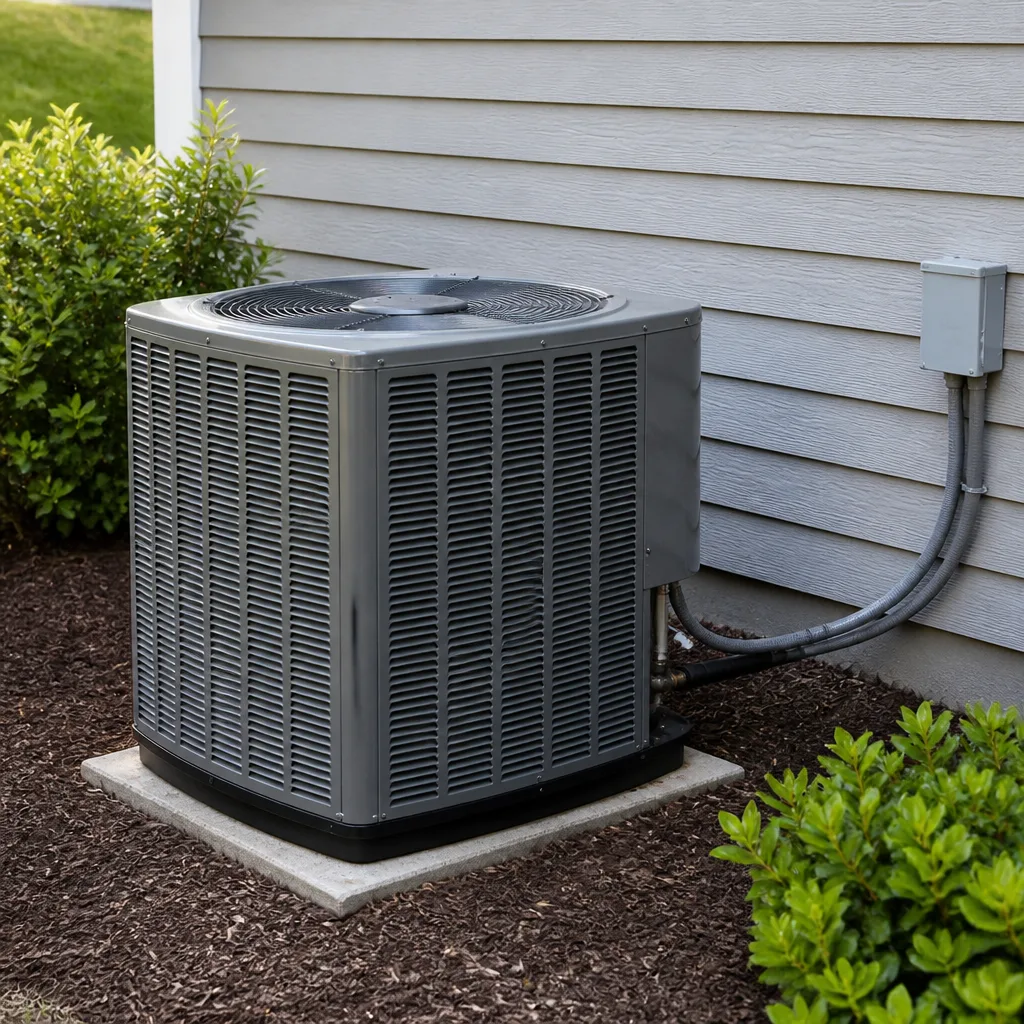
- Look at the pad under the outdoor unit. Any rust streaks, oil spots, or standing water tells a story. A little condensation on a hot day is normal. Puddles after the fan stops are not.
- Go look at your filter. Hold it up to a light. If you can’t see daylight through it, it’s clogged. In dusty Enterprise summers, filters load up fast.
- Check the thermostat against a kitchen thermometer. Set the thermostat to 72 and wait ten minutes. If your kitchen thermometer reads 76, that gap is a warning sign, not a quirk.
- Look at your electric bill. Compare this month to the same month last year. A jump of 15% or more with no rate change means something in the system is working harder than it used to.
That walkthrough catches most of what we see on a first visit. If you find something you don’t like, you already know what tier you’re in before you call.
Warning Signs Sorted by Tier
Here’s the full sort. Bookmark this section. When something feels off, find the symptom and see which tier it lands in.
Tier 1: Fix This Weekend
- One room runs two to four degrees warmer than the rest of the house
- Dust collecting on vents faster than usual
- A slight musty smell when the system first turns on
- Thermostat display flickers or dims briefly
- Outdoor fan runs a few extra minutes after the system stops
Tier 2: Call Tomorrow
- Weak airflow from one or more registers
- System runs all afternoon without reaching set temperature
- Electric bill jumped 15% or more versus last year
- Outdoor unit is noticeably louder than last summer
- Short cycling, meaning the system turns on and off every few minutes
- Visible moisture or rust on the indoor air handler
Tier 3: Call Right Now
- Burning, plastic, or chemical smell from any vent
- Breaker trips when the system runs
- Warm air from vents on a hot afternoon
- Ice on the copper refrigerant line while the system is running warm
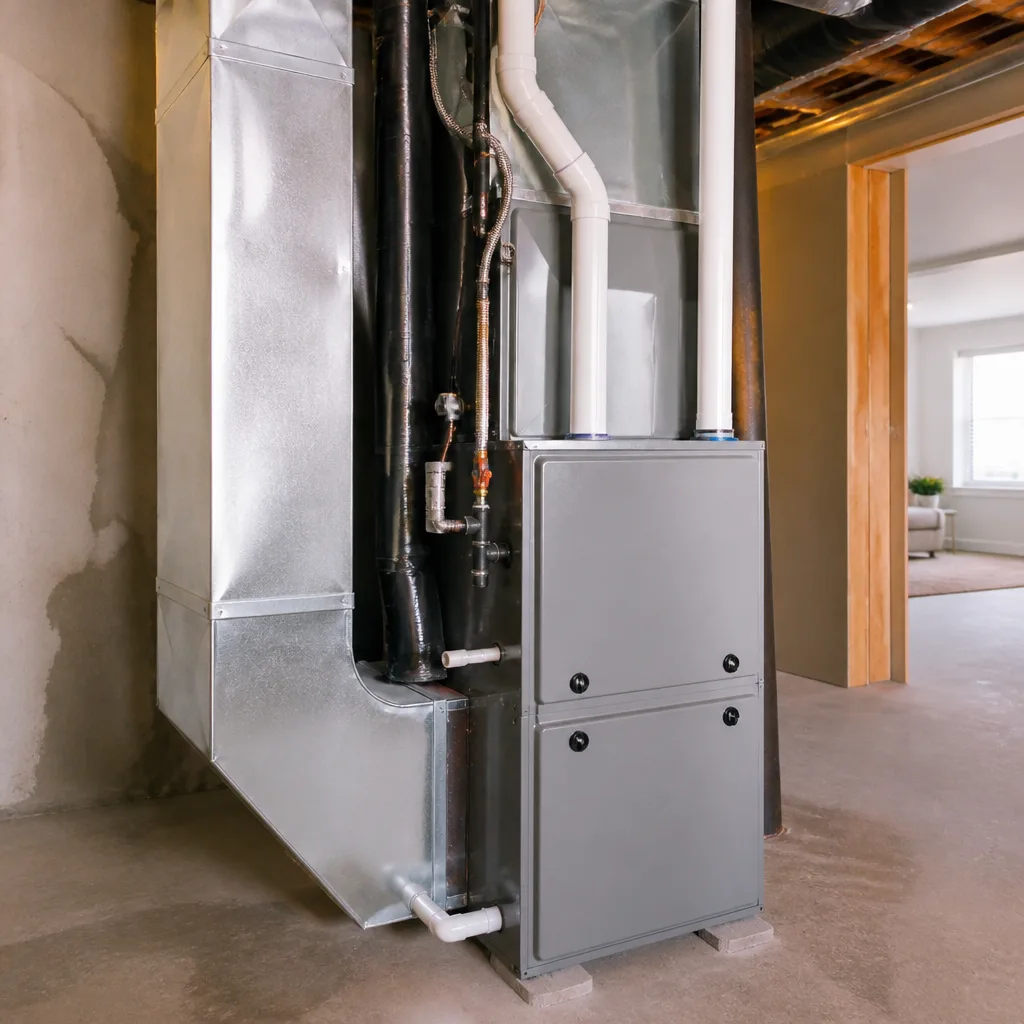
- Water pooling around the indoor unit or furnace
- Any loud bang, pop, or grinding from the outdoor unit
If you’re seeing a Tier 3 symptom and the system is still running, shut it off at the breaker before you call. A compressor that keeps running with no refrigerant flow will destroy itself. That’s a $2,000 mistake you don’t have to make. When you’re ready, our AC repair and installation in Enterprise team is set up to take that call.
Why Enterprise Homes Built 2005-2015 Are Hitting the Danger Zone
A lot of the homes in Enterprise that went up between 2005 and 2015 got the same generation of builder-grade equipment. That gear was built to a price and rated for roughly 15 years of service, which means a house finished in 2010 is standing on a system that’s already past its rated life or about to be. The 2005-era homes are already replacing. The 2010-2015 cohort is right in the window where things start to need real decisions.
What makes this specific to Enterprise is the climate duty cycle. A builder-grade system installed for a moderate market might log 1,200 running hours a year. Here, between June and September alone, you can put 2,000 hours on a compressor without blinking. That gear has lived a harder life than its original spec sheet assumed. We see 2007 to 2012 homes all over Enterprise where the compressor is still hanging on but the capacitor, contactor, and blower motor have all been replaced once already.
If your home is in that window, the warning signs you feel are usually not the compressor itself, not yet. They’re the supporting parts failing around it. That’s the good news. That’s the moment you have choices. A Trane or Lennox system from that era is worth repairing if the compressor is sound and the indoor coil isn’t leaking. A Goodman or Rheem build from the same period often makes more sense to replace when the second repair hits. We give you the readings either way, then the numbers. If you’re at that decision point, our heat pump and mini-split in Enterprise page covers what a modern high-efficiency swap actually looks like.
Signs That Sound Scary but Are Genuinely Minor
Some symptoms sound terrible and are basically nothing. Worth knowing, because we’ve had people call us in a panic over a handful of these:
- Steam rising from the outdoor unit. That’s condensation burning off on a hot day. It’s not a fire. Unless you smell burning plastic at the same time, this is normal.
- A puddle under the outdoor unit after it stops. A little condensation is expected. Same note as before: if the puddle is inside, that’s a different story.
- A hiss when the system kicks on. That’s refrigerant equalizing through the lines. Same hiss every time means normal. New hiss this week means call.
- The system running longer on a 108-degree afternoon than it used to. In an Enterprise July, your system is allowed to run almost continuously. That’s the system doing its job in extreme heat, not failing. What matters is whether it’s keeping up with the thermostat.
- A musty smell on first startup. Usually stale air sitting in the ducts since last fall. Run the fan for ten minutes and see if it clears. If it doesn’t clear or it comes back, that’s a Tier 2 call.
The flip side is more important, and it’s in the next section.
The Quiet Symptoms You Should Actually Worry About
The scariest failures we see don’t come in loud. They come in quiet.
A slow refrigerant leak is the top of the list. Your system starts taking a little longer to cool the house. Then a little longer. Nothing bangs. Nothing hisses. You just get used to it. By the time we’re called, the system has been running with low refrigerant for months, which is the fastest way to cook a compressor. If the house feels two or three degrees warmer than the thermostat reads over a couple of weeks, don’t wait for it to get worse. That’s a Tier 2 call about 90% of the time.
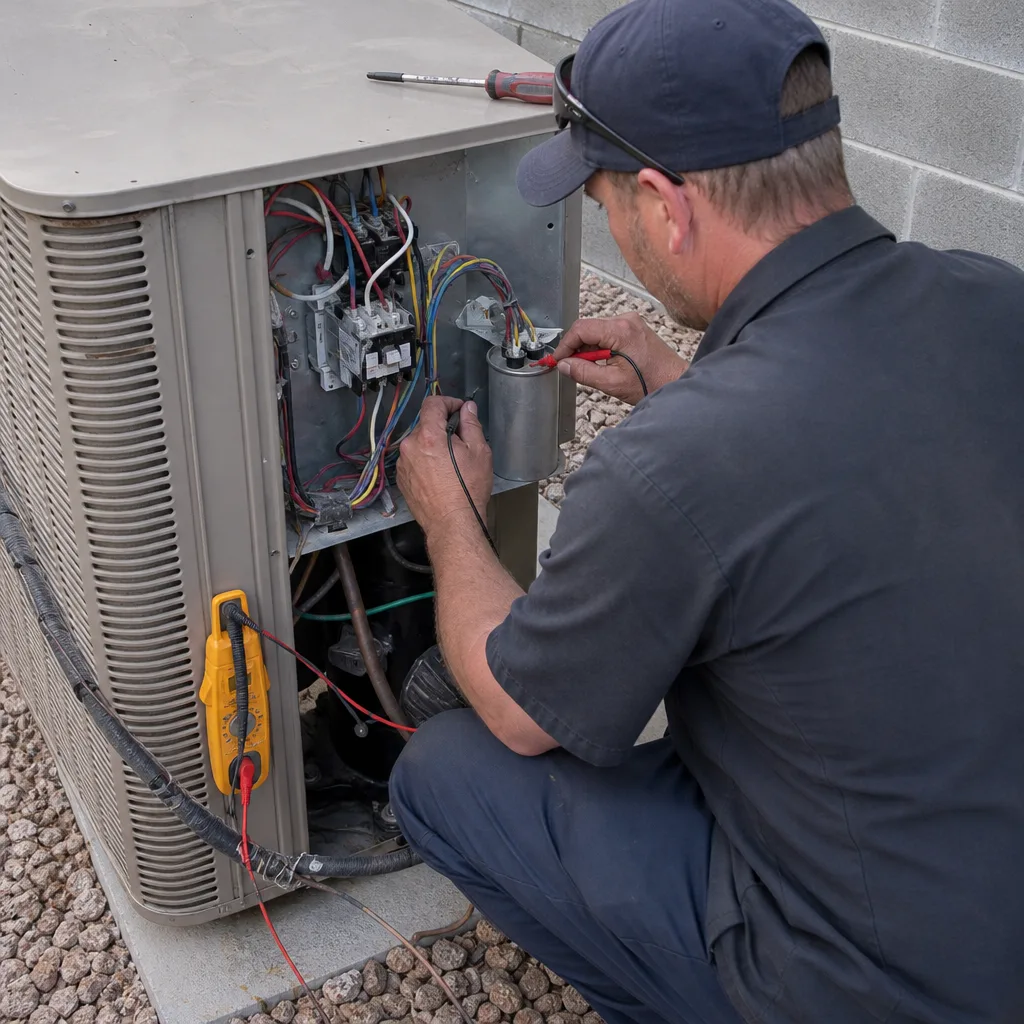
A failed capacitor is the second one. The capacitor is a $10 to $30 part that helps the compressor and the fan motor start. When it starts drifting out of spec, nothing dramatic happens. The fan just takes a minute longer to spin up. The compressor stubmles on hot afternoons. You don’t notice until it fully fails. That’s why every visit we test the capacitor before we ever say the word compressor. A $200 capacitor job is a lot different from a $2,000 compressor job.
Partially blocked airflow is the third. A duct that’s sagged or disconnected in the attic cuts airflow to a bedroom. The system works harder to compensate. That extra work shows up in your electric bill first, then in a burned-out blower motor a year later. If you notice one room quietly falling behind while every other room is fine, that’s not always a small thing.
What to Tell the Dispatcher So the Truck Arrives Prepared
When you call, the person on the phone can only work with what you give them. Here’s what actually helps.
- Give the exact model number if you can find it. It’s a sticker on the outdoor unit and on the indoor air handler. A Trane or Lennox model number tells the person at your door exactly which parts to load before they roll.
- Say what the thermostat and the room thermometer say. “Thermostat reads 71, room reads 76” is a much better picture than “it’s not cooling.”
- Say when it started. “Started Tuesday” versus “started in June” is a totally different call. One has time on its side. The other doesn’t.
- Describe the sounds in plain words. Rattle, click, buzz, hum, whine, thump. Don’t try to name the part. Your words give the tech a working theory before the visit.
- Say whether the breaker has tripped. If yes, how many times. This is one of the single most useful pieces of information you can give us.
- Mention age of the system and brand. A 2008 Goodman and a 2017 Rheem are two different calls.
Get those six things said and the person at your door is showing up with the right parts more often than not. That saves you a second trip, which saves you two days in a hot house. If you’re ready now, call (844) 455-2034 and a live person will pick up, day or night.
Common Mistakes to Avoid
- Waiting for the system to “catch up” on a 110-degree Enterprise afternoon. A healthy system can hit its set point. If yours can’t after two hours of running, waiting another day just raises the odds you’re sleeping in a hot house tonight.
- Replacing the whole system because one part failed. A capacitor, contactor, or blower motor failure on an otherwise healthy system is a repair, not a replacement. We test the compressor before we ever discuss replacement.
- Calling the national outfit that quoted one price on the phone and another at the door. The price is not the real price unless it’s in writing before the work starts. Ask for it in writing. Every time.
- Ignoring the electric bill because the system “still works.” A 15% jump with no rate change is a warning sign, not a fluke. That’s the part inside your system telling you it’s working too hard.
- Running the AC on a tripped breaker. Every time you reset the breaker and use the system without finding out why it tripped, you give it one more chance to cause real damage.
- Skipping the filter for a season because “it looks fine.” In a dusty Enterprise June, a filter that looked fine last month can be fully loaded this month. Hold it up to the light.
- Calling a different number every time you have a problem. A name you can verify and a face you’ll see again is worth more than saving $20 the first time. That’s the whole point of an owner-operated shop.
See the difference
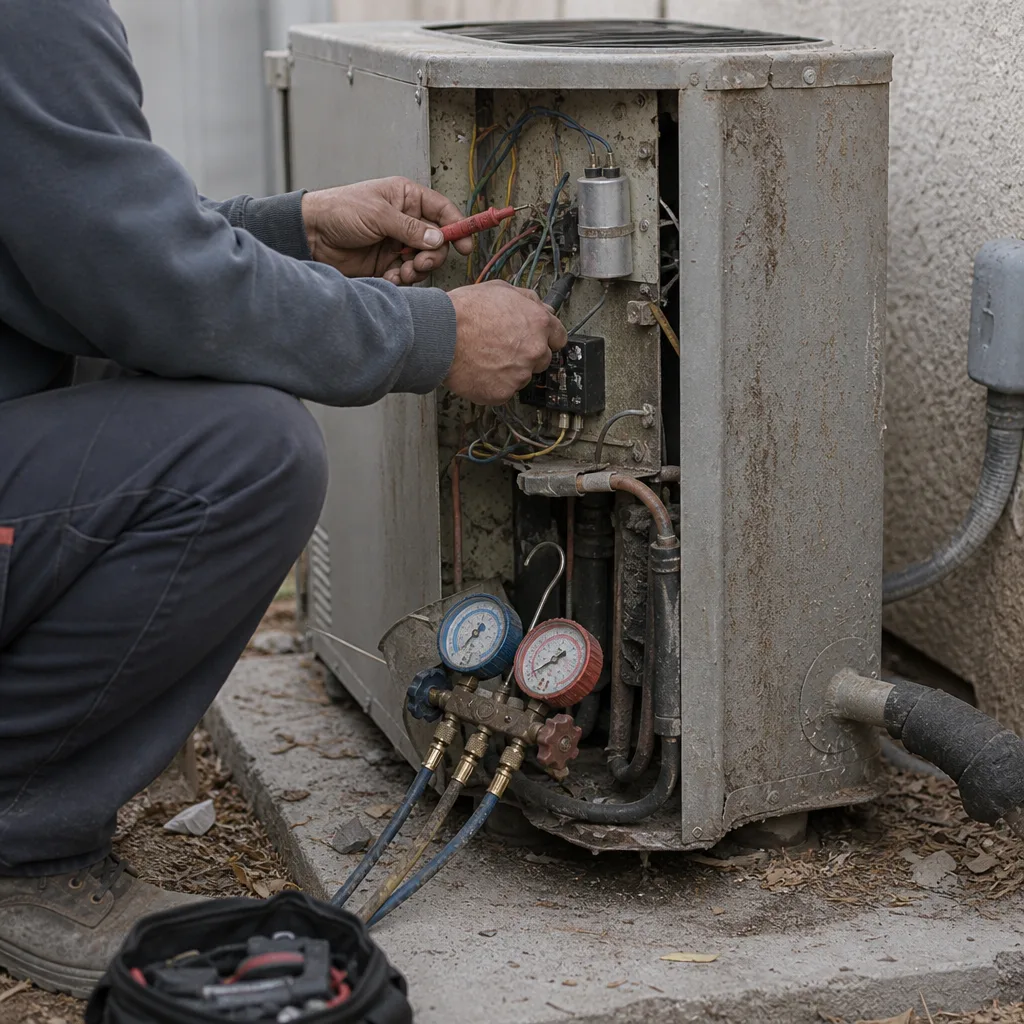 Before
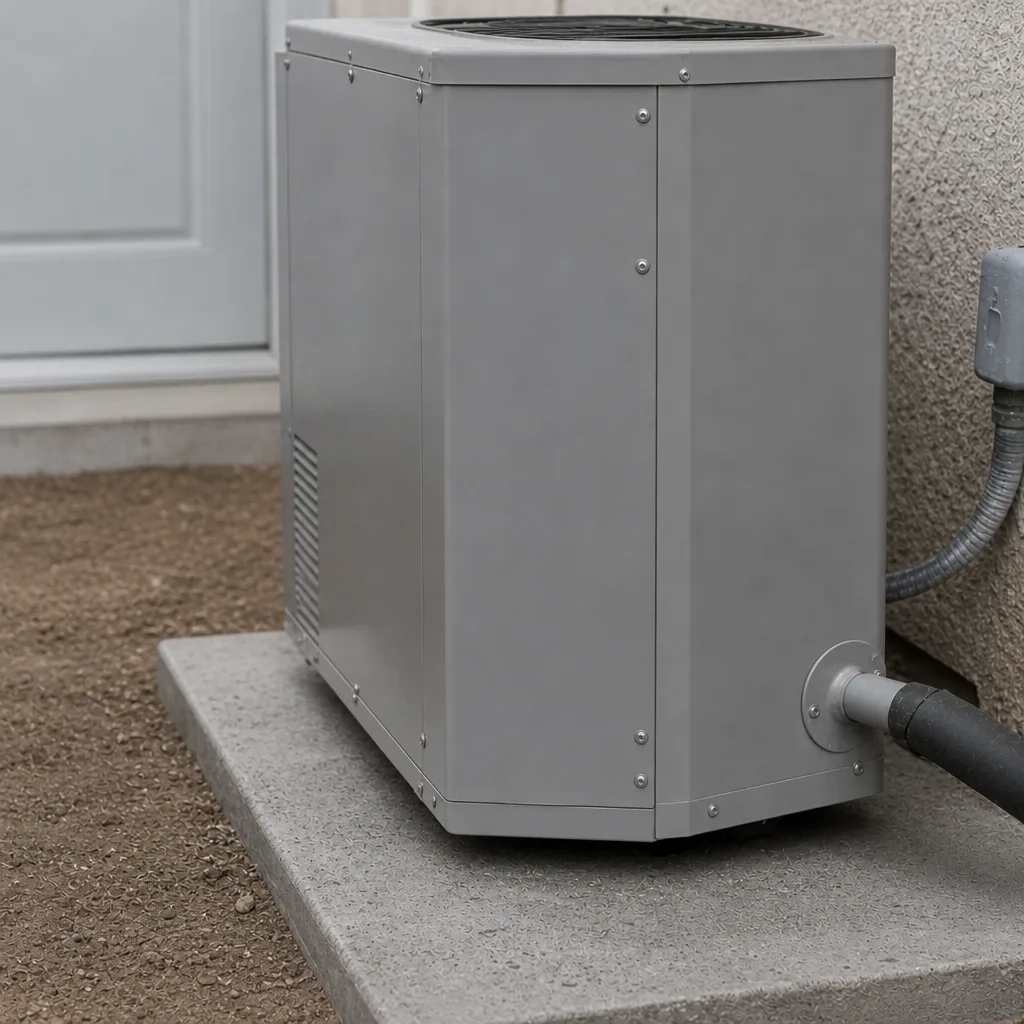 After
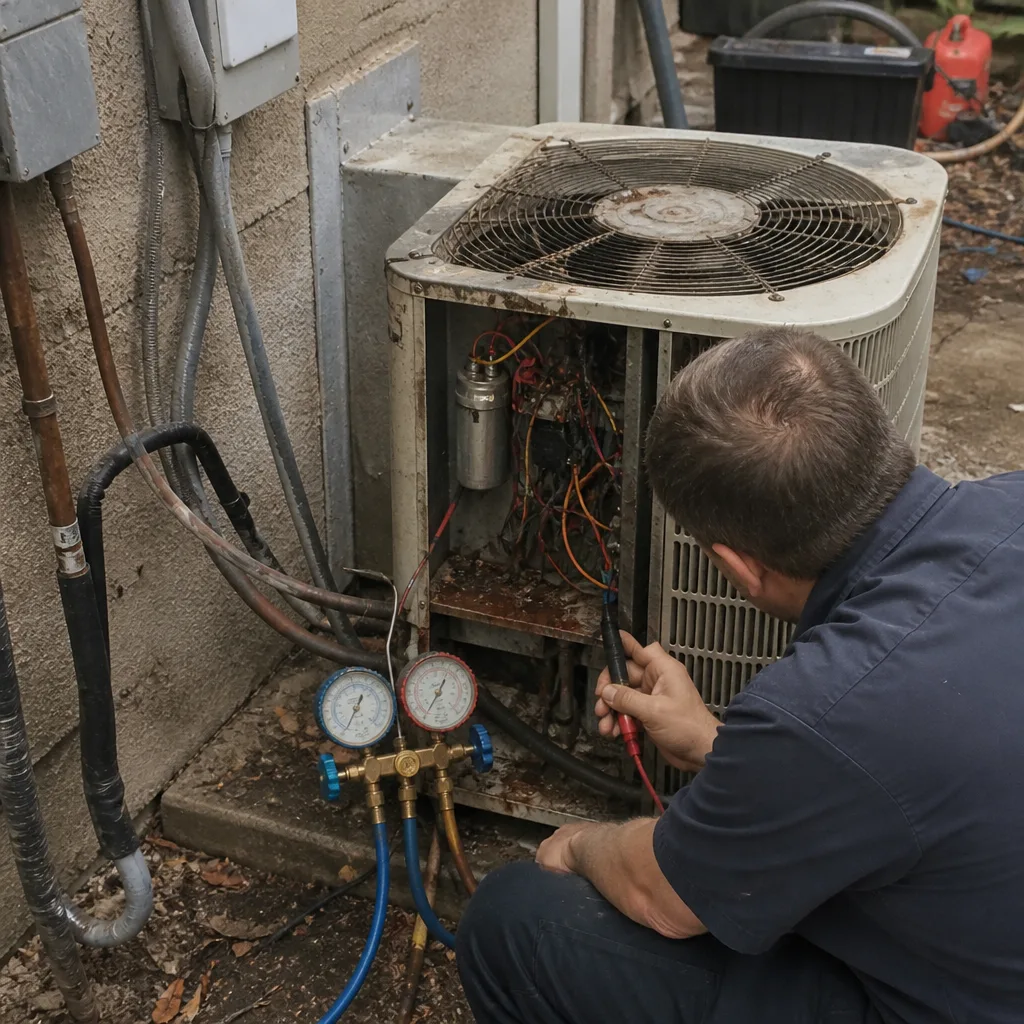 Before
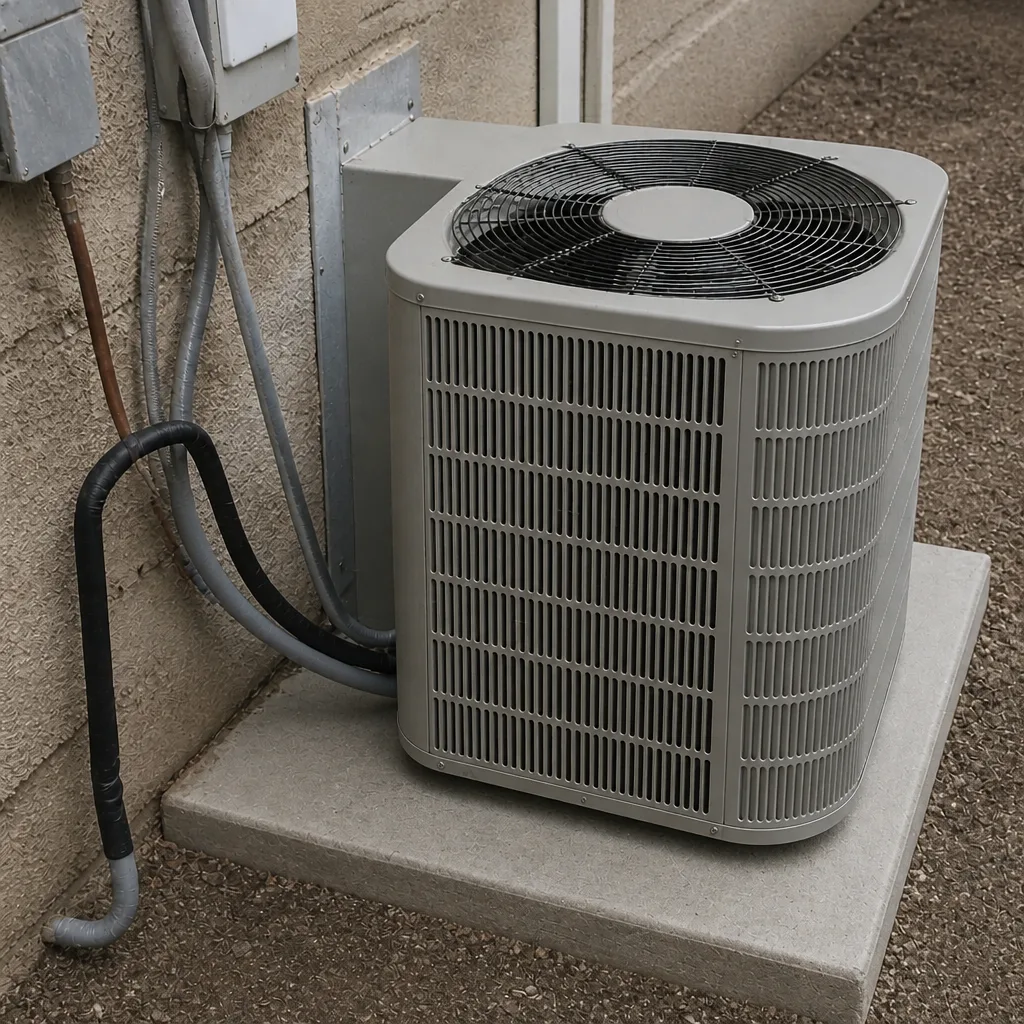 After
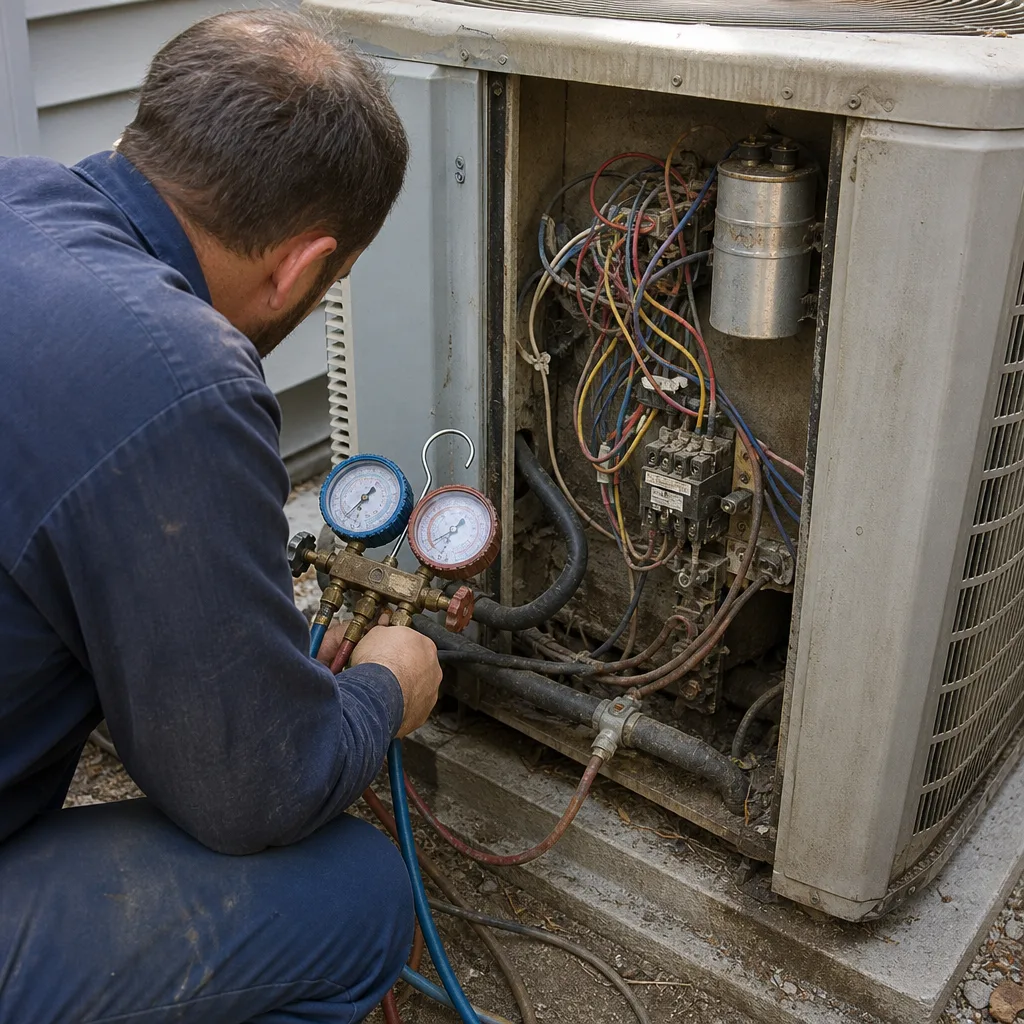 Before
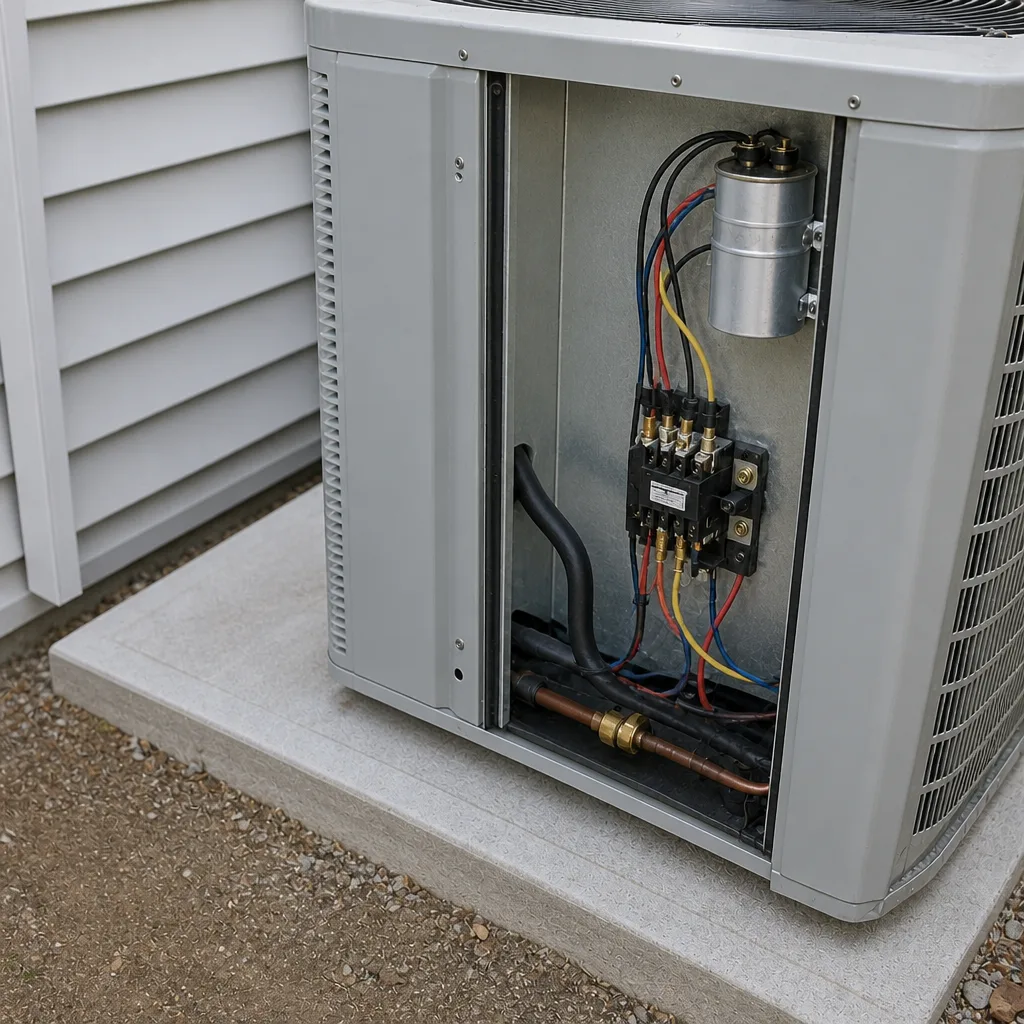 After
When to Call a Professional
Call a professional the moment any Tier 3 symptom shows up. That’s the burning smell, the popped breaker, the warm air in July, the ice on the line, the water on the floor. Call the moment you see a Tier 2 symptom you didn’t cause, meaning it’s not just a filter or a thermostat setting. And call before you crawl into the attic or open a panel yourself. Refrigerant under pressure and live electrical components inside your air handler are not places to learn on a Saturday afternoon. Our heating and furnace in Enterprise team handles the indoor side, including the furnace and heat pump components that get ignored until winter. Ray’s Heating & Air Enterprise offers free estimates in Enterprise, and there’s a standing Free Second Opinion on any written estimate from another shop. Call (844) 455-2034 and a live person picks up.
Frequently Asked Questions
The most common warning signs in Enterprise are a house that runs two to four degrees warmer than the thermostat reads, weak airflow in one or two rooms, a rising electric bill with no rate change, and an outdoor unit that’s louder than it was last summer. In a desert climate, these signs tend to show up fast in June and July rather than building slowly over a season. If you’re seeing any of them, call (844) 455-2034 for a free estimate.
It’s an emergency if you smell burning, the breaker trips when the system runs, warm air is coming from the vents on a hot day, water is pooling around the indoor unit, or you can see ice on the refrigerant line while the system is running warm. Anything that’s just slightly worse than last year can wait until tomorrow. Call (844) 455-2034 and a live person will help you sort which tier you’re in.
A gap between the thermostat reading and the room reading usually means one of three things: low refrigerant, restricted airflow from a clogged filter or sagging duct, or a thermostat that’s reading its own wall instead of the room. Diagnostic readings will tell you which one within 15 minutes. Call (844) 455-2034 for a free estimate on the fix.
A working system can still be working too hard. A 15% jump in your bill for the same month as last year usually means a failing capacitor, a partially blocked duct, or a compressor straining against low refrigerant. Those are all Tier 2 warning signs. Call (844) 455-2034 and we’ll test the obvious suspects before anyone recommends anything expensive.
Usually no. Steam or a wisp of haze from the outdoor unit on a hot day is condensation burning off, which is normal. It’s only a problem if you also smell burning plastic or see sparks, and in that case shut the system off at the breaker and call (844) 455-2034 right away.
For most Enterprise homes in that build window, the answer comes down to whether the compressor is sound and the indoor coil is holding refrigerant. If both are healthy, repair makes sense. If a 10-year-old Goodman or Rheem is on its second major repair, replacement usually pencils out better over the next five years. Either way, you see the readings before you see the numbers. Call (844) 455-2034 for a free second opinion on any written estimate.
The Bottom Line
Most HVAC failures in Enterprise homes give you warning. Not always a loud one, and not always an obvious one, but a warning. The trick is sorting warning signs by how much time you have. Slight uneven cooling means this weekend. Weak airflow and a rising bill mean call tomorrow. Burning smell, tripped breaker, warm air in July, or ice on the line mean hang up the phone with whoever you were talking to and call right now. When you call, give the model number, the actual room temperature, and how the sound breaks down. Those three details turn a second visit into a single one. If your system is telling you something this week, our Ray’s Heating & Air Enterprise home page has the number and a live person on the other end, around the clock.
Call (844) 455-2034 for a free estimate. Ask anyone on your street. The readings come first. The numbers come second. And if it’s not done right, one call brings Ray back.
Written by the team at Ray’s Heating & Air Enterprise.