
Last updated November 17, 2026
 AC repair
 Furnace & heating
 Heat pumps
 Ductless mini splits
 Carrier
 Trane
 Goodman
Seasonal tune-up and full diagnostic on your Carrier, Trane, or Goodman system - readings shown to you before any repair is proposed
Diagnosis first, numbers second - you approve the repair price before a single part goes in.
Get your free estimateHow Long Does AC Repair & Installation Take? Timelines and What to Expect
Ray has done AC installs in four hours. He’s done others that stretched to three days. Not because he was slow on the second one, but because nobody looked at the electrical panel or crawled the attic before quoting the job. The difference between a smooth install and a week-long headache almost never comes down to how fast the crew works. It comes down to what got checked before anyone touched a wrench. This guide lays out honest timelines for AC repair and installation in Enterprise, the parts and permit realities that shape them, and the questions to ask so you’re not stuck guessing while your house sits at 91 degrees.
Quick Answer
Most AC repairs in Enterprise take 1 to 3 hours on site, with a capacitor or contactor swap often done in under 90 minutes. A full system installation typically runs one day for a straight swap, or two to three days when a permit through Clark County, an electrical panel upgrade, or special-order equipment is involved. The clock that hurts you isn’t the work. It’s the waiting on permits and parts, which is why we tell people to ask about both before signing anything.
Styles & brands we work with
- AC repair
- Furnace & heating
- Heat pumps
- Ductless mini splits
- Carrier
- Trane
- Goodman
Table of Contents
- How long do common AC repairs actually take?
- How long does a new AC installation take in Enterprise?
- Why Clark County permits can stretch your timeline
- Parts availability in the Las Vegas Valley: what’s on the truck vs. what’s ordered
- Red flags that a quoted timeline is too short
- What to ask before the job starts
- How Enterprise’s summer heat changes the schedule
- The electrical panel question nobody asked you
How long do common AC repairs actually take?
Hours, not days, for most repairs. That’s the short version. Here’s the longer one, broken down by the failures we see most in Enterprise.
- Capacitor replacement: 45 to 90 minutes. It’s a common failure in the desert heat, and it’s one of the first things we test. The part is small, cheap, and usually on hand.
- Contactor replacement: 1 to 2 hours. Another wear item that ages fast when your system runs hard from May through September.
- Refrigerant charge and leak check: 1.5 to 3 hours. The charge itself is quick. Finding the leak takes longer, and that’s the part that matters. Topping off a leaking system is a temporary fix, not a repair.
- Evaporator or condenser coil work: 3 to 6 hours, sometimes more. Coils are buried, and getting to them means opening up parts of the system. This is where an honest tech tells you upfront that the job runs long.
- Blower motor or control board: 2 to 4 hours. Parts availability moves this number more than labor does.
Here’s the caveat most companies skip. Every one of these ranges assumes the diagnosis is right the first time. We’ve walked into houses where the previous outfit quoted a compressor and the actual problem was a $180 capacitor. Readings first, numbers second. You should see the meter readings before anyone says the word compressor. If a quote for a major repair shows up in under ten minutes, ask what was tested.
How long does a new AC installation take in Enterprise?
One day for a straight system swap where everything lines up: same tonnage, existing pad and line set in good shape, panel with room to spare, permit already pulled. Two to three days is more realistic when the job involves anything unexpected. Here’s how a typical installation runs.
- Day one, morning: Removal of the old equipment and a walk-through of what was actually found once it’s out. Sometimes the surprise lives under the old unit.
- Day one, afternoon: Setting the new condenser, connecting the line set, and pressure testing.
- Day one or two: Evacuation, refrigerant charge, and startup. This step can’t be rushed. A proper vacuum pull takes time.
- Day two: Ductwork adjustments if needed, thermostat setup, and a full commissioning check with airflow and temperature split readings.
- Day two or three: Final inspection scheduling if the permit requires it, plus a walkthrough with you so you know what was done.
In Enterprise, the biggest variable on a replacement is whether the equipment you want is sitting in a local distributor’s yard or has to be ordered. Brands like Daikin and American Standard are common enough that a straight swap often goes same-week. A specialty configuration can add three to seven days to the start date, not the install itself. When we quote an install, we give you a set install date, a written fixed price, and we handle any rebate or financing paperwork. No surprise line items when the truck pulls up.
Why Clark County permits can stretch your timeline
A like-for-like AC replacement in Enterprise usually needs a permit pulled through Clark County, and permit timing is the single most common reason an installation slides. Standard mechanical permits generally clear in a few business days, but busy summer weeks push that out. Add inspection scheduling on the back end and you’re looking at one to two weeks from signing to a finished, inspected install in many cases. That’s not us being slow. That’s the paperwork gate moving at its own pace.
Repairs typically don’t require a permit. Installations and anything involving new electrical circuits do. If a company quotes you a next-day install on a job that clearly needs a permit, ask who’s pulling it and when. A timeline that ignores the county isn’t a timeline, it’s a sales tactic. We tell people upfront: the install day itself is fast, the runway to get there depends on Clark County, and nobody honest can promise you two days from handshake to cold air on a permitted job in peak season.
Parts availability in the Las Vegas Valley: what’s on the truck vs. what’s ordered
This is where install and repair timelines really live, and almost no one explains it before the job starts. Here’s the honest breakdown.
- On the truck: capacitors, contactors, common relays, thermostats, basic fuses, and standard refrigerant. These cover most same-day repairs.
- At a local Las Vegas distributor: blower motors, control boards, and many brand-specific parts. These usually mean same-day or next-day pickup, so a repair stretches from hours to a day.
- Special-order: odd-tonnage condensers, specialty coils, and some brand-specific configurations. This can mean three to ten days, and no crew can make it faster.
With major brands like Carrier, Trane, Lennox, Goodman, Rheem, York, Daikin, Bryant, and American Standard, the local distributor network is strong, which helps. But “strong” doesn’t mean “always in stock.” When we quote a repair, we tell you whether the part is on the truck, at the distributor, or has to be ordered. You deserve to know which one before we start, not after.
Red flags that a quoted timeline is too short
A too-fast quote usually means either the work is getting shortcut or the estimate doesn’t reflect reality. Watch for these.
- “We’ll have it installed tomorrow” on a job that needs a permit. Either they’re skipping the permit, which becomes your problem at inspection, or they’re setting you up for a “surprise, it took longer” conversation.
- A firm install price before anyone has looked at your panel. If the panel’s capacity hasn’t been checked, the timeline isn’t real. See the panel section below.
- A major repair diagnosed in under ten minutes with no readings shown. That’s a sign the tech is guessing or selling. Ask for the meter readings.
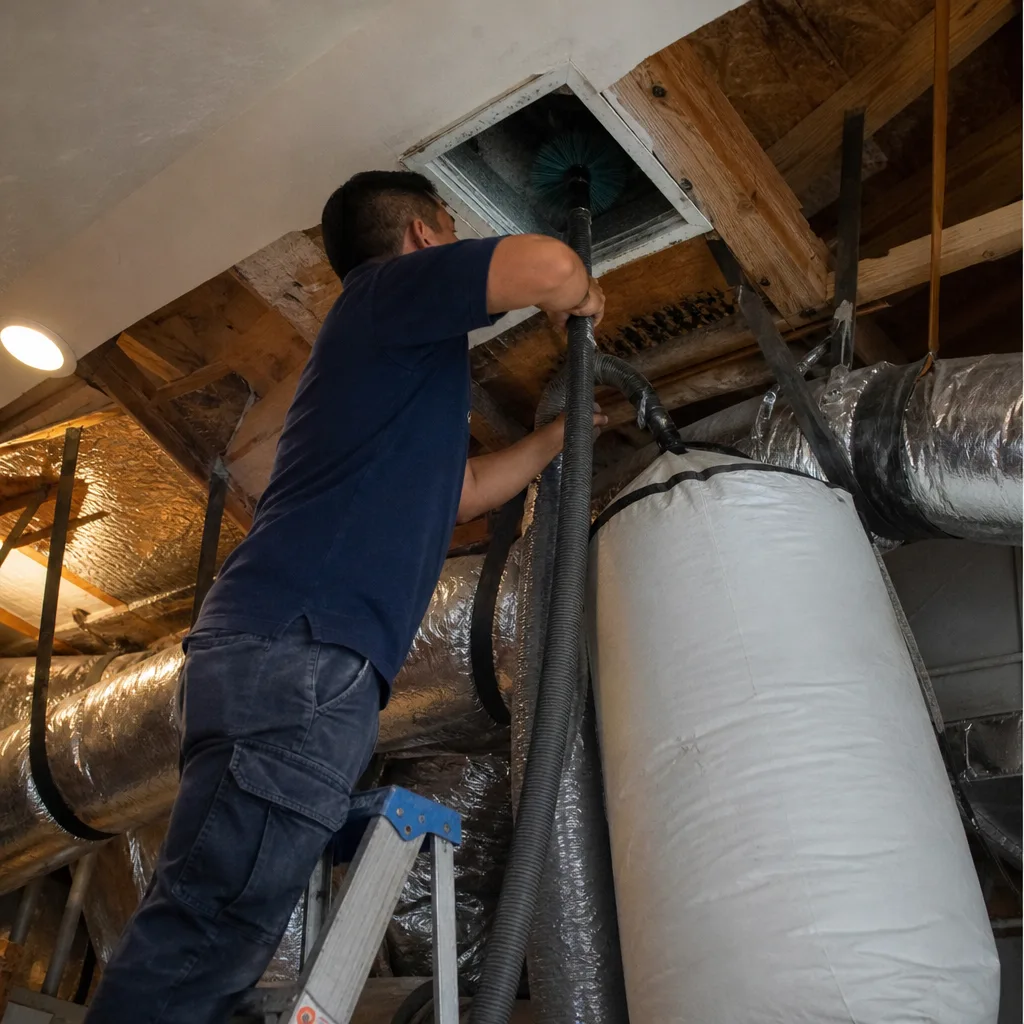
- No walkthrough of the attic or ductwork before an install quote. Duct problems found on install day are a classic reason a one-day job becomes two.
- “Same day” promised on a special-order coil. Nobody can do that. If they say they can, they’re either not ordering the right part or planning to patch instead of repair.
- A timeline that gets vaguer the more you ask. Straight answers hold up under questions. Evasive ones don’t.
Ask anyone who’s been through it: the second estimate usually looks different from the first. That’s not because the second company is nicer. It’s because the first one didn’t look closely enough. A free second opinion on any written AC estimate is a standing offer with us for exactly this reason.
What to ask before the job starts
Five questions, and the answers tell you whether the timeline you were quoted is real or a sales number.
- “What readings did you get, and can I see them?” A real diagnosis is grounded in numbers. The capacitor gets tested before anyone says the word compressor.
- “Is a permit needed, and who pulls it?” If the answer is vague, that’s a red flag for a install job.
- “Is the part on the truck, at a local distributor, or special-order?” This one question explains most timeline gaps.
- “Has anyone looked at my electrical panel?” An under-capacity panel is the classic “one-day became three” surprise, and it’s found before the work starts, not after.
- “What’s the worst-case timeline, and what would cause it?” An honest company gives you a range and tells you what moves the dial. A stacked answer with no specifics usually means they haven’t thought it through.
Write them down before the tech arrives. You’ll get clearer answers, and you’ll hear the difference between a company that’s looked at your system and one that’s quoting off a phone script. For heating jobs, the same list applies to furnace work in Enterprise, and the answers carry over to heating and furnace service as well.
How Enterprise’s summer heat changes the schedule
Enterprise sits in the high desert, and July afternoons routinely push past 110. That changes the schedule in ways a company from out of state won’t tell you. Attic temperatures during an install can run well over 140 degrees, which means install crews work in shorter bursts to stay safe and get the job done right. A two-day install that could be rushed into one day in a mild climate becomes two days here, and that’s the correct call. Rushing an attic install in this heat is how you get sloppy line-set work and a callback in three weeks.
The other pattern we see in Enterprise is spring load: the first real heat wave in May and early June, every AC on the block tries to start at once, and the calls stack up. Repairs still get handled quickly on an emergency basis, but non-urgent work like new installs sees longer scheduling windows in mid-June than they do in April or October. If you’ve been putting off a replacement, booking it in spring or fall gets you a faster start date and less competition for permits and parts.
The electrical panel question nobody asked you
Here’s the part most install quotes skip. Your AC runs off a dedicated circuit with its own breaker, and if your panel is full, outdated, or rated for less load than the new system needs, you can’t just swap the unit. The electrical work has to happen first, and that adds time and cost. We’ve seen it turn a one-day install into a three-day job when the panel gets discovered on install morning.
Newer, higher-efficiency equipment often draws less current than the old unit, which can work in your favor. But a panel that’s already at its limit or shows signs of age will need attention regardless. This is a licensed-electrician item, not a handyman task, and it’s worth flagging before you sign an install contract. Ask the company quoting the job: “Did you check the panel?” If they haven’t, the timeline they gave you is a guess. When we quote an install, we look at the panel, the line set, and the ductwork before the number gets written down. Readings first, numbers second, and you see both. For heat pump and mini-split projects, which have their own electrical requirements, we go through the same check.
Common Mistakes to Avoid
- Accepting a phone quote as a firm price. A firm price without a site visit is a guess dressed up as a number. It changes at the door, and then you’re deciding between paying more or starting over.
- Skipping the panel check on a replacement. This is the single biggest cause of one-day installs turning into three. Ask before signing.
- Believing “same-day install.” On a permitted replacement in Clark County, it isn’t happening unless someone’s cutting the permit corner, and that becomes your liability at inspection.
- Topping off refrigerant without finding the leak. It might get you through one more season, but the charge will bleed out again, and you’ll have paid twice.
- Scheduling a replacement in mid-July. Peak-demand weeks in Enterprise stretch install windows. Spring and fall move faster.
- Not writing down what was promised. Timeline, parts, permit, and price should all be in writing. If it’s only verbal, it didn’t happen.
- Assuming the cheapest quote means the fastest job. Often it means the crew is set up to find “surprises” once they’re on site. A firm, in-writing estimate is worth more than ten dollars of savings.
See the difference
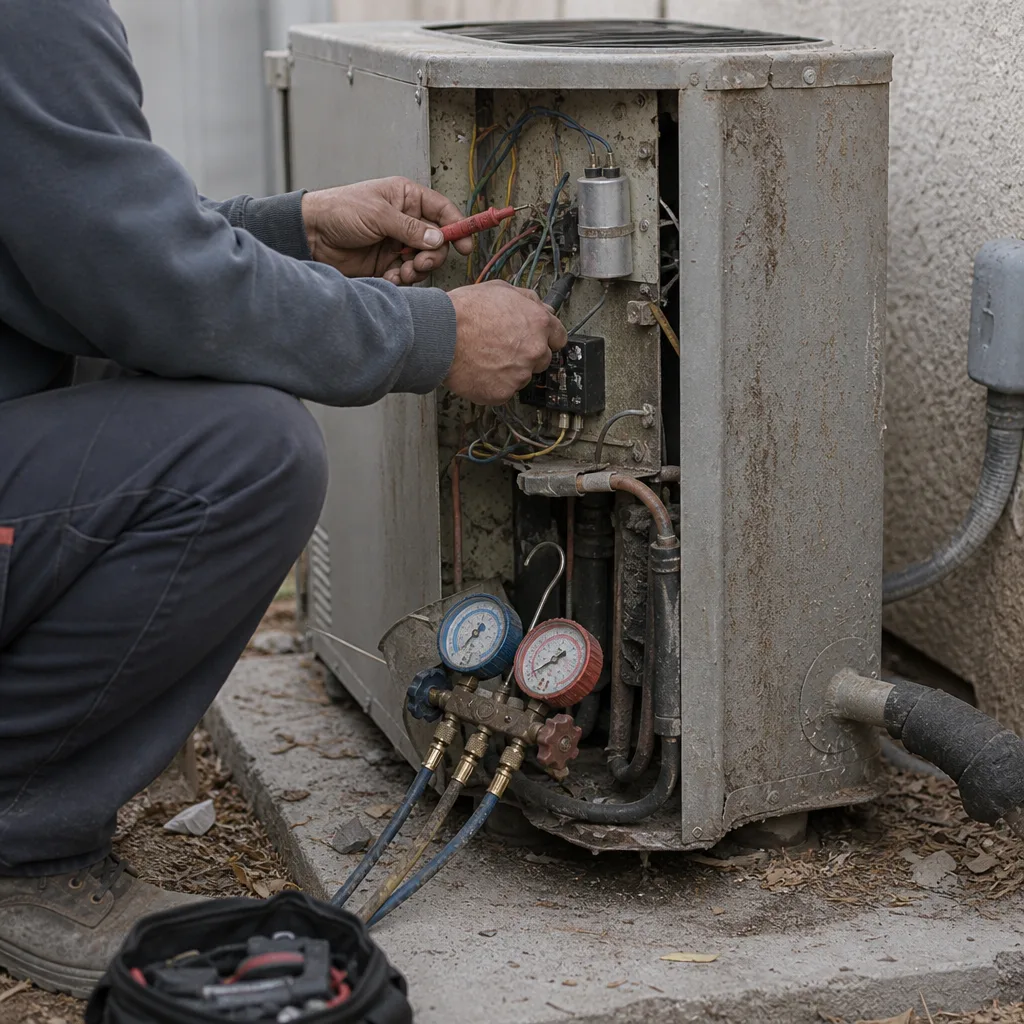 Before
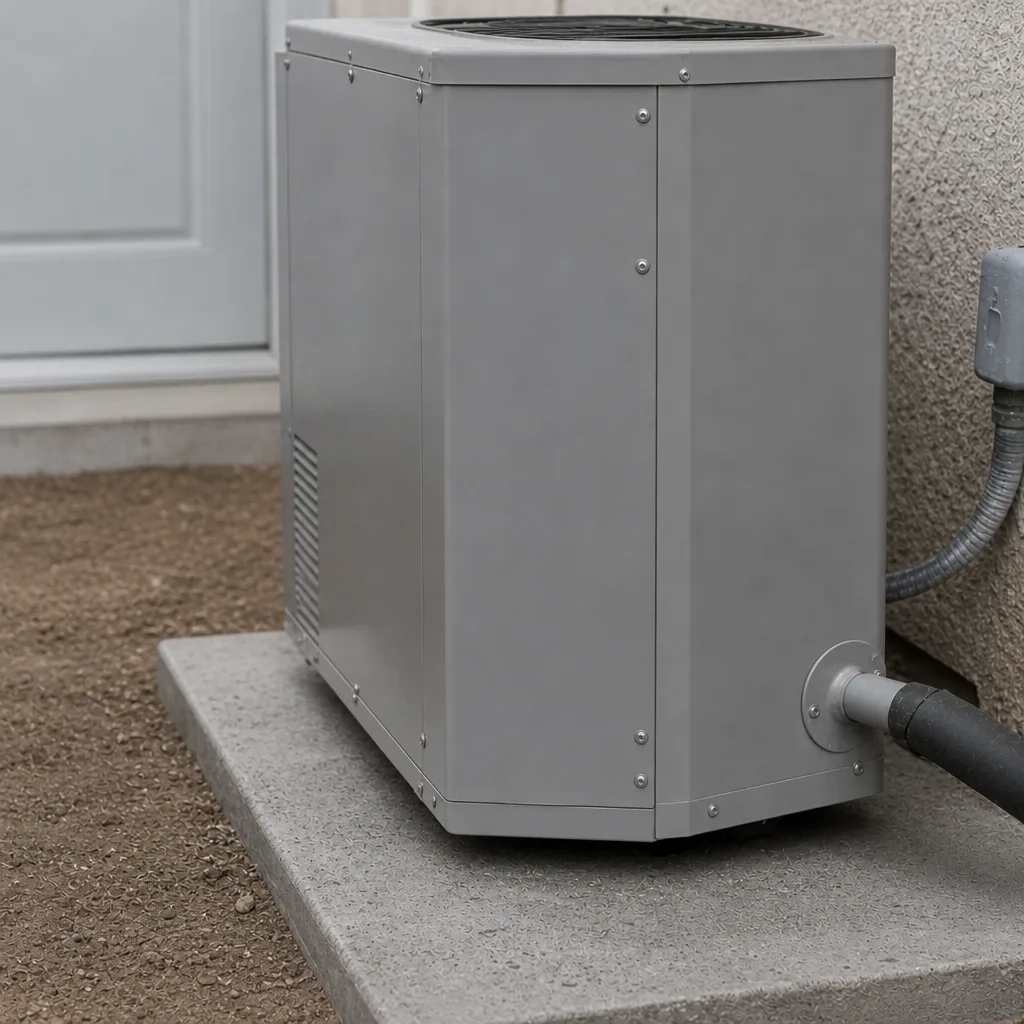 After
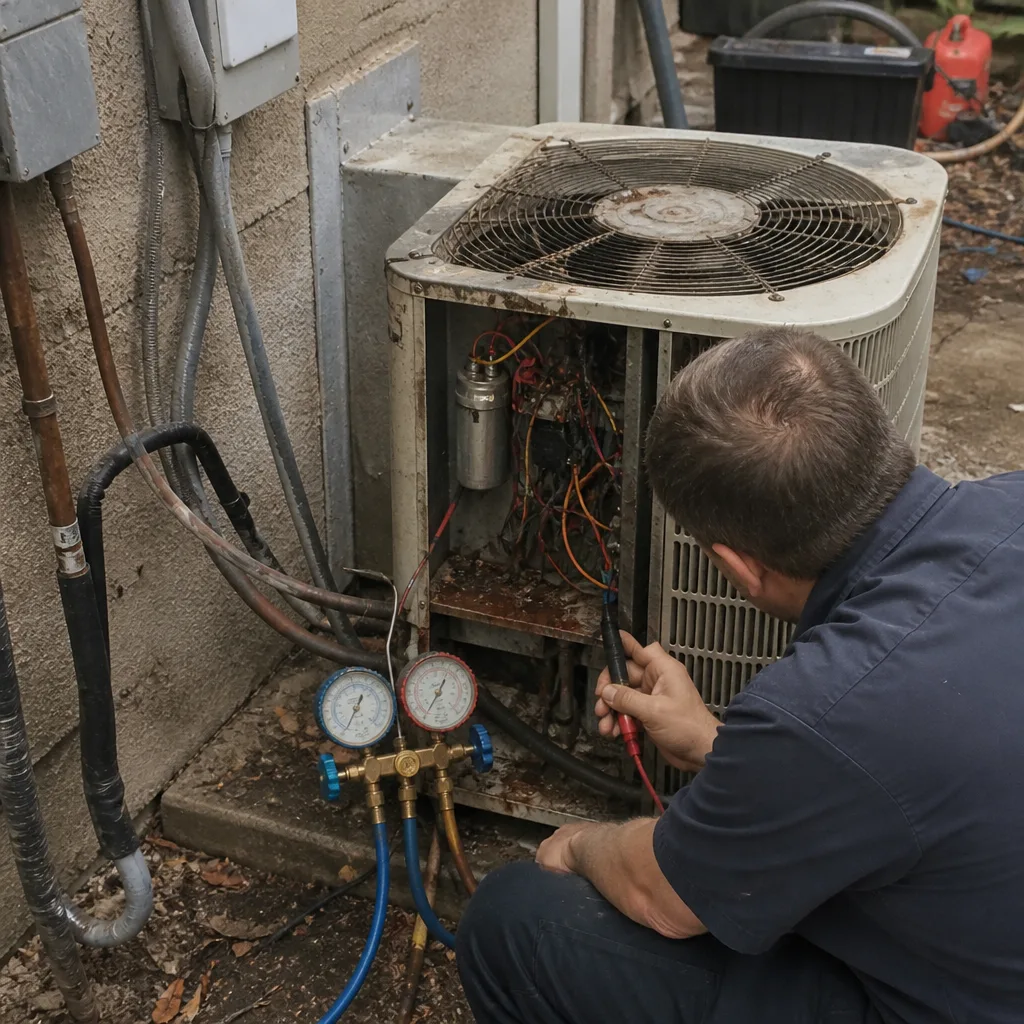 Before
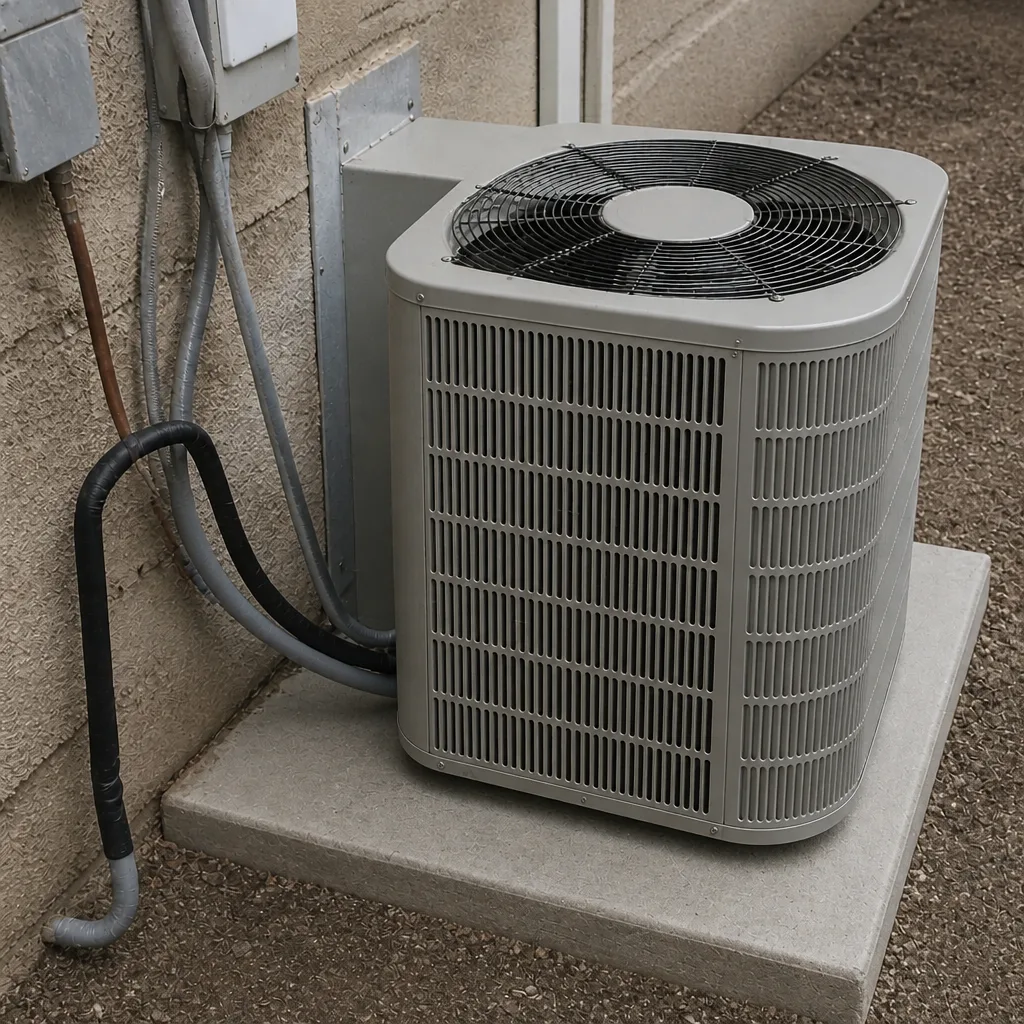 After
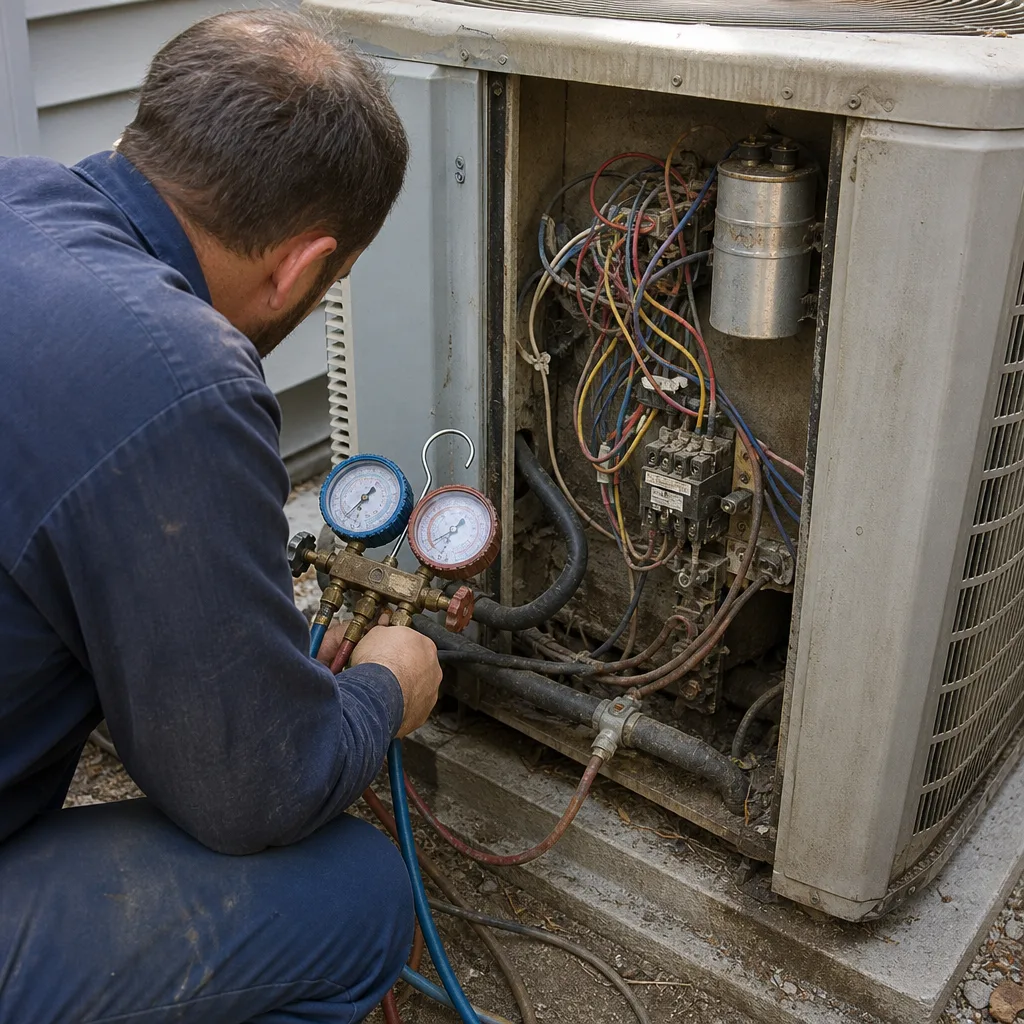 Before
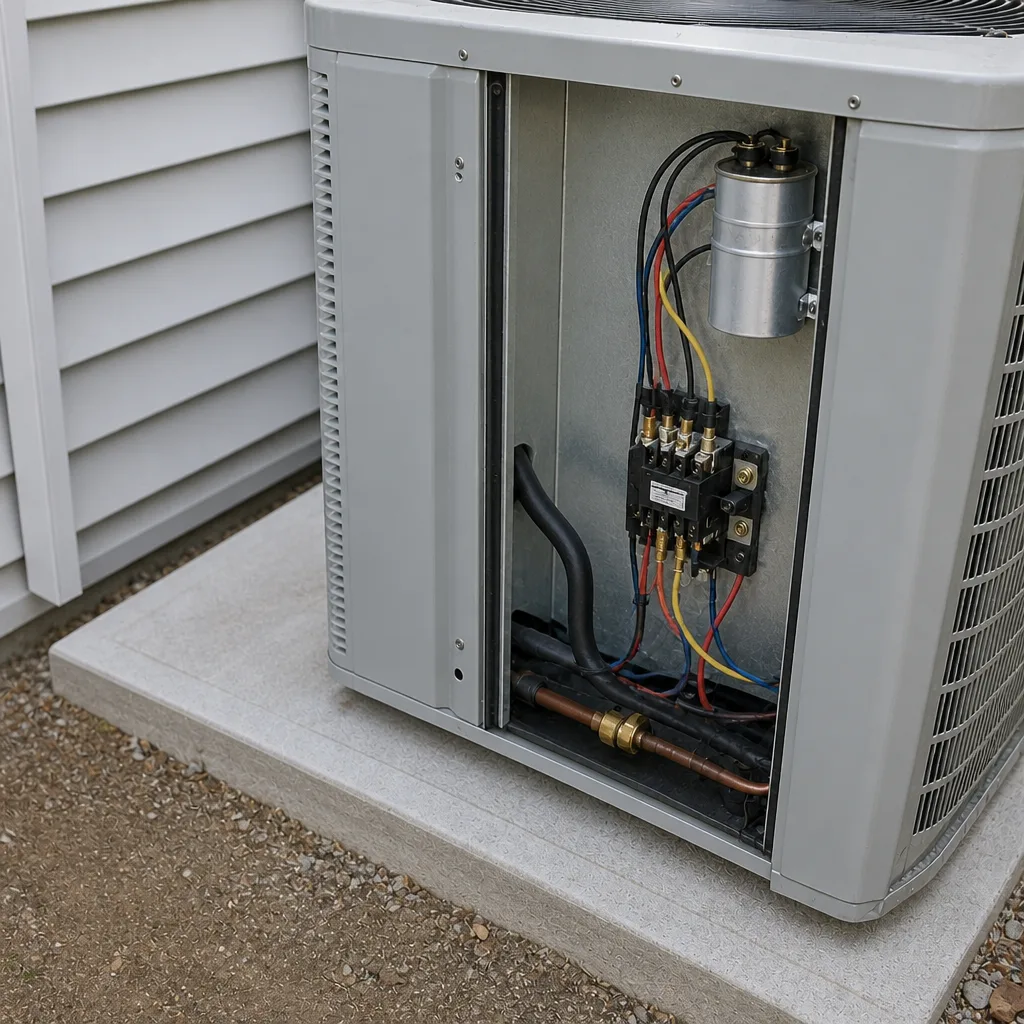 After
When to Call a Professional
Some jobs a handy homeowner can handle. An AC system isn’t one of them. High-voltage capacitors hold a charge even after power is off, refrigerant handling is regulated, and gas or electrical work needs a licensed pro. Call us when your system won’t cool, when you smell burning at the disconnect, when the breaker trips repeatedly, when you see ice on the indoor coil, or when you’re hearing a noise that wasn’t there last month. Call us before signing an install quote you’re unsure about, too. We offer a free second opinion on any written estimate, and there’s no trip charge inside the county. If you’re in Enterprise, we can usually get out same-day for emergency calls and give you a real timeline instead of a sales one. For heat pump and mini-split work, that’s a separate scope and we’ll tell you so upfront. Ray’s Heating & Air Enterprise offers free estimates in Enterprise. Call (844) 455-2034.
Frequently Asked Questions
A straight system replacement usually takes one day on site, while a permitted install with an electrical panel upgrade or special-order equipment can run two to three days. The permit through Clark County is often the longest part of the whole timeline, and it’s worth asking about before you sign. Call (844) 455-2034 for a written estimate and a real install date.
Most common repairs, like a capacitor or contactor, can be handled same-day if the part is on the truck or at a local distributor. If the fix needs a special-order part, you’re looking at several days, and we’ll tell you upfront which one it is. Call (844) 455-2034 to start with a real diagnosis.
Three-day installs almost always come down to something that wasn’t checked upfront: a permit running long, an electrical panel that needs upgrade, a special-order unit, or ductwork that needs rework once the old system comes out. When we quote an install, we look at all of it before we give you a number. Call (844) 455-2034 to schedule a site visit and get an honest timeline.
Yes, a like-for-like replacement generally needs a permit pulled through Clark County, and that’s true for most install work. It adds a few business days to a couple of weeks depending on the season, and it’s the most common reason install timelines stretch. We handle the permit for you as part of the install. Call (844) 455-2034 to talk through your project.
Then the electrical work has to happen before the AC install, and that adds time and cost. Newer high-efficiency units sometimes draw less, which helps, but a maxed-out or aging panel still needs attention. It’s a licensed electrician task, not a shortcut. We check the panel before quoting an install so there are no surprises on install morning. Call (844) 455-2034 to get the check scheduled.
Ask for readings, ask about the permit, ask whether the part is on the truck or special-order, and ask whether the panel was checked. A realistic quote has a range and explains what could move it. If the answers are vague or the timeline is suspiciously fast, get a second opinion. We offer a free second opinion on any written estimate. Call (844) 455-2034.
The Bottom Line
The honest answer to “how long will this take” hinges on three things most companies won’t spell out before you sign: parts availability in the Las Vegas Valley, whether your electrical panel can actually run the new unit, and how closely the person quoting the job has looked at what they’re quoting. Repairs run 1 to 3 hours for most common failures. Installations run one day on site when everything lines up, and stretch to two or three days when permits, panels, or special-order equipment enter the picture. The quickest way to a realistic timeline is a company that looks at the panel and the attic before quoting. Ray’s Heating & Air Enterprise is locally owned and owner-operated in Enterprise, and every job carries the 90-Day Done Right Promise in writing. Our technicians have up to 24 years of experience. If you want a straight answer on your project, reach out through Ray’s Heating & Air Enterprise home and we’ll come look before we quote.
Contact
Call Ray’s Heating & Air Enterprise at (844) 455-2034 for a free estimate on AC repair or installation in Enterprise. Live person answers every call, around the clock, including the owner himself. No trip charge inside the county, free second opinion on any written estimate, and $40 off any repair over $200. For heat pump and mini-split work, we’ll scope it separately and give you a real timeline before you commit. Ask anyone on your street.
Written by the team at Ray’s Heating & Air Enterprise.