
Last updated November 17, 2026
 Heat pumps
 AC repair
 Furnace & heating
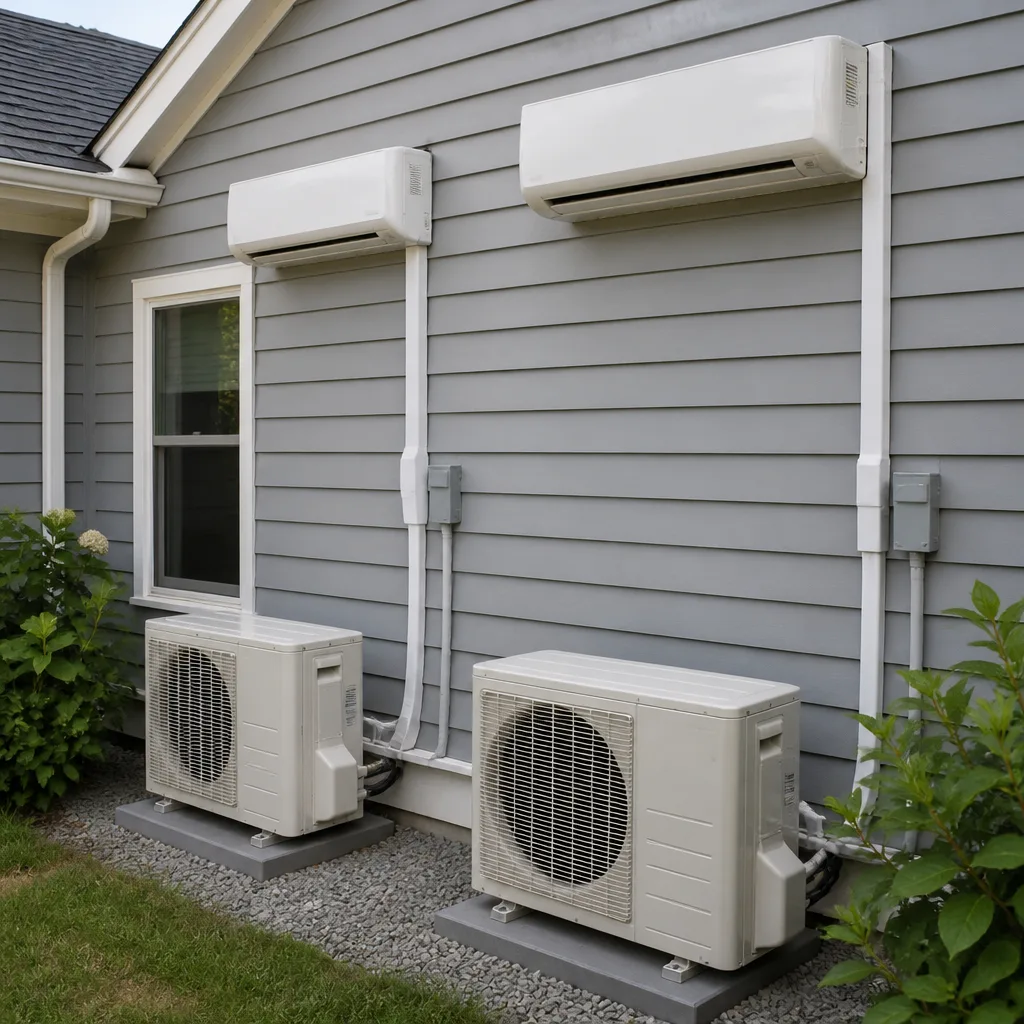 Ductless mini splits
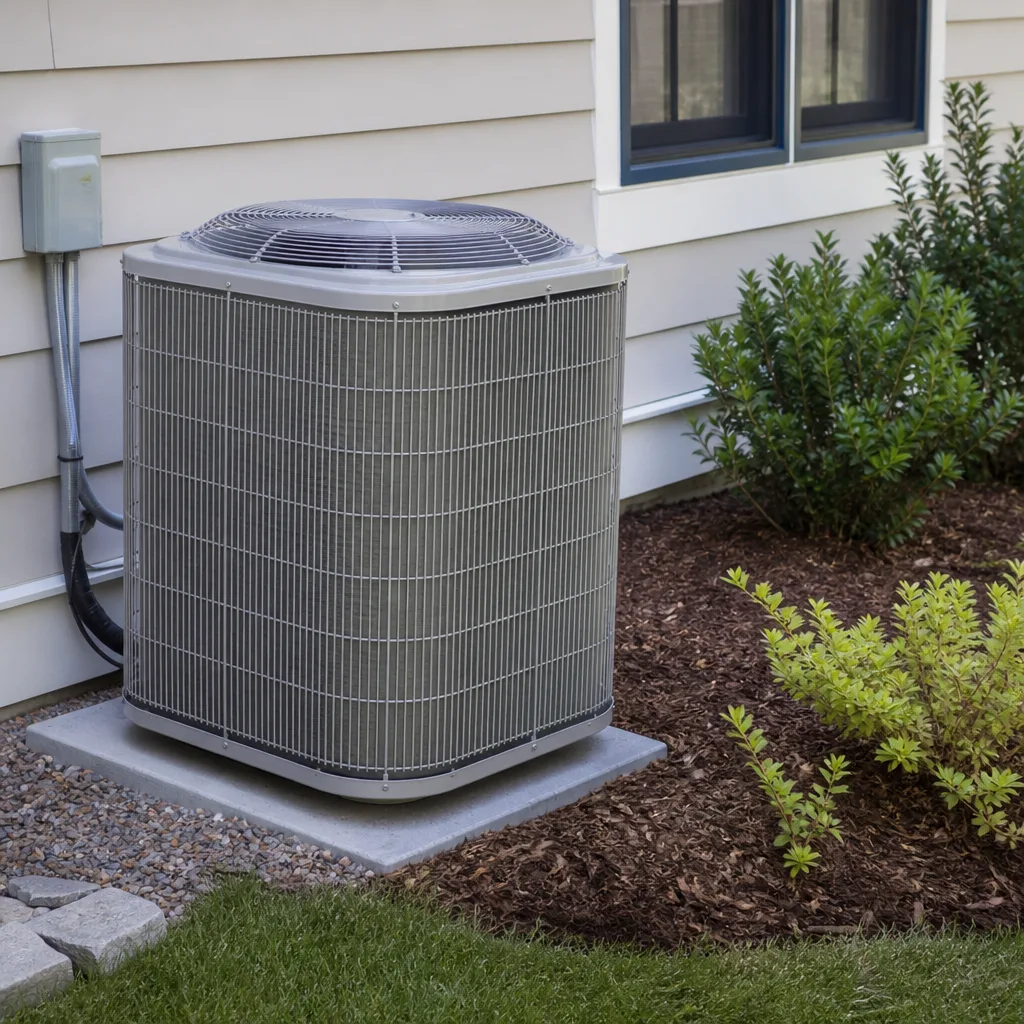 Carrier
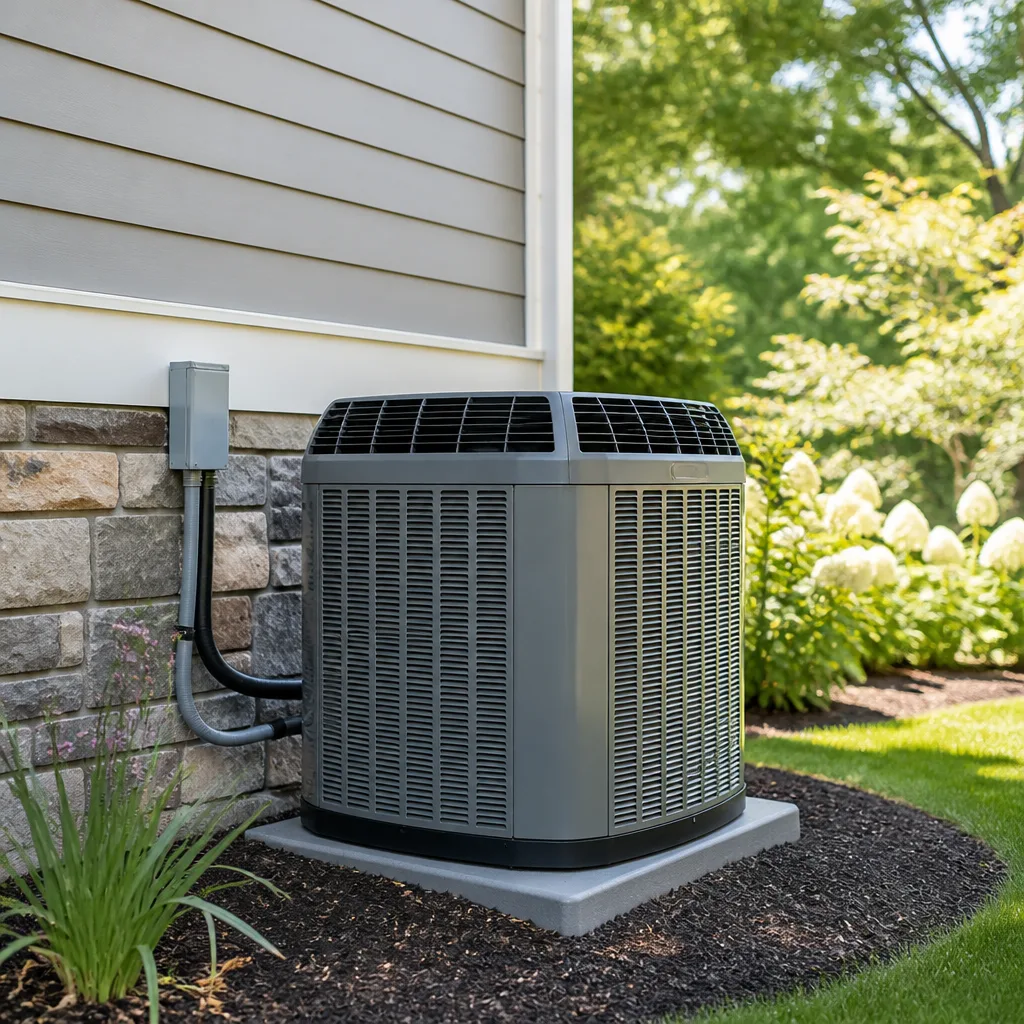 Trane
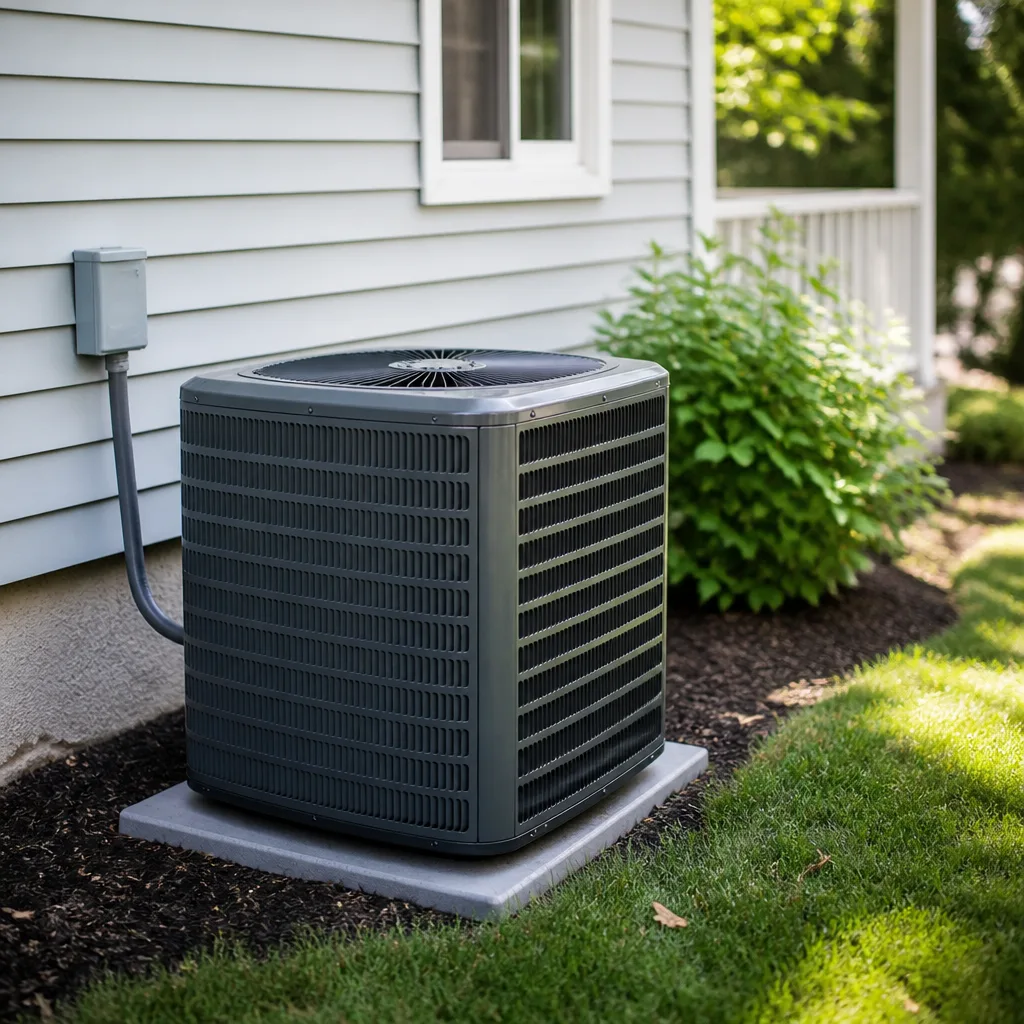 Goodman
Seasonal tune-up and full diagnostic on your Carrier, Trane, or Goodman system - readings shown to you before any repair is proposed
Diagnosis first, numbers second - you approve the repair price before a single part goes in.
Get your free estimateHeat Pump & Mini Split Troubleshooting: Common Problems and How to Fix Them
That blinking light on your mini split indoor unit isn’t a malfunction. It’s the system trying to tell you something specific, and in our experience roughly 40% of the time the fix is a dirty filter or a tripped breaker, not a service call. The codes on these units are designed to protect the equipment, not to inform the homeowner, so a light that flashes in a pattern you can’t read is actually the machine doing its job. What you need is a translation. This guide takes the most common error code patterns and symptoms we see in Enterprise and turns them into plain-language triage, so you know whether to grab a step stool or grab your phone.
Quick Answer
Most mini split and heat pump problems fall into five buckets: airflow, power, refrigerant, the reversing valve, or a sensor fault. Start by resetting the unit at the breaker, waiting 10 minutes, and cleaning the filter. If the fault returns after that, the system is telling you the problem lives deeper than the homeowner can safely reach, and it’s time for a proper diagnostic.
Styles & brands we work with
- AC repair
- Furnace & heating
- Heat pumps
- Ductless mini splits
- Carrier
- Trane
- Goodman
Table of Contents
- How to Read a Mini Split Error Code Without Calling Anyone
- The Five Error Code Patterns That Cover Most Failures
- The Unit Blows Air But Won’t Heat or Cool
- Why a Mini Split Freezes Up in Summer
- The Outdoor Fan Runs But No Air Moves Indoors
- The Reset-and-Wait Decision Tree
- Heat Pump Specific Symptoms in Desert Heat
- What Actually Prevents These Failures
How to Read a Mini Split Error Code Without Calling Anyone
Almost every manufacturer uses the same underlying logic for error codes, even though the letter or number on the display changes. Goodman, Rheem, York, and Daikin all follow the same pattern families. The code itself is rarely brand-specific in meaning; it’s telling you which sensor or protection circuit has tripped.
Here’s the translation that matters. Look at the display, then look at the list below. The code letters don’t matter as much as what category of problem the system is flagging.
- Communication faults (often E1, E6, or a flashing number sequence): the indoor and outdoor units aren’t talking. Usually a loose wire, a power interruption, or a control board issue.
- Sensor faults (often E2, E3, or a code tied to a specific temperature reading): one of the thermistors or the room temperature sensor is reading out of range. Sometimes just dirty, sometimes failed.
- Refrigerant or pressure faults (often P-codes or specific letter combinations): the system senses low pressure or a temperature mismatch it can’t reconcile. This one always gets a professional.
- Drain or float switch faults (often F-codes): water isn’t draining correctly, and the unit shut down to prevent a mess. Usually a clogged condensate line.
- Overcurrent or overload faults: the compressor is drawing too much. Could be a failing capacitor, could be something worse.
The pattern here is that three of these five categories are things you can check on your own. Two of them mean the system is protecting itself from damage, and you should stop and call. In our experience across Enterprise, our technicians have up to 24 years of experience reading these same codes, and the pattern families haven’t changed much in that time even as the screens got fancier.
The Five Error Code Patterns That Cover Most Failures
When we get called out on a mini split that isn’t working, the first thing the person at your door does is read the code and then verify what the code is actually reporting. Here’s what each pattern means inside the unit, and what you can do about it. Note that our techs test the capacitor before anyone says the word compressor, and that’s a discipline worth knowing about before a stranger with a clipboard tells you the whole thing is dead.
- Communication fault: The indoor unit and the outdoor unit lost their handshake. Power-cycle the whole system at the breaker, wait 10 minutes, and turn it back on. If the code reappears, it’s a wiring or board problem.
- Sensor fault: A temperature sensor is reading wrong. Sometimes dust has coated the indoor sensor. Clean the filter and the coil fins closest to the sensor, and see if it clears. If not, the sensor or the board needs testing with a meter.
- Refrigerant/pressure fault: The system detects a leak or a low-charge condition. Do not reset and keep running it. Running a heat pump low on refrigerant is how a $300 repair becomes a compressor replacement. Call for a refrigerant leak check.
- Drain fault: The condensate line is clogged. A wet/dry vacuum on the outdoor drain line end can sometimes clear it. If the line runs to a pump or into a wall, don’t force it.
- Overload fault: The compressor is pulling too much current. This is often a failing run capacitor, which is a normal wear item. It’s an inexpensive part and a fast repair. But it’s also a live-capacitor test, so leave the meter work to someone qualified.
If a code clears after a reset and stays gone for a week, it was likely a power blip or a nuisance trip. If it comes back, note the exact code and call it in. A specific code in hand saves diagnostic time, and since our trip charge is waived inside our own county, giving us that detail helps us bring the right part on the first visit.
The Unit Blows Air But Won’t Heat or Cool
This is the most common complaint we hear and the one most likely to be misdiagnosed by a rotating crew that doesn’t know your system. A unit that blows air but the air isn’t conditioned is almost always one of two things: refrigerant charge or the reversing valve. Neither is a homeowner repair.
Here’s how to tell the difference in practical terms. If the outdoor unit is running, the compressor is humming, and the air from the indoor head is room temperature, the compressor is likely working but the refrigerant isn’t transferring heat. That’s a charge or a valve problem. In heating mode, if it blows cool air while the outdoor unit is running, it may be a reversing valve stuck in one position, or the defrost cycle getting stuck.
On a heat pump, the reversing valve is the part that switches the system between heating and cooling. When it fails, the unit can run all day and never move heat in the direction you asked for. It’s a mechanical part that fails from time to time, and no amount of cleaning the filter will fix it.
What you can check before you call:
- The outdoor unit has power and the fan is spinning.
- The indoor filter is clean and the indoor coil fins aren’t clogged.
- You’ve tried the reset and waited the full 10 minutes.
- The thermostat or remote is set to the right mode and temperature.
If all four are true and the air is still the wrong temperature, the system needs a refrigerant pressure test. That’s a job for a professional, and it’s best done by someone who will show you the readings before they quote you a number. Our Heat Pump & Mini Split in Enterprise page covers what a proper diagnostic appointment includes.
Why a Mini Split Freezes Up in Summer
An iced-over indoor coil in the middle of an Enterprise summer looks alarming, but it’s usually an airflow problem before it’s a refrigerant problem. The coil needs a steady flow of warm air across it to transfer heat. When airflow drops, the coil cools below freezing and frost builds up.
Rank the probable causes in this order:
- Dirty filter or blocked return air. The single most common cause. A clogged filter chokes the airflow, and the coil frosts. Clean or replace it and see if the icing stops.
- Blocked indoor coil fins. Dust, pet hair, or lint packs into the fins. Same effect as a dirty filter.
- Low refrigerant charge. A leak causes the coil to get colder than it should. This one is a refrigerant problem, and it needs a leak check and repair.
The tell between an airflow problem and a refrigerant problem: airflow fixes usually stop the icing entirely after one good cleaning and a day of running. A refrigerant leak will ice up again in short order, often within hours, even with a clean filter. If it keeps freezing, stop resetting it and get a leak check.
Desert climate makes this worse. The dust and fine grit that blow through Enterprise in a dry spring find their way into every filter and coil. Systems here need their filters changed more often than a system in a humid climate, and the outdoor coil needs a rinse before the cooling season starts. Families on the older streets near the center of town call us every June with the same froze-up story, and nine times out of ten it’s the filter.
The Outdoor Fan Runs But No Air Moves Indoors
This scenario confuses people because the outdoor unit sounds normal. The fan is spinning, the compressor is running, and yet nothing comes out of the indoor head. The system is alive but the indoor blower isn’t participating.
The probable causes, in order of how often we see them:
- The indoor blower motor has failed. The outdoor unit is still running because the two are on separate circuits, but the indoor fan belts, bearing, or motor is done.
- The indoor control board isn’t sending the fan signal. Communication issue that stops the blower command.
- A tripped float switch or drain fault. Many units shut down the indoor fan when the float switch trips to keep water from spilling. Check for a blinking drain code.
- Blower wheel or duct restriction. Rare on a mini split, but possible if the indoor head has a blocked airflow path.
If the outdoor unit is running and the indoor head is silent, turn the system off at the breaker and call. Running the outdoor unit with no indoor airflow can freeze the coil solid and stress the compressor. That’s a small repair becoming a large one, and it’s exactly the kind of thing our 90-Day Done Right Promise in writing is there to make sure gets fixed correctly the first time.
The Reset-and-Wait Decision Tree
Most homeowners don’t need a service call. They need a way to rule out the cheap, safe causes before paying for a diagnostic. Here’s the decision tree we walk people through on the phone at the shop, and it’s the same one to run before you call anybody, in Enterprise or anywhere else.
- Reset the unit. Turn the system off at the thermostat or remote, then off at the breaker for 10 full minutes. Ten minutes is not a guess; the control board needs that long to fully discharge. Turn it back on and see if the fault clears.
- Check three things. Clean or replace the filter. Verify the breaker didn’t trip again. Confirm the remote or thermostat is in the right mode and set to a temperature that will call for the system to run.
- Watch the 10-minute window after reset. If the unit runs normally for 10 minutes and stays running, you’ve likely cleared a nuisance fault. Watch it for a day.
- If the code returns or the air is the wrong temperature, call. Do not reset it a fourth time. A fault that keeps returning is a real fault, and every reset you run on a low-charge or frozen system does more damage.
This sequence is why we offer a free second opinion on any written estimate. If someone shows up and tells you the compressor is gone before they’ve tested the capacitor or verified the code, that’s a red flag. The right first move is always readings first, numbers second, and you should see both before anyone touches a wrench.
Heat Pump Specific Symptoms in Desert Heat
A heat pump in Enterprise is asked to do something most heat pumps in the country don’t do: run hard in 110-degree summer heat and then flip to heating on a 35-degree winter night. That range pushes the equipment, and it means a few symptoms show up here more than in milder climates.
When the outdoor temperature climbs past 100 degrees, the system’s high-pressure switch may trip as protection. That’s why a heat pump that ran fine in the morning can shut down mid-afternoon on a hot day and then start fine the next morning. Don’t call it a dead compressor. It may be a high-pressure trip from a dirty outdoor coil, a refrigerant overcharge, or restricted airflow, and those are each a separate, fixable issue.
On the heating side, a heat pump in defrost mode can look broken: the outdoor fan stops, the system makes a whooshing sound, and steam comes off the outdoor coil. That’s normal. If it stays in defrost for more than 10 minutes or the indoor head blows cold air for a long stretch, that’s a defrost control or reversing valve fault worth a look.
One more local fact worth knowing: inverters and control boards on modern mini splits are sensitive to power quality. If you’re on a rural co-op line or you’ve had a couple of brownouts, a surge protector on the disconnect is a smart, cheap addition. Our Heating & Furnace in Enterprise page covers the heating-side problems in more depth if your issue shows up in the cold months.
What Actually Prevents These Failures
Nearly every problem in this guide traces back to three maintenance tasks. None of them are glamorous, and all of them are cheaper than a repair.
- Change the filter on a real schedule. Monthly during heavy use. In dusty Enterprise months, more often. This alone prevents most freeze-ups and a good share of overload faults.
- Rinse the outdoor coil before summer. A garden hose on low pressure, fins only. A clogged outdoor coil is the number one cause of high-pressure shutdowns in desert heat.
- Get an annual check that includes a real capacitor test and a refrigerant reading. Not a look-and-wave. The person at your door should show you the readings, and you should be able to read them before any work begins.
What separates a good maintenance visit from a bad one is what happens when the tech finds something. Ours carries a written report of what was actually found, and nobody is paid on what they sell you. That matters. It’s the difference between an honest “your filter was the problem, we cleaned it, you’re good” and a pitch for equipment you didn’t come in for.
Common Mistakes to Avoid
- Resetting the breaker a fifth time. Each reset on a system that’s low on refrigerant or has a stuck valve runs it harder. Three resets with a 10-minute wait is the limit. After that, the fault is real.
- Ignoring the exact code. Write down the letters and numbers on the display before you reset. That code is the cheapest diagnostic tool you have, and losing it costs you time on the repair.
- Assuming the compressor is dead. A failed run capacitor is a common, inexpensive fix and it masquerades as a dead compressor. If nobody has tested the capacitor, nobody knows what’s wrong yet.
- Cleaning an iced coil before it thaws. Let the ice melt with the system off. Bending the fins or scraping the coil damages it further and turns a thaw into a replacement.
- Trusting a phone quote as a firm price. In Enterprise, a quote given before the person at your door sees the unit and reads the code is a guess, and guesses go up at the door. Upfront pricing means the readings come first.
- Skipping the filter because the weather has been mild. Dust builds whether or not the system is running. The filter loads up in the off-season and then chokes airflow on the first hot day.
- Hiring a crew you can’t get back. If the person who did the work can’t come back and the name on the invoice isn’t the name on the truck, the warranty is worth nothing. Continuity matters, and it’s why you should know who you’re calling.
See the difference
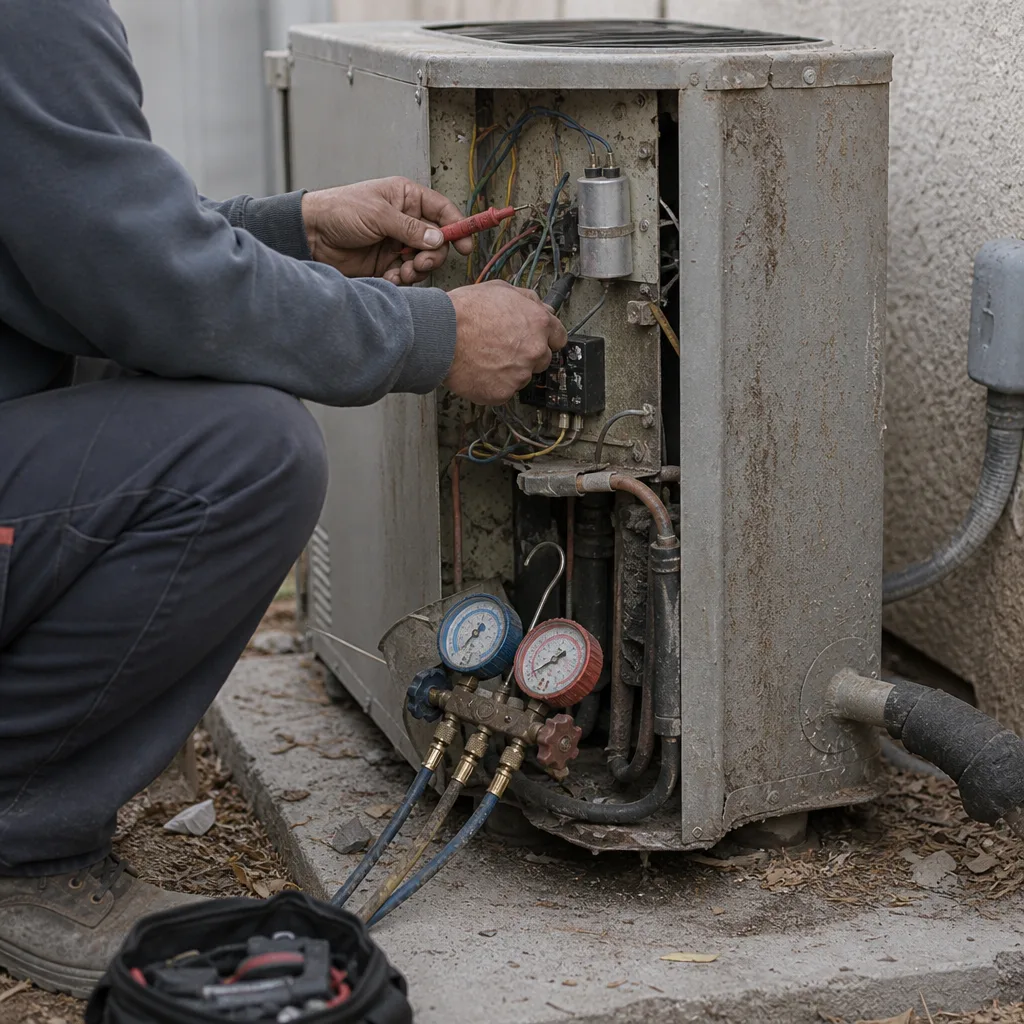 Before
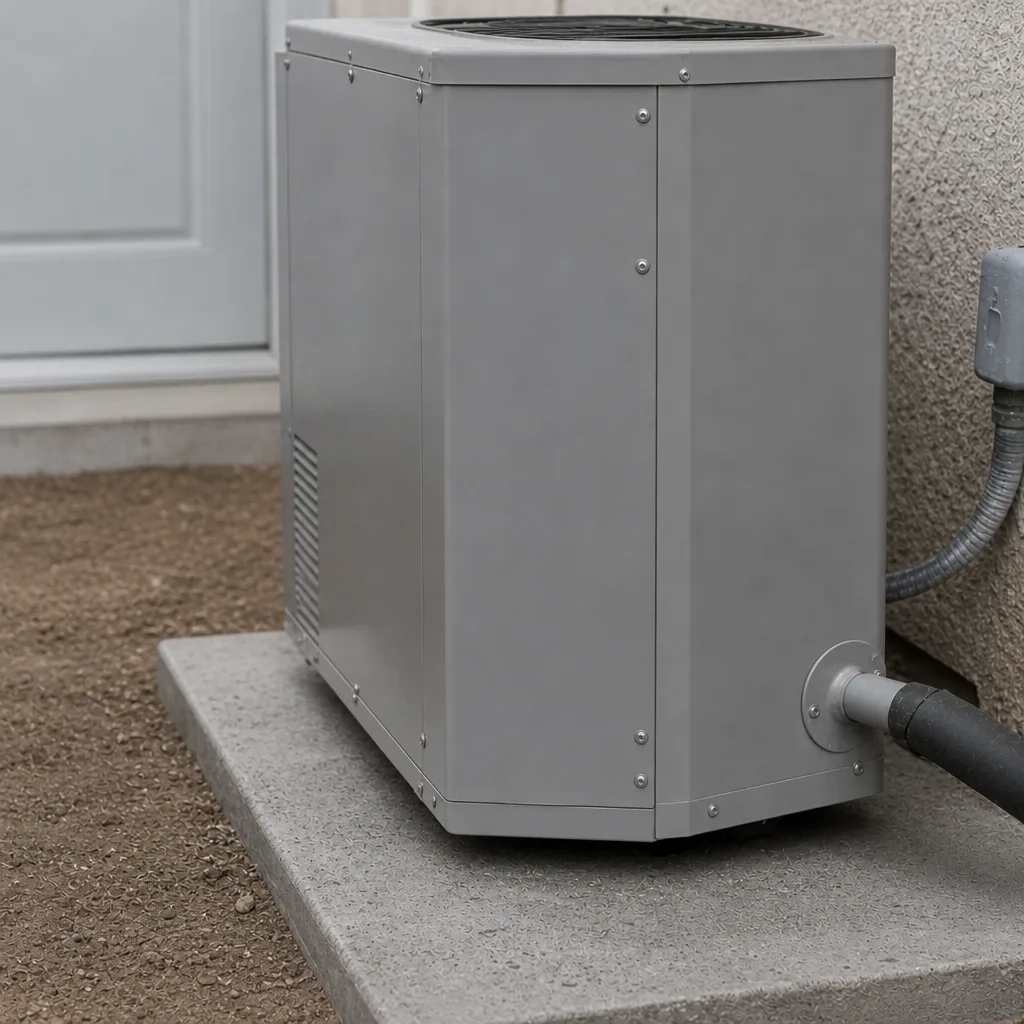 After
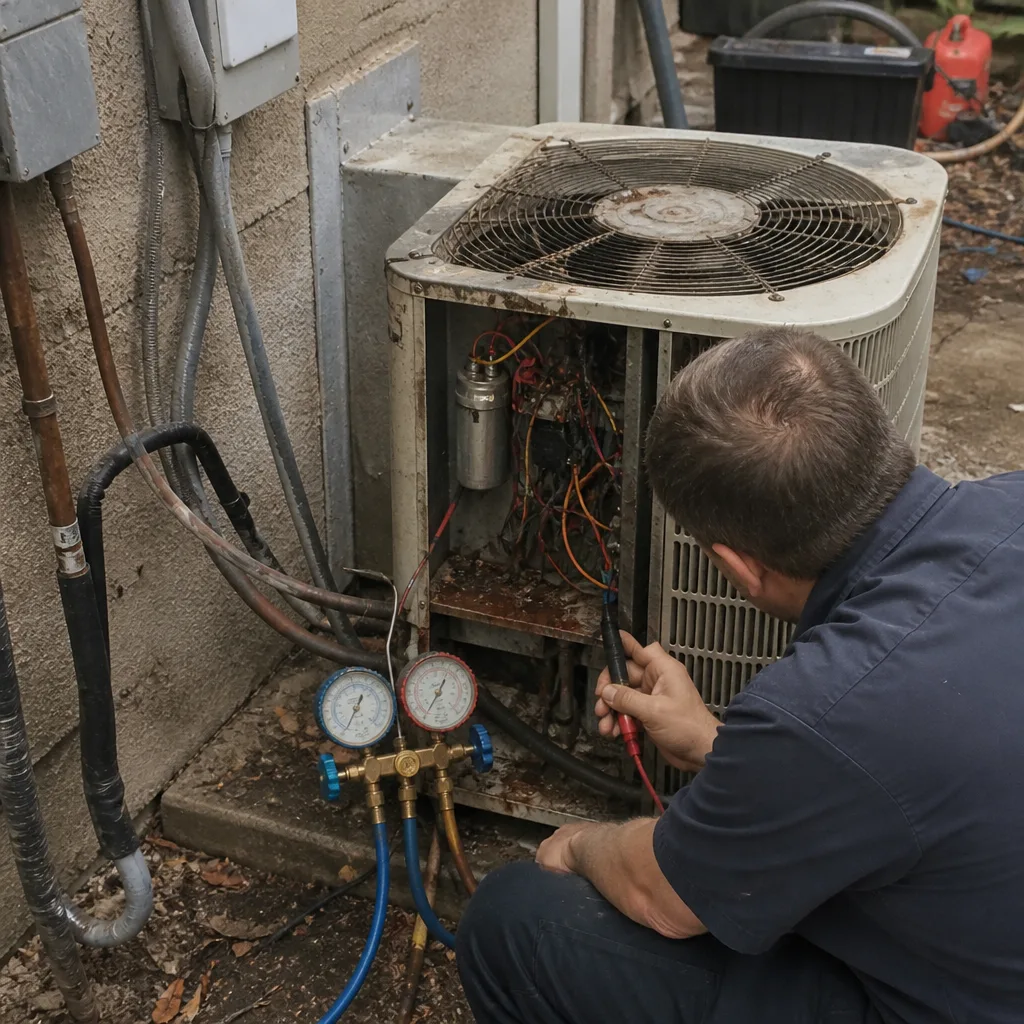 Before
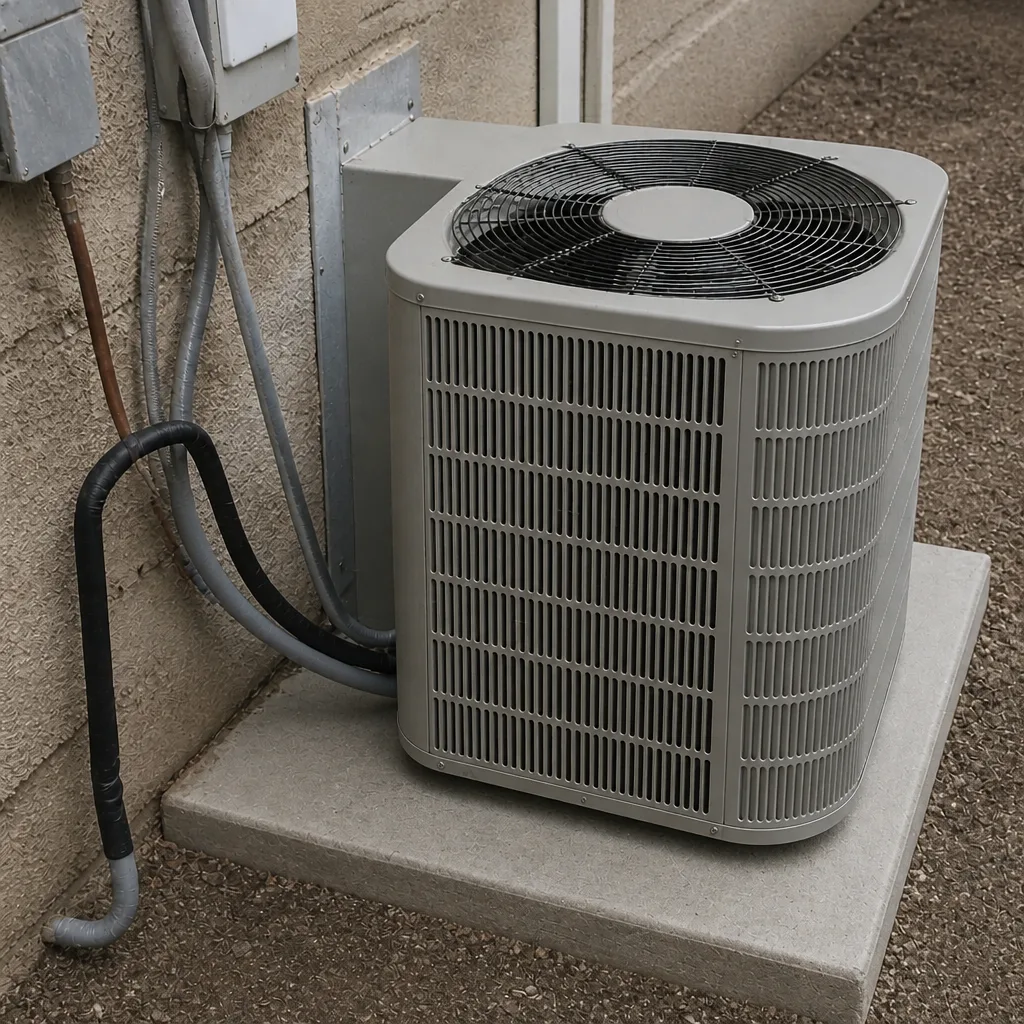 After
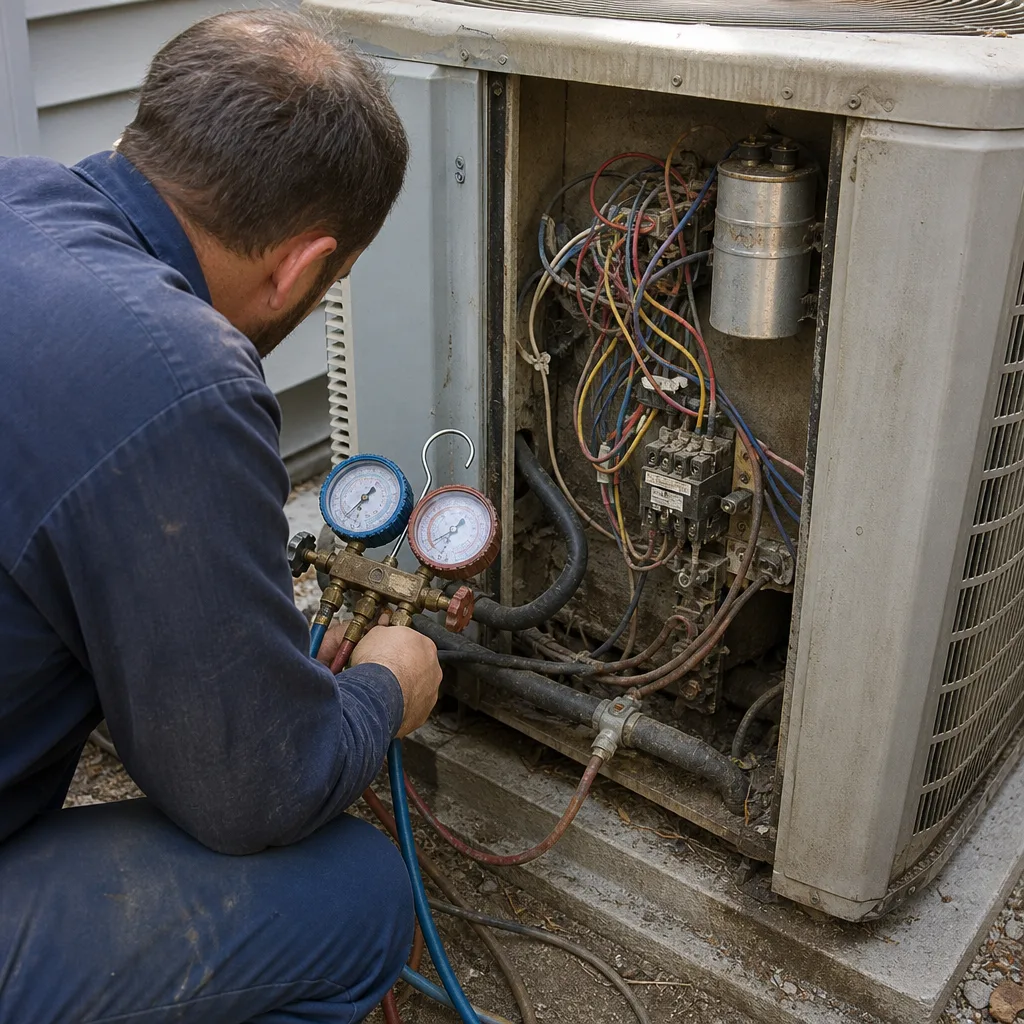 Before
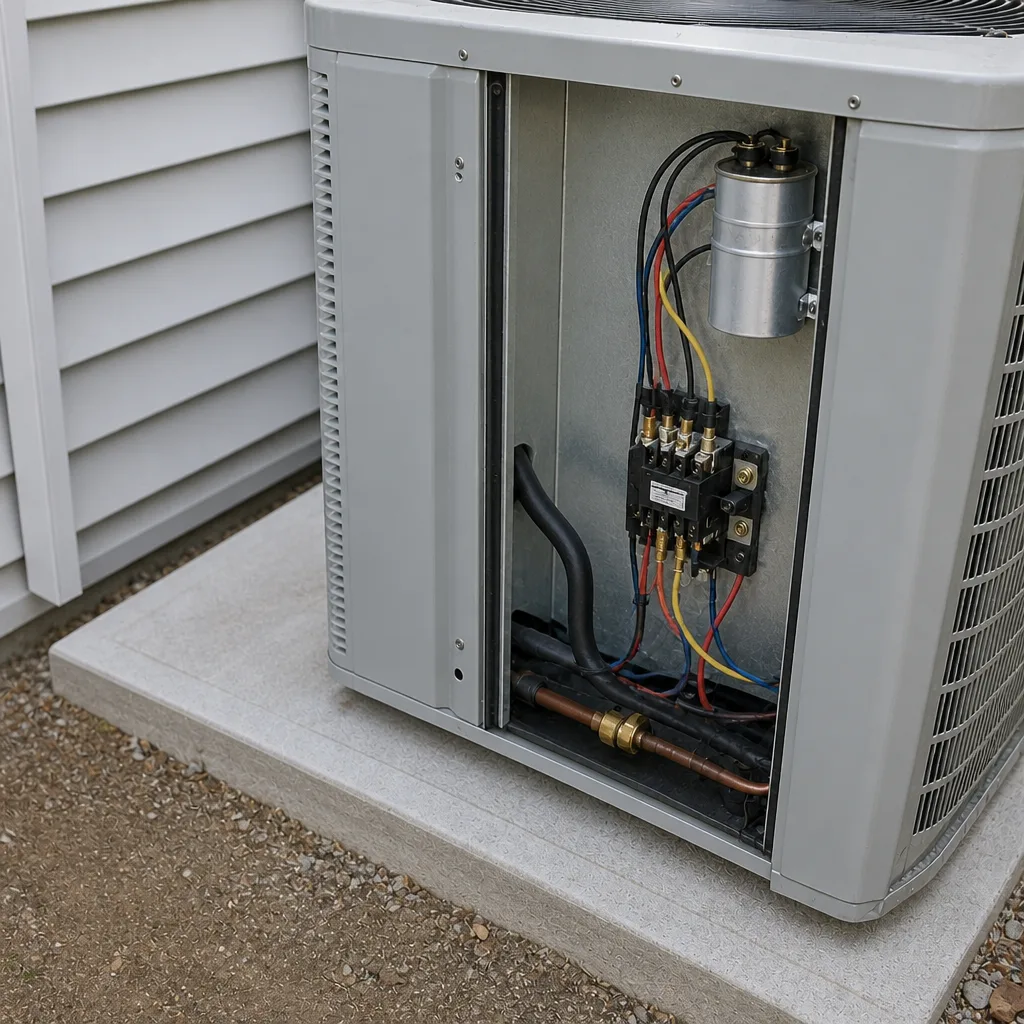 After
When to Call a Professional
Call when the code returns after a full reset and a clean filter. Call when the unit blows air at the wrong temperature, when the indoor head is silent while the outdoor unit runs, or when the system keeps freezing up within hours. Call if you smell refrigerant, hear a compressor that’s louder than normal, or see ice on the lines. Call any time the problem lands in the refrigerant, reversing valve, or overload category, because those are the ones where a homeowner reset turns a small repair into a big one.
For everything else, the reset-and-wait sequence is safe and worth trying first. If you’re in Enterprise and the fault comes back, Ray’s Heating & Air Enterprise offers free estimates and a free second opinion on any written estimate. Call (844) 455-2034 and a live person picks up, day or night.
Frequently Asked Questions
The light is a status indicator, not necessarily a fault. A steady light usually means the unit has power but isn’t being told to run. Check the thermostat or remote first, confirm the mode and set temperature, and reset at the breaker if the display is blinking.
If the light blinks and the code returns after a reset, note the code and call (844) 455-2034. Estimates are free.
Sometimes. Communication and sensor codes clear with a reset and a filter cleaning, and drain clogs often clear with a wet/dry vacuum. Refrigerant codes, pressure faults, and overload faults should not be reset repeatedly. Those need a technician with a manifold gauge and a meter. Call (844) 455-2034 if you’re not sure which category your code falls into.
Diagnostic pricing depends on the system and the symptom, and you deserve a specific number before anyone starts. What you should expect is this: readings first, numbers second, and you see both before any work begins. We waive the trip charge inside our own county, and we give a free second opinion on any written estimate. Call (844) 455-2034 for exact numbers on your unit.
Summer icing is an airflow problem first and a refrigerant problem second. Warm air can’t get across a choked coil, so the coil frosts. Winter icing on a heat pump is usually defrost mode working normally. If it ices in summer and stays iced after a filter change, get a refrigerant leak check.
The light itself isn’t a hazard. What can be dangerous is continuing to reset a unit that’s low on refrigerant or has a failing capacitor. Running a system with a real fault can turn a small repair into a compressor replacement. The blinking light is the system protecting itself. Listen to it.
Yes. We service Goodman, Rheem, York, Daikin, and every other major brand. Our technicians have up to 24 years of experience and every job carries the 90-Day Done Right Promise in writing. One call brings Ray back if the work isn’t right. Call (844) 455-2034 for a free estimate.
The Bottom Line
The blinking light on your mini split is a translation problem, not usually a catastrophe. Read the code by pattern, run the reset-and-wait sequence once, clean the filter, and hold the line at three resets. Airflow, power, refrigerant, the reversing valve, and sensor faults account for nearly everything, and only two of those five are safe to touch on your own. Desert heat and dust in Enterprise push these systems harder than most, so filter changes and an outdoor coil rinse go a long way. When the code comes back, call (844) 455-2034. A live person answers, any hour, and we’ll show you the readings before we quote the repair.
If you’re weighing repair against replacement on a heat pump or mini split, our AC Repair & Installation in Enterprise page walks through the math. And if you want to see everything we do in one place, start at the Ray’s Heating & Air Enterprise home page.
Call (844) 455-2034 for a free estimate. Ray’s Heating & Air Enterprise is locally owned and owner-operated, we answer the phone around the clock, and we put it in writing.
Written by the team at Ray’s Heating & Air Enterprise.