
Last updated November 17, 2026
 Heat pumps
 AC repair
 Furnace & heating
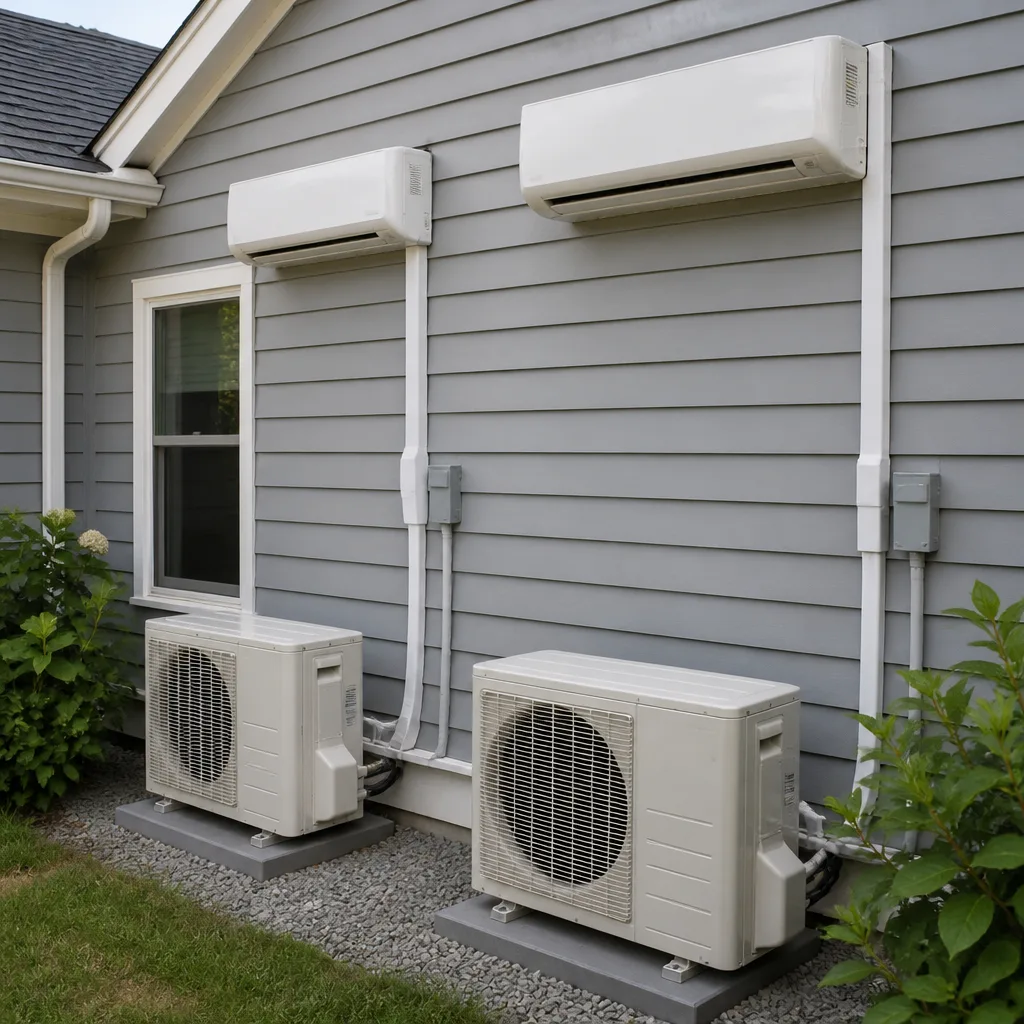 Ductless mini splits
 Carrier
 Trane
 Goodman
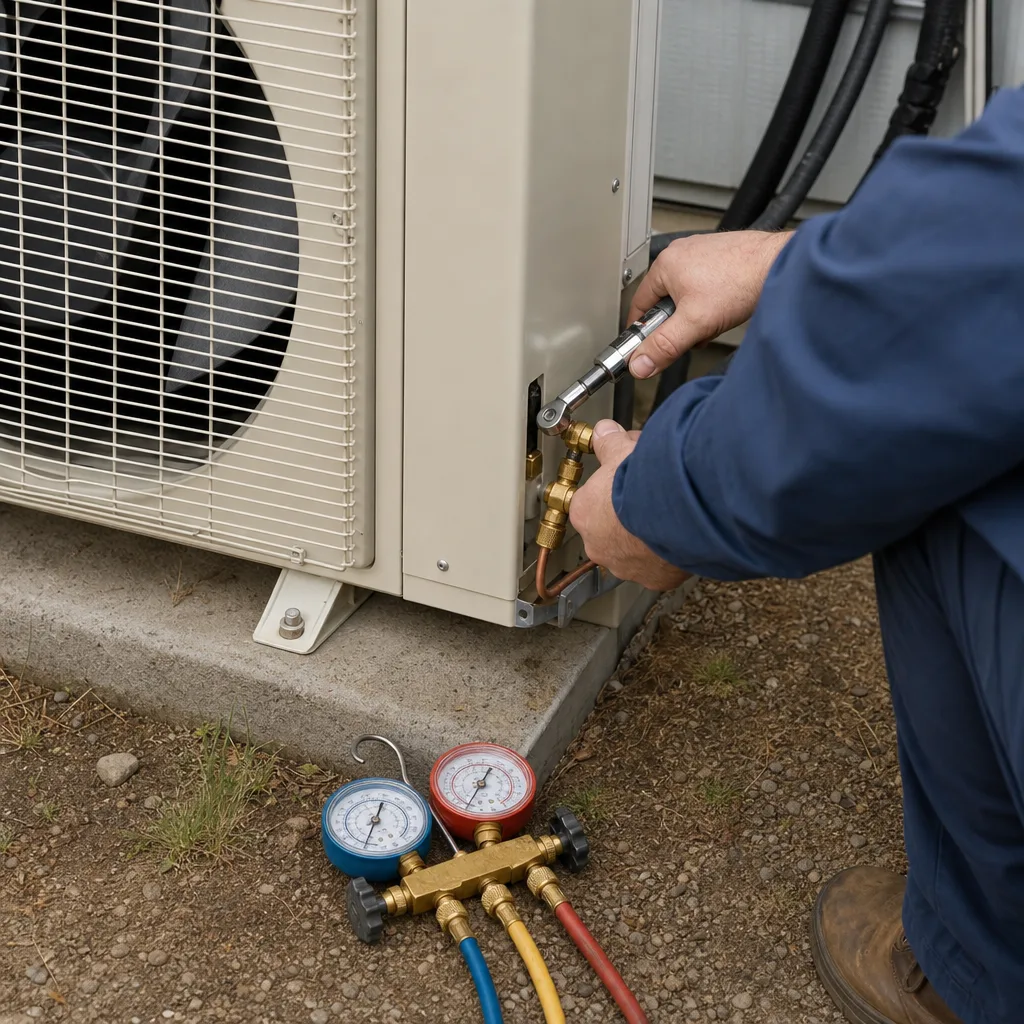
Seasonal tune-up and full diagnostic on your Carrier, Trane, or Goodman system - readings shown to you before any repair is proposed
Diagnosis first, numbers second - you approve the repair price before a single part goes in.
Get your free estimateHeat Pump & Mini Split Warning Signs Every Homeowner Should Know
Mini splits don’t fail the way furnaces do. A furnace will bang, rattle, and let you know something’s wrong. A mini split just gets quieter. It gets a little mustier. It gets a little weaker. And then one July night in Enterprise, when it’s 108 degrees at 9 p.m. and the house won’t cool below 84, you find out it’s been dying for months. We’ve seen it over and over: the warning signs were there, nobody recognized them, and a $200 repair turned into a $2,400 problem. Here’s what to watch for, why each symptom matters, and which ones you can wait on versus which ones need a call today.
Quick Answer
The most common mini split warning signs are a musty smell at startup (mold on the evaporator coil), ice on the indoor or outdoor unit (two completely different problems), weak airflow from the indoor head (usually a failing blower wheel or clogged coil), gurgling or mid-cycle clicking sounds (refrigerant or electrical), and a unit that runs nonstop without reaching setpoint (often low refrigerant or an undersized system). In Enterprise’s summer heat, that last one is almost never user error.
Styles & brands we work with
- AC repair
- Furnace & heating
- Heat pumps
- Ductless mini splits
- Carrier
- Trane
- Goodman
Table of Contents
- The musty smell at startup (and why it matters in desert climates)
- Ice on the indoor unit vs. ice on the outdoor unit
- Reduced airflow: the sign most homeowners miss
- Gurgling, clicking, and hissing: decoding the sounds
- Runs constantly but never reaches setpoint
- Short cycling and other heat pump-specific signs
- Common mistakes to avoid
- When to call a professional
The Musty Smell at Startup (and Why It Matters in Desert Climates)
If your mini split smells musty when it first kicks on, that’s not “just how it smells” – that’s mold growing on the evaporator coil, and running it another six months means you’re blowing that into the room your kid sleeps in. That’s the short version. Here’s the longer one.
The evaporator coil sits behind the filter inside the indoor head. Cold refrigerant runs through it, and condensation forms on the fins while the unit is cooling. In most of the country, that coil stays wet or dries slowly because the ambient air is humid. In Enterprise, our air is bone dry most of the year – except during monsoon season, when humidity spikes for weeks at a time and then crashes back down. That swing is the problem. The coil gets soaked during a monsoon stretch, then the dry air hits and the fan pushes warm dust and pollen across a wet surface. Mold and mildew get a foothold in that window, and once they’re on the coil they don’t leave on their own.
A musty smell at startup is the fuel for a real health concern. If you or anyone in the house has asthma, allergies, or a newborn, this isn’t a small thing. We’ve pulled indoor heads off the wall in Enterprise homes where the coil looked like a chia pet under a flashlight.
What to check before you call anyone:
- Wash the reusable filter. A clogged filter traps moisture and dust together and mimics the smell. If the smell survives a good filter wash, it’s on the coil.
- Look at the blower wheel. If it’s coated with dark fuzz, the coil likely is too.
- Ask how long it’s been happening. A smell that started this month usually means a quick coil cleaning. A smell that’s been there two summers usually means deeper work.
Cleaning an evaporator coil properly requires pulling the indoor head off the wall, containing the runoff, and treating the coil rather than just spraying a deodorizer on it. That’s a job for someone with the right equipment. If you want a system that runs clean year-round, our Heat Pump & Mini Split service in Enterprise covers coil cleaning and full diagnostics.
Ice on the Indoor Unit vs. Ice on the Outdoor Unit
Homeowners assume ice means the same thing wherever it shows up. It doesn’t. Ice on the indoor head and ice on the outdoor condenser are two completely different failures, and confusing them will send you down the wrong repair path.
Ice on the indoor unit
Frost or ice on the indoor coil almost always points to restricted airflow or low refrigerant. When the coil can’t get enough warm air moving across it (clogged filter, dirty coil, failing blower wheel), it drops below freezing and the condensation on the fins freezes. Low refrigerant does the same thing from the other direction: less pressure means lower coil temperature means ice. In Enterprise, we see the airflow version more often, partly because desert dust loads filters fast and partly because the filters in mini splits are small and easy to forget for a full season.
Ice on the outdoor unit
Ice on the outdoor unit is usually a defrost problem. Heat pumps run a defrost cycle in heating mode to melt frost off the outdoor coil. When that cycle fails (bad defrost sensor, bad reversing valve, bad control board), the frost builds up and doesn’t melt off. It gets worse every cold night until the unit looks like it’s wearing a fur coat. If you’re seeing a solid block of ice on the outdoor cabinet during the winter, don’t chip at it. Turn the system off and call. Chipping can puncture the coil, and a punctured coil is a much bigger bill than a defrost sensor.
What to do in either case:
- Turn the system off at the thermostat. Running a frozen system makes it worse and can damage the compressor.
- Note which unit is iced. Indoor or outdoor – the diagnostic path is completely different.
- Don’t chip, scrape, or pour hot water on anything. Coil fins bend and puncture easily.
- Call for service. This is a diagnostic issue, not a DIY fix.
Reduced Airflow: The Sign Most Homeowners Miss
When the air coming out of your mini split head feels weaker than it used to, most people blame “wind direction” on the louvers. Adjust the louver, move on, forget it. In our experience, airflow complaints that start subtle and get worse over a season are almost never about the louver. They’re about the blower wheel or the coil.
The blower wheel is the cylindrical fan that pushes air through the indoor head. Over time, the blades load up with dust, and dust on a blower wheel is like putting a hand towel over a box fan. The wheel spins just as fast, but it moves less air. On the same system, a clogged coil behind the wheel restricts flow from the other side. Both problems are invisible from the front because the intake grille hides the wheel.
What weak airflow looks like at the other end:
- Rooms that used to cool in 15 minutes now take an hour. Same unit, same setting, worse performance.
- The unit runs longer and longer. The system is trying to compensate for a restriction it can’t overcome.
- Cold air feels “close to the unit” and disappears fast. The throw distance shrinks noticeably.
- Higher electric bills in Enterprise winters and summers. A restricted system runs longer and works harder for a smaller result.
If you notice the change in airflow, catch it early. A blower wheel cleaning is a routine, affordable service. A blower motor that burns out from running against a restriction is a bigger repair. Same story for the coil: get it cleaned before it becomes a refrigerant issue.
Gurgling, Clicking, and Hissing: Decoding the Sounds
Mini splits are quiet by design – that’s part of why people buy them. When they start making noise, it’s telling you something specific. The tricky part is that not every sound is a problem. Here’s how to sort them.
Gurgling or whooshing
A soft gurgling sound right after startup or shutdown is normal – it’s refrigerant equalizing in the lines. But gurgling that keeps going during a cooling or heating cycle, especially with a whoosh or a bubbling noise from the wall unit, usually means the refrigerant charge is low or there’s air in the line set. Continued gurgling is a refrigerant issue, full stop.
Clicking at startup (normal) vs. clicking mid-cycle (not normal)
A single soft click when the unit kicks on is the contactor or relay engaging. That’s fine. Clicking that repeats during a running cycle, or a rapid clicking that goes on for a few seconds and then stops, points to a relay, control board, or capacitor failing. Rapid clicking with the fan running but no cooling is a classic sign that the compressor is trying to start and can’t. Turn the system off and get it looked at before the compressor really does fail.
High-pitched hissing
Hissing is refrigerant escaping. It might be a pinhole leak in a flare fitting, or a Schrader valve that’s starting to weep. Hissing usually comes with a slow loss of cooling over weeks or months. If you hear hissing plus you’ve noticed the system isn’t cooling like it used to, that’s a refrigerant leak. Call today. Refrigerant leaks don’t fix themselves, and running a system low on refrigerant will destroy the compressor eventually.
Rattling or buzzing
Usually loose panels, a fan blade out of balance, or debris caught in the outdoor unit. Less urgent than a leak, but worth checking before it causes mechanical damage.
Runs Constantly but Never Reaches Setpoint
You set the mini split to 72. It runs all afternoon. It never gets below 78. The house isn’t that hot, only 102 outside, and the unit is clearly running – you can hear it, you can feel it blowing. So why won’t it reach 72?
In Enterprise, this is almost never user error. Our summer heat is real, and it’s not uncommon to see afternoon highs of 105 to 110 in July and August. Air conditioning systems are sized for a design-day load, and once you’re above that load, they just can’t keep up. But if the system used to reach 72 on the same day of the year, and now it doesn’t, something changed – either the refrigerant charge, or the load on the system.
The two big causes:
- Low refrigerant charge. A small leak takes the system below its designed capacity, so it runs longer and produces less cooling. If the unit is only reaching 76 or 78 when it used to hit 72, this is your prime suspect.
- Undersized system or a change in the load. A new addition, extra windows, a skylight, or a house that’s been air-sealed tighter than it was before can push a system past its original design. We see this most in older Enterprise homes where a mini split was added for an addition without a load calculation being redone.
A simple test: check the air coming out of the indoor head with a thermometer at the vent. If the supply air is more than 18 to 20 degrees cooler than the return air, the system is producing cold air and might be sized short. If it’s cooler by only 10 or 12 degrees, the system isn’t producing what it should – likely a refrigerant or airflow problem. Either way, a proper diagnostic beats guessing. That’s exactly how we approach AC repair and installation in Enterprise: readings first, numbers second.
Short Cycling and Other Heat Pump-Specific Signs
Heat pumps share the mini split warning signs above, but they have a few extra failure modes that are worth knowing. Short cycling – the system turning on and off every few minutes – is one of the most expensive signs to ignore.
Short cycling
A heat pump that runs for two minutes and shuts off, then runs again, is either oversized for the space or has a control problem. Oversized systems were common in older installs, especially in Enterprise homes where an addition took a smaller heat pump off the calculations. A control problem (bad thermostat, bad pressure switch, low refrigerant) looks similar from the outside. Both are diagnostic calls. Running a short-cycling system quietly wastes money – the startup draw on a compressor is much higher than steady-state draw – and it wears the compressor out faster than anything else.
Heat pump stuck in one mode
If the heat pump is cooling in the winter or heating in the summer, the reversing valve is stuck or the control board has failed. That’s not a homeowner adjustment. Turn it off and call.
Aux heat stuck on in heating mode
If the “aux heat” or “emergency heat” indicator is on during mild weather, aux strips are running when they shouldn’t. In Enterprise winters, that can double your electric bill during a cold snap. It usually means the defrost cycle is running too long, the outdoor sensor is failing, or the thermostat is wired wrong.
Any of these three symptoms in Enterprise means it’s time for a real diagnostic. Ray’s Heating & Air’s Heating & Furnace service in Enterprise and heat pump side covers all of these.
Common Mistakes to Avoid
- Assuming the musty smell will go away. It won’t. Mold on an evaporator coil gets worse every season it’s left alone. Deal with it the first summer you notice it, before it spreads into the ductwork or the blower housing.
- Chip ice off the outdoor unit. Coil fins are thin aluminum. A screwdriver blade pops a hole right through them, and a punctured coil usually means a full replacement. Turn the system off and call.
- Adding refrigerant without finding the leak. Topping off a leaky system without finding the leak is a temporary patch. It’ll be low again next season, and the compressor takes damage every time it runs undercharged. Find the leak, fix the leak, then recharge.
- Skipping the filter for a full season. In Enterprise’s dusty summers, mini split filters load up fast. Two cleanings a season, minimum, and more if you live near an active construction area or a gravel road.
- Blaming “wind direction” for poor airflow. The louver angle changes how air is thrown, not how much air the unit moves. Weak airflow is almost always a blower wheel or coil issue, and it doesn’t fix itself.
- Ignoring short cycling in Enterprise’s shoulder months. A unit that short cycles in April and May will cost you in July and August. Get it diagnosed before summer hits, not during the first 110-degree week.
- Letting a fast, cheap repair become an expensive one. A capacitor test takes five minutes and costs almost nothing. Called two months later after the compressor has smoked, it’s a different number entirely. That’s why we test the capacitor before anyone says the word compressor.
When to Call a Professional
Some warning signs are a “get to it this week” situation, and some are a “call right now.” Call immediately if you smell burning, see visible ice on either unit, hear hissing from the indoor or outdoor system, see the system short cycling with no cooling, or notice voltage smell from the breaker panel. Those are the “turn it off and call” cases. Get on the schedule in the next few days for a persistent musty smell, decreasing airflow, gurgling that doesn’t stop, or a system that used to reach setpoint and doesn’t anymore. Ray’s Heating & Air Enterprise offers free estimates on any written estimate, and there’s no trip charge inside our own county. Call (844) 455-2034 and the phone gets answered by a live person – not a phone tree.
See the difference
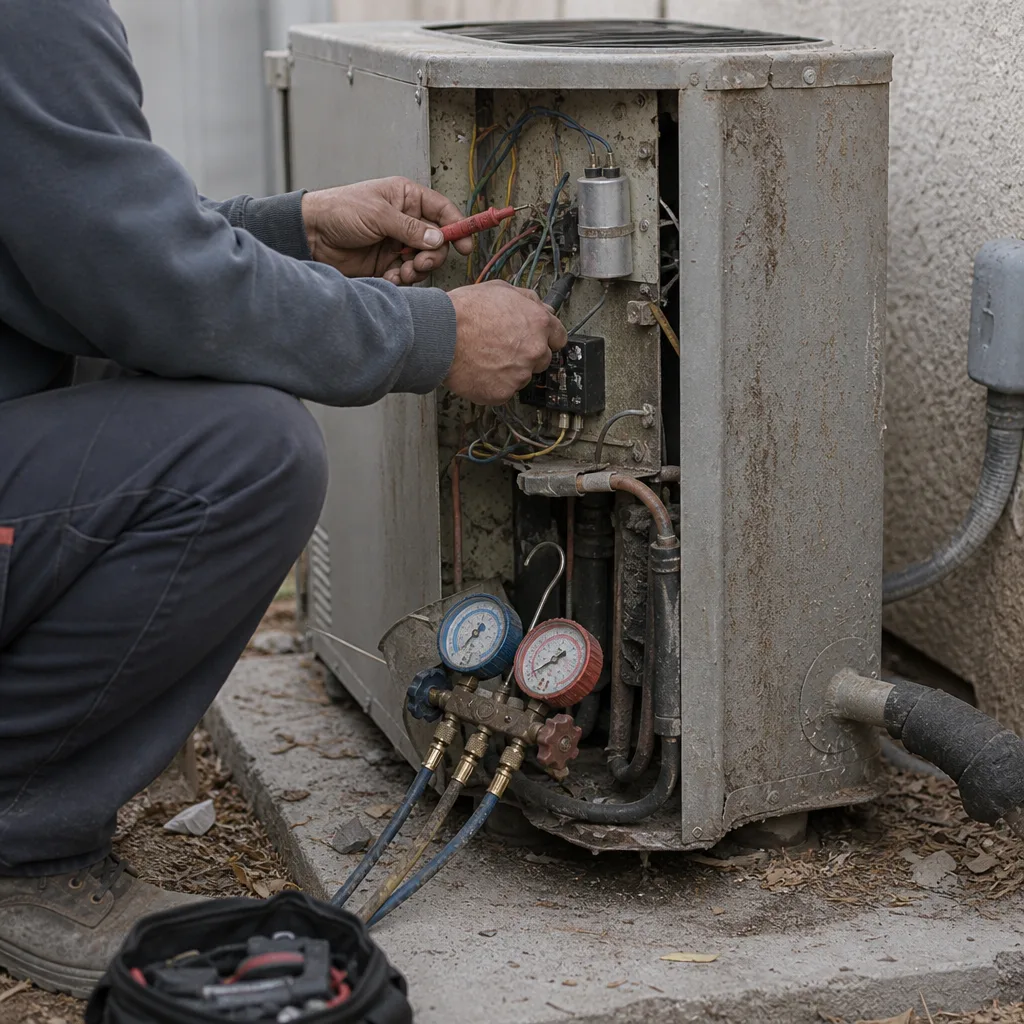 Before
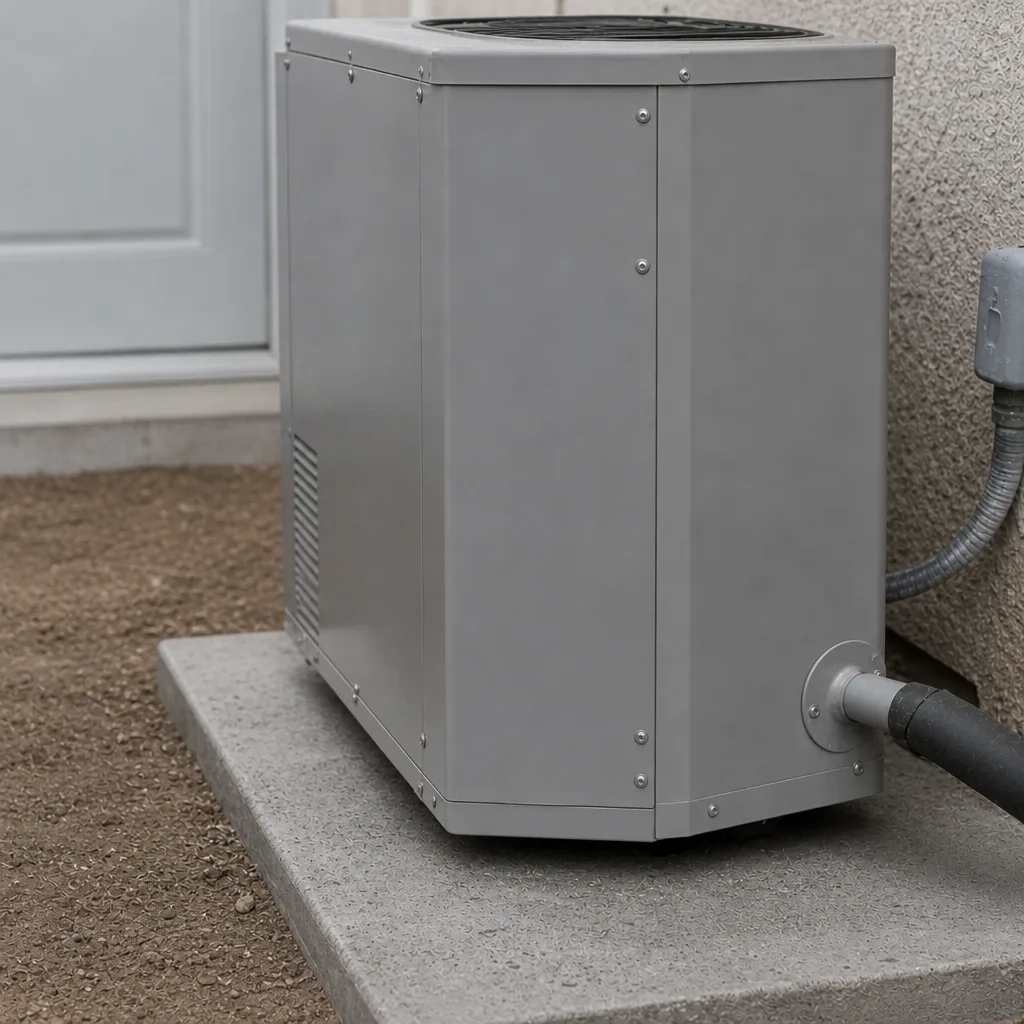 After
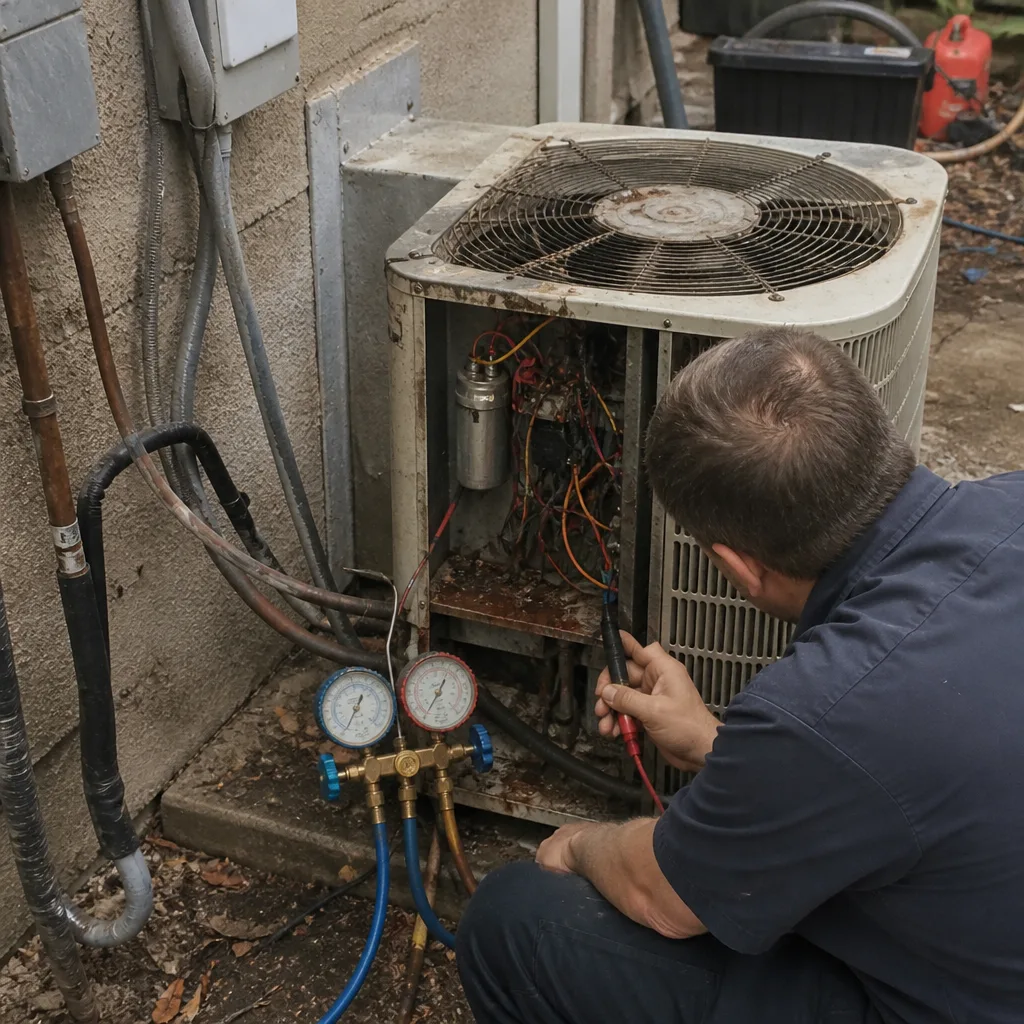 Before
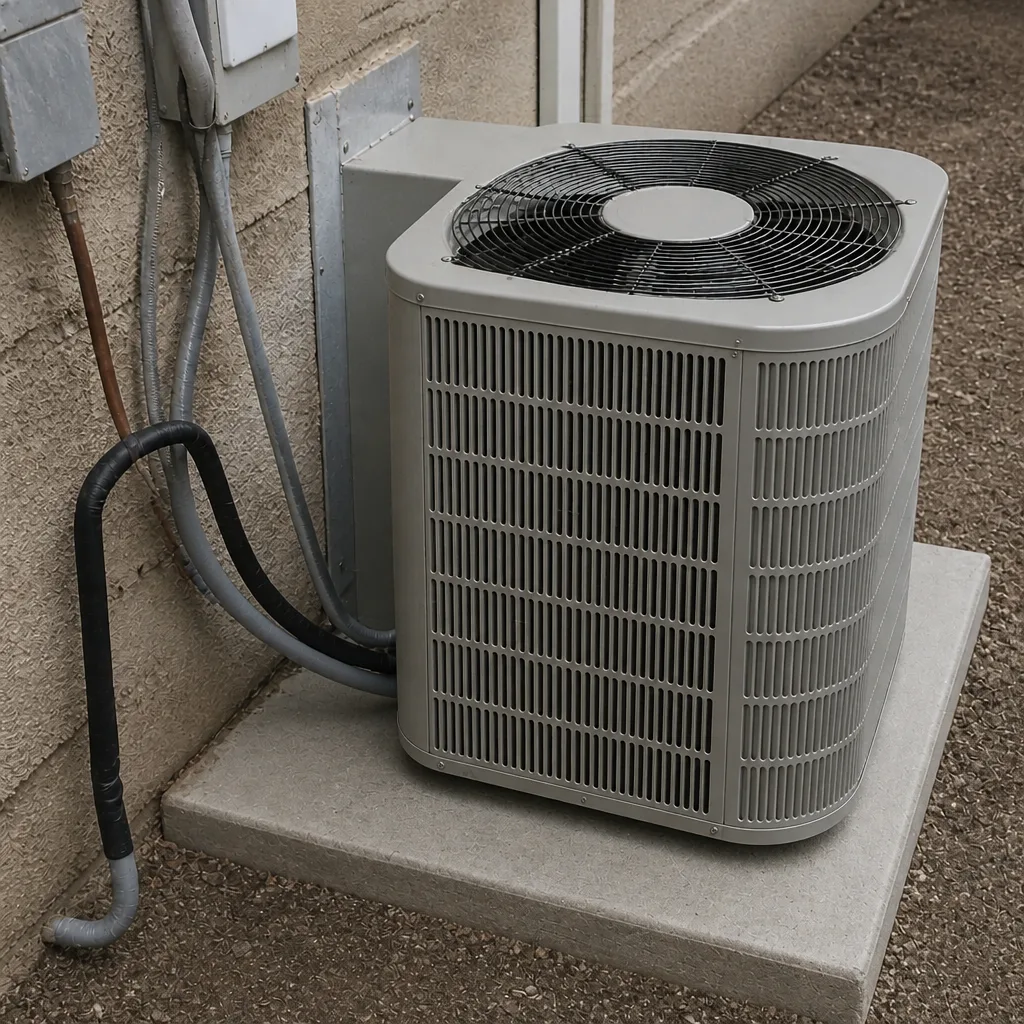 After
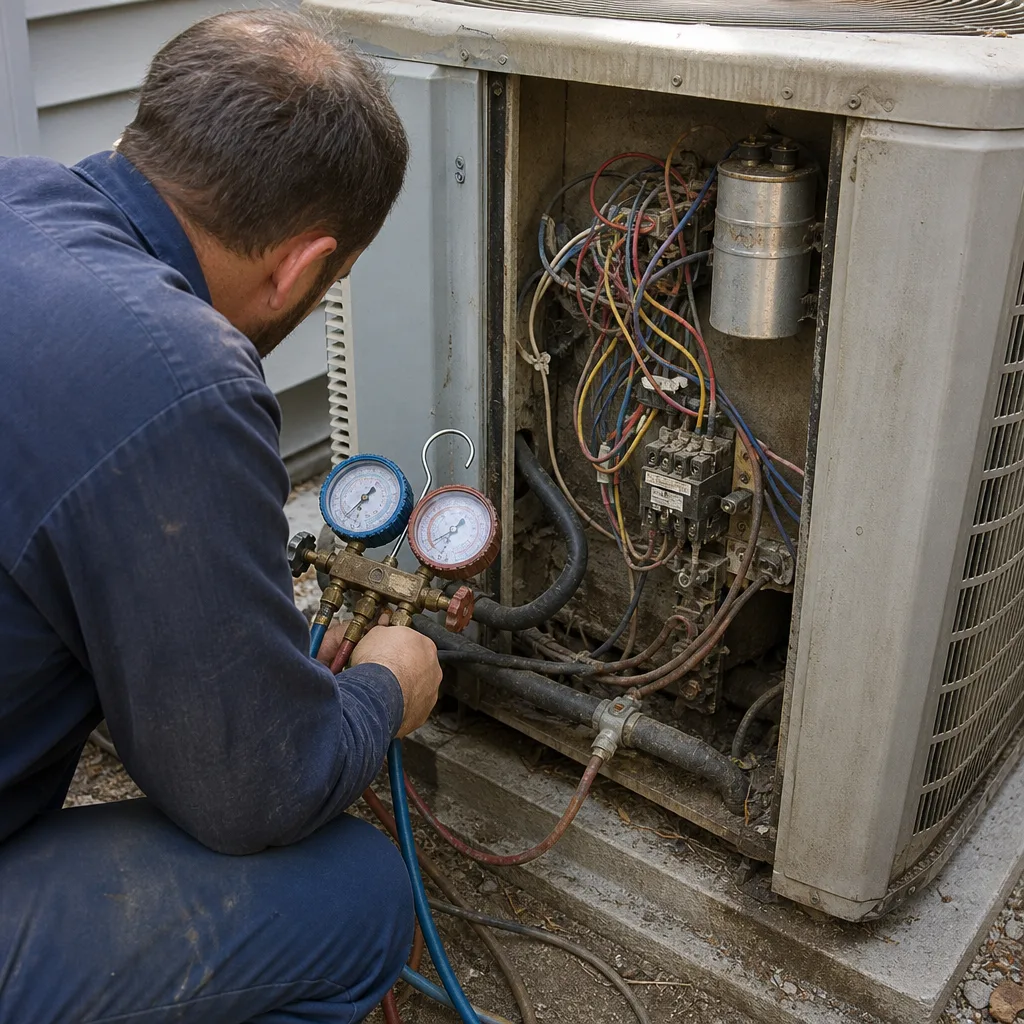 Before
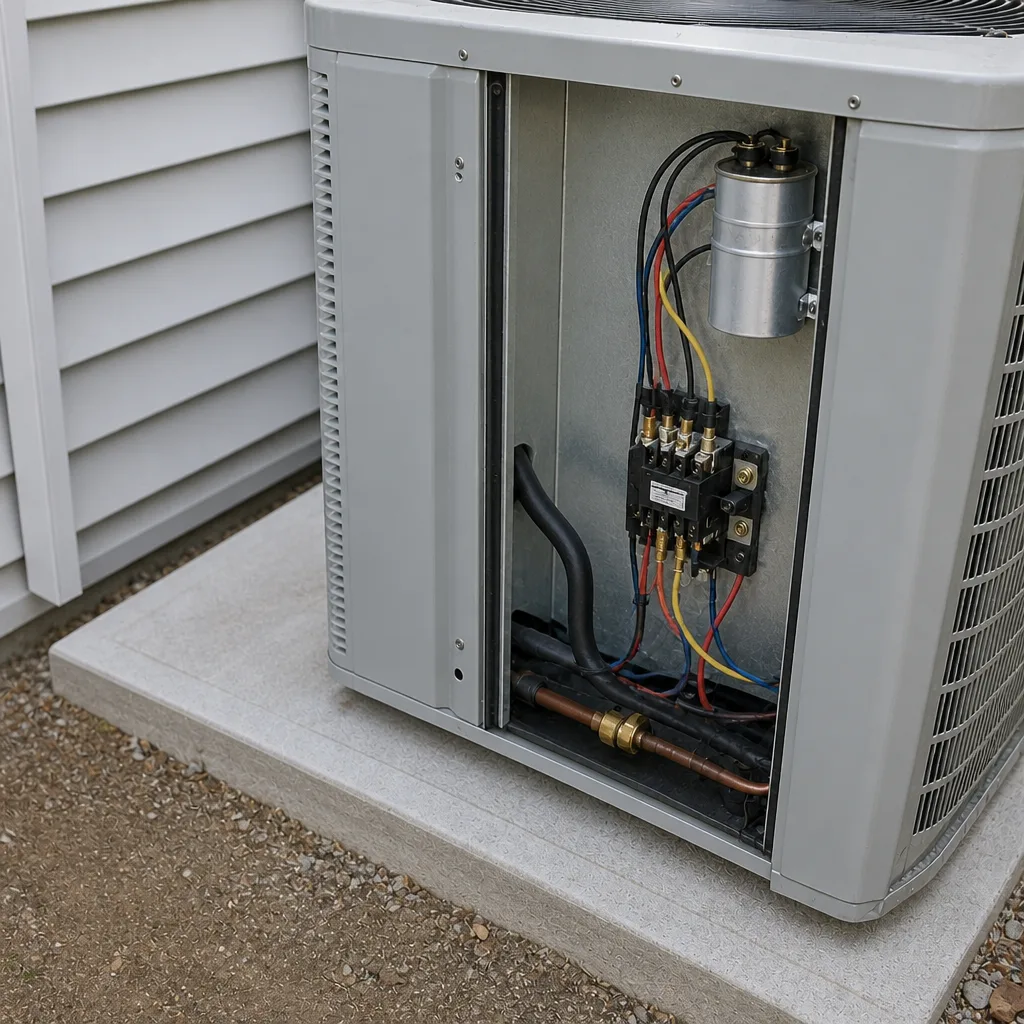 After
Frequently Asked Questions
Because mold is growing on the evaporator coil inside the indoor head. Dust sticks to the wet coil after each cooling cycle, and in a climate like Enterprise’s – dry most of the year but humid during monsoon season – the coil gets wet, dries slowly, then stays damp just long enough for mold to take hold. Wash the filter and if the smell survives, it’s on the coil. Call (844) 455-2034 for a proper coil cleaning.
Yes, if it’s not melting off. Frost on the outdoor coil during heating mode is normal – the defrost cycle is supposed to clear it. A solid block of ice that stays put after a defrost cycle means the defrost cycle is failing. Turn the system off and call. Don’t chip it. Call (844) 455-2034.
One click at startup is normal – that’s the contactor engaging. Repeated clicking during a running cycle, or rapid clicking with no cooling, is not. It usually means a failing relay, control board, or capacitor. Turn it off and get a diagnostic before it turns into a compressor replacement. Call (844) 455-2034 for a quote.
In Enterprise’s summer heat, that’s usually low refrigerant or an undersized system, not user error. If the system used to reach 72 on the same kind of day, something changed – likely a leak. A diagnostic that measures supply-air temperature vs. return-air temperature will tell you which one. Call (844) 455-2034 and we’ll check it.
A soft gurgle right after startup or shutdown is normal – that’s refrigerant equalizing in the lines. Gurgling that continues during the cooling cycle, especially with bubbling or whooshing, is a low-refrigerant sign. Continuing gurgling needs a leak check, not a top-off. Call (844) 455-2034.
You can wash the filter and clean the exterior grille. You should not touch the coil, the blower wheel, the wiring, or the refrigerant side – those involve either a live electrical panel, fragile aluminum fins, or refrigerant under pressure. Once you’re past the filter, it’s a call to a professional. Ray’s Heating & Air handles all major brands, including York, Daikin, Bryant, and American Standard. Call (844) 455-2034.
The Bottom Line
Mini splits and heat pumps fail quietly compared to furnaces. The signs are there if you know what to look for: a musty smell at startup, ice on either unit, weak airflow, gurgling during the cooling cycle, mid-cycle clicking, or a system that runs nonstop without reaching setpoint. In Enterprise’s heat, that last one is almost never user error. Catch these signs early and most of them stay small repairs. Ignore them and they become compressor replacements, coil replacements, or full system swaps. If you’re in Enterprise and any of these sound familiar, get ahead of it now. Call (844) 455-2034 for a free estimate – Ray answers his own phone, and that includes at 2 a.m.
For a full look at our heat pump and mini split work, see Heat Pump & Mini Split in Enterprise. For AC repair, AC Repair & Installation in Enterprise. For heating and furnace work, Heating & Furnace in Enterprise. And for the full picture on Ray’s Heating & Air, visit Ray’s Heating & Air Enterprise home.
Written by the team at Ray’s Heating & Air Enterprise.