
Last updated November 17, 2026
 Heat pumps
 AC repair
 Furnace & heating
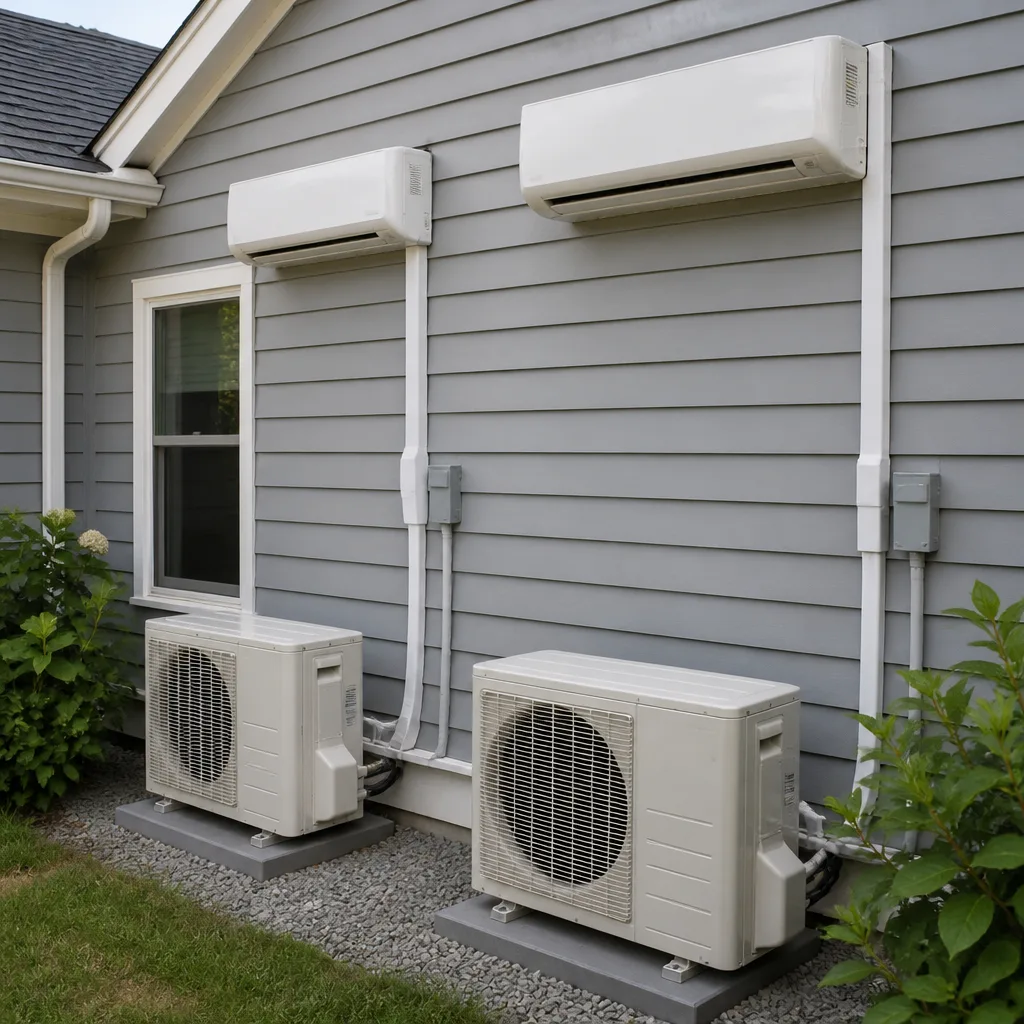 Ductless mini splits
 Carrier
 Trane
 Goodman
Seasonal tune-up and full diagnostic on your Carrier, Trane, or Goodman system - readings shown to you before any repair is proposed
Diagnosis first, numbers second - you approve the repair price before a single part goes in.
Get your free estimateHeat Pump & Mini Split Maintenance Schedule: What to Do and When
Enterprise’s caliche dust isn’t like normal household dust. It’s alkaline, it’s fine enough to ride on a breeze for half a mile, and it coats mini split coil fins in a way that inland city dust simply doesn’t. That’s why we routinely see mini splits out here needing coil cleaning twice a year when the manufacturer’s manual says once. Those manuals are written for technicians working in a generic climate, not for a homeowner in Enterprise staring down monsoon season and 110-degree August afternoons. So we built the calendar the manual should have included: a plain-English, month-by-month maintenance schedule tied to Enterprise’s specific dust season, monsoon window, and summer load. Read it once, tape it to the garage wall, and stop guessing what to do and when.
Quick Answer
For Enterprise specifically: clean or rinse your indoor mini split filters every 3 to 4 weeks during dust season (roughly March through June) and every 4 to 6 weeks the rest of the year. Schedule a professional coil cleaning twice a year – once in late spring before the heavy cooling load, once in late September after monsoon. Get refrigerant charge verified annually by a licensed tech. Everything else (drain line flush, outdoor unit clearance, visual inspection) falls on a predictable monthly rhythm you can handle yourself.
Styles & brands we work with
- AC repair
- Furnace & heating
- Heat pumps
- Ductless mini splits
- Carrier
- Trane
- Goodman
Table of Contents
- The Enterprise Month-by-Month Maintenance Calendar
- Filter Cleaning: Why Enterprise Needs a Different Interval
- Outdoor Unit Clearance in Desert Landscaping
- What Professional Coil Cleaning Actually Involves
- Monsoon Season Prep and Post-Monsoon Inspection
- The Annual Check Only a Licensed Tech Can Do
- Heat Pump Mode: The Fall Switch-Over Checklist
- Common Mistakes to Avoid
The Enterprise Month-by-Month Maintenance Calendar
Generic maintenance charts say “spring and fall” and leave it there. That’s useless in Enterprise, where the seasons have their own rhythm and each one puts a different kind of wear on your system. Here’s what we actually recommend to homeowners across the valley.
January through February – Quiet season check. Filters, visual inspection of the indoor head, and a listen-and-smell test. Does the unit smell musty on startup? Is the outdoor fan spinning freely with the power off? Any ice on the lines? This is also the best window to schedule the annual refrigerant check, because nobody’s calling in a panic and you get the appointment you want.
March through June – Dust season. Filter cleaning every 3 to 4 weeks. This is the stretch where caliche dust and spring wind combine into the worst possible environment for a coil. Watch the outdoor unit weekly – more on that below. Schedule the pre-summer professional coil cleaning in late April or May, before the first real 100-degree week hits.
July through August – Peak load. Filters every 2 to 3 weeks if you’re running the system daily, which in Enterprise you will be. Keep an eye on the condensate drain line – clear it monthly with a cup of distilled water and a shop vac on the outdoor end. Check the indoor head for any water staining around the housing.
September – Monsoon tail and post-summer inspection. Book the second professional cleaning and inspection. This is when we find the small issues that bloomed during the summer load cycle.
October through November – Heat mode switch-over. Test the heat function on the first cool evening in October, not the first cold night in December. We’ve seen too many heat pumps in Enterprise fail to switch over in January because nobody checked in the fall.
December – Year-end check. Filter, visual, drain line. Nothing else needed if you’ve stayed on the calendar.
Filter Cleaning: Why Enterprise Needs a Different Interval
Manufacturer manuals typically say “clean or replace filter every one to three months.” That range is written for a middle-American climate with average dust levels. In Enterprise, it doesn’t hold. Two things change the math: the alkaline caliche dust that dominates our spring wind season, and the sheer volume of hours your mini split runs during summer. A filter that sees 600 hours of runtime in a month is going to load up much faster than a manufacturer’s test-unit filter.
Our recommendation for Enterprise homeowners:
- March through June: every 3 to 4 weeks. Yes, really.
- July through September: every 2 to 3 weeks if you’re running the system daily.
- October through February: every 4 to 6 weeks.
- After any dust storm or high-wind event: check the filter that week, regardless of where you are in the cycle.
The clean procedure matters too. Mini split filters are washable on most units – pull them out, rinse them in lukewarm water from the clean side, shake them dry, and let them air-dry fully before reinstalling. A wet filter reinstalled in a mini split head is a musty smell waiting to happen. While the filter is out, wipe the front grille with a damp cloth. If you can see dust on the coil fins behind the filter, that’s your signal to call for a coil cleaning sooner rather than later.
Don’t run the system with the filter removed to “see if it works better.” It will. And it will also coat the coil and blower wheel in dust, which is exactly the problem you’re trying to prevent. The filter is doing its job.
Outdoor Unit Clearance in Desert Landscaping
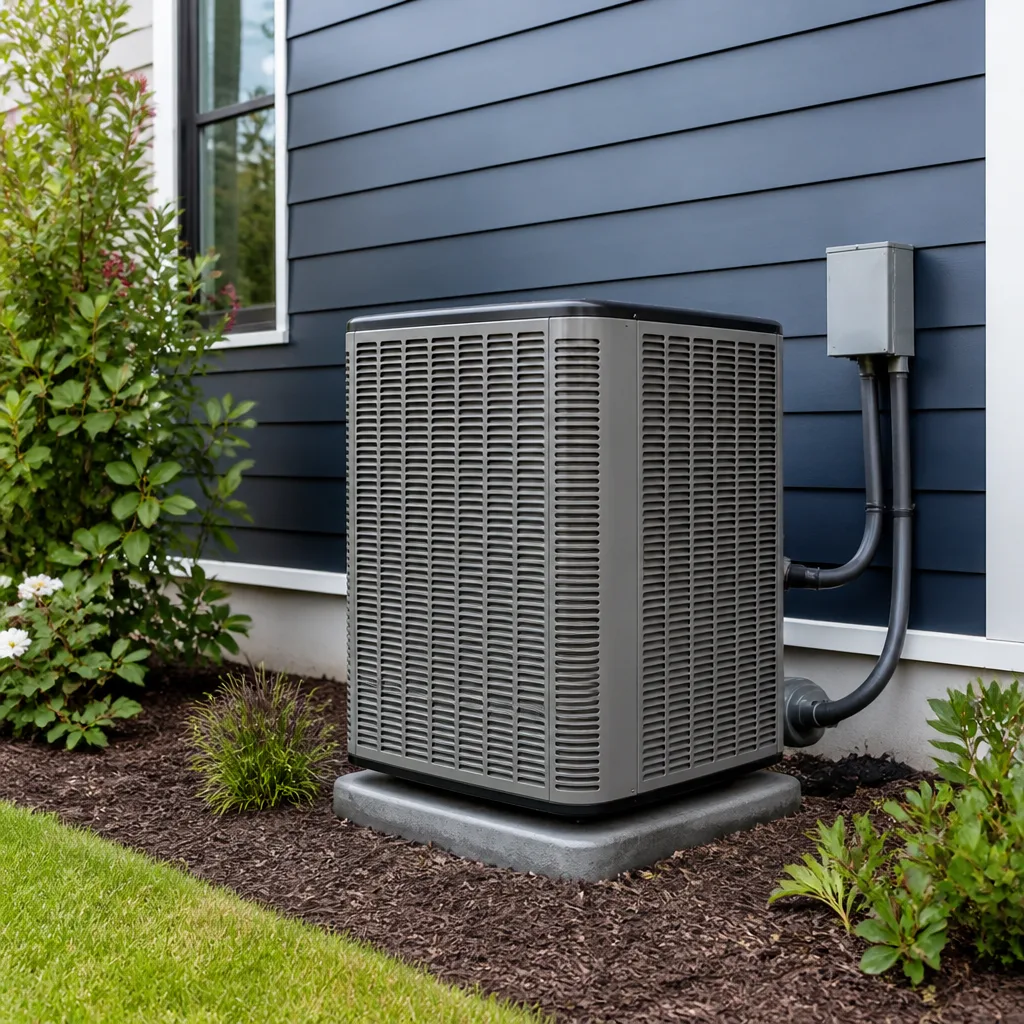
This is the maintenance item that Enterprise homeowners skip most often, and it costs more than any other. Desert landscaping grows into condenser coils. Oleander, Texas ranger, lantana, and even the ornamental grasses people put near a back patio will push growth directly into the outdoor unit’s air path within a single season. We’ve pulled more seed pods, leaves, and lint-like plant fluff out of condenser coils in this valley than any other debris type.
The clearance rules are simple:
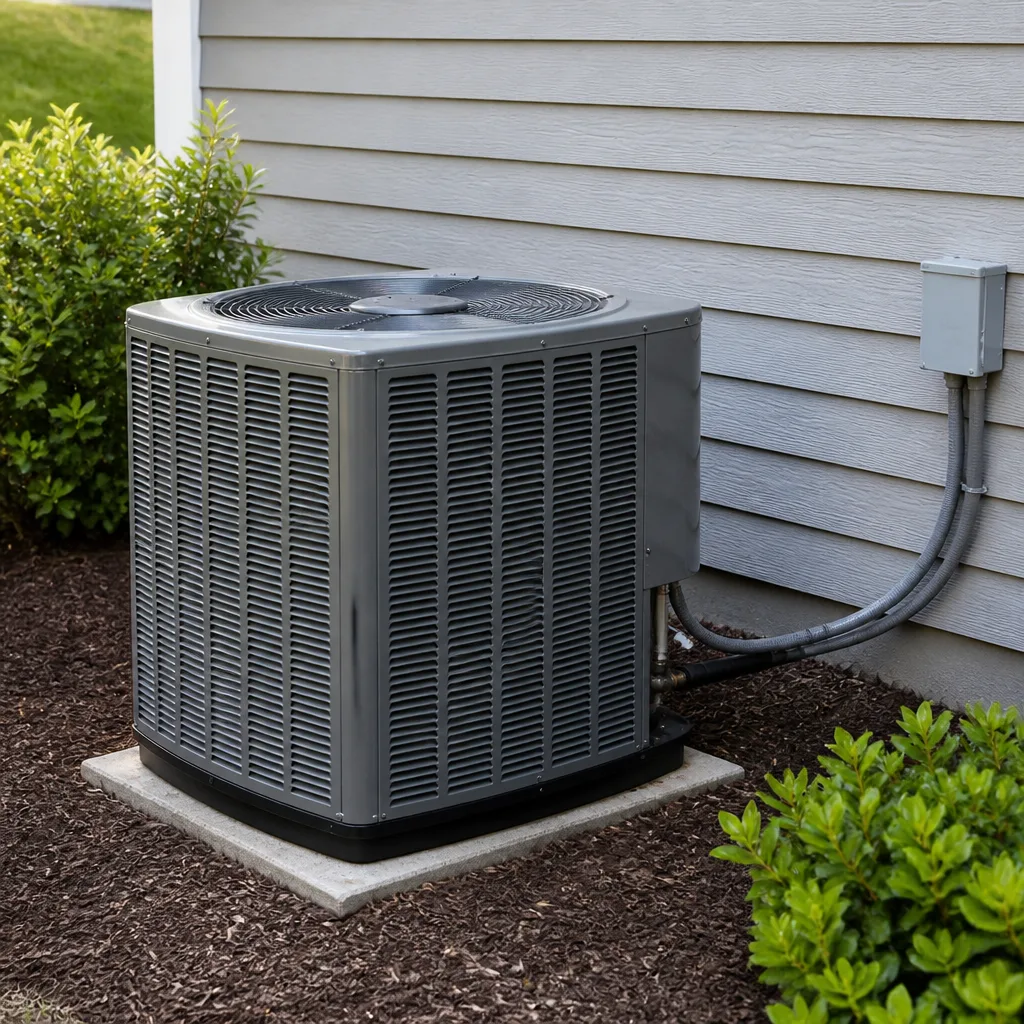
- Two feet of clear space on all sides. No plant touching, no fence within a foot, no patio furniture leaned against it. Golf cart parked against the condenser in July? Move it.
- Five feet of clear space above the unit. Tree branches, patio covers, and shade cloth all count. The unit needs to exhaust upward without recirculating hot air.
- Check weekly during growing season. Walk out, look at the side grille, and pull anything that’s touching it. Two minutes.
- Trim before the season, not after. Cut back summer growth in late March. If you wait until July, the plant is already pressed against the coil.
- Watch for hardscape additions. New block wall? New deck? Any new construction near the unit needs to respect the same two-foot rule.
Here’s the thing most homeowners miss: a condenser that’s half-blocked by growth doesn’t stop working. It works harder, drawing more amps, running longer cycles, and slowly stressing the compressor. The symptom is a summer electric bill that creeps up without explanation, and by the time you notice, you’re looking at a service call. Clear space is free maintenance. Use it.
What Professional Coil Cleaning Actually Involves
Garden hose rinsing the outdoor coil is not coil cleaning. It’s a surface rinse. The difference matters, and it matters most in Enterprise, where the dust is alkaline and sticks differently than inland dust.
Professional coil cleaning, done properly, involves:
- Coil-safe chemical cleaner matched to the dust type. Alkaline caliche dust needs a different cleaner than organic soil or pet hair buildup. A general-purpose coil spray that works fine elsewhere doesn’t cut it here.
- Controlled water pressure applied from the inside out. Hosing from the outside pushes dirt deeper into the fins. The correct technique is inside-out, at a pressure that cleans without bending fin stock.
- Fin combing. Bent fins block airflow. A fin comb restores the fins to open position after cleaning.
- Indoor coil cleaning on mini split heads. Most homeowners never think about the indoor coil, but that’s where the bacterial growth and dust accumulation happen on a mini split. The evaporator coil needs to be accessed, cleaned, and dried properly. This is also where you find (or don’t find) mold growing in the housing.
- Blower wheel inspection. A dirty blower wheel throws off balance and reduces airflow. We check it during every professional cleaning because it’s the most-missed item on most “maintenance” visits we see.
- Drain pan and drain line flush. Standing water and dust make a sludge that clogs the drain line by August. Clear it now.
For a full picture of what a proper service visit looks like for this equipment type, see our Heat Pump & Mini Split in Enterprise page. The short version: professional coil cleaning on a mini split in Enterprise should happen twice a year – late spring before the cooling load, late September after monsoon – because once a year isn’t enough for our dust environment.
Monsoon Season Prep and Post-Monsoon Inspection
Monsoon season in Enterprise typically runs July through September. The weather is dramatic and the HVAC impact is specific: high wind drives dust and debris at the outdoor unit, sudden pressure changes stress the refrigerant system, and lightning strikes and power surges are a real threat to the control board on any modern mini split or heat pump.
Prep checklist before the first monsoon storm:
- Clear the outdoor unit pad. Loose debris becomes a projectile when the wind picks up. Remove any rock, mulch, or plant material that could get blown against the unit.
- Check the condenser anchor bolts. A unit that wobbles in a 40-mile-an-hour gust can loosen refrigerant lines. Hand-check for play.
- Look at the electrical disconnect box. Any sign of water intrusion or corrosion? Get it checked before storm season.
- Trim tree branches that overhang the unit. A snapped branch on the coil is an expensive repair.
Post-monsoon inspection (September, second week or so) catches the aftermath: any filter that got dust-packed during the windy stretch, any outdoor debris that settled against the coil, and any drain line that got overwhelmed by the humidity. It’s also the best time to book the second professional cleaning, so your system goes into the cooler months with a clean coil. If you’re running into trouble on the AC side because of a monsoon-induced problem, our AC Repair & Installation in Enterprise page has the service breakdown, and calling us directly is faster.
The Annual Check Only a Licensed Tech Can Do
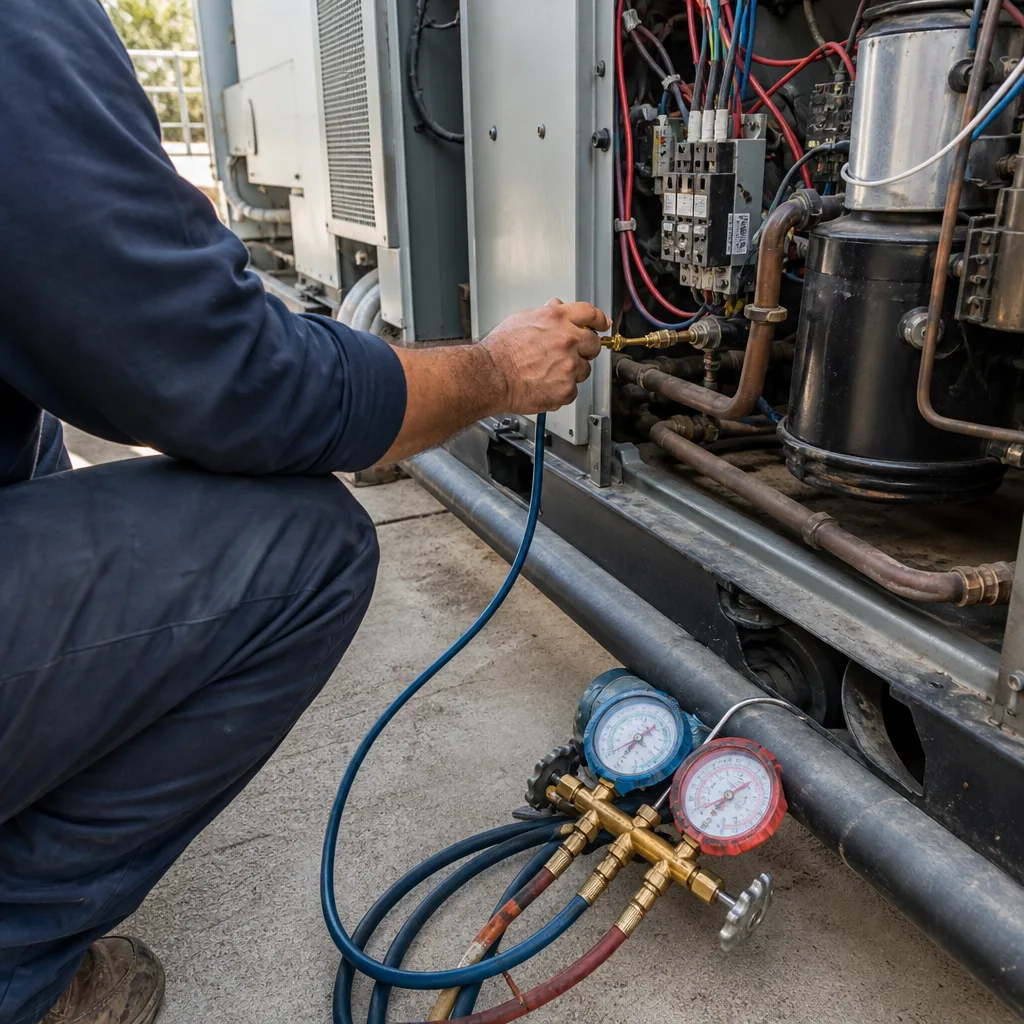
Refrigerant charge verification is the one maintenance item on this entire calendar that you cannot do yourself. It requires a manifold gauge set, pressure-temperature correlation for the specific refrigerant in your system (R-410A or R-32, depending on the model), a thermometer, and the training to interpret the numbers correctly. It also requires a license to handle refrigerant legally.
Here’s why skipping it costs more than the service call. A system running 10% undercharged doesn’t stop cooling. It cools less effectively, runs longer cycles, and puts hours of extra wear on the compressor – the single most expensive component in the system. In Enterprise summer, a system that’s short on charge is a compressor failure waiting to happen. Compressor replacement on a typical residential heat pump or mini split runs well into four figures. The refrigerant check is a fraction of that.
We check refrigerant charge using the superheat/subcooling method rather than just “is the low side reading in range” – because the shortcut method misses partially restricted metering devices and low-charge conditions that don’t push the gauge out of range yet. Readings first, numbers second. You’ll see both before anyone touches the system.
Skipping this check pays off only if nothing goes wrong. Running a short-charged system through one Enterprise summer is the wrong kind of gamble. For reference on how refrigerant issues show up as performance problems, see our Heating & Furnace in Enterprise page – the diagnostics logic is similar for heat mode problems.
Heat Pump Mode: The Fall Switch-Over Checklist
Heat pumps do double duty, and the maintenance calendar has to reflect it. The single most common failure we see in Enterprise heat pumps happens in the fall: the system is never tested in heat mode until the first genuinely cold night, by which point any problem is now an emergency.
Do this on the first cool evening in October:
- Switch the thermostat to heat, set it 5 degrees above room temp, and let the system run for 10 minutes. You’re looking for warm air at the indoor head within the first couple of minutes and steady warm air after that.
- Listen at the outdoor unit. Defrost cycle functioning? You’ll hear the reversing valve shift if you’re paying attention, and the unit should briefly stop the fan while it defrosts the outdoor coil.
- Check the indoor coil for ice. Any ice on the indoor coil in heat mode is a problem – usually a sign of low charge or a restricted metering device.
- Smell test for mustiness on the first heat cycle. If the head smells like a locker room, the indoor coil needs cleaning.
- Confirm auxiliary heat backup is available. On most systems with electric strip backup, you’ll see the aux heat indicator on a smart thermostat during the initial heat-up. No indicator? Get it checked.
A properly functioning heat pump in Enterprise should switch modes cleanly. A system that struggles, blows lukewarm air, or trips the breaker on heat mode needs service before the cold snap arrives. Fall diagnostics are cheaper than winter emergencies.
Common Mistakes to Avoid
- Running garden-hose-only “cleaning” as your annual service. A superficial outdoor rinse does nothing for the indoor coil, the blower wheel, or the refrigerant charge. The three problem areas stay invisible until they fail.
- Waiting for the manufacturer’s filter interval. The one-to-three-month guidance doesn’t hold in Enterprise, where dust loads a filter in a week during spring. Every three to four weeks in dust season, no exceptions.
- Letting desert landscaping touch the outdoor unit. The biggest cause of condenser strain we see in this valley. Two feet clear, no exceptions, check it weekly during growing season.
- Skipping the October heat-mode test. Fall switch-over is the cheapest failure to catch. Winter is the most expensive.
- Assuming “it’s still cooling” means “it’s fine.” A short-charged system in Enterprise summer cools, but strains the compressor into early failure. The refrigerant check is the difference.
- Scheduling maintenance in July or August. Peak season, everyone needs service, and appointments are tight. Schedule the maintenance visits in April-May and September-October when the calendar has breathing room.
- Ignoring the drain line behind the indoor head. Standing condensation plus Enterprise dust equals sludge. Clear the drain line monthly during cooling season or you’ll meet the water-staining issue firsthand.
When to Call a Professional
You should call the moment you see any of the following: ice forming on either the indoor or outdoor coil, the head blowing mildly cool air but not cold, water leaking from the indoor housing, a smell of hot electrical or burning dust that doesn’t clear after the first cycle, an outdoor fan that stops spinning, a system that trips the breaker, or a filter-cleaning routine that isn’t restoring full airflow. Any of these could be a simple fix or the early sign of a failing component; the readings tell you which. Ray’s Heating & Air Enterprise offers free estimates in Enterprise, and we answer every call with a live person around the clock. Call (844) 455-2034 to schedule.
See the difference
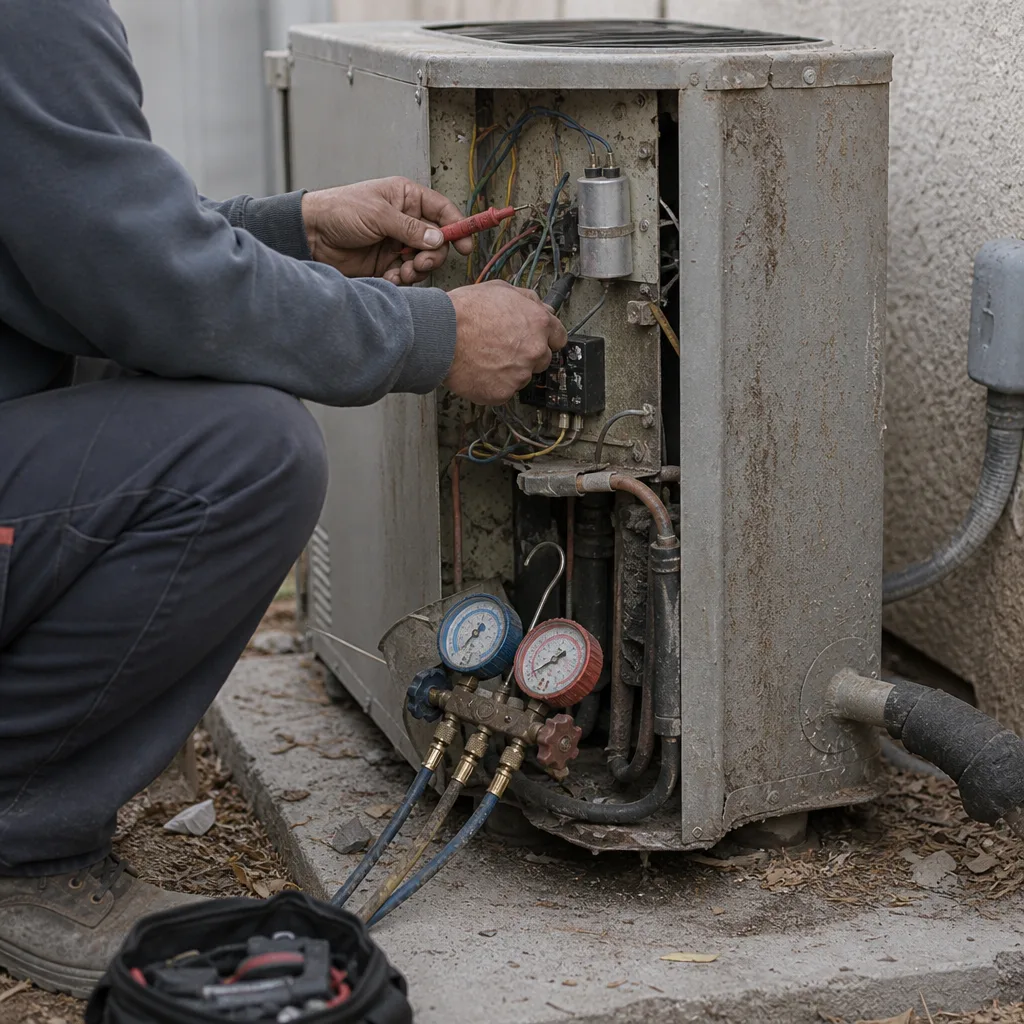 Before
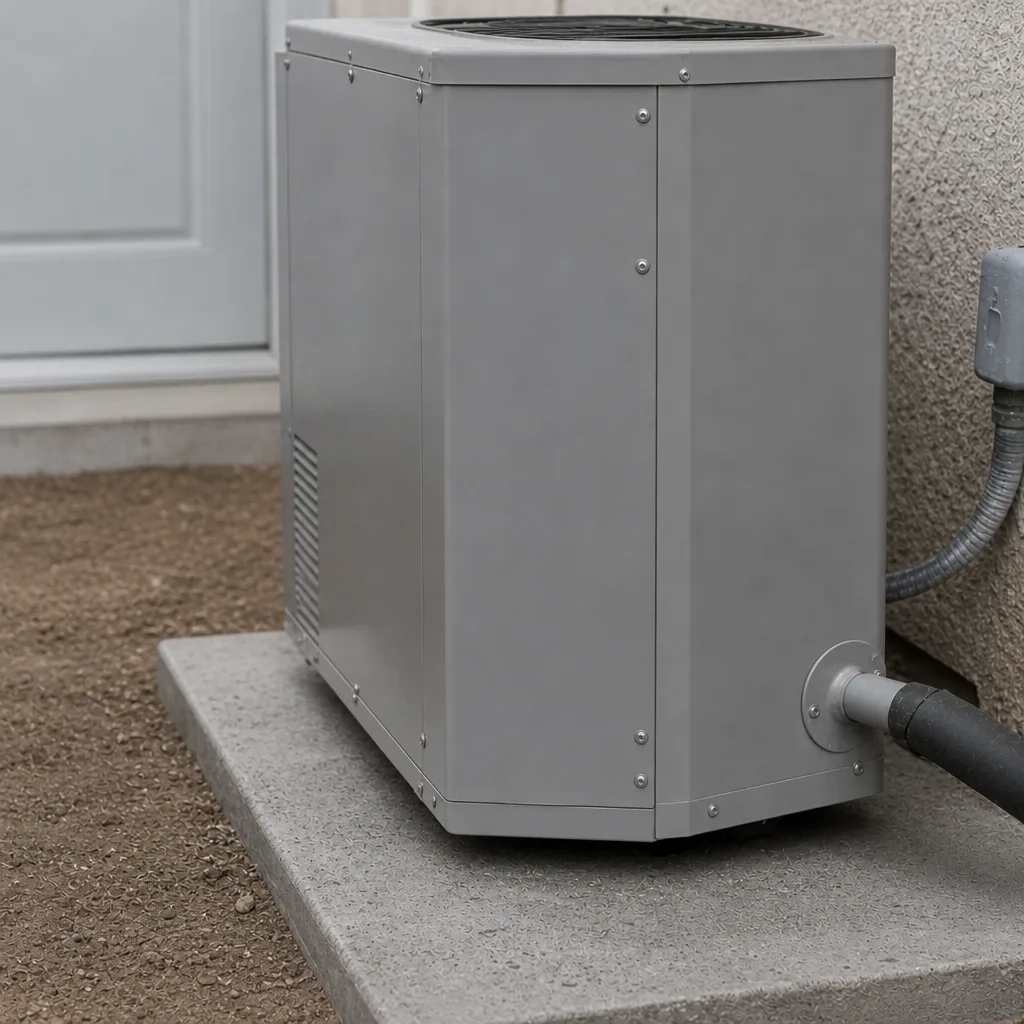 After
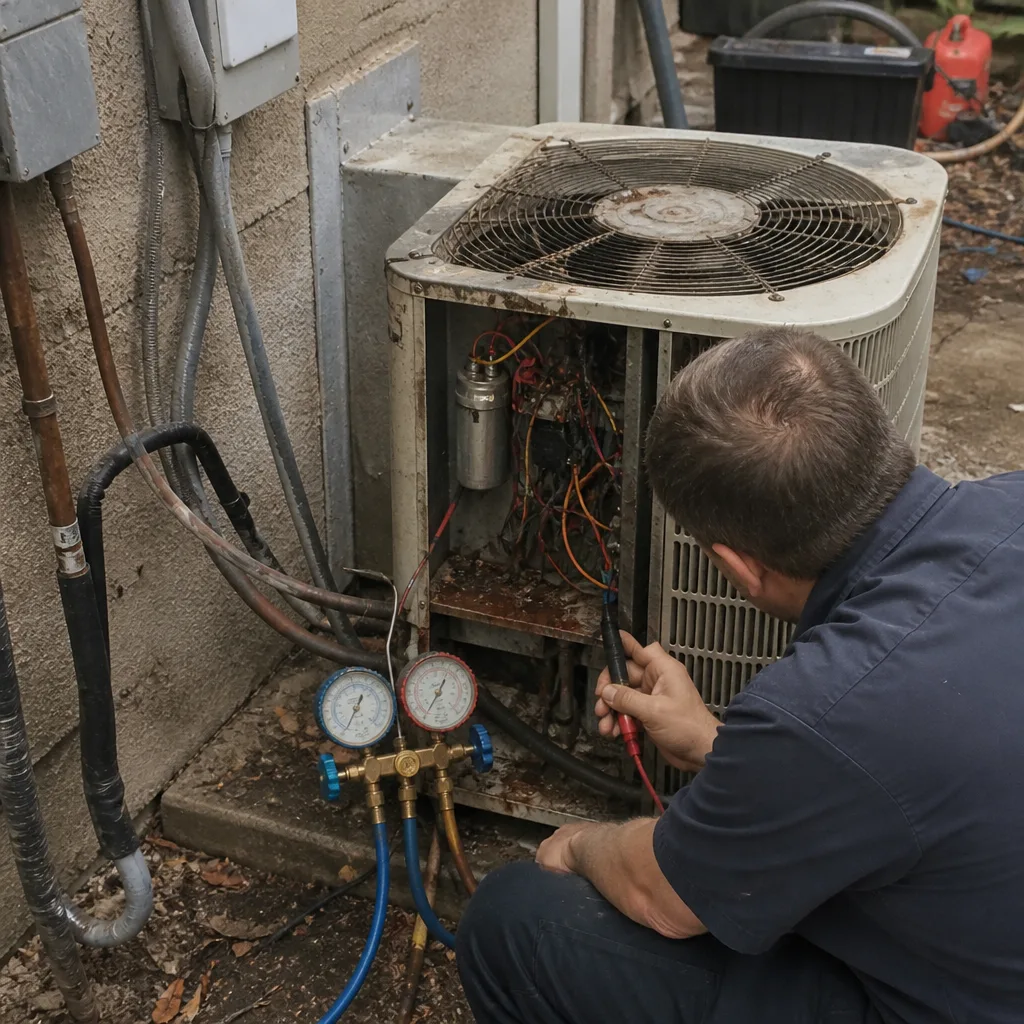 Before
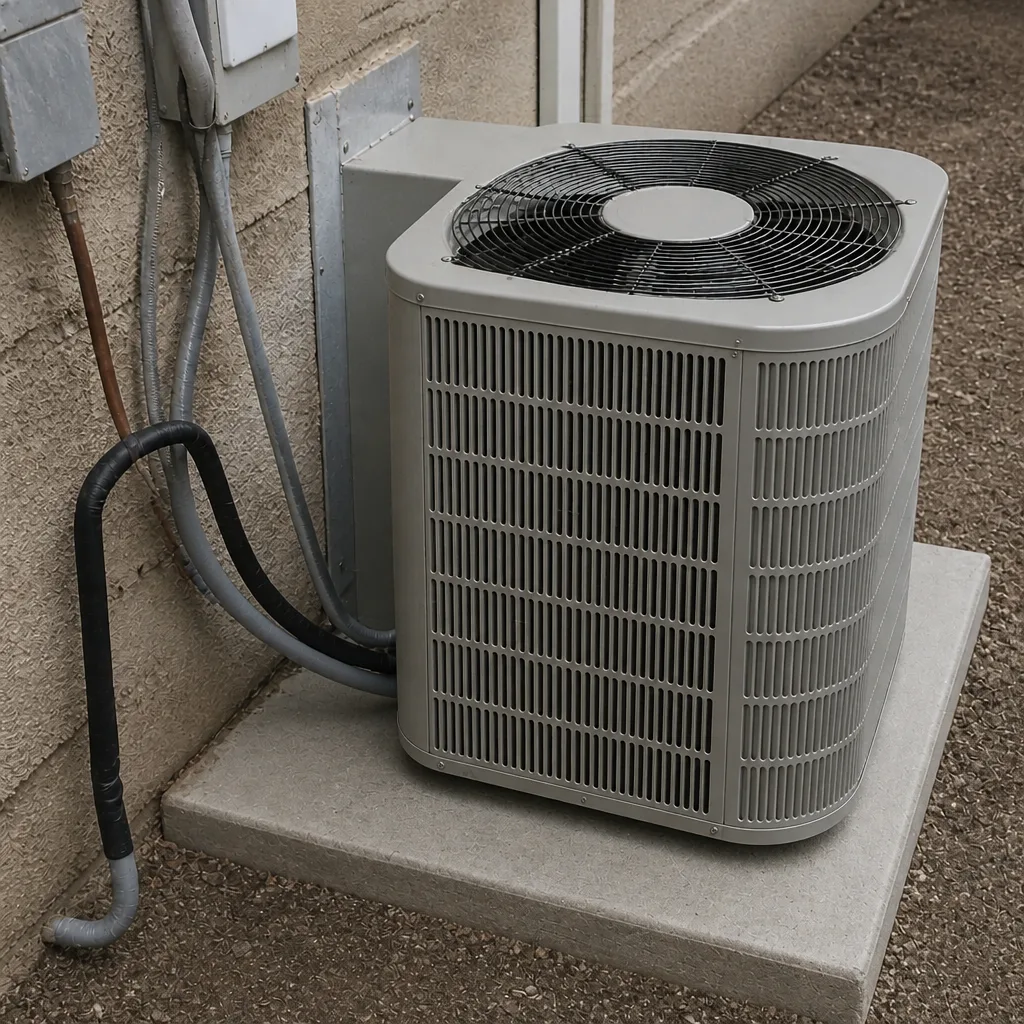 After
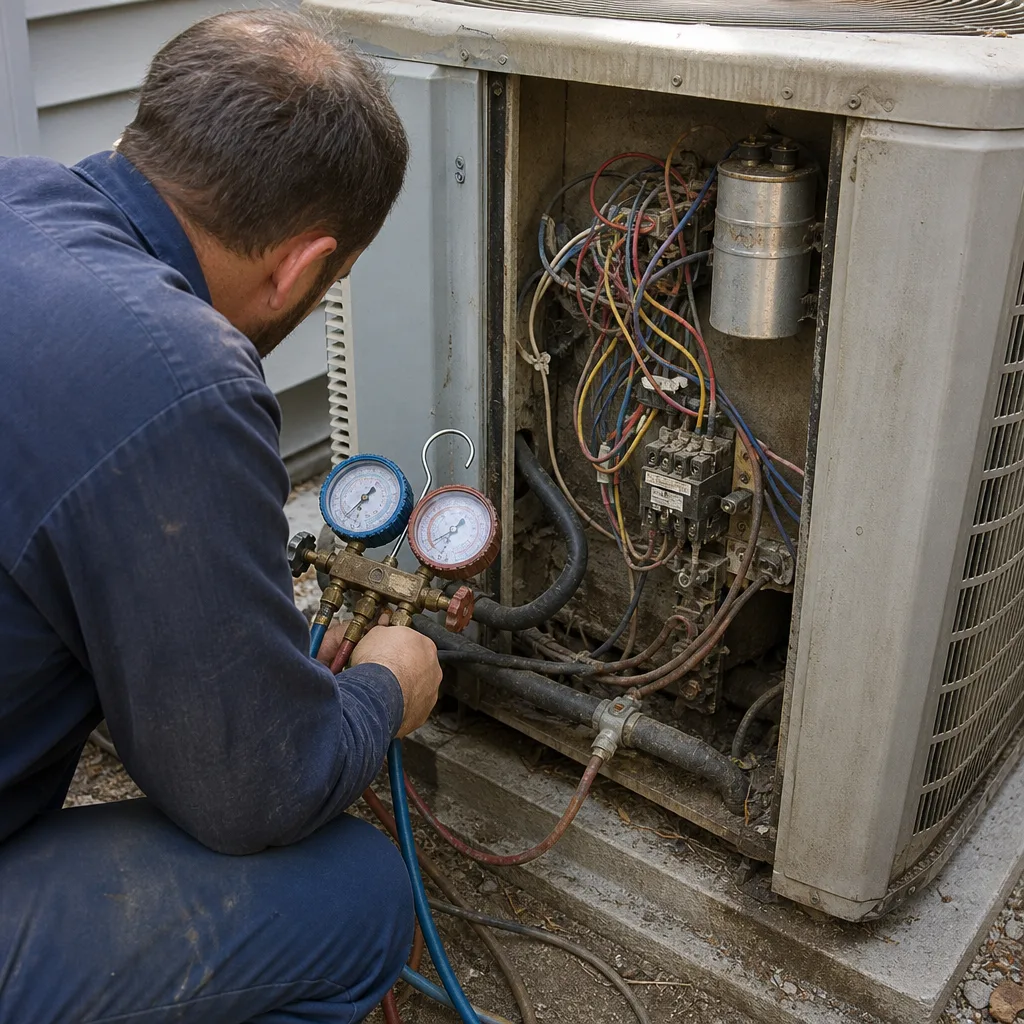 Before
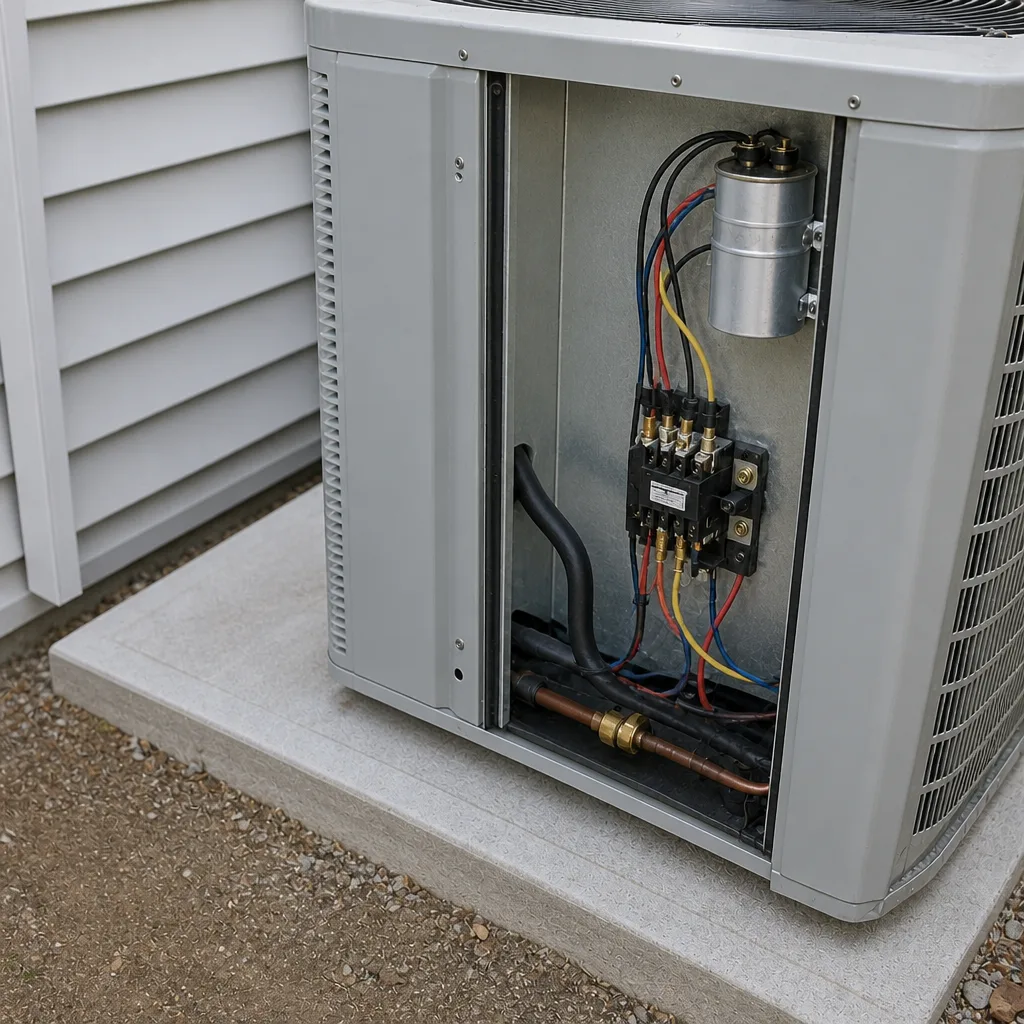 After
Frequently Asked Questions
Every 3 to 4 weeks during the March-June dust season, and every 2 to 3 weeks during summer peak cooling. This is far more frequent than the manufacturer’s one-to-three-month recommendation, because Enterprise’s alkaline caliche dust loads filters much faster than average inland dust. If you can’t remember the last time you cleaned yours, clean them today.
Yes, in Enterprise. The alkaline dust in this valley coats coil fins differently than the dust inland service manuals are written for. Once a year is not enough to keep the coils and blower wheel clean, and the compressor strain from a dirty condenser costs more than the second cleaning. Call (844) 455-2034 to schedule both visits at once – the late-spring and post-monsoon cleaning.
April through May and September through October. Those are the shoulder-season months when the calendar is less crowded, and each one follows an actual seasonal pivot point – pre-summer cooling load and post-monsoon inspection. Booking in July or August means waiting behind peak-season repairs.
We strongly recommend you don’t. A short-charged system cools but runs longer cycles and wears the compressor faster, and this is the exact failure mode that turns into a four-figure compressor replacement in Enterprise summer heat. The annual refrigerant check is the cheapest insurance you’ll buy on a heat pump or mini split.
Bacterial and mold growth on the indoor evaporator coil, usually. This happens because the cooling coil stays moist between cycles in a humid monsoon season, and Enterprise dust feeds the growth. A professional indoor coil cleaning removes the growth at the source; surface sprays and “coil cleaner foggers” don’t.
It depends on the refrigerant type, the compressor age, and how many deferred maintenance items the system has accumulated. We do a full diagnostic before quoting either path, and we’ll show you the readings and the numbers so you can decide. Call (844) 455-2034 for a free second opinion on any written estimate – especially one from another company that quotes replacement on the phone.
The Bottom Line
The Enterprise mini split maintenance calendar comes down to three things the manufacturer’s manual doesn’t tell you: clean your filters every 3 to 4 weeks during dust season, get two professional coil cleanings a year instead of one, and verify refrigerant charge annually because skipping it costs more than the service call. Everything else – outdoor unit clearance, drain line flush, October heat-mode test – is a rhythm you can handle yourself. If you want to hand the whole calendar to someone who will show up on time and know your system, that’s what we do. Our technicians have up to 24 years of experience, and every maintenance and repair job carries the 90-Day Done Right Promise in writing.
Contact
If this guide raised more questions than it answered, or if you want someone to look at your system before the next Enterprise summer, we’d rather hear from you now than after a failure. Ray’s Heating & Air Enterprise answers every call with a live person, around the clock. Call (844) 455-2034 for a free estimate, and if you’re starting your research further upstream, Ray’s Heating & Air Enterprise home has the full service overview. Free second opinion on any written estimate, no trip charge inside the county, and a senior and veteran discount available.
Written by the team at Ray’s Heating & Air Enterprise.