
Last updated November 17, 2026
 AC repair
 Furnace & heating
 Heat pumps
 Ductless mini splits
 Carrier
 Trane
 Goodman
Seasonal tune-up and full diagnostic on your Carrier, Trane, or Goodman system - readings shown to you before any repair is proposed
Diagnosis first, numbers second - you approve the repair price before a single part goes in.
Get your free estimateDIY vs Professional Emergency & Commercial HVAC: What’s Safe to Do Yourself
A business owner who resets a tripped breaker to get the AC back on is making a reasonable call. The same owner who starts opening electrical panels inside a commercial air handler is one mistake away from a voided insurance claim and a Nevada OSHA file. That’s the line this guide draws, and it isn’t about whether you’re handy. It’s about what happens to your occupancy permit, your insurance, and your liability the moment your hand is the last one that touched the equipment. We’ve pulled apart enough botched DIY jobs in Enterprise to know where capability ends and consequence begins. Here’s what you can safely handle yourself, what voids your coverage, and how to hand a technician enough information by phone to cut your diagnosis time and your bill.
Quick Answer
You can safely swap filters on accessible units, change thermostat batteries, drop condensate pan tablets, and rinse exterior coils with a garden hose. You should not open a refrigerant circuit, touch electrical components inside the cabinet, or modify ductwork without permits. In Nevada, unlicensed commercial HVAC work is a licensing violation that can void insurance and put your occupancy permit at risk. The safe DIY zone for a business owner is maintenance and information-gathering. Everything past the cabinet panel belongs to a licensed professional.
Styles & brands we work with
- AC repair
- Furnace & heating
- Heat pumps
- Ductless mini splits
- Carrier
- Trane
- Goodman
Table of Contents
- What Nevada Actually Says About Unlicensed Commercial HVAC Work
- The Safe DIY Territory for Commercial Buildings
- The Liability Shift: Refrigerant, Electrical, and Ductwork
- Why “I’ll Just YouTube It” Is a Different Risk on a 10-Ton Unit
- How to Give a Tech Enough Information to Diagnose Faster
- Emergency vs Commercial: Two Different Playbooks
- When to Call Instead of Touch
- Frequently Asked Questions
What Nevada Actually Says About Unlicensed Commercial HVAC Work
In plain language: if you’re not licensed by the Nevada State Contractors Board, you cannot legally perform HVAC work for compensation on a commercial building, and that includes work you do on your own building if it’s a commercial property covered by code. The board classifies HVAC as a specialty contracting category. Working without that license isn’t a gray area or a wink-and-nod situation. It’s a violation that the board can investigate, fine, and refer for further action, especially when the work involves refrigerant handling, electrical connections, or gas lines.
What does that mean for an owner-operator in Enterprise who wants to save a buck? It means the cost calculation you’re running is incomplete. You’re comparing the price of a service call against the price of doing it yourself. You’re not factoring in:
- An insurance claim denial if a fire or water damage traces back to unpermitted work
- A failed commercial inspection that delays your occupancy or your tenant’s move-in
- Personal liability if an employee or customer is injured by equipment you modified
- Warranty voidance on a unit that’s still under manufacturer coverage
We’re not saying this to scare anybody into a service contract. We’re saying it because the math changes the moment the work touches a permit or a policy. A $180 capacitor swap is cheap. A denied claim on a $40,000 rooftop unit is not. If you’re weighing repair against replacement on a system that’s already been touched, our guide to AC repair and installation in Enterprise walks through how to document what’s been done so you’re not starting from zero.
The Safe DIY Territory for Commercial Buildings
There’s real work you can do yourself on a commercial system, and doing it well saves money. Here’s the short list of what’s genuinely safe for an owner or a facilities person to handle without a license, and why each one is low-risk.
- Filter swaps on accessible units. If the filter rack is reachable without removing a cabinet panel or disconnecting power, you can change it. Use the MERV rating the manufacturer specifies, not the highest one on the shelf. Too high a MERV on a system not designed for it chokes airflow and freezes coils. On a 5-ton Carrier or Trane package unit running in Enterprise summer heat, the wrong filter is worse than a dirty one.
- Thermostat battery replacement. Pop the cover, swap the batteries, restore your schedule. This solves a surprising number of “the AC won’t come on” calls, especially on older commercial stats that lose programming when the battery dies.
- Condensate pan tablets. Drop a pan tablet in the drain pan to keep algae from clogging the drain line. Do it at the start of cooling season. In the desert, drain lines clog with dust and biofilm faster than most people expect.
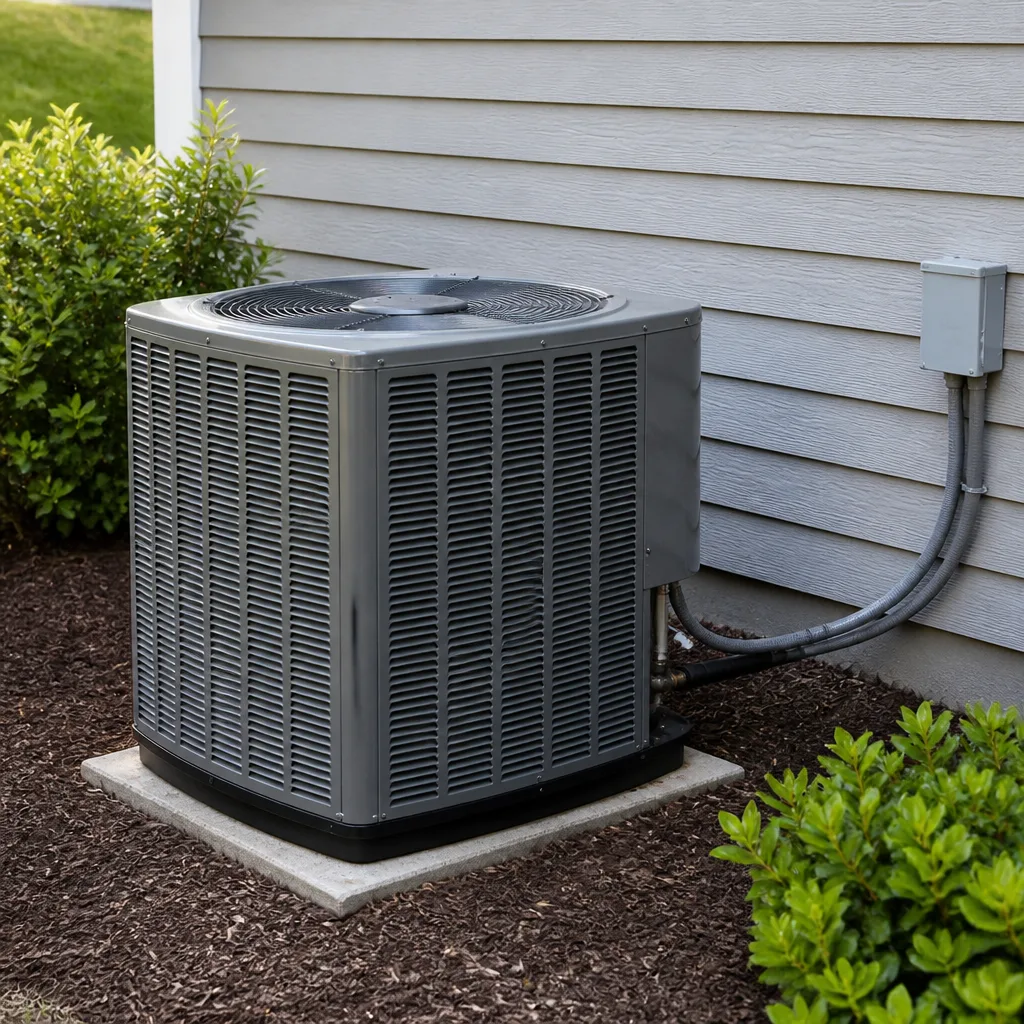
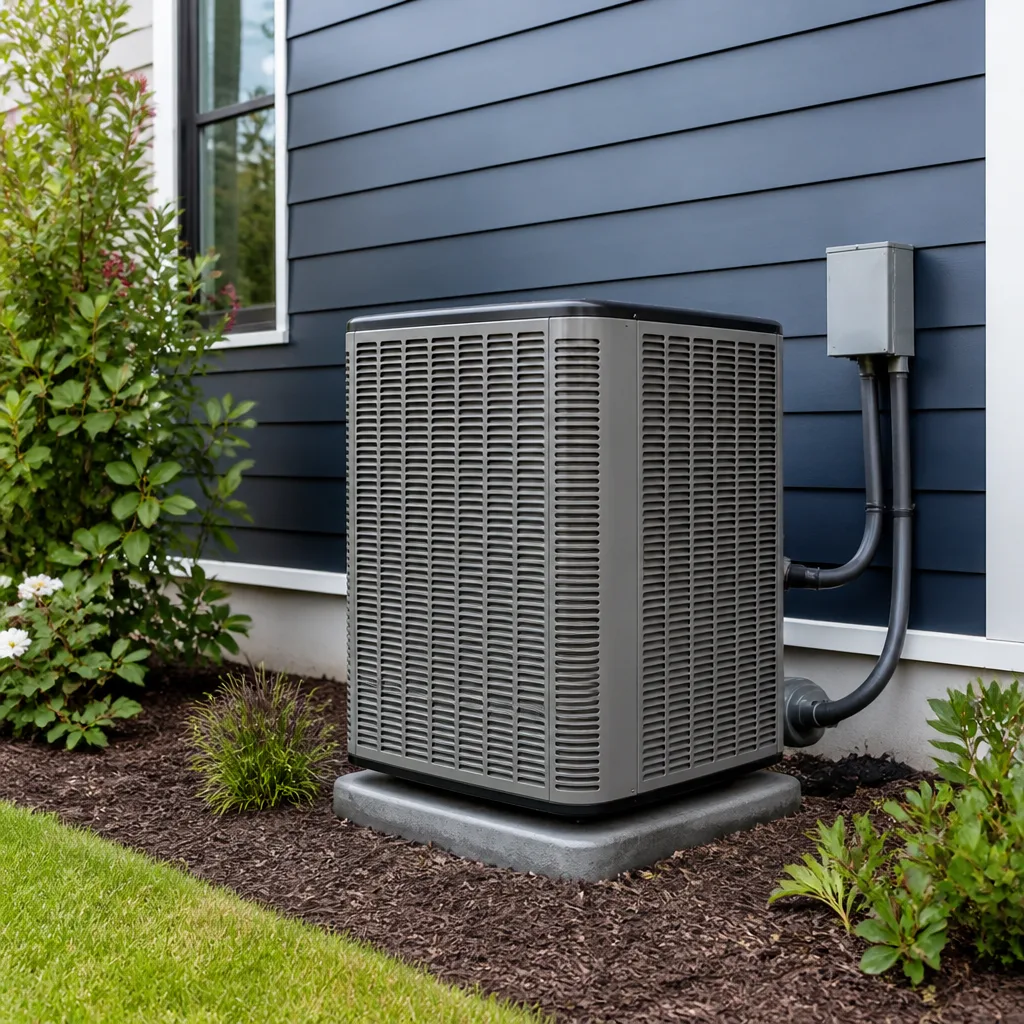
- Exterior coil rinse with a garden hose. With the unit off, rinse the outdoor coil from the inside out to push debris out rather than into the fins. No pressure washer. A pressure washer bends fins flat and turns a cheap cleaning into a coil replacement.
Everything on that list is maintenance, not repair. None of it requires opening a refrigerant circuit, disconnecting line voltage, or touching a gas valve. That’s the boundary. If the task in front of you crosses it, even a little, the safe move is to stop and call.
The Liability Shift: Refrigerant, Electrical, and Ductwork
There’s a specific moment in every DIY commercial HVAC job where the risk profile changes. It’s not gradual. It’s a switch that flips. Understanding where that switch is can save you from a very expensive lesson.
Refrigerant circuits
Refrigerant handling is regulated at the federal level under Section 608 of the Clean Air Act, and it requires EPA certification. Opening a refrigerant circuit without that certification is a violation, full stop. Beyond the legal piece, a commercial system has to be evacuated to a specific micron level and charged by weight, not by feel. Guessing the charge on a 10-ton Lennox package unit costs you a compressor eventually, and the compressor is often the single most expensive part on the unit.
Electrical components
Commercial HVAC runs on 208, 230, or 460-volt three-phase power depending on the building. That’s not residential 240. The capacitors, contactors, and disconnects inside a commercial cabinet can hold a lethal charge even after the disconnect is pulled. This is where the insurance conversation gets very real: if you’re not a licensed electrician or HVAC contractor and a fire traces back to a panel you opened, your carrier has grounds to deny.
Ductwork modifications
Ductwork changes affect static pressure, and static pressure affects every other component in the system. Cutting in a new register or rerouting a trunk without a manual J or manual D calculation doesn’t just risk comfort, it can void equipment warranties and, in a commercial building, trigger a code compliance issue at your next inspection. If you need ductwork changes as part of a larger efficiency project, our team at heat pump and mini split work in Enterprise handles the load calculations that keep the system balanced.
Why “I’ll Just YouTube It” Is a Different Risk on a 10-Ton Unit
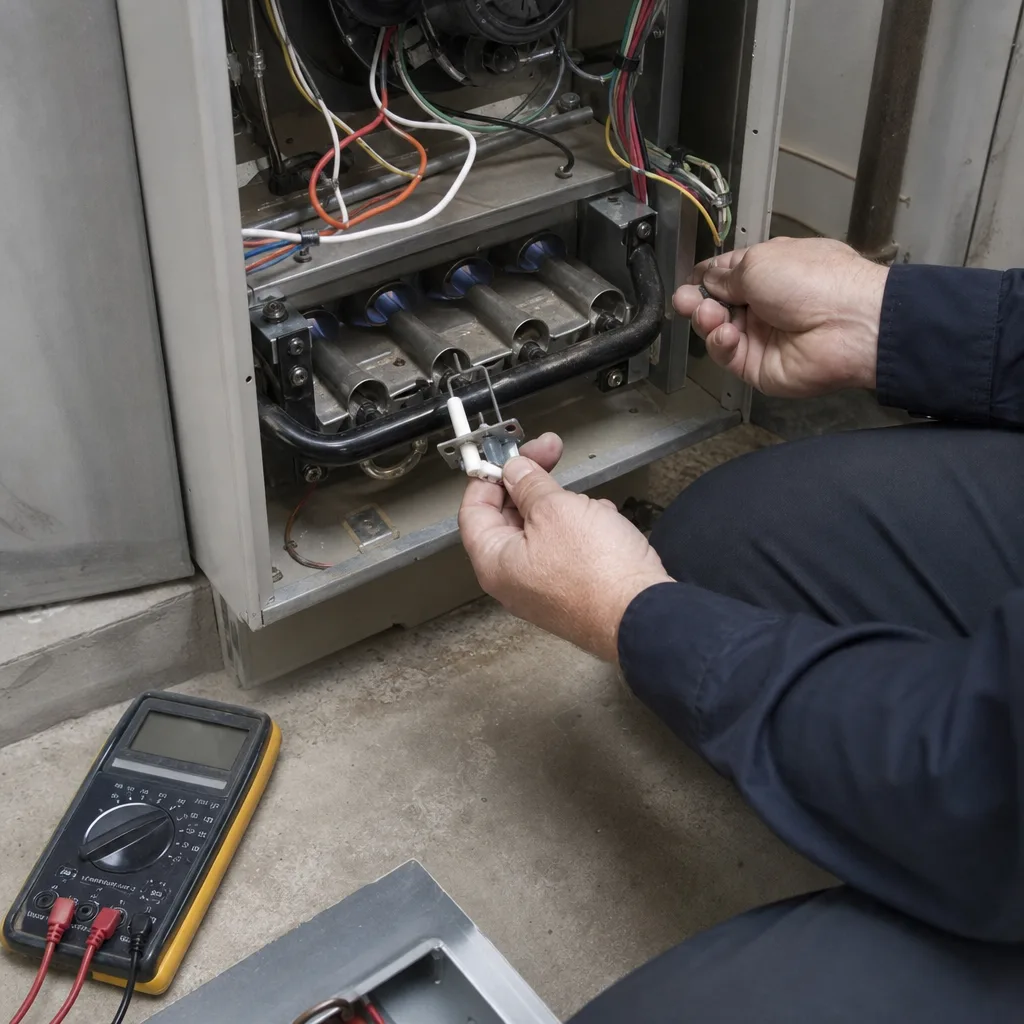
The YouTube model works pretty well on a residential system. A homeowner watches a video on a failing capacitor, tests it with a multimeter, swaps in a new one, and the AC comes back on. That’s a real, replicable repair on a 3-ton condenser, and most of the time it’s fine. The same logic does not scale to a 10-ton commercial package unit, and here’s why.
Residential systems are usually one circuit, one compressor, one blower, one zone. Commercial systems are layered. A 10-ton package unit may have two compressors, two contactors, two capacitor banks, multiple safety switches, an economizer, and a control board talking to a building automation system. The failure mode looks identical on the thermostat, but the actual cause could be any one of a dozen components, and testing the wrong one tells you nothing.
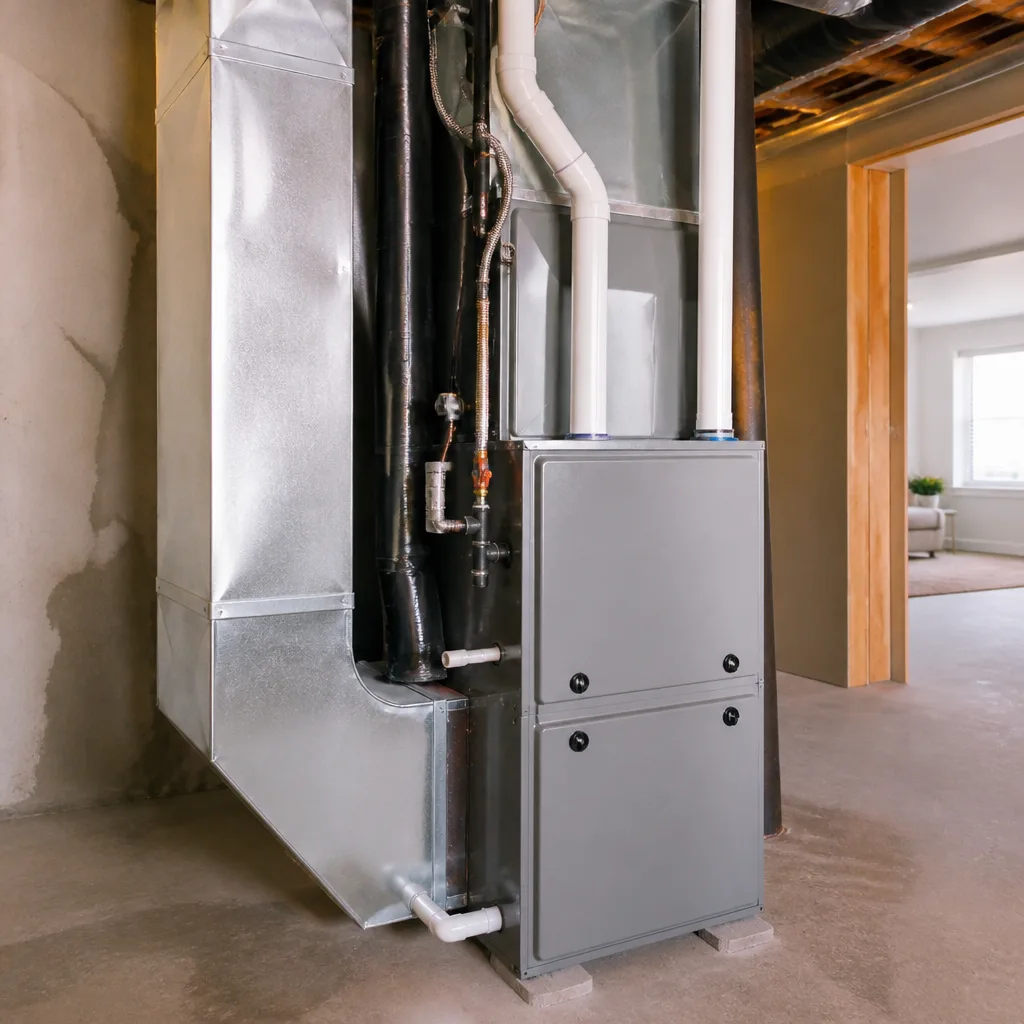
There’s also the recovery cost of getting it wrong. On a residential system, a misdiagnosis is a service call you didn’t need. On a commercial system, a misdiagnosis during business hours can mean a restaurant closes for a day, a server room overheats, or a clinic reschedules patients. The system in a commercial building is carrying revenue, not just comfort. That changes the math. If you’re already leaning toward a replacement conversation, our heating and furnace page for Enterprise covers how systems are sized and what a written fixed-price quote should include before you commit.
How to Give a Tech Enough Information to Diagnose Faster
Here’s the DIY contribution that actually saves you money: the phone call. A commercial HVAC technician who walks in already knowing the symptoms, the history, and the readings can cut diagnosis time in half. That’s money you keep. Here’s what to gather before you dial.
- The model and serial number. Take a photo of the data plate on the outdoor unit or rooftop unit. That one photo tells a tech the tonnage, the age, the refrigerant type, and the parts diagram. It’s the single most useful thing you can send.
- The exact symptoms, in order. “It ran fine Monday, Tuesday it short-cycled every 10 minutes, Wednesday morning it was blowing warm” tells us more than “it’s broken.” Timeline beats description.
- Any thermostat or control readings. Setpoint, actual temp, mode, fan setting. If your building has a BAS, screenshot the alarm or trend log.
- What you’ve already done. If you swapped the filter, changed a battery, reset a breaker, or dropped a pan tablet, say so. We’re not keeping score. We’re building a diagnosis.
- Any unusual noise or smell. Metallic rattling, electrical burning, refrigerant smell (faintly sweet, like freshly cut grass in some blends). Note it and say it.
When you call Ray’s Heating & Air with that information in hand, the person on the phone can often tell you within a minute whether it’s a same-day repair or a scheduled diagnosis. Phones are answered by a live person around the clock, including at 2 AM. No voicemail maze, no callback queue.
Emergency vs Commercial: Two Different Playbooks
Emergency HVAC and commercial HVAC are not the same category of work, even when they overlap on the same building. Emergency response is about speed and stopping the damage. Commercial work is about uptime, code, and documentation. Knowing which category your problem falls into tells you what to do next.
- Emergency (call now). No heat in freezing weather, no cooling in a triple-digit Enterprise afternoon, refrigerant smell, burning smell, water pouring out of a unit, or any unit showing visible smoke. For a business, add: refrigeration failure that threatens inventory, or a server room climbing past safe operating temperature.
- Commercial (schedule, but don’t sit on it). One zone running warm while the rest are fine, a rooftop unit short-cycling in mild weather, a comfort complaint that’s been building for two weeks, or a system that’s making a noise you can’t place but seems consistent. These still matter, they just don’t carry the same immediate bodily or financial risk.
Emergency work on a commercial system is where experience matters most. Ray has been doing this since 2002, backed by a team with up to 24 years of experience. The 90-Day Done Right Promise applies to every heating and cooling job in writing: if it isn’t done right, one call brings Ray back. That’s the kind of thing you want on the record before anyone touches a 460-volt cabinet.
When to Call Instead of Touch
If the task you’re considering requires opening a cabinet panel, pulling a disconnect, touching a refrigerant line, or modifying ductwork, call. If there’s any burning smell, refrigerant smell, or water where water shouldn’t be, call. If your building’s occupancy or insurance is on the line, call. Ray’s Heating & Air Enterprise offers free estimates in Enterprise, free second opinions on any written estimate, and no trip charge inside the county. Call (844) 455-2034 and we’ll tell you straight whether it’s something you can handle yourself or something that needs the person at your door. That’s a real answer, not a sales push.
See the difference
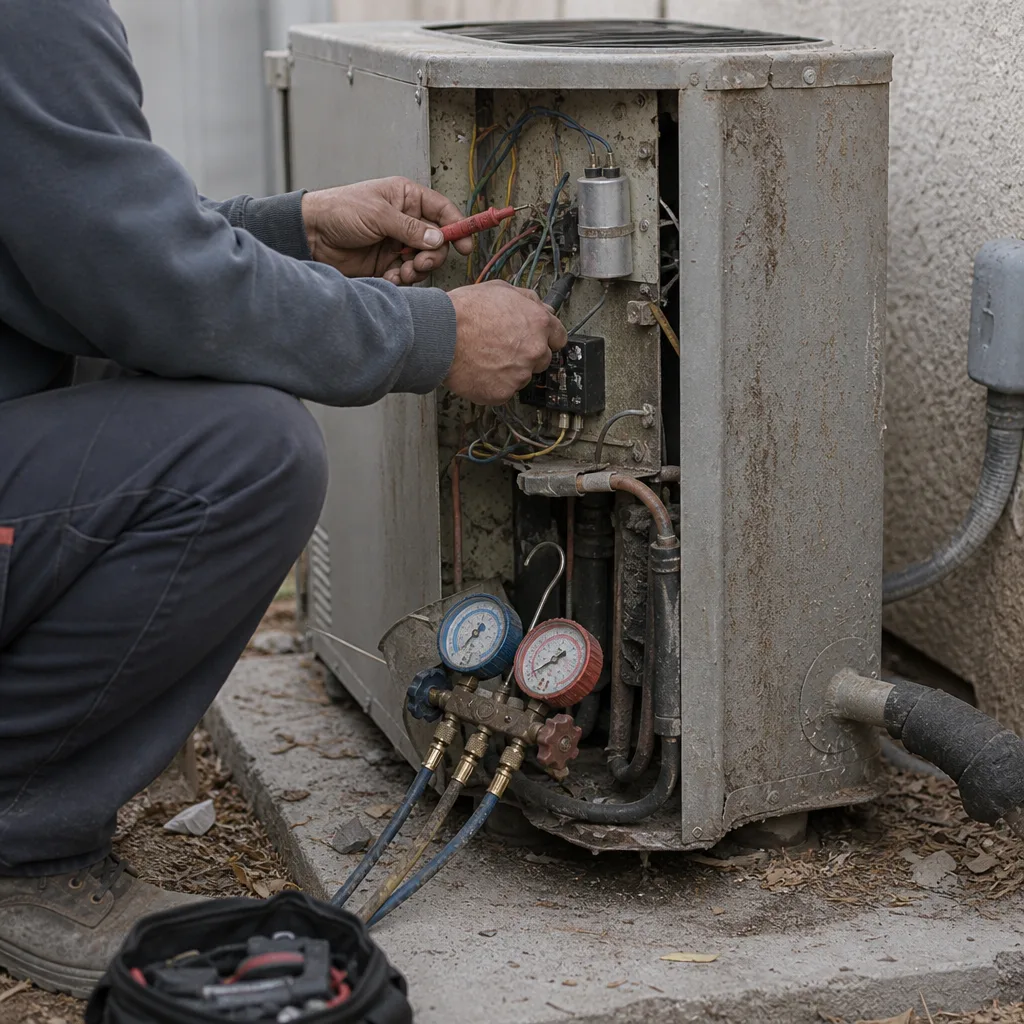 Before
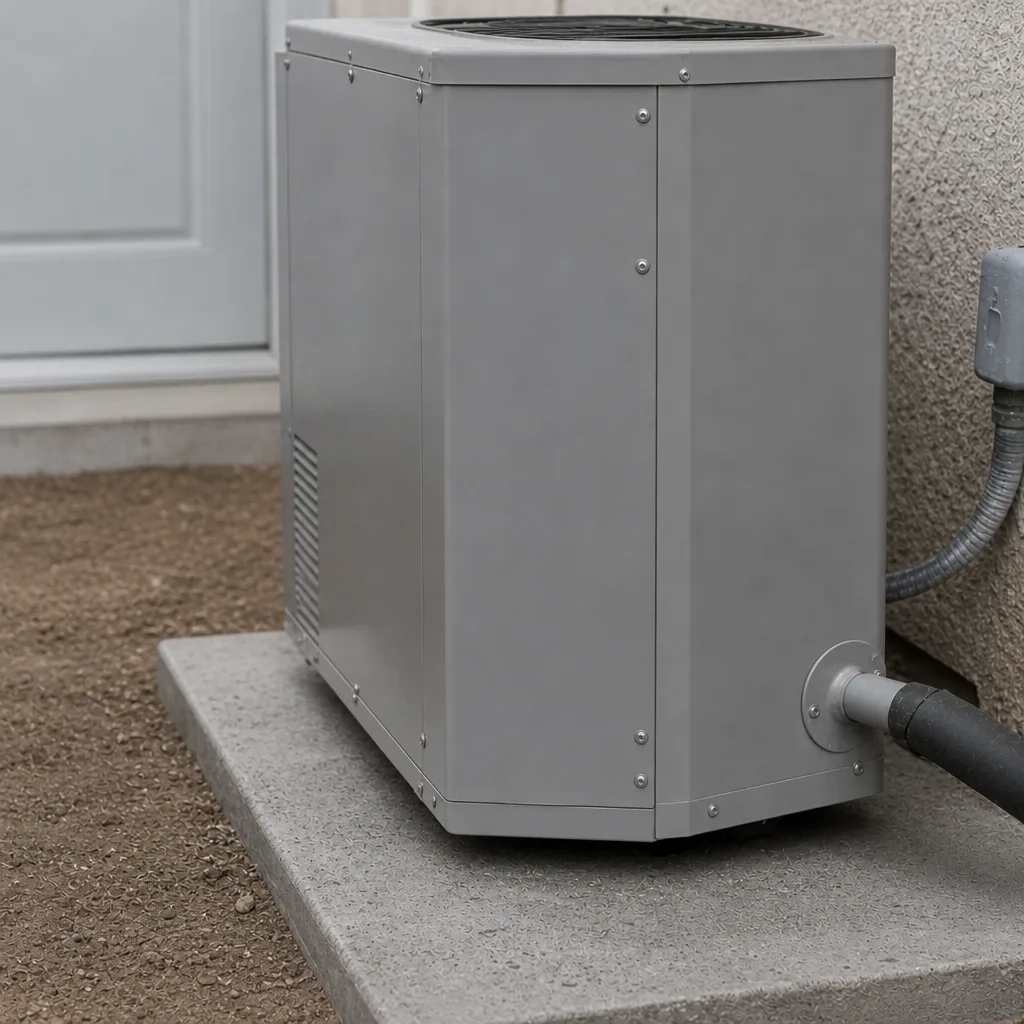 After
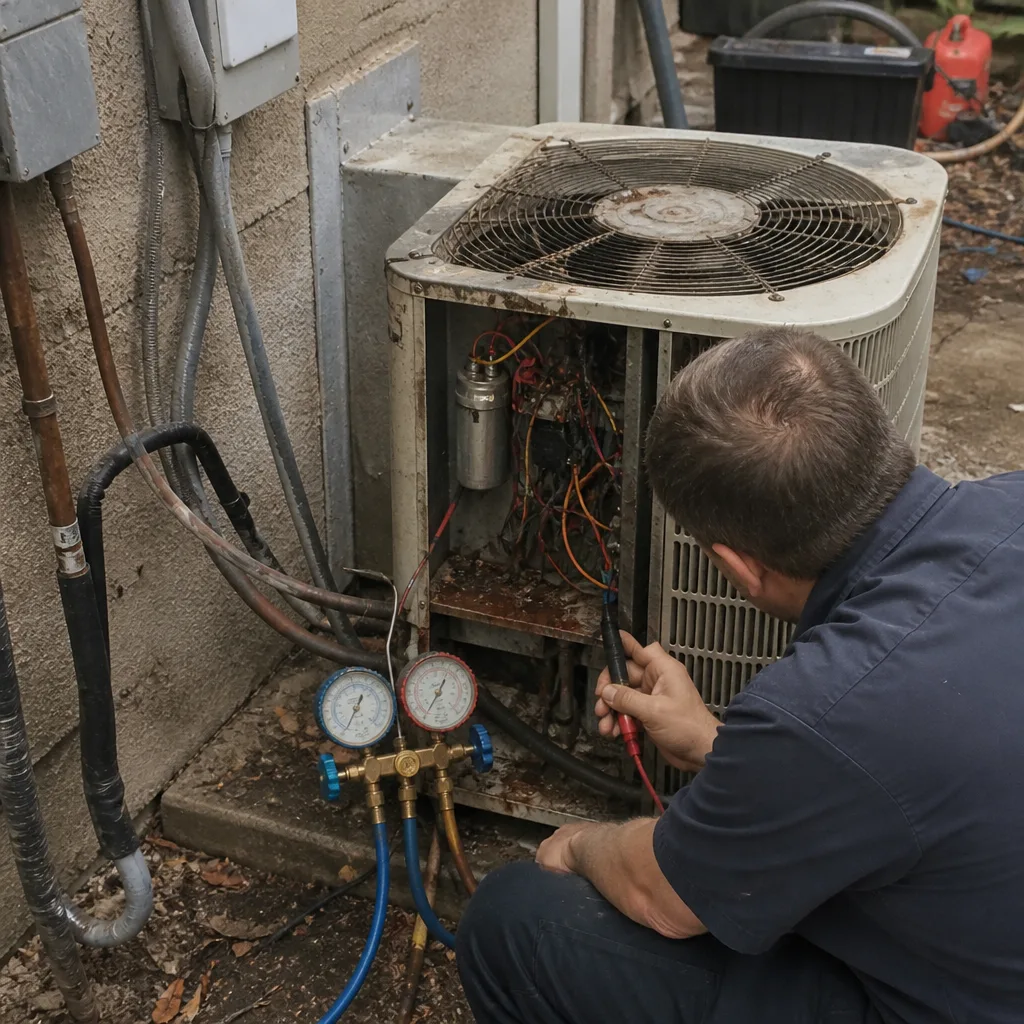 Before
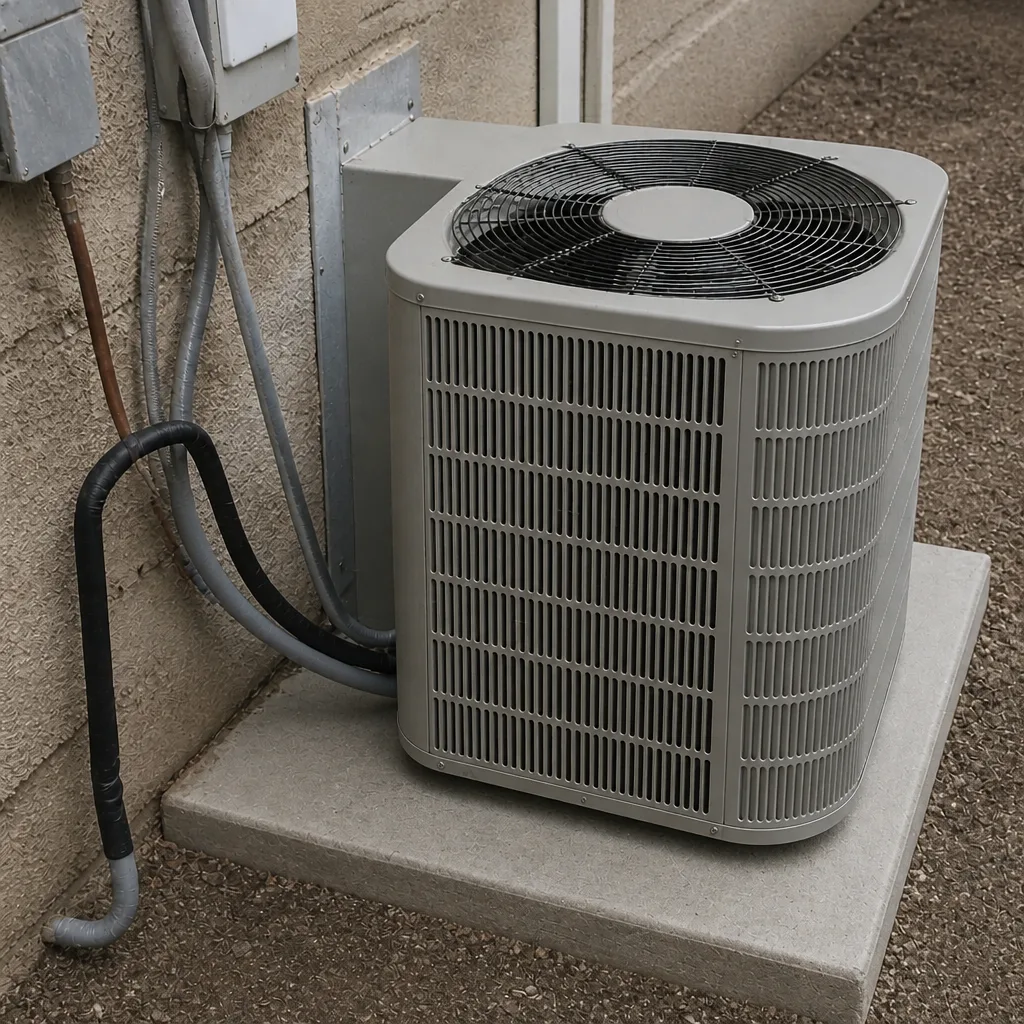 After
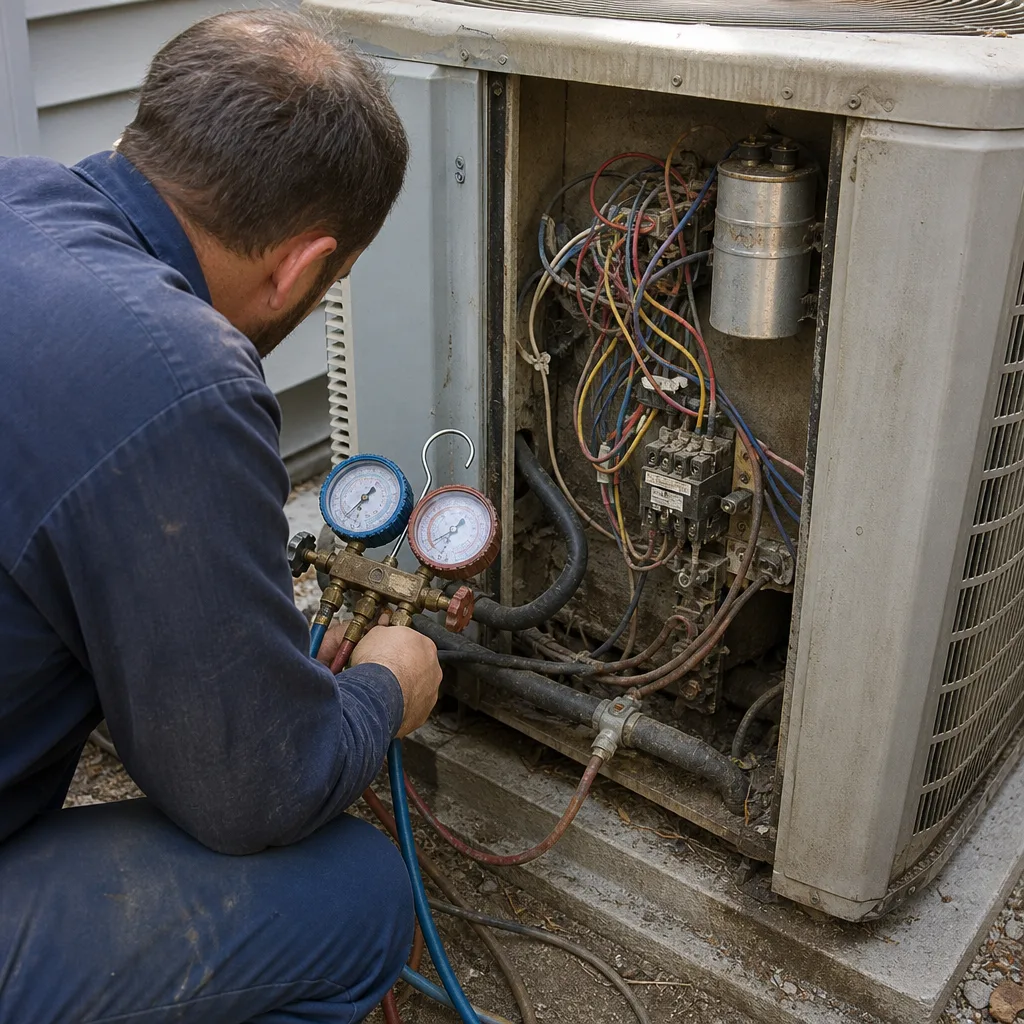 Before
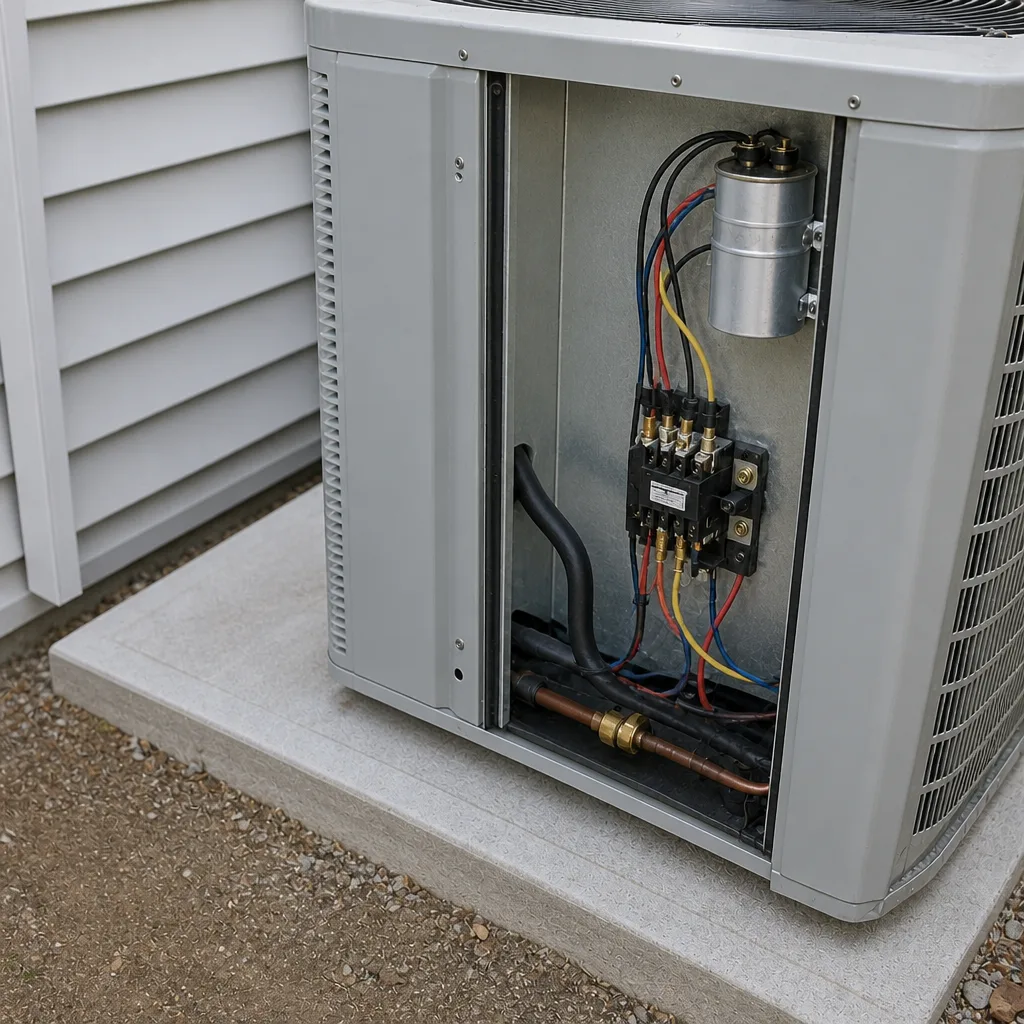 After
Common Mistakes to Avoid
- Resetting a breaker on a unit that keeps tripping it. A breaker that trips twice is telling you something is drawing more current than it should. Reset once, then stop. Repeated resets on a commercial compressor can turn a $200 repair into a full compressor replacement.
- Using a higher-MERV filter than the system is rated for. We see this constantly in Enterprise. A MERV 13 in a unit designed for MERV 8 chokes airflow, freezes coils, and burns out blower motors. Match the rated filter.
- Pressure-washing outdoor coils. It flattens the fins and pushes debris deeper into the coil. A garden hose from the inside out is the right tool. Pressure washing costs you a coil replacement.
- Topping off refrigerant. Refrigerant doesn’t get used up. If the system is low, it’s leaking, and adding refrigerant without finding the leak just delays the failure. It’s also a federal violation without EPA certification.
- Taping over a condensate drain instead of clearing it. We’ve seen pan overflows in Enterprise commercial buildings that soaked a tenant’s ceiling tiles because someone taped a drain line rather than clearing it with a shop vac.
- Ignoring a “it’s been doing that for a while” symptom. Small rattles and short cycles become compressor failures when they’re left alone through a full summer. A cheaped-out diagnosis in May is a very expensive August.
- Letting a rotating crew touch the system. If the person showing up at your door has never seen your building, they’re relearning your system on your dime. Continuity matters, and it’s why we make sure the same background-checked, uniformed person comes back.
When to Call a Professional
Call for anything involving refrigerant, line voltage, gas, or ductwork modification. Call if you can’t find the model and serial plate and need help identifying the system. Call if a breaker trips twice, if there’s a smell you can’t place, or if a leak has been “topped off” more than once. Call if you’re facing an insurance claim and want the work documented properly by a licensed contractor. Call if a repair quote feels high and you want the readings behind it, not just a number. Our starting point for any call is the same: the system tells us what’s wrong, we listen first, and you see the readings before you see the numbers. Ask anyone on your street. Free estimates from Ray’s Heating & Air Enterprise for any Enterprise business or homeowner: (844) 455-2034.
Frequently Asked Questions
Nevada requires a state contractor license for HVAC work on commercial properties, and that generally applies even to work on your own commercial building when it’s covered by code. Filter changes, thermostat batteries, condensate tablets, and exterior coil rinses are routine maintenance and don’t require a license. Opening a refrigerant circuit, touching electrical components, or modifying ductwork does. When in doubt, call the Nevada State Contractors Board or check with your insurance carrier before you start.
Insurance carriers routinely deny claims when the proximate cause traces back to unpermitted or unlicensed work. The exact policy language varies, but the pattern is consistent: if the fire, water damage, or electrical failure traces to a component you modified, the carrier has grounds to deny. Documented, licensed work protects you here. That’s one reason we put the 90-Day Done Right Promise in writing on every job.
The safest tasks are filter swaps on accessible units, thermostat battery replacement, condensate pan tablets, and exterior coil rinses with a garden hose. Those four cover most of the routine maintenance and none of them touch refrigerant, line voltage, or gas. Everything past that list belongs to a licensed professional. If you want a written record of what’s been handled, ask for our maintenance report.
Commercial systems are more complex, run on higher voltage, and often carry revenue through the building. A 10-ton package unit may have two compressors, multiple safety switches, an economizer, and a building automation interface, so testing the wrong component tells you nothing. The recovery cost of a misdiagnosis also scales: a restaurant loses a day of business, a clinic reschedules patients. That changes the math.
Calls are answered by a live person 24/7, and emergency commercial work gets priority scheduling. Same-day service is common for repair calls when the call comes in early, though install work is always scheduled rather than same-day because it requires a written fixed price and a set date. Call (844) 455-2034 and we’ll give you a straight answer on timing.
It depends on the age, the repair history, and whether the system is still sized right for the building. A good rule: if the repair exceeds a third of replacement cost and the system is past 12-15 years, get quotes on both. We give a free second opinion on any written estimate, so you can compare without pressure. No trip charge inside the county.
The Bottom Line
The DIY line in commercial HVAC isn’t about whether you’re capable. It’s about code, licensing, and the moment your building’s occupancy permit and insurance become someone else’s problem if something goes wrong after you touched it. Safe DIY territory is narrow and real: filters, thermostat batteries, condensate tablets, exterior coil rinses. The phone call matters more than you think, and a tech who arrives knowing the model, the symptoms, and the timeline can cut your bill meaningfully. Everything past the cabinet panel belongs to a licensed professional. If you’re in Enterprise and not sure which side of the line your problem sits on, call.
Ray’s Heating & Air Enterprise serves all major brands including Carrier, Trane, Lennox, and Goodman, with a 90-Day Done Right Promise on every heating and cooling job in writing. Free estimates, free second opinions on any written estimate, and no trip charge inside the county. For the full picture on what we handle, start at Ray’s Heating & Air Enterprise home, or call (844) 455-2034 for a free estimate.
Written by the team at Ray’s Heating & Air Enterprise.