
Last updated November 17, 2026
 Furnace & heating
 AC repair
 Heat pumps
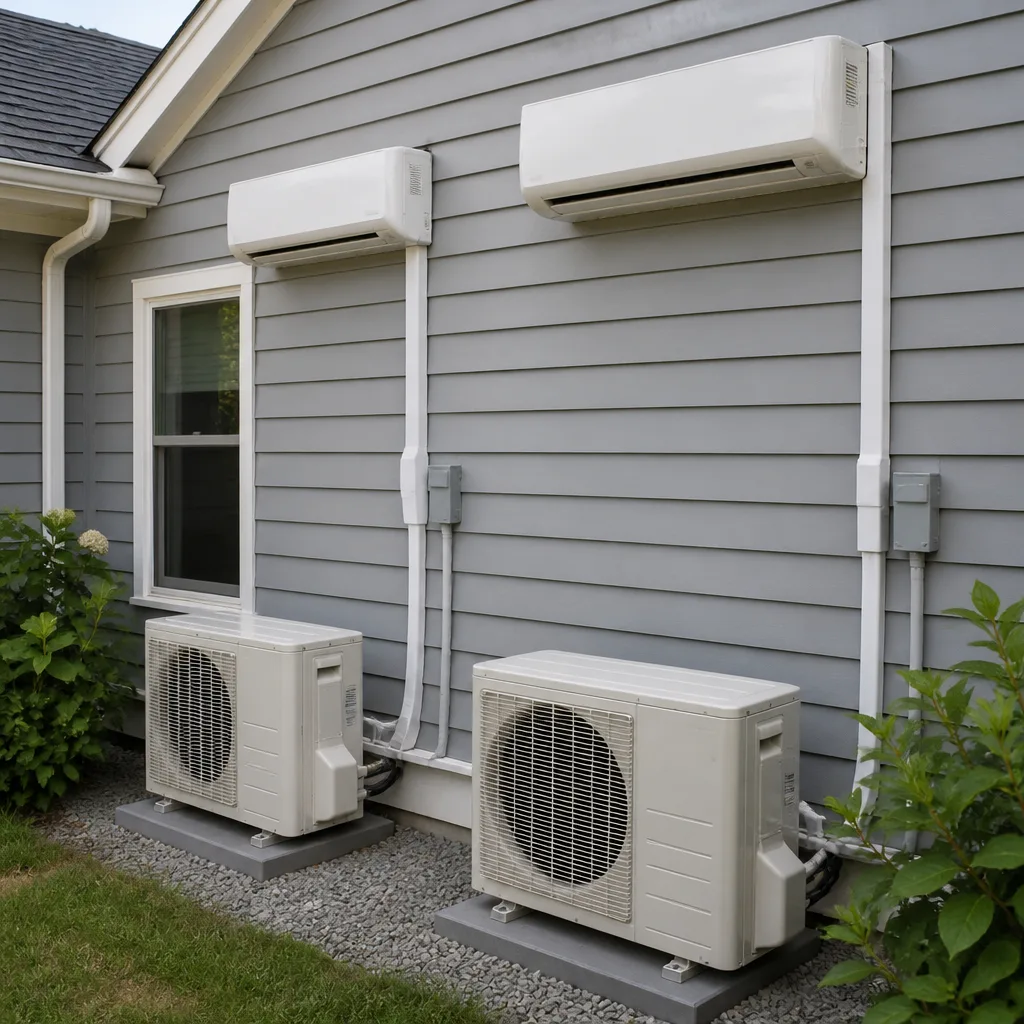 Ductless mini splits
 Carrier
 Trane
 Goodman
Seasonal tune-up and full diagnostic on your Carrier, Trane, or Goodman system - readings shown to you before any repair is proposed
Diagnosis first, numbers second - you approve the repair price before a single part goes in.
Get your free estimateThe Complete Heating & Furnace Guide for Enterprise Homeowners
The furnace nobody thought about all summer is the furnace that quits the first cold night in November. In Enterprise, that’s not bad luck – it’s a predictable pattern we see every single year. Here’s the part most people don’t think about: a furnace in Enterprise sits completely idle for roughly ten months, then gets asked to carry the house through six or eight cold weeks in a row. That on-off cycle wears parts differently than it does in Minnesota or Denver, where the heat runs a little every day and stays limber. This guide maps that failure pattern honestly – what breaks, why, what Nevada requires, and how to tell when repair stops making financial sense.
Quick Answer
If you want the short version: most furnace failures in Enterprise show up as the first cold snap hits, usually because the system sat unused all summer and something seized, cracked, or dirtied up while it was idle. A gas furnace typically lasts 15 to 20 years here, and a heat pump 12 to 15, but the idle cycle means you can’t judge either one purely by age. What matters more is whether the unit was run occasionally through the off-season and checked before the first freeze – that single habit prevents a large share of the November emergency calls we take in Enterprise.
Styles & brands we work with
- AC repair
- Furnace & heating
- Heat pumps
- Ductless mini splits
- Carrier
- Trane
- Goodman
Table of Contents
- Why the Desert Idle Cycle Ages Furnaces Differently in Enterprise
- The Furnace Problems That Are Actually Common in Enterprise Housing
- Heat Pump vs. Gas Furnace: An Honest Comparison for This Climate
- What Nevada Requires for Furnace Installation – and Why Skipping It Bites You
- Repair or Replace? Our Checklist for Doing the Math
- Getting Your Furnace Ready Before the First Cold Night
- Common Mistakes to Avoid
Why the Desert Idle Cycle Ages Furnaces Differently in Enterprise
Furnaces don’t age like cars. They age like lawnmowers – the ones that sit are often in worse shape than the ones that get run. When a furnace in Enterprise sits off from March to November, several things happen quietly:
- Dust settles on the burners and heat exchanger. Desert dust is fine and it gets everywhere. When the furnace fires the first time in months, that dust burns off and you smell it. That’s normal. But a season’s worth of it caked onto the heat exchanger changes how evenly it heats, which stresses the metal.
- Belts and blower bearings dry out. A blower motor that hasn’t turned in months can hesitate or squeal on startup. The lubricant in older bearings migrates away from the wear surfaces when nothing spins.
- Pilot and ignition components corrode. Hot-dry summers followed by cold nights create small condensation cycles inside the cabinet that a climate with steadier use doesn’t see as much. Igniters and flame sensors are common first-cold-night failures in Enterprise for this reason.
- Rodent and insect intrusion. A furnace cabinet with a vent to the outside and warm shelter potential becomes attractive during the desert summer. We’ve pulled nests out of more than one idle unit around the older neighborhoods off the main Enterprise corridor.
The takeaway isn’t that your furnace is doomed. It’s that idle time has a specific cost, and knowing what to check first when the heat won’t come on saves a lot of guessing – and sometimes a service call. If your unit has been sitting since spring, treat the first cold night as a real risk, not a maybe.
The Furnace Problems That Are Actually Common in Enterprise Housing
Generic furnace guides assume a 1950s Midwestern basement with a mid-efficiency gas furnace and a humidifier. That’s not what’s in most Enterprise homes. Here’s what we actually see when we walk into houses in this area, and how the local housing stock shapes it.
Older single-story homes: original-equipment and duct questions
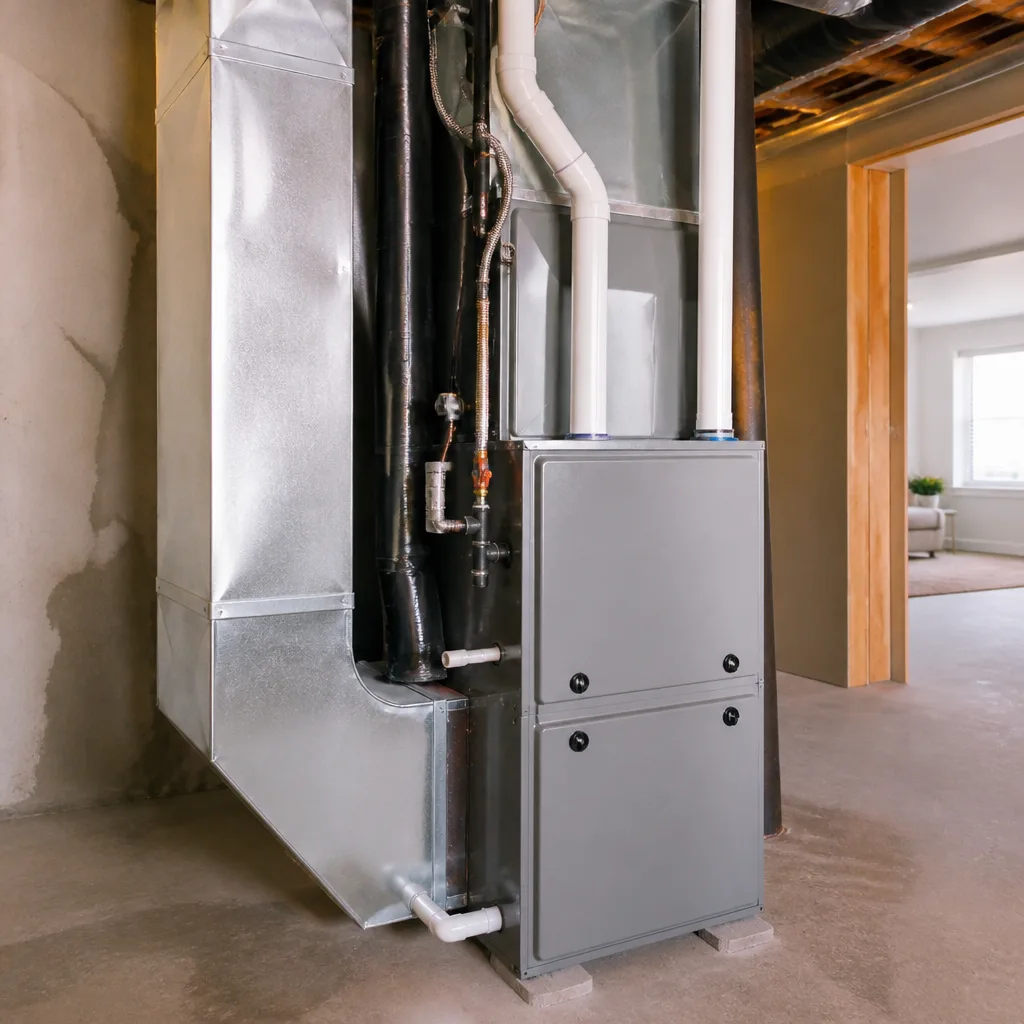
A large share of Enterprise houses were built in the 1990s and 2000s, and many still have their original furnace or a first replacement. In those homes the furnace is usually in a garage closet or a hallway mechanical closet – no basement. That location matters: garage-closet furnaces share air space with a garage that gets brutally hot in summer, which pushes the cabinet temperature and stresses the electronics and blower over time. We see more control-board and blower-capacitor failures in garage-closet units than basement units, full stop.
Newer construction: heat pumps and the furnace question
Homes built in the last 10 to 15 years in Enterprise often went in with a heat pump rather than a gas furnace. That’s the right call for this climate – hot for six months, cold for about six weeks – but it means a lot of people asking “my furnace isn’t working” actually own a heat pump and don’t know it. If the thermostat says “heat” and you have a heat pump, the same call applies but the diagnosis is different. Our heat pump and mini-split work in Enterprise covers that side of the house.
Rural and exurban properties
On the edges of town, we run into more propane, more well-water pressure issues affecting humidifiers, and more duct runs that were done for a smaller original house and never updated. A furnace sized for 1,400 square feet is doing the work of a house that’s now 2,000. You’ll get short cycling and hot-and-cold rooms, and that’s a sizing question, not a broken-furnace question.
Heat Pump vs. Gas Furnace: An Honest Comparison for This Climate
People ask this constantly, and the honest answer is that it depends on how cold your cold weeks actually get, what you already have, and what your power and gas costs look like here. Let’s break it down for the specific pattern of an Enterprise winter: mild most of the time, with a handful of nights that dip hard enough to matter.
- Heat pump strengths here: It cools in summer and heats in winter from one system. That’s a huge advantage in a climate where cooling runs six months and heating runs six weeks. Modern units from Carrier and Bryant handle the mild stretches above freezing efficiently, and you don’t need a separate furnace at all.
- Heat pump weakness here: On the hardest cold snaps, efficiency drops and the auxiliary heat strips kick in. That’s fine, but it’s a consideration if your home is drafty or poorly insulated.
- Gas furnace strengths here: It heats fast and strong on the coldest nights regardless of outside temperature, and it doesn’t care about a cold snap. If your house is older with thinner walls, a gas furnace will simply overpower the losses.
- Gas furnace weakness here: It doesn’t cool. If you already have an AC, that’s fine. If you’re replacing an aging unit and doing the whole system fresh, a heat pump often makes more sense.
One point that doesn’t get said enough: a heat pump run once a month through the summer keeps its reversing valve exercised and its compressor oil circulated, which is the exact maintenance an idle system in Enterprise is missing. That single monthly run is cheap insurance. If you’re weighing a full replacement, our heating and furnace service in Enterprise team can look at your actual system and tell you which way the math points for your house – no pressure, just numbers.
What Nevada Requires for Furnace Installation – and Why Skipping It Bites You
Nevada requires a permit for furnace and HVAC system replacements, and the work has to be done by a licensed contractor. This isn’t red tape for its own sake. The permit triggers an inspection of gas connections, venting, and combustion safety – the things that fail silently and dangerously if done wrong. A few specific reasons this matters for an Enterprise homeowner:
- Gas line and flue inspection. A furnace that’s improperly vented leaks carbon monoxide. The inspection catches that. No permit, no inspection, no safety check.
- Resale and disclosure problems. When you sell the house, an unpermitted HVAC replacement is a disclosure item. Buyers and their inspectors find it, and it becomes your negotiation problem and often your cost to correct after the fact.
- Insurance exposure. If an unpermitted install is tied to a fire or a CO incident, the claim becomes a fight you don’t want. An insurer can and will ask for the permit record.
- The warranty question. Manufacturer warranties on a unit like a Daikin or American Standard often hinge on proper installation. Unpermitted, unrecorded installs can void them.
We pull the permit on every replacement, and we’re upfront that it’s part of the cost. If anyone quotes you a furnace swap and doesn’t mention the permit, that’s your cue to ask why. Any licensed pro in Enterprise should be able to tell you exactly how the permit process works for your address. It’s one of the first things we walk through when we give an estimate.
Repair or Replace? Our Checklist for Doing the Math
This is the question that matters most, and it’s the one where a lot of homeowners get steered wrong in either direction. Here’s how we actually think about it. Run down this list honestly:
- How old is the unit? Gas furnaces last 15 to 20 years; heat pumps 12 to 15. If yours is past that window and needs a major part, replacement usually wins.
- What’s the repair cost as a fraction of a new system? The rough rule: if the repair is more than a third of what a new system would cost, and the unit is over 12 years old, lean toward replacement. Under that, repair.
- Is it a single-point failure or a pattern? One capacitor is a repair. A failed blower, a cracked heat exchanger, and a control board in the same year is a system telling you it’s done.
- How’s the efficiency? An old 80% furnace vs. a modern high-efficiency unit changes your gas bill noticeably over a decade. That’s part of the math.
- What’s the seasonal load here? In Enterprise you heat for weeks, not months, so the payback on a high-efficiency upgrade is slower than in a cold state. A mid-efficiency unit can make more sense than the top-of-the-line here. Don’t let anyone push the premium model without showing you why.
- What’s the house doing? If you’re about to sell, a documented recent replacement is a selling point. If you’re staying 10 more years, efficiency and reliability matter more than resale.
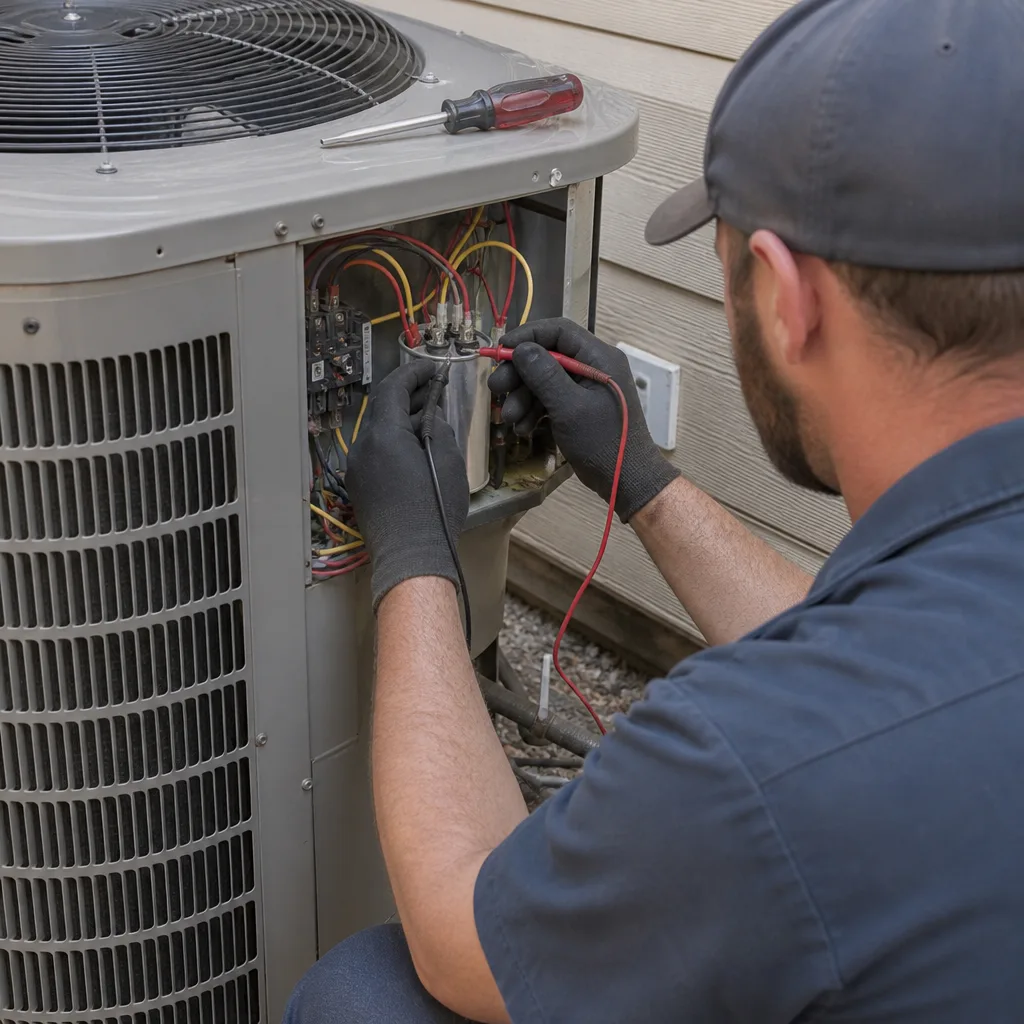
One thing we won’t do is tell you to replace a unit that’s fine. We test the capacitor before anyone says the word compressor. Readings first, numbers second – you see both. If a part reads healthy, we tell you it reads healthy. That’s the whole idea behind how Ray runs this shop.
Getting Your Furnace Ready Before the First Cold Night
The best repair is the one you never need, and in Enterprise the prep window is now, not the night the cold hits. Here’s what actually matters before the season.
- Run the heat once in October. Just twenty minutes. If something’s wrong, you find out on your schedule instead of at 11 p.m. with a cold house.
- Change the filter. A clogged filter is the single most common reason a working furnace underperforms. It’s cheap and it’s real.
- Clear the area around the furnace and the return. No boxes, no stored paint, nothing blocking the return grille. Garage-closet units especially get used as storage closets, and that’s a problem.
- Listen. A squeal or a rumble on startup that wasn’t there in spring is worth a look before it becomes a mid-season failure.
- Watch the flame color through the sight glass. A steady blue flame is good. Yellow or lifting flame is a reason to stop using it and call someone – that’s a combustion and venting issue, not a cold-house inconvenience.
A tune-up before the season is worth it in a climate like this precisely because the unit sits so long. It’s not a hard sell – it’s a cheap way to catch the idle-cycle problems before the first cold night. If you want the details of what a good pre-season check covers, our furnace guide in Enterprise has the maintained-vs-neglected comparison spelled out.
Common Mistakes to Avoid
- Never running the furnace all summer. Ten months of complete idle is what causes half the first-cold-night failures we see in Enterprise. Twenty minutes once a month in the off-season keeps the blower, ignition, and bearings exercised.
- Replacing a furnace without checking the AC side first. If your cooling side is also old, replacing just the furnace now and the AC in two years means two separate loads and permits. Plan the whole system together. AC repair and installation in Enterprise starts with the same sizing math.
- Skipping the permit to save a few hundred bucks. The inspection catches venting and gas issues, and the unpermitted install becomes a resale and insurance problem later. That’s a bad trade every time.
- Letting anyone quote a repair from the phone. A “your compressor’s shot” diagnosis without readings is a sales pitch, not a diagnosis. Ask to see the meter readings before you agree to anything.
- Ignoring a yellow flame. A yellow or flickering flame is a combustion problem. Turn it off and call someone. This is not a DIY situation.
- Buying the top-efficiency unit without the math. In a six-week heating climate, a 96% furnace may not pay back the premium over a 90% unit in the years you own the house. See the numbers.
- Storing things around the furnace in the garage or closet. Clearance around the unit exists for a reason. Boxes against a garage-closet furnace in Enterprise’s summer heat is asking for trouble.
See the difference
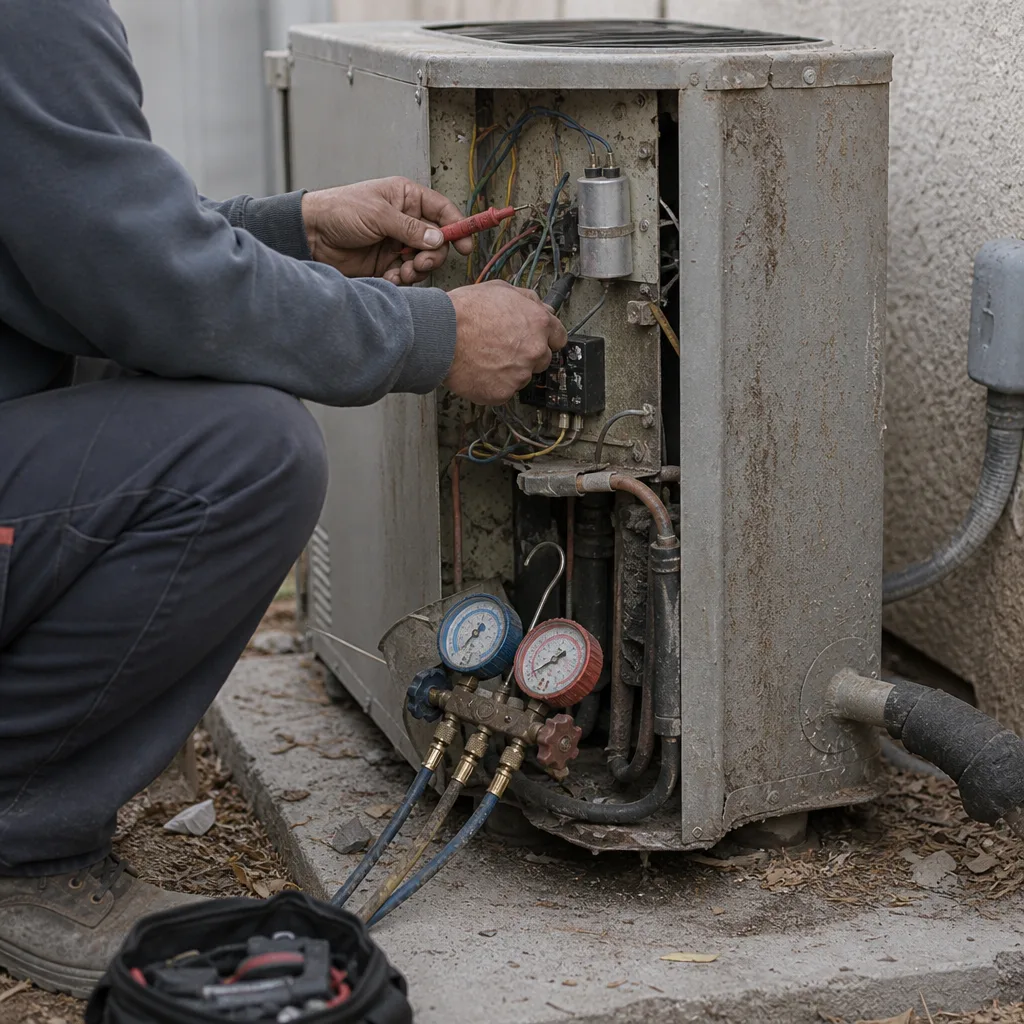 Before
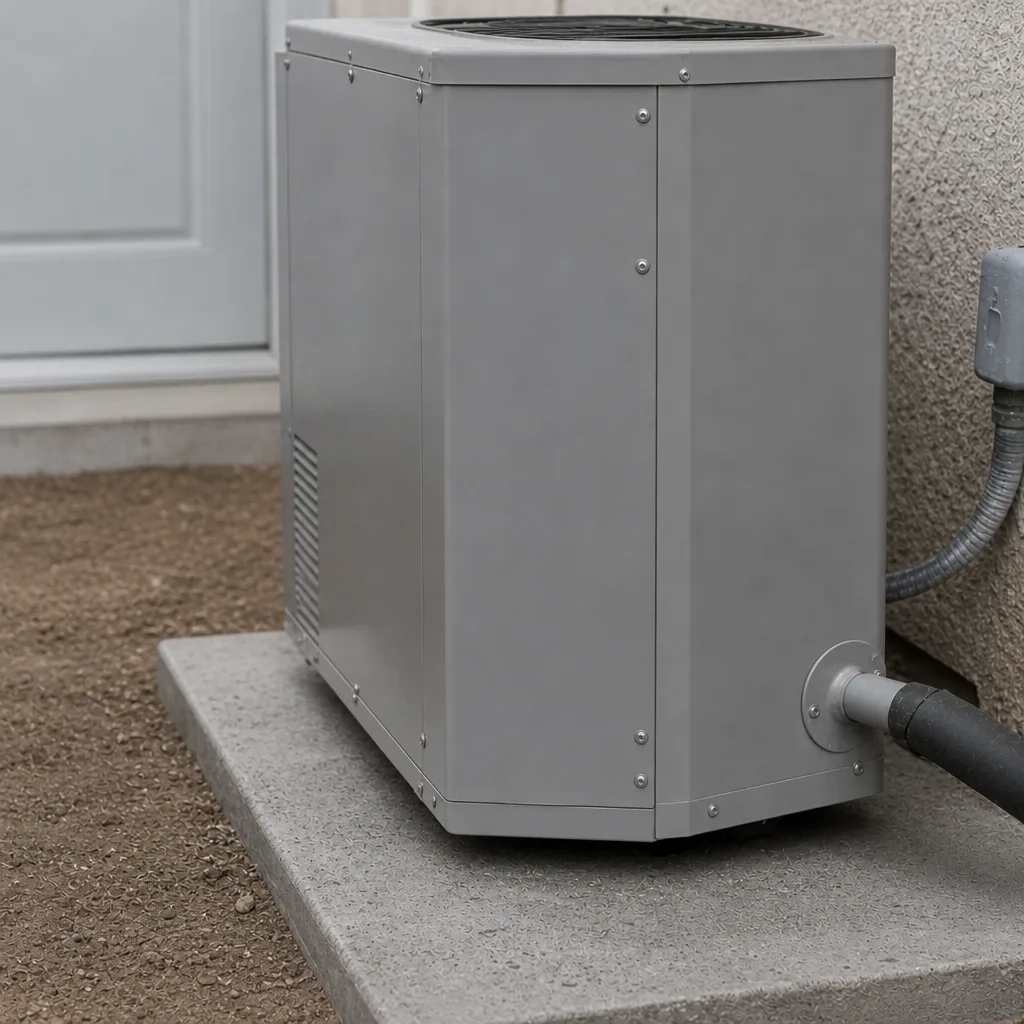 After
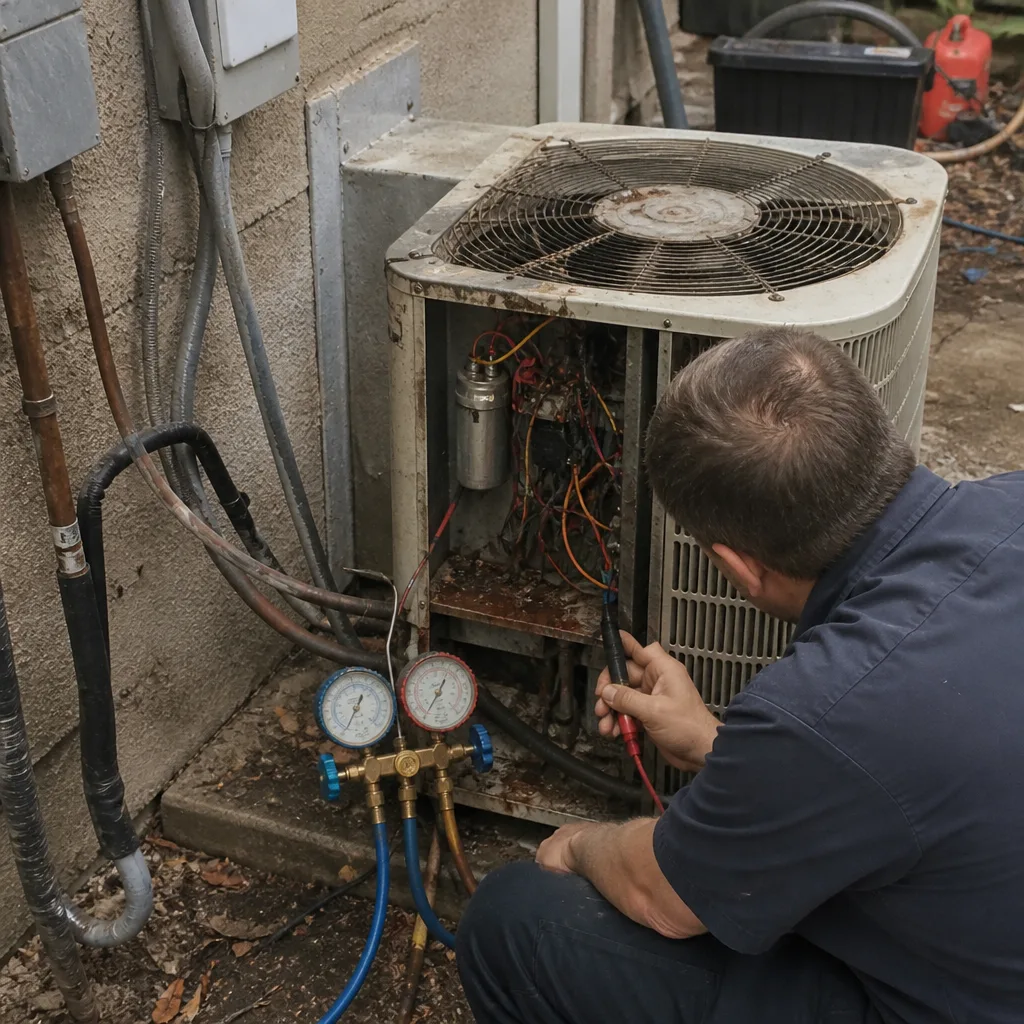 Before
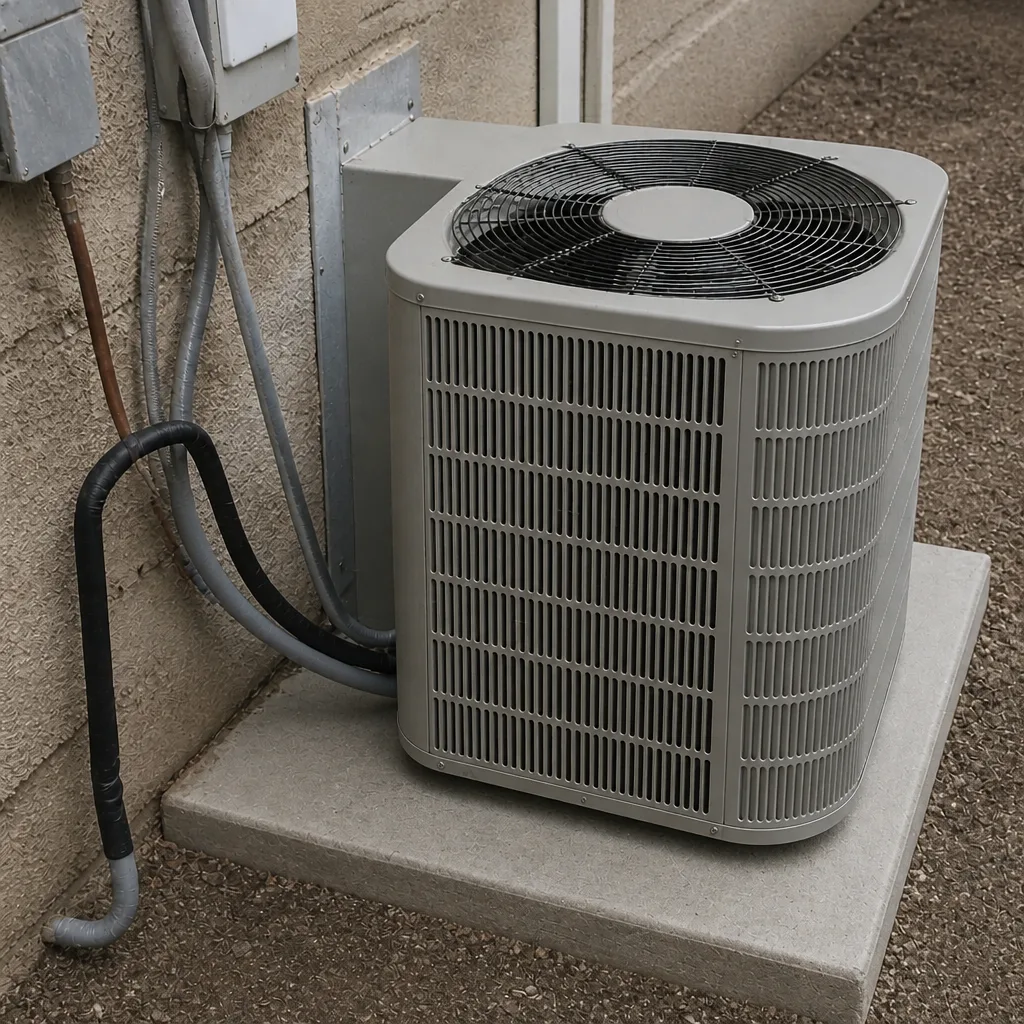 After
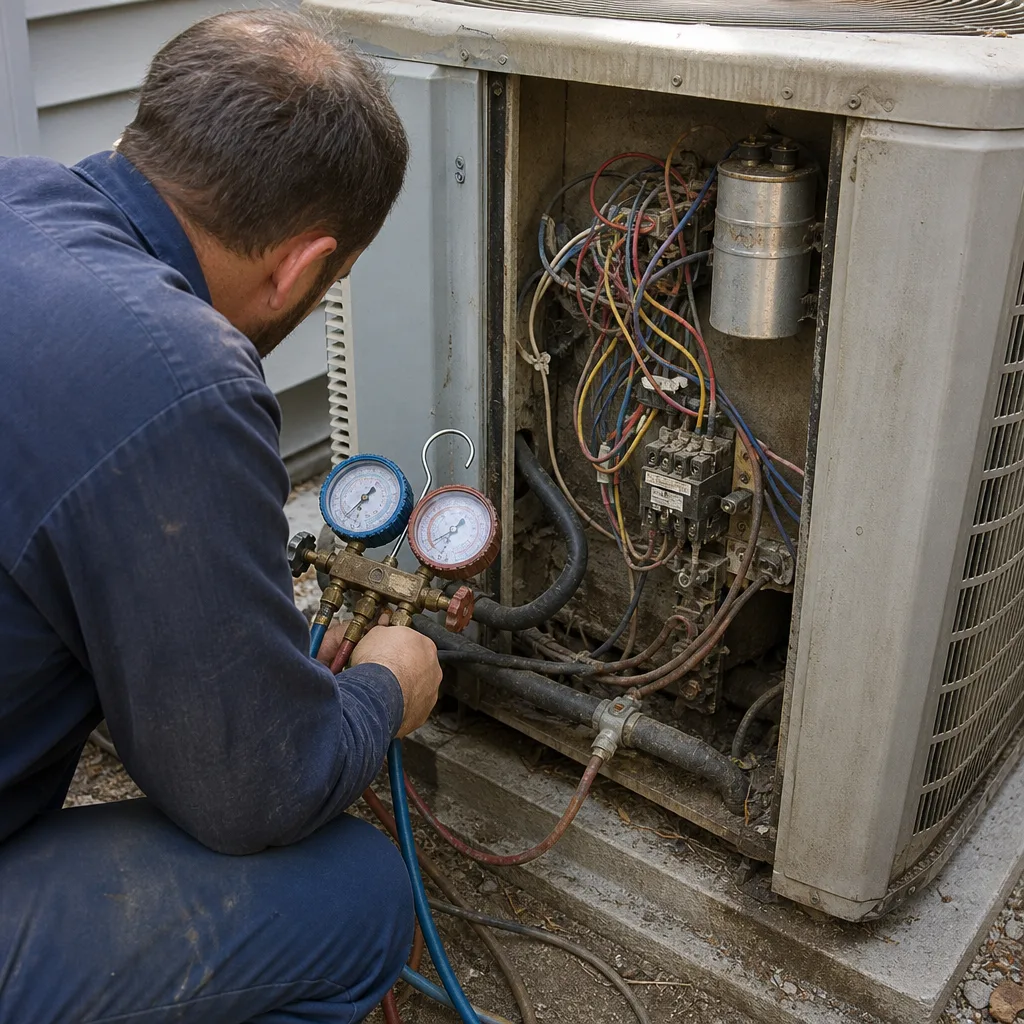 Before
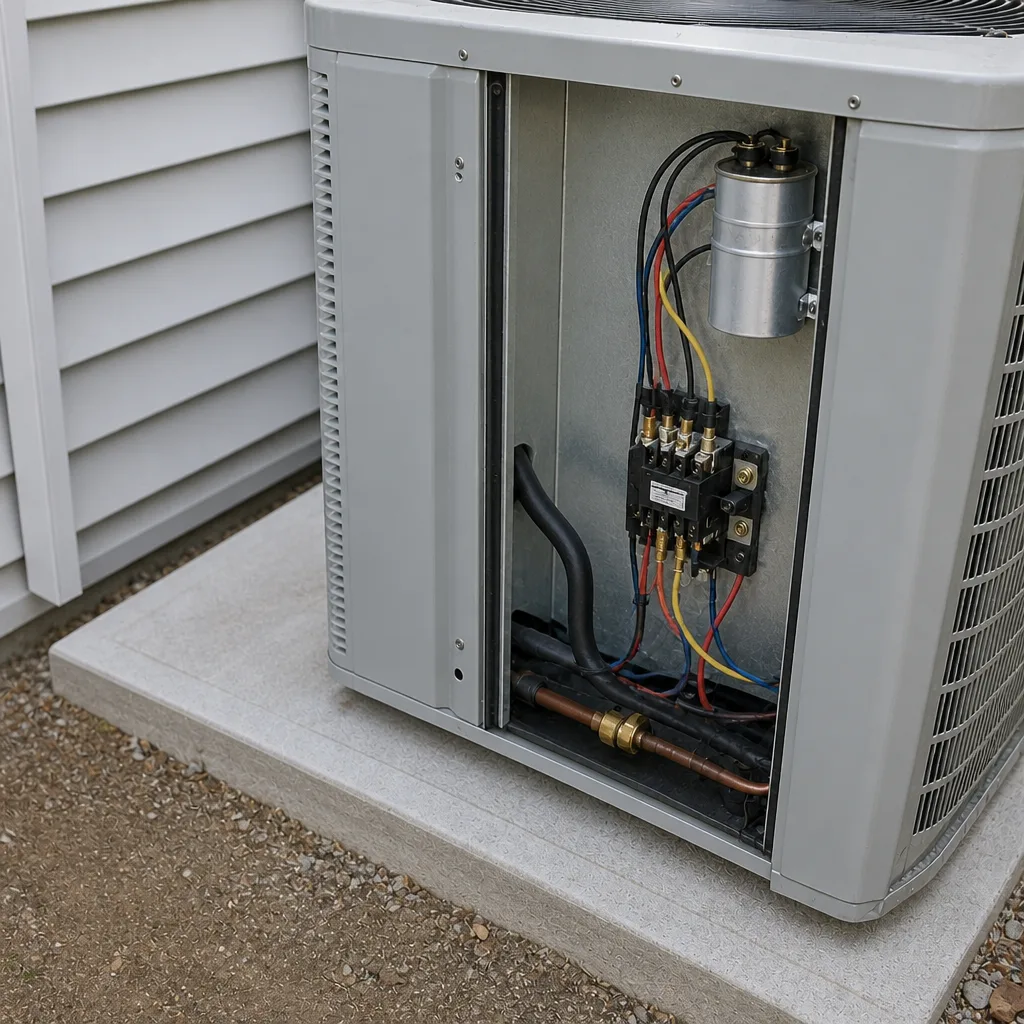 After
When to Call a Professional
Call us the moment you smell gas. That’s not a wait-and-see. Get everyone out and call from outside. Beyond that, here are the situations where a call is the right move: a yellow or lifting flame, a furnace that short-cycles repeatedly, water or rust around the base of the cabinet, a CO detector that alarms (get out first, then call), a blower that won’t turn or screams, or a unit that won’t ignite after two tries. If your furnace is past 12 years old and every winter brings a new repair, that’s a conversation worth having now, before it quits on the coldest night. Ray’s Heating & Air Enterprise offers free estimates in Enterprise – call (844) 455-2034. We test before we quote, and if we’re inside our own county we don’t charge a trip fee to get out there.
Frequently Asked Questions
Because it sat idle through the summer and something seized, dirtied up, or corroded while it wasn’t running. That’s the idle-cycle failure pattern, and it’s the single most common reason we get first-cold-night calls. Running the heat for twenty minutes once a month through the off-season is the fix, and it almost always costs less than the emergency visit.
A gas furnace typically lasts 15 to 20 years and a heat pump about 12 to 15, but the idle cycle means you can’t judge yours on age alone. A well-exercised 18-year-old unit can outlast a neglected 10-year-old one. What matters more is maintenance history and whether parts are failing in a pattern.
Yes. Nevada requires a permit and a licensed contractor for a furnace replacement, and the inspection checks gas connections, venting, and combustion safety. Skipping it creates resale, insurance, and warranty problems later. Any licensed pro here should pull the permit as a matter of course, and we always do.
If the unit is under 12 years old and the repair is less than roughly a third of replacement cost, repair usually wins. If it’s past 12 years and needs a major part, or you’re seeing repair after repair, the math points toward replacement. We’ll show you the readings and the numbers so you can decide. Call (844) 455-2034 for a free second opinion on any written estimate you’ve been given.
For a climate that’s hot six months and cold about six weeks, a heat pump usually makes the most sense because one system does both. A gas furnace wins if your house is older and drafty and you want strong heat on the coldest nights, or if you already have AC and just need the heat side. The right call depends on your house, your existing system, and your energy costs.
That’s usually dust burning off the heat exchanger after months of sitting, and it’s normal the first time. It should fade within the first twenty minutes. If the smell is sharp, chemical, or gas – or it doesn’t fade – that’s a different story. Shut it down and call us.
The Bottom Line
The furnace in an Enterprise home lives a strange life: idle ten months, then asked to carry the whole house through the cold. That pattern drives almost every winter failure we see, and it’s why a few cheap habits – running the heat monthly, changing the filter, checking before the season – prevent more emergencies than any repair. When it’s time to repair, know the math. When it’s time to replace, pull the permit. And don’t let anyone diagnose your system from the phone. Our technicians have up to 24 years of experience, background-checked, and the same face comes back if something needs a second look. That’s the 90-Day Done Right Promise in writing, and it’s why the name is on the truck.
Call Ray’s Heating & Air Enterprise at (844) 455-2034 for a free estimate, a second opinion on a written quote, or just to ask a question. Live person, every time. We’re happy to look at your furnace before the cold settles in, and we’ll show you the readings before we give you a number.
Written by the team at Ray’s Heating & Air Enterprise.