
Last updated November 17, 2026
 AC repair
 Furnace & heating
 Heat pumps
 Ductless mini splits
 Carrier
 Trane
 Goodman
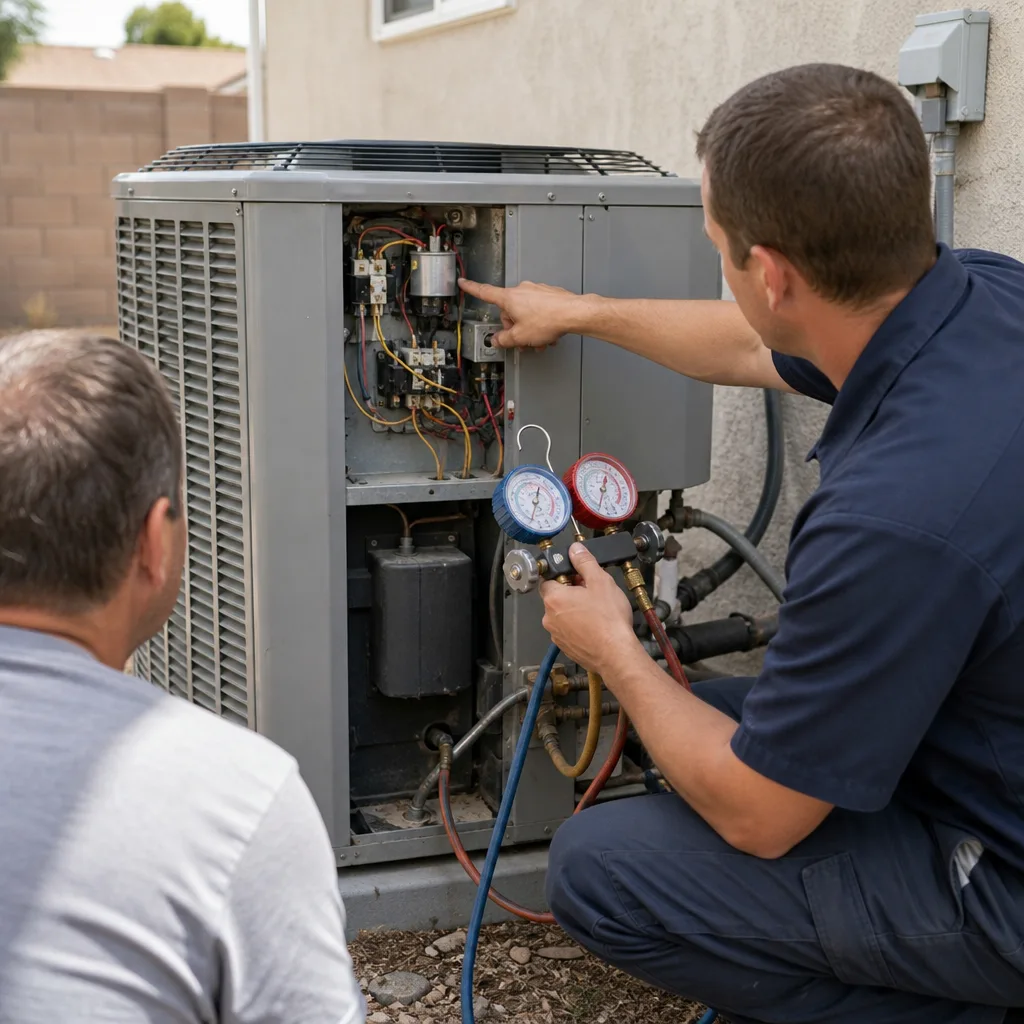
Seasonal tune-up and full diagnostic on your Carrier, Trane, or Goodman system - readings shown to you before any repair is proposed
Diagnosis first, numbers second - you approve the repair price before a single part goes in.
Get your free estimateThe Complete Guide to HVAC in Enterprise
Most HVAC guides are written for some average American home in some average American climate. Enterprise is neither, and buying equipment sized for the national average is one of the most expensive mistakes a homeowner here can make. We’ve watched builder-grade systems in Enterprise hit failure age all at once, watched oversized units short-cycle themselves to death in our specific summer heat, and watched homeowners get quotes from people who never once looked at a load calculation. This guide covers what actually matters inside a house at the south end of the Las Vegas Valley: sizing, dust, grid load, new-construction reality, and what “done right” should look like on paper before anyone touches your system.
Quick Answer
HVAC in Enterprise, NV is not the same as HVAC in Phoenix, Tucson, or any other desert city. Our elevation, dust load, and late-afternoon summer peaks mean a system must be sized from a real Manual J calculation done for this address, not copied from a neighboring model. If a contractor can’t show you the load calc, the permit, and the commissioning report, they’re guessing at your house.
Styles & brands we work with
- AC repair
- Furnace & heating
- Heat pumps
- Ductless mini splits
- Carrier
- Trane
- Goodman
Table of Contents
- Why Enterprise Is a Climate Pocket That Breaks National HVAC Rules
- The Sizing Problem: Why Manual J Doesn’t Tell the Whole Story Here
- The Short Cooling Season Myth
- The Builder-Grade Wave: 2015 to Present
- What “Done Right the First Time” Looks Like on Paper
- The One Question to Ask Every Contractor
- Keeping a System Alive in Enterprise Dust
- Common Mistakes to Avoid
Why Enterprise Is a Climate Pocket That Breaks National HVAC Rules
Enterprise sits in a specific spot that manufacturers’ generic guidelines don’t really account for. We’re above the valley floor, we get a dust signature that comes off the open desert and the construction fields to our south, and our summer peaks hit differently than the heat in other parts of the Sun Belt. All three of those things change what kind of equipment belongs in your house.
Here’s the practical version:
- Elevation affects airflow and pressure. A system rated at sea level doesn’t deliver the same capacity at our elevation. Duct static pressure readings and blower performance have to be checked here, not assumed from a spec sheet written for a customer in Florida.
- Dust load is heavier than most of the Valley. Filters clog faster, coils get dirtier, condensers work harder. A system that coasts through coolant season in Henderson can strain for the same ton cooling in Enterprise.
- Summer peaks are sharp, not long. We don’t get 110-degree afternoons in April. But when July and August land, they land hard, and the equipment has to hold capacity at the worst hour of the day.
What this means in plain terms: a system picked off a rule of thumb like “one ton per 500 square feet” is going to be wrong. Every time. Inside an Enterprise home, the correct number depends on the specific house. That’s the whole reason we push for a real load calculation before quoting equipment. For the repair side of this, see our AC Repair & Installation in Enterprise page, which goes deeper into diagnostics.
The Sizing Problem: Why Manual J Doesn’t Tell the Whole Story Here
Manual J is the industry standard load calculation, and it’s a genuinely good tool. But a Manual J run by someone who doesn’t know Enterprise will underestimate how hard a system has to work in our specific conditions. Manual J accounts for square footage, insulation, windows, orientation, and climate zone. It does not automatically account for the local dust load that coats your condenser coil every spring, or the grid-driven runtime patterns that develop when everyone in the neighborhood comes home and cranks the thermostat at 5 p.m.
A properly sized system for an Enterprise home will often come in slightly larger than a national-average calculation would predict, not because we’re padding, but because the local conditions require it. Oversized systems short-cycle. Undersized systems never reach set point. Neither one lasts. The right size is the one that matches this house, this yard, this window layout, this neighborhood’s afternoon patterns.
What a real load calculation includes:
- Window-by-window heat gain. South and west glass in an Enterprise home carries a different load than the same square footage on a north-facing lot.
- Attic and duct design. Ducts run in a 140-degree attic lose cooling before it reaches the room. That loss has to be in the number, or the system is undersized in practice.
- Infiltration values that match the actual build. Builder-grade homes from the last decade have different air sealing than older construction, and the model has to reflect which one is in front of us.
- Latent load tuned to the dry climate. It’s less about humidity removal than humidity management, and getting that wrong swings the sensible capacity in ways that matter.
When we quote a replacement system, we run the calculation for the address. Not a model number match from a similar house down the street. Do two houses of the same square footage sometimes come out at the same size? Sure. But we still check.
The Short Cooling Season Myth
People hear “Nevada” and mentally shorten the cooling season. The assumption is: cool spring, hot summer, then back off in fall. In Enterprise, the runtime per day in July and August is often higher than what you’d see in parts of Texas or Arizona with a longer nominal season, because we run hard during peak hours rather than coasting through a long mild shoulder.
What this means practically: your compressor cycles accumulate faster than the calendar suggests. A unit that has “only” been through eight summers in Enterprise might have more run hours than a fifteen-year-old system in a milder climate. When we tell a homeowner in Enterprise that their equipment is hitting the age where failure risk climbs, we’re not talking about the year on the tag. We’re talking about hours and load.
The other side of this: pre-season service matters more here than the seasonal-calendar advice you’d get nationally. If you wait until the first 105-degree day to test the system, you’ll find the failure the same day everyone else does. The first week of serious heat is when the calls stack up. Getting eyes on the system in spring, before the load arrives, is the difference between a small fix and an emergency. Our Heating & Furnace in Enterprise team handles the shoulder-season side of that equation too, so it’s not just a summer concern.
The Builder-Grade Wave: 2015 to Present
Enterprise has grown fast, and a huge share of the housing stock went up in the last decade. That means thousands of homes in this area are running on the same original builder-grade equipment, all hitting the same failure window in roughly the same years. We see it every week now: 8- to 11-year-old systems, sometimes with the original builder’s cheapest equipment still in place, starting to fail on the same compressor relay or the same blower motor.
Why does the “wave” matter to you?
- Replacement economics change when everyone replaces at once. Lead times and availability on certain models tighten when a whole neighborhood hits the same age bracket.
- Builder-grade installs often skipped the fine details. Duct sealing, refrigerant charge verification, and static pressure setup get compressed on production timelines. Those shortcuts show up as failures a decade later.
- You can plan ahead. If your home was built between 2015 and 2020, sketch out a replacement budget before the failure happens. That’s cheaper than the emergency call.
The upside: if we know the equipment is due to fail, we can catch the early warning signs before the compressor gives out on a 108-degree afternoon. Brands like Goodman and Rheem have made significant improvements in the residential segment, and a properly installed and commissioned system from either will run well past a decade. What kills them isn’t the brand. It’s the installation quality and the maintenance routine.
What “Done Right the First Time” Looks Like on Paper
You should be able to hold three documents in your hand after any installation and know the job was done properly. If any of them are missing, that’s your answer about the quality of the work.
- The permit. A mechanical permit pulled under the correct contractor license and closed by the jurisdiction after inspection. Not a receipt. Not a handwritten note. A real permit record with your address on it.
- The load calculation. The Manual J output, printed or digital, showing the inputs (square footage, window sizes, orientation, insulation values) and the output (required tonnage and airflow). If a contractor tells you they “just know” the right size, that’s not on paper and that’s not good enough.
- The commissioning report. Static pressure readings, refrigerant charge verification (superheat and subcool numbers), temperature split across the coil, and airflow measured at the registers. Numbers, not checkmarks.
On top of the paperwork, a properly commissioned install includes refrigerant charge verified against manufacturer spec, electrical connections torqued and tested, condensate drain primed and tilted to flow, and thermostat wiring run clean and labeled. We’ve seen plenty of new installs where none of that happened and the homeowner found out three summers later when the compressor died.
Our own version of “done right” is the 90-Day Done Right Promise: if something we installed or repaired isn’t right in the first 90 days, one call brings us back. That’s in writing, stamped on every job. It’s also why we push for the paperwork. If we can’t document that we did it correctly, we have no business calling it done.
The One Question to Ask Every Contractor
Here it is: “Can you tell me how this neighborhood’s grid load affects your sizing recommendation?”
That’s the question. It’s not a trick, and it’s not a gotcha. But it tells you almost immediately whether the person quoting your system understands where they are. Enterprise’s grid patterns matter because the local utility load shapes both the peak demand and the recovery periods the system has to handle. A contractor who knows this neighborhood will talk to you about afternoon peaks, the way the whole block comes home and turns on cooling at once, and how that interacts with the equipment’s rated capacity at high outdoor temperature. They’ll talk about whether the utility has demand-response programs in place and how those affect comfort. They’ll talk about what happens during a peak-event afternoon when the grid is strained and everyone’s thermostat is trying to recover at the same moment.
A contractor who looks confused by the question is giving you a quote based on a national average. Which is exactly the thing that gets homeowners into trouble in Enterprise.
Two follow-up questions that separate the pros from the salespeople:
- “Walk me through your diagnostic process before you told me it was the compressor.” The right answer starts with testing the capacitor, checking the contactor, verifying refrigerant charge, and confirming line voltage. The wrong answer starts with “the compressor’s probably bad.” (We test the capacitor before anyone says the word compressor. Every call.)
- “What’s the written guarantee if it doesn’t work?” Any installer who won’t put it on paper is telling you something.
That second question is why we lead with the 90-Day Done Right Promise. It’s not a marketing line. It’s a written commitment that if the work doesn’t hold, we come back.
Keeping a System Alive in Enterprise Dust
You can’t change the dust. You can change how often you deal with it. The single biggest thing that extends equipment life in Enterprise homes is filter discipline – and not the once-a-year routine you’ll read in national guides.
What a realistic maintenance rhythm looks like here:
- Filter check every 60 days, not quarterly. During spring and construction season in the southern part of Enterprise, check every 30 days. Filters loaded with dust force the blower to work harder and reduce the cooling the coil can deliver.
- Condenser coil wash every spring. A condenser caked with desert dust loses capacity long before it fails. Get it cleaned before the heat arrives.
- Duct inspection every two years. Not to sell you a duct cleaning. To find the leaks and disconnected runs that a builder-grade install missed.
- Capacitor and contactor check every spring. These are the two cheapest failures to fix and the two most expensive to ignore.
If you’re running a heat pump or mini-split instead of a traditional split system, the maintenance cadence is similar but the filter locations are different and the outdoor unit has to be kept clear of debris and vegetation. Our Heat Pump & Mini Split in Enterprise page covers that in more detail. Also worth mentioning for anyone tracking reliability across brands: we see solid results from Daikin and York on the residential side year after year, along with the bigger names. The brand matters less than the install and the maintenance. That’s not a sales pitch. It’s just what the service records show.
Common Mistakes to Avoid
- Buying on square footage alone. “One ton per 500 square feet” is a number that fails in Enterprise more often than it works. Get the Manual J or walk away.
- Skipping the permit to save a few hundred dollars. No permit means no inspection, which means you have no idea whether the install meets code. That shows up when you go to sell the house.
- Replacing the outdoor unit but keeping an old indoor coil. Mismatched equipment loses efficiency and reliability. Both sides together, or neither.
- Waiting for the first hot day to test the system. The first 105-degree afternoon is not the time to find out your capacitor failed in the spring. Book a pre-season check.
- Trusting a phone quote. If they quote a price before a technician has run readings on your specific system, they’re guessing. Numbers first, then pricing.
- Ignoring dust on the condenser. Every extra pound of dust on that coil is capacity lost. Clean it in the spring, every year, no exceptions.
- Letting a national-crew installer walk through the door without asking who’s coming back. If the tech who shows up today won’t be the one who answers when the system fails next summer, that’s a problem.
When to Call a Professional
Some things are genuinely homeowner tasks. Changing the filter. Clearing vegetation from around the outdoor unit. Watching for ice on the lines. And some things are not. Any of the following should trigger a call:
- Your system trips a breaker, blows fuses, or shuts off repeatedly on its own.
- You smell burning, gas, or anything electrical near the indoor or outdoor unit.
- Ice forms on the refrigerant lines or the outdoor unit while it’s running in the heat.
- You hear grinding, screeching, or metal-on-metal from the air handler or condenser.
- Cooling output drops noticeably even after a filter change.
- You receive a written estimate for a system replacement from anyone, and you want a second opinion before committing.
Do not open the outdoor unit’s electrical panel to test anything yourself, and don’t attempt refrigerant work. That equipment holds lethal electrical energy and high-pressure gas, and no online guide is a substitute for the training and meters a real technician brings. Ray’s Heating & Air Enterprise offers free estimates in Enterprise – call (844) 455-2034, and we’ll show you the readings before we quote anything. A free second opinion on any written estimate from another contractor is a standing offer. No trip charge inside the county.
See the difference
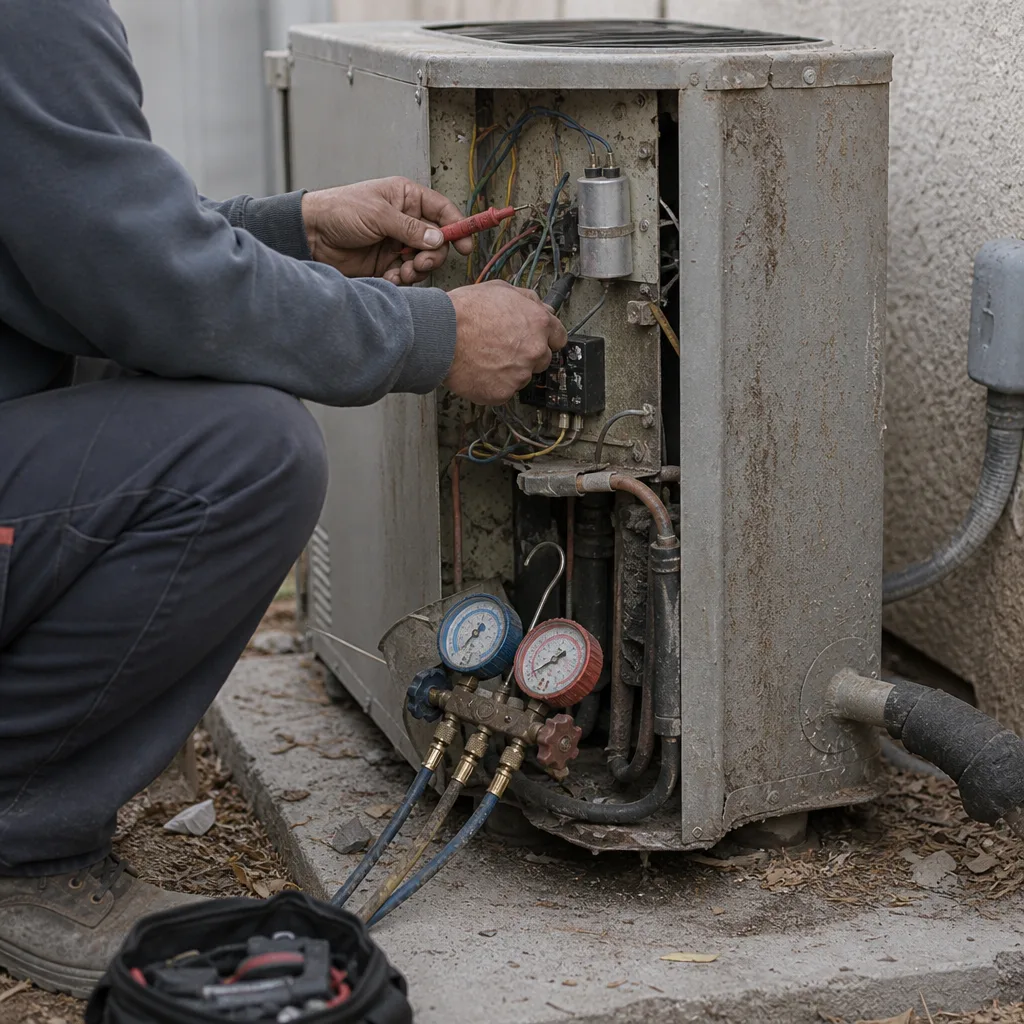 Before
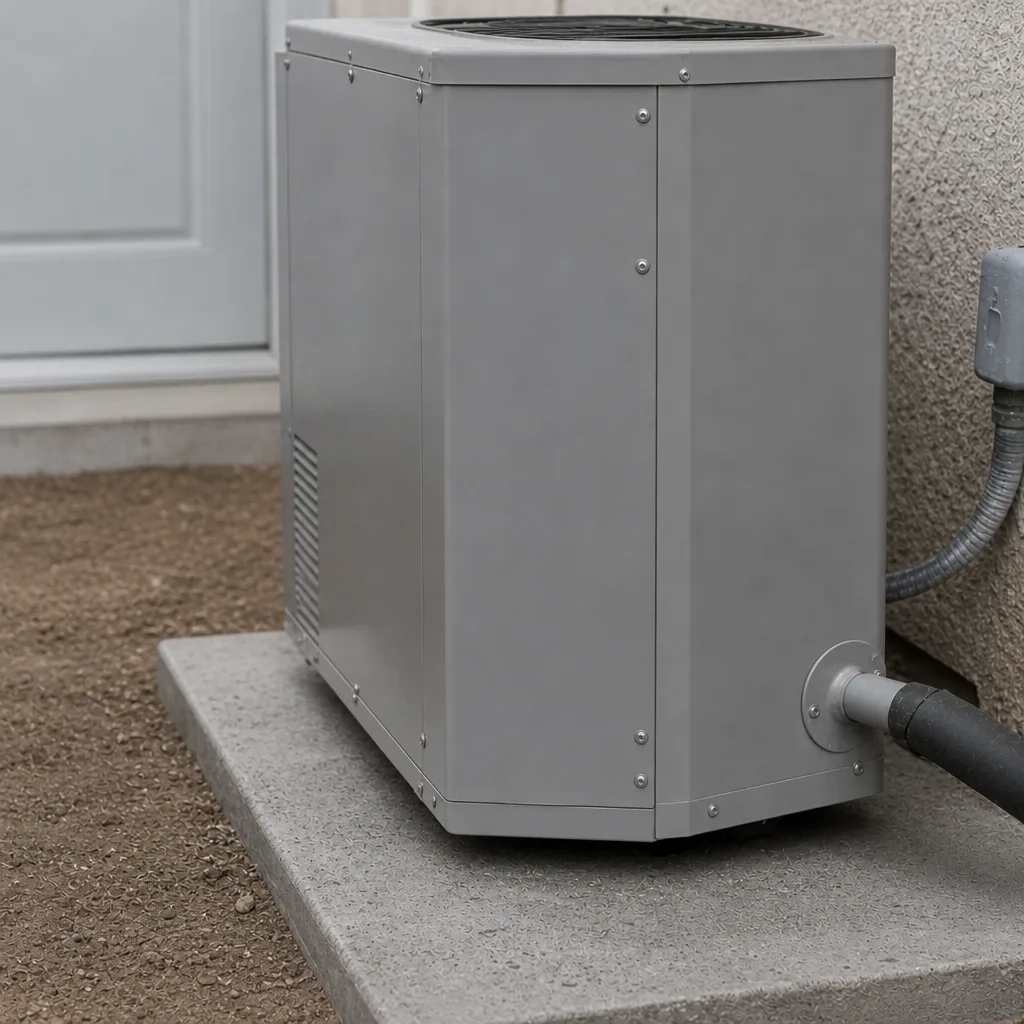 After
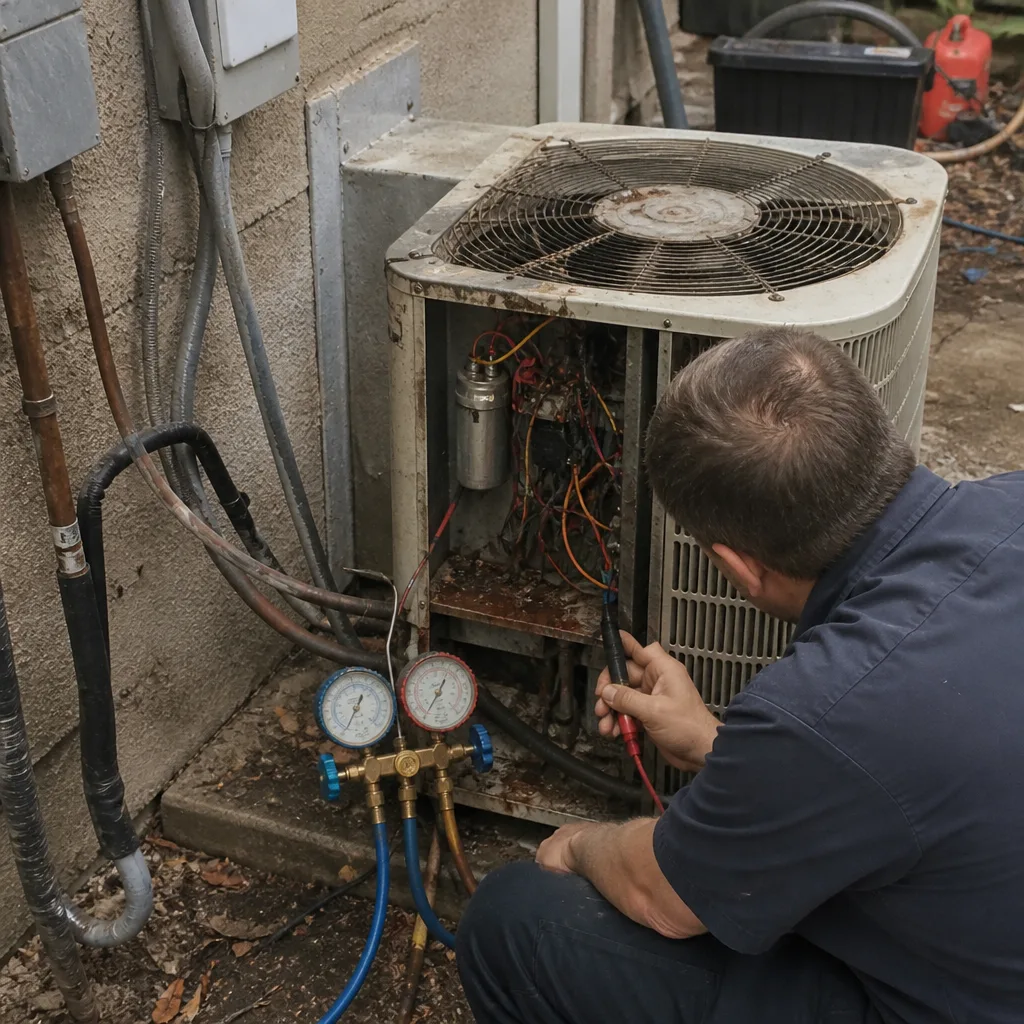 Before
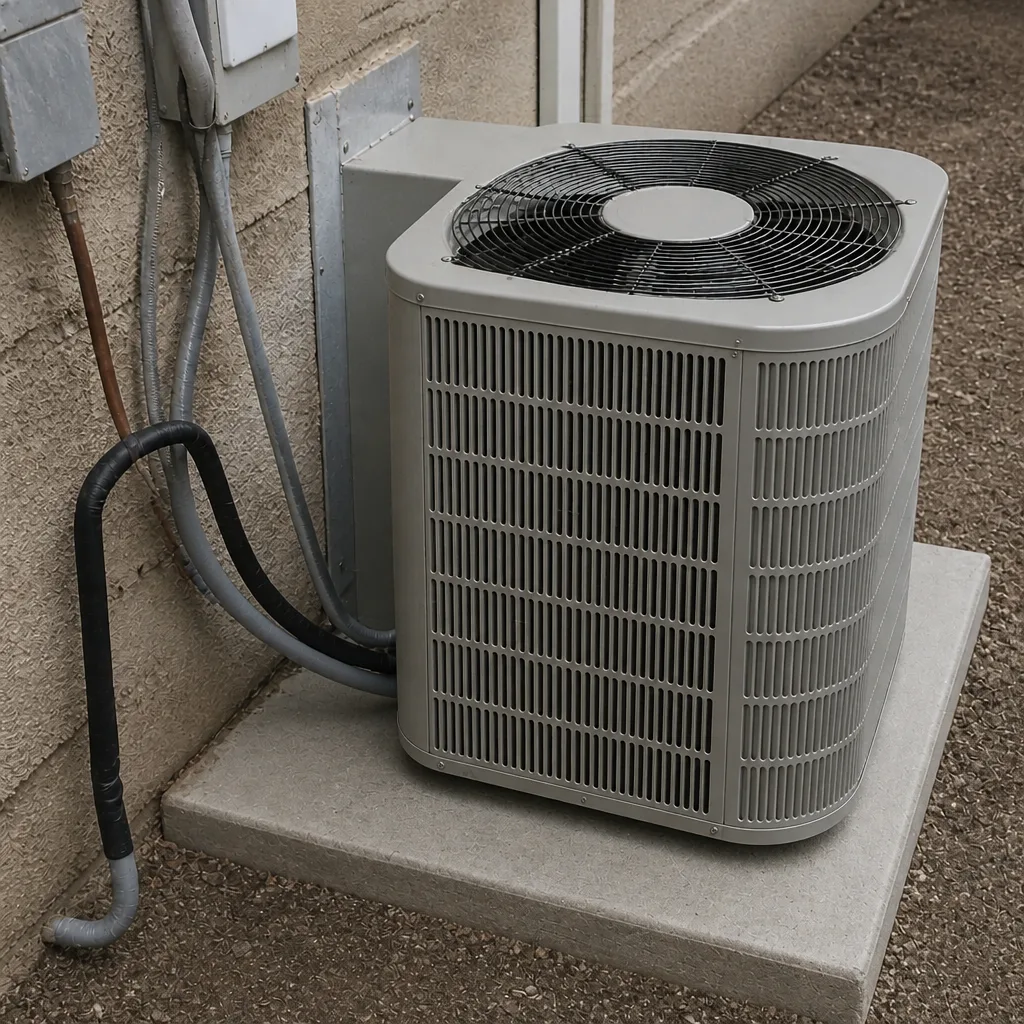 After
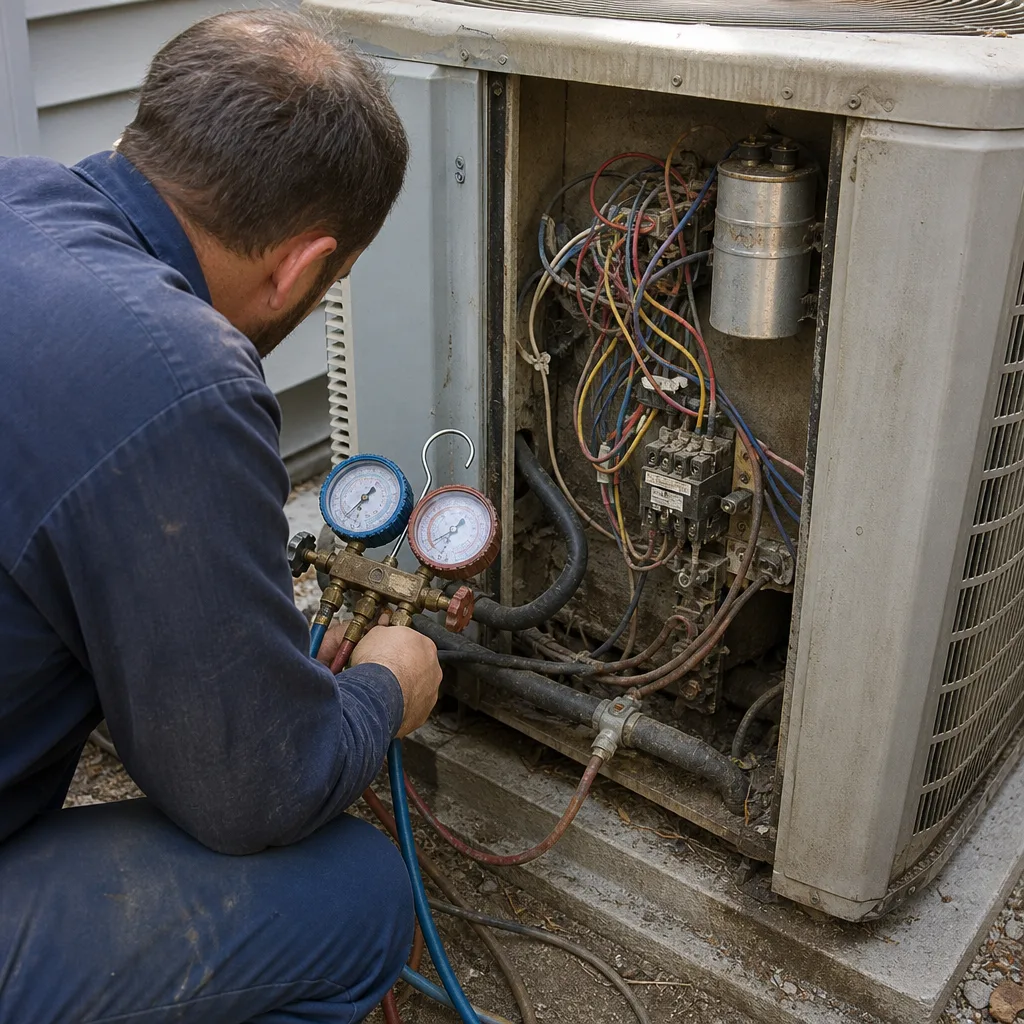 Before
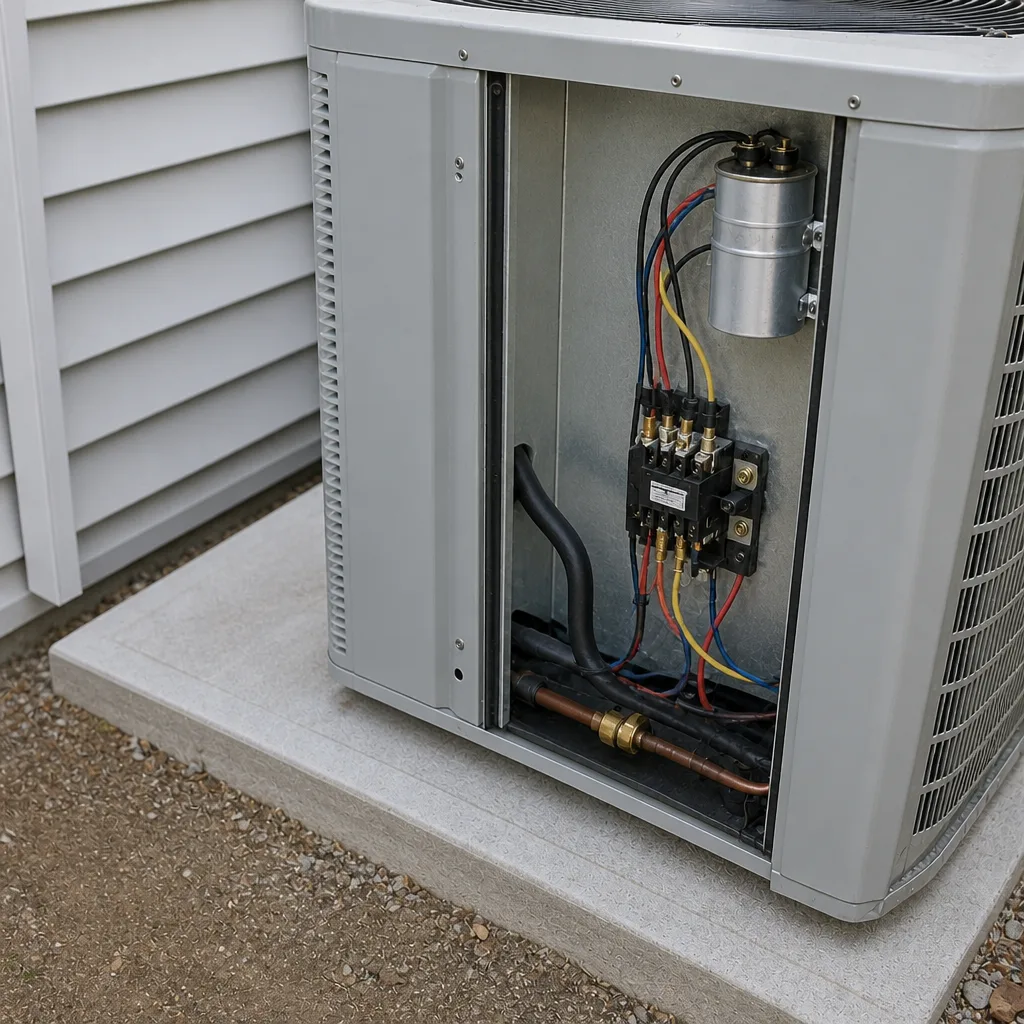 After
Frequently Asked Questions
The only reliable way is a Manual J load calculation run for your specific address, including window sizes and orientation, insulation values, and duct design. A contractor who offers you a size before they’ve done that calculation is guessing based on national averages, and in Enterprise that guess is usually wrong. For our process, see the AC repair and installation page.
Our elevation, dust load, and specific afternoon peak patterns change the effective load on equipment in ways a generic Manual J assumes away. Systems sized for the valley average often short-cycle here, or fail to reach set point on the worst afternoon of the year. The right size comes from a calculation run for this address, not one pulled from a neighboring model.
Yes, and here’s why. The wave of builder-grade installs from 2015 onward is now hitting the failure window for capacitors, contactors, and blower motors. Builder-grade equipment is generally fine, but the initial commissioning was often rushed. Having a technician inspect the system now – before failure – is cheaper than the emergency call.
Repair the system if the failure is a low-cost component (capacitor, contactor, thermostat) and the equipment is under roughly ten years old. Replace if the compressor is failing, the system is 12+ years old in Enterprise’s load conditions, or you’re being quoted a repair over 40 percent of replacement cost. Get the readings first, then decide. No honest technician quotes replacement before diagnosis. Call (844) 455-2034 for a free second opinion if you want one before deciding.
Every 60 days is a reasonable baseline. Every 30 days during spring dust season and any time construction is happening within a mile of your home. Filters are the cheapest protection your system has, and the dust load here is heavier than most of the Valley.
Yes. We service and install all major brands including Carrier, Trane, Lennox, Goodman, Rheem, York, Daikin, Bryant, and American Standard. Our technicians have up to 24 years of experience, and we don’t have a brand bias. What we do have is a bias toward proper sizing and proper installation, because that’s where system life actually comes from.
The Bottom Line
Enterprise is not Phoenix and not anywhere else. The sizing that works here has to come from a real load calculation, the paperwork has to include a permit, a load calc, and a commissioning report, and the dust has to be dealt with on a shorter cycle than national guides suggest. If your home was built in the last decade, plan ahead for the builder-grade failure wave instead of being surprised by it. And when you’re ready for a service call, ask the contractor who’s coming back if it fails. Start with our Ray’s Heating & Air Enterprise home page if you want the full picture on how we work, or just pick up the phone.
Contact Us
Call (844) 455-2034 for a free estimate. Whether you need a load calculation, a second opinion on a written quote from another contractor, an emergency repair, or just someone to actually answer the phone at two in the morning and tell you what’s likely going on – Ray’s Heating & Air Enterprise is here. We work in Enterprise and the surrounding area, the phones are answered by a live person around the clock, and there’s no trip charge inside the county. Your system tells us what’s wrong. We just listen first.
Written by the team at Ray’s Heating & Air Enterprise.