
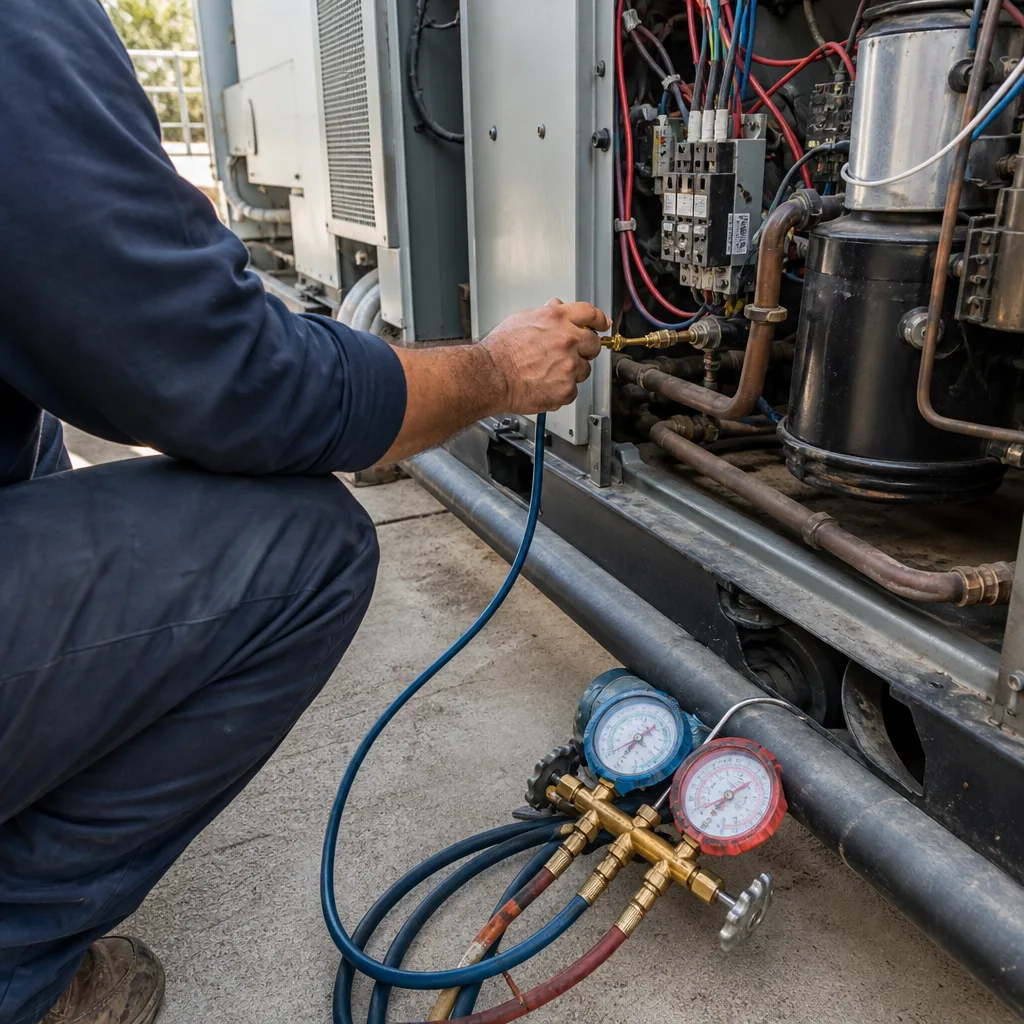
Last updated November 17, 2026
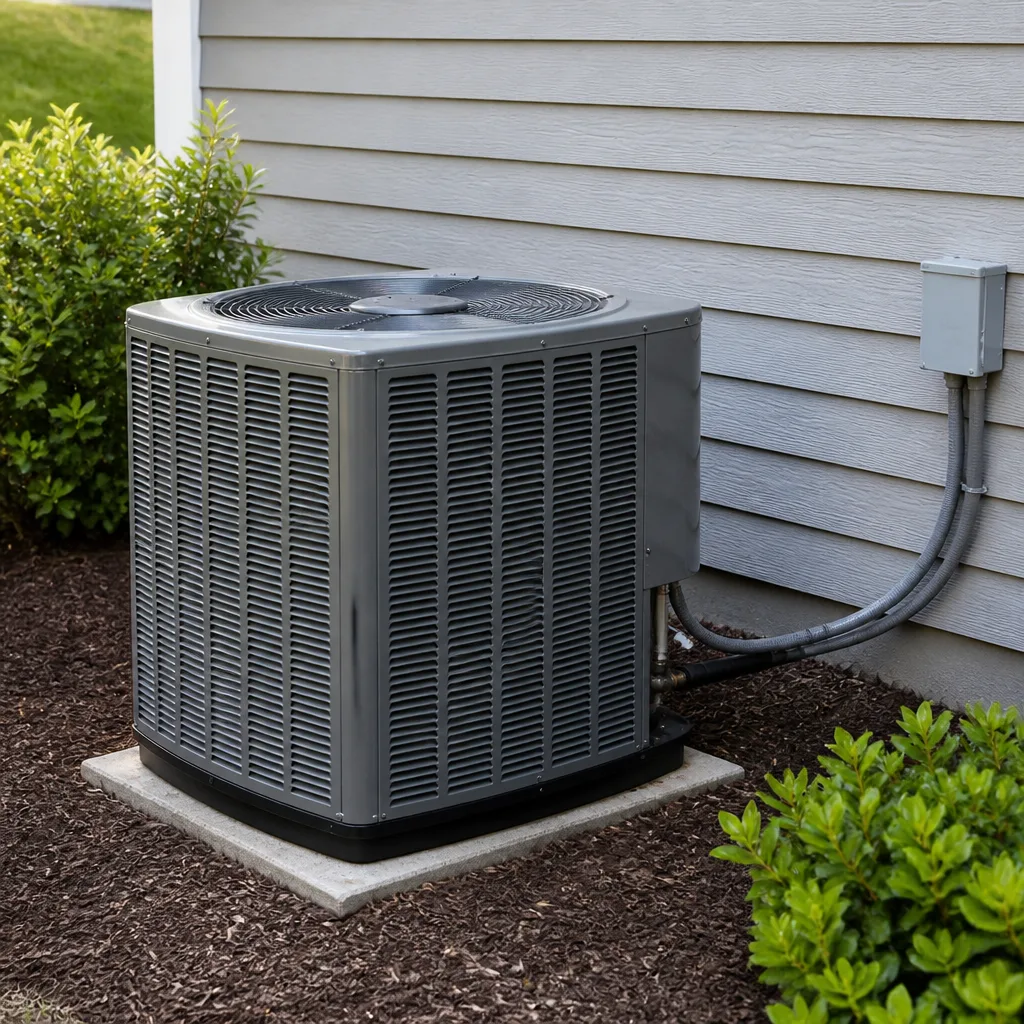 AC repair
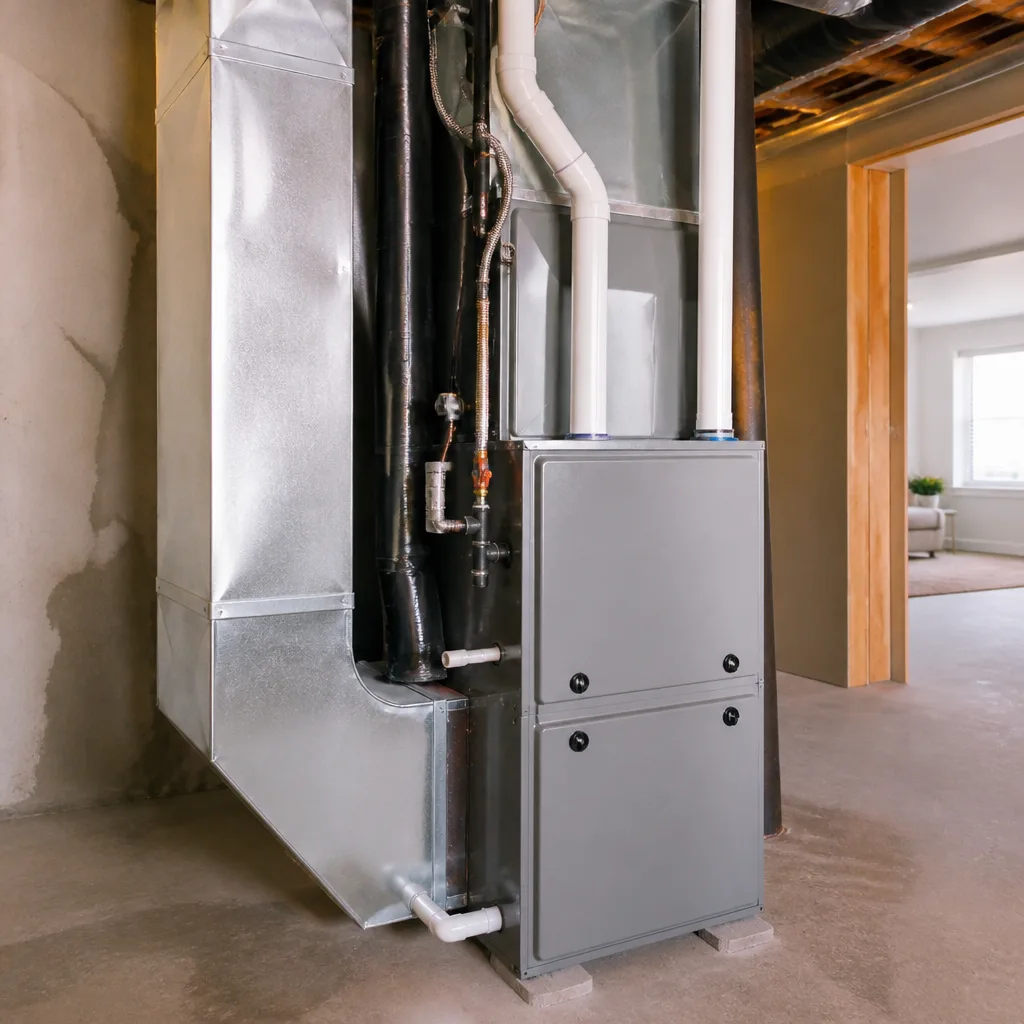 Furnace & heating
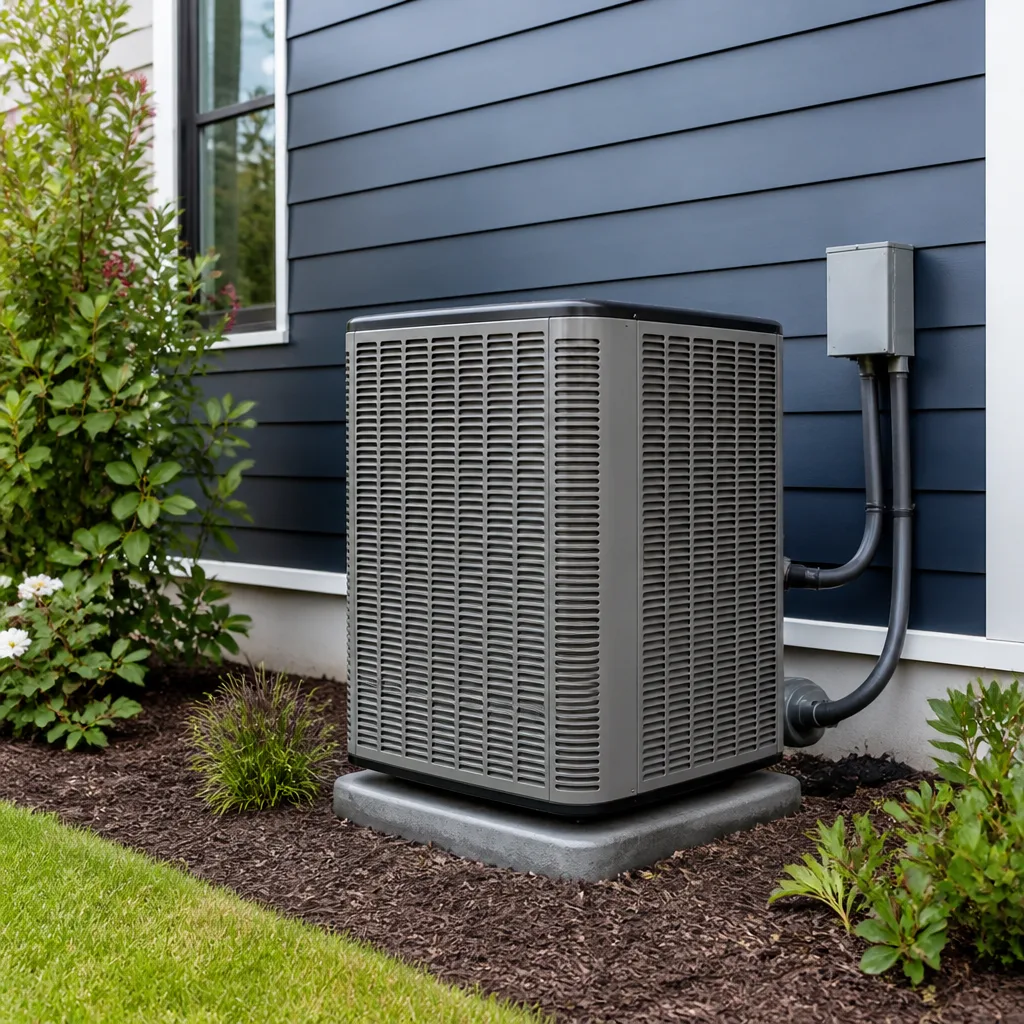 Heat pumps
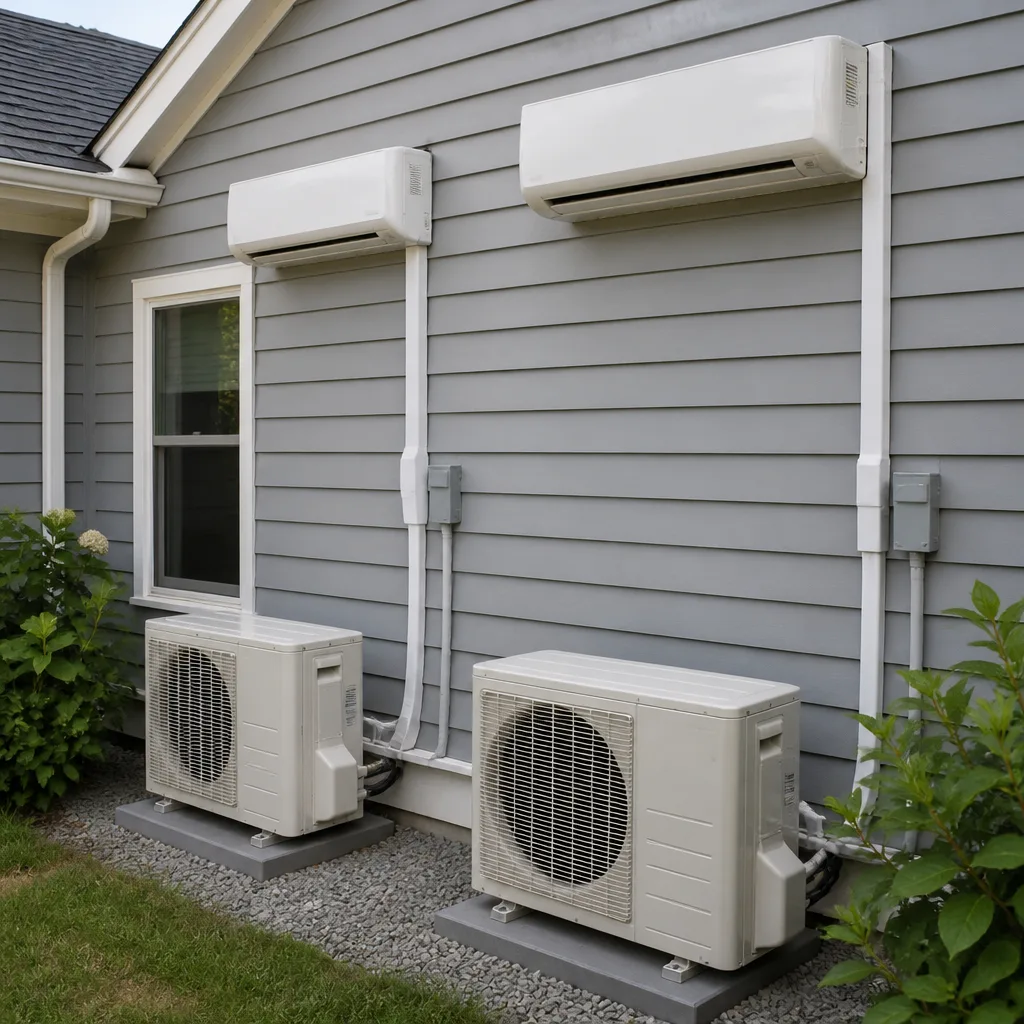 Ductless mini splits
 Carrier
 Trane
 Goodman
Seasonal tune-up and full diagnostic on your Carrier, Trane, or Goodman system - readings shown to you before any repair is proposed
Diagnosis first, numbers second - you approve the repair price before a single part goes in.
Get your free estimateThe Complete Emergency & Commercial HVAC Guide for Enterprise Homeowners
A homeowner whose furnace quits on a Friday can shrug and put on a sweater until Monday. A restaurant owner in Enterprise can’t. Health inspectors show up with thermometers, tenants with lease clauses start counting hours, and the walk-in cooler full of product doesn’t wait for a callback. The gap between a residential heating call and a commercial HVAC emergency isn’t just equipment size. It’s that nobody lets a commercial building say “we’ll deal with it tomorrow.” Here is what actually breaks in Clark County’s small commercial buildings, what your obligations are when it does, and how to handle the first 30 minutes before anyone opens a panel.
Quick Answer
Most commercial HVAC emergencies in Enterprise come down to three things: catching them in the first 30 minutes, knowing who’s liable if you don’t, and calling a licensed, verifiable contractor instead of the first number that answers. Document the failure, protect the product and the people, and get a real diagnosis with readings before you agree to any repair. If you’re facing one right now, call us at (844) 455-2034 and we’ll walk you through it.
Styles & brands we work with
- AC repair
- Furnace & heating
- Heat pumps
- Ductless mini splits
- Carrier
- Trane
- Goodman
Table of Contents
- How Commercial HVAC Failure Liability Differs from Residential
- Why Enterprise Rooftop Units Fail Faster Than the Spec Sheet Says
- The First 30 Minutes of a Commercial HVAC Emergency
- Service Contract vs. Time-and-Materials for Small Commercial
- How to Vet an Emergency Commercial HVAC Contractor Fast
- Heat Pumps and Mini-Splits in a Commercial Setting
- Prepping an Enterprise Business for Next Summer
How Commercial HVAC Failure Liability Differs from Residential
When your home AC breaks, the only person you answer to is your family. When a business in Enterprise loses cooling, you answer to at least four parties at once. The first is the health department. For restaurants, delis, and any food-service operation, ambient temperature and cold-holding capacity are part of your operating permit. An inspector who finds a compressor down and product sitting above 41°F doesn’t care that the tech is on his way; that’s a critical violation. Medical offices get hit through specimen refrigeration and treatment-room comfort standards.
The second party is your landlord or your tenant. Read your lease before you sign a service ticket. Most commercial leases bury a clause requiring the tenant to maintain interior HVAC and to repair or replace components up to a dollar cap. Some flip the responsibility for rooftop units entirely onto the property owner. If you repair without checking who’s on the hook, you can spend money you are contractually not obligated to spend.
The third party is your insurer. And the fourth is your own attorney, if it gets that far. That’s why the documentation step matters more than people realize. Before you call anyone, take:
- Photos and timestamps of the thermostat reading and the space temperature.
- A quick written log of when the failure started, who noticed, and what the space temp was at that moment.
- Product temperatures if you’re in food service, taken with a probe thermometer, not a guess.
- Your lease’s HVAC clause and your maintenance log, if you have one.
This is the part nobody hands you on a residential call. It’s also the part that saves Enterprise business owners real money when the insurance adjuster or the health inspector comes back with questions.
Why Enterprise Rooftop Units Fail Faster Than the Spec Sheet Says
Rooftop units have a nameplate that says “15-year service life.” In Enterprise, that number is optimistic. Walk across any strip mall on a July afternoon and you can feel why. Surface temperatures on that roof will run well past 150°F, and the condenser coil sitting in that sun has to reject heat from inside a building that’s simultaneously trying to hold 72. The coil is fighting physics from every direction: the outside air is hot, the rooftop is hotter, and the unit’s own heat load dumps right back into the same microclimate.
The second failure driver is vibration. RTU footprints on small commercial pads are often shared with a walkway, a loading dock, or a kitchen space above. Every footstep, every delivery door, every forklift that rolls past sends a small shockwave up through the mounting. Over 8 to 12 years, that loosens fasteners, fatigues copper lines at the braze joints, and hastens refrigerant leaks. In our experience in Enterprise, the leaks show up on the suction line first.
The third driver is dust. Clark County’s spring wind events throw fine particulate that finds its way into condenser coils and evaporator pans. A coil that would breathe clean for a season in a wetter climate can cake over in two months in Enterprise. When the coil can’t breathe, discharge pressures climb, compressor amp draws spike, and the whole system works harder and shorter. That’s why a rooftop unit here wants a coil cleaning and a filter inventory check every season, not every other year.
Catch one of these early and it’s a repair. Catch one late and you’re pricing a compressor on a unit that had four years left. If you’re wondering whether a rooftop replacement is the right call versus a repair, our AC Repair & Installation in Enterprise page walks through the decision with actual costs.
The First 30 Minutes of a Commercial HVAC Emergency
This is the sequence we would hand a business owner in Enterprise if the office went down at 10 PM on a Sunday before an open Monday. It is not a repair manual. It’s a control-and-document sequence that keeps the damage contained, keeps you out of trouble, and sets up the technician to walk in with useful information instead of a blank slate.
- Protect the produce and the product first. Move anything temperature-sensitive to a backup cooler, a neighboring business, or a refrigerated trailer if you have one. If you’re a restaurant, do not open the walk-in repeatedly to check on it; every open door loses cold air and adds to the recovery time later.
- Check the obvious, without touching anything inside the unit. Flip the thermostat. Confirm the breaker at the panel hasn’t tripped. Look at the disconnect for the rooftop unit. If a breaker is clearly tripped and stays tripped, leave it tripped and note it. Do not reset it repeatedly to force the unit back on.
- Do not climb the roof and do not open the unit. Rooftop units carry line voltage, capacitors that hold a charge after power is cut, and refrigerant under pressure. Untrained hands on an RTU are how people get hurt, and it happens more than you’d think. This is the part of the guide most worth taking seriously.
- Write your log. Timestamp, what’s broken, what you did, what you saw. Photograph the thermostat and the panel. This is what your insurance and your landlord will want.
- Call a licensed contractor and, if relevant, your property manager or landlord. Call order matters. Get the contractor lined up first so there’s a name and a time, then loop in the landlord so the record shows you moved fast.
- Notify whoever else needs to know. For a restaurant, that’s your staff and possibly the health department if product has to be discarded. For a medical office, it’s the on-call provider and anyone with specimen refrigeration in the building.
That’s the whole 30 minutes. No tools, no roof, no heroics. What you’ve done is protect the property, protect yourself, and give the technician a clean starting point.
Service Contract vs. Time-and-Materials for Small Commercial
We get asked this a lot by small business owners in Enterprise, and the honest answer is that it depends on what’s on the roof and how much downtime costs you. A service contract makes sense for a business with three or more rooftop units, a business where a lost day has a hard dollar cost (restaurant, clinic, pharmacy), or a business that has zero appetite for surprise repairs. The contract covers scheduled maintenance and locks in a known annual cost.
Time-and-materials makes sense for a single-unit shop, a seasonal business that isn’t running HVAC in the shoulder months, or a building that’s on its last legs before a planned replacement. Here’s how the two compare on the things that actually matter to a small commercial owner:
- Predictability: Contract wins. You know the annual number, and maintenance gets scheduled without you remembering to call.
- Upfront cost: Time-and-materials wins, especially if the units are already healthy.
- Reaction time on a failure: Contract wins, because you’re already in the system and you’re not competing for a slot with the rest of Enterprise at 10 PM in July.
- Best fit for a single RTU: Time-and-materials, unless the unit is over 10 years old and eating repairs.
- Best fit for a restaurant or clinic: Contract, almost every time.
One thing we push back on: don’t buy a contract just because it’s bundled with a residential-style “tune-up” that never actually gets performed. Ask for a written maintenance checklist and a report after each visit. If a provider can’t show you what they did, they didn’t do it. We don’t sell service contracts full of things your building doesn’t need. Readings first, numbers second, and you see both.
How to Vet an Emergency Commercial HVAC Contractor Fast
When a unit is down at 10 PM and your phone is ringing, the pressure to just call the first number is very real. So this is the shortest version of a vetting checklist we can give you. It works on any contractor in Nevada, and it takes about three minutes if you’re already sitting in front of a phone.
- Look up the license on the Nevada State Contractors Board. Search the contractor’s name or license number on the board’s website. Ninety seconds. If the license is inactive, expired, or issued to a name that doesn’t match the truck, walk away. This is the single most common way Enterprise business owners lose money on emergency calls.
- Ask for the license number before you give an address. A legitimate commercial contractor reads it off without hesitation. Anyone who has to “get back to you on that” is telling you something.
- Ask whether they carry general liability insurance specific to commercial work. Residential-only policies don’t cover what happens on a commercial roof. You want the certificate.
- Ask how the diagnosis and pricing are structured. A contractor who shows you the readings and then writes the number is your contractor. A contractor who quotes over the phone before seeing the unit is not.
- Ask who’s actually coming out. If the answer is “whoever’s on call,” that’s a rotating crew who has never seen your building. If the answer names the person or the same crew, that’s continuity, and continuity is what keeps a commercial account from getting re-diagnosed three times.
- Ask for a written estimate, every time. Any contractor worth a long-term relationship will hand you one without being asked twice.
We’ve seen Enterprise businesses get burned by two versions of this: the contractor whose license lapsed and the operator who quoted a repair number that grew by $1,800 once the unit was on the roof. Both are avoidable with the checklist above. If you want a second set of eyes on a written estimate, Ray’s Heating & Air Enterprise home page covers how we handle free second opinions.
Heat Pumps and Mini-Splits in a Commercial Setting
Small commercial buildings in Enterprise are shifting toward heat pumps and ductless mini-splits for two reasons: no gas line, and the ability to zone a building instead of cooling the whole thing for one occupied room. A small office with three offices and a conference room doesn’t need to run the rooftop unit all day for one person taking calls. A heat pump with mini-split heads can cool only the room in use and shut the rest down.
The catch on commercial heat pumps is defrost and load. A heat pump pulls heat out of cold outdoor air in winter, which means it works harder in January than a furnace does. When the outdoor coil frosts, the unit runs a defrost cycle, and during that cycle it’s briefly not heating. In a home, nobody notices. In a commercial building with a morning staff meeting, everybody notices. A unit that’s undersized for the building’s real load will defrost more often and recover slower. That’s why a commercial heat pump needs a proper load calculation, not a guess-and-size-by-square-footage. If the building uses a heat pump as primary heat, the contractor needs to be honest about backup and the lowest temperatures the building will see.
For ductless heads in a commercial space, the placement matters as much as the equipment. A mini-split head blowing directly on a workstation becomes a complaint. A head mounted too high in a high-ceiling shop loses its throw. And a multi-zone outdoor unit on a small commercial roof needs clearance for service, not just for install. We see a lot of Enterprise mini-split installs where the outdoor unit ended up boxed in by a parapet, and servicing it later is a two-person job that could have been a one-person job. Our Heat Pump & Mini Split in Enterprise page has the sizing details if you’re planning new installs.
Prepping an Enterprise Business for Next Summer
Every spring, we get a wave of emergency commercial calls in Enterprise that could have been a two-hour scheduled visit in March. Here’s what that pre-summer list looks like on a rooftop unit:
- Coil cleaning, condenser and evaporator. In Enterprise, this is the single highest-value maintenance item on the roof.
- Capacitor and contactor check. We test the capacitor before anyone says the word compressor. A weak capacitor is the most common false-compressor diagnosis in small commercial work.
- Refrigerant charge verification by superheat and subcool, not just pressure. Pressure alone lies in hot weather.
- Condensate drain clearing and pan inspection. A clogged drain in a commercial space soaks the ceiling tile directly under the unit, and that’s how you find out the pan has been rusted through since last summer.
- Filter inventory and replacement. Stock the correct filter size so staff can change them without a service call.
- Belt and bearing check on any belt-driven blower.
- Thermostat and controls review. Sitting empty overnight, a commercial space shouldn’t be conditioning itself for nobody.
If your plan is to replace rather than repair, do that planning in March or April, not July. Heating equipment and Heating & Furnace in Enterprise work also gets a look during pre-summer visits, because a rooftop unit that heats in winter and cools in summer has a lot of shared components. That’s the difference between a scheduled install and an emergency install, and the scheduled version is cheaper and better.
Common Mistakes to Avoid
- Calling the first number without a license lookup. Ninety seconds on the Nevada contractor board prevents most of the horror stories we hear from Enterprise business owners.
- Letting a tech tell you “compressor” before testing the capacitor. It’s a $40-to-$200 part that mimics a dead compressor when it fails. Get the readings before you agree to a repair.
- Resetting a tripped breaker three times to “try it again.” A breaker that stays tripped is a signal, not a nuisance. Reset it once, then call.
- Climbing on the roof yourself. Line voltage, stored capacitor charge, and pressurised refrigerant behind a panel. Nobody untrained should be on an RTU.
- Skipping the log. Enterprise business owners lose insurance money every summer because nobody wrote down when the failure started and what the temperature was.
- Ignoring the lease’s HVAC clause until the invoice arrives. Know who’s supposed to pay before the work starts, not after.
- Buying a service contract and never asking for the maintenance report. If you don’t see the readings in writing, the visit probably didn’t include the readings.
See the difference
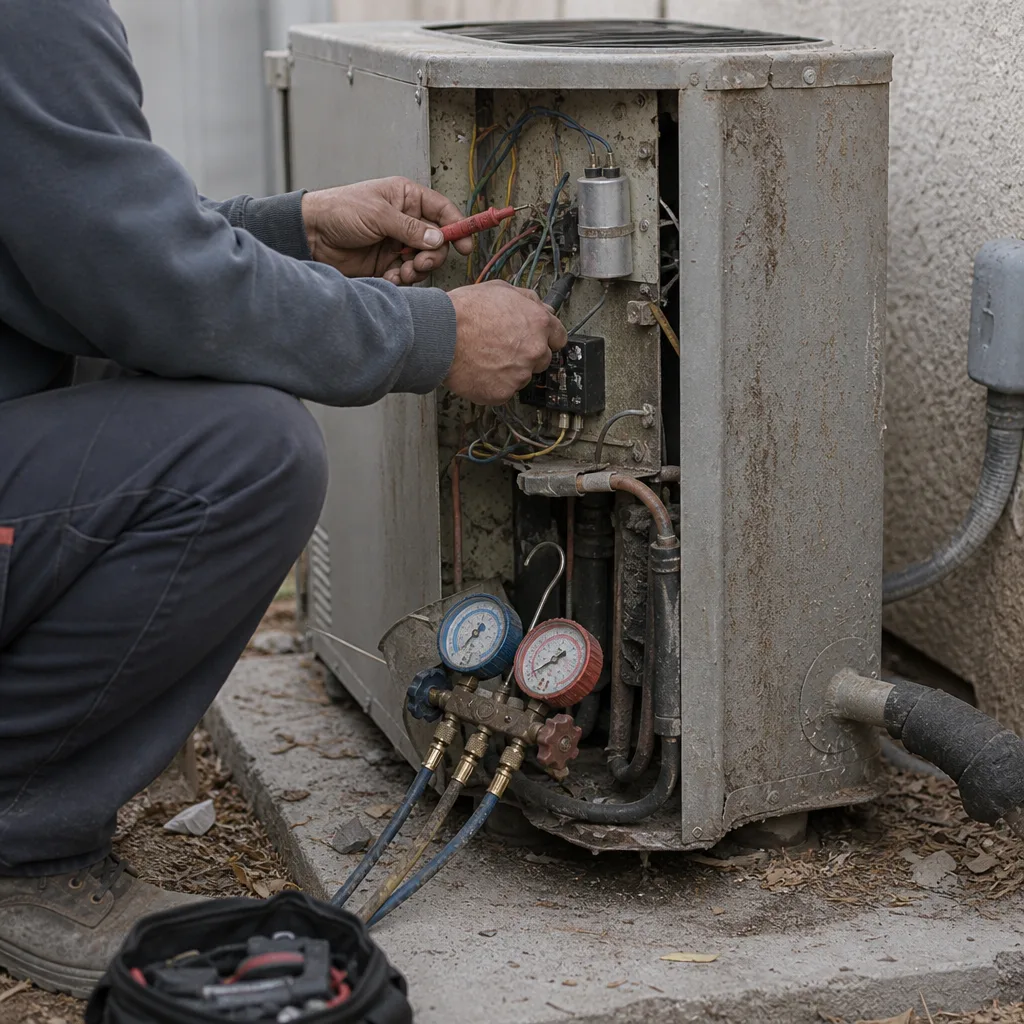 Before
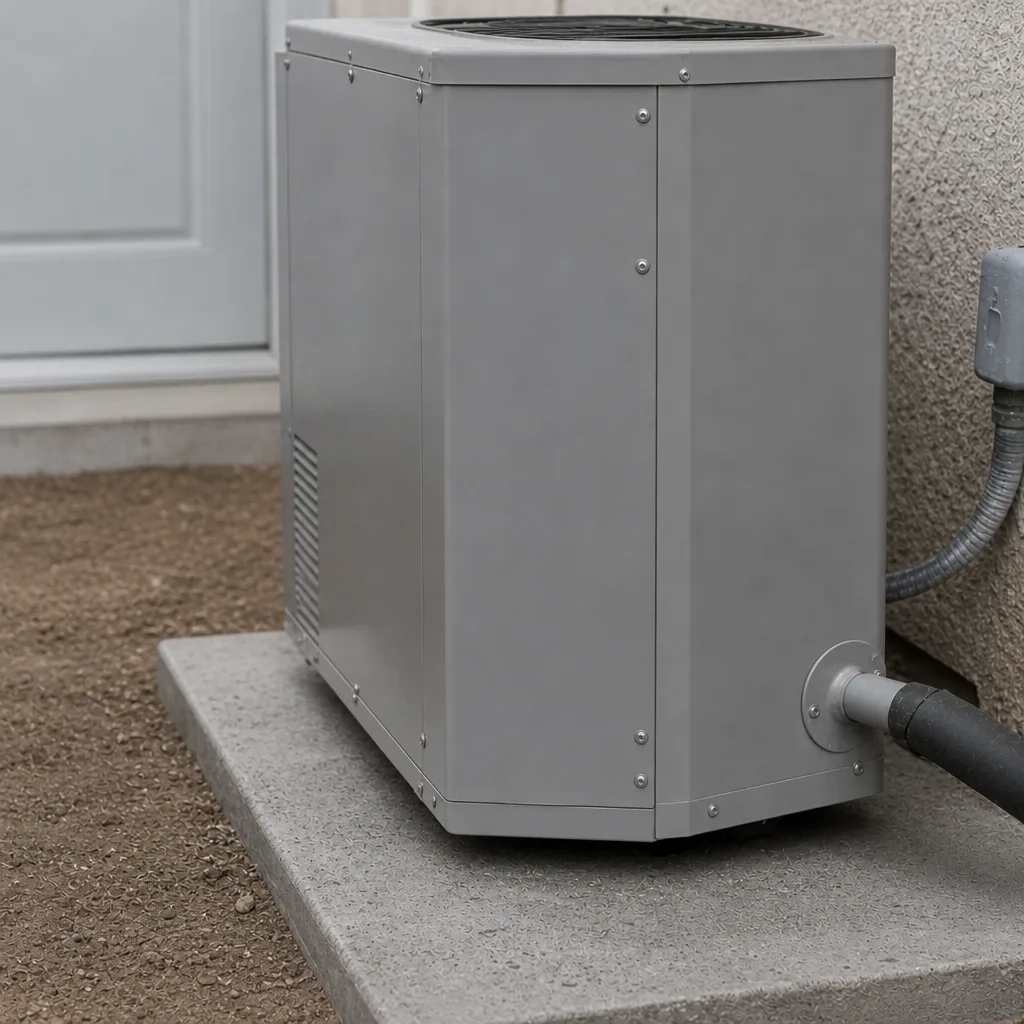 After
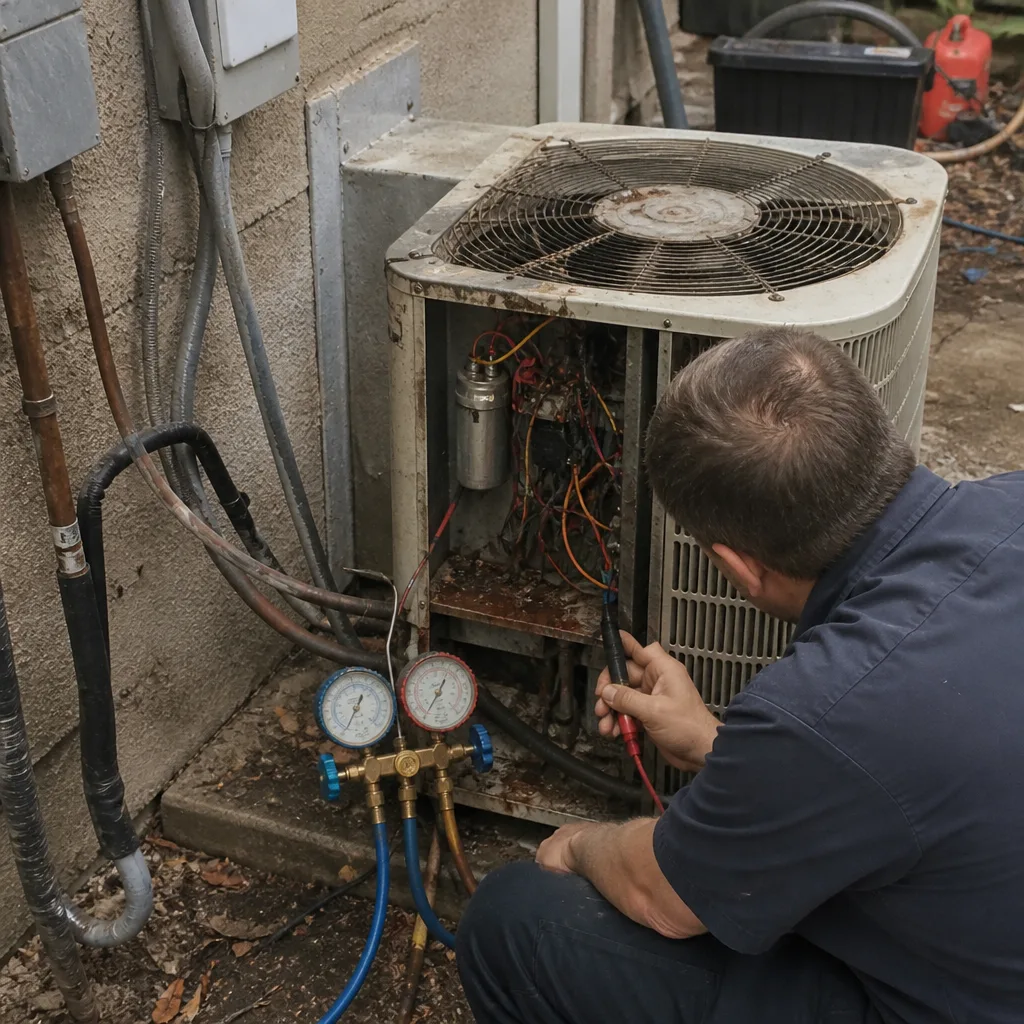 Before
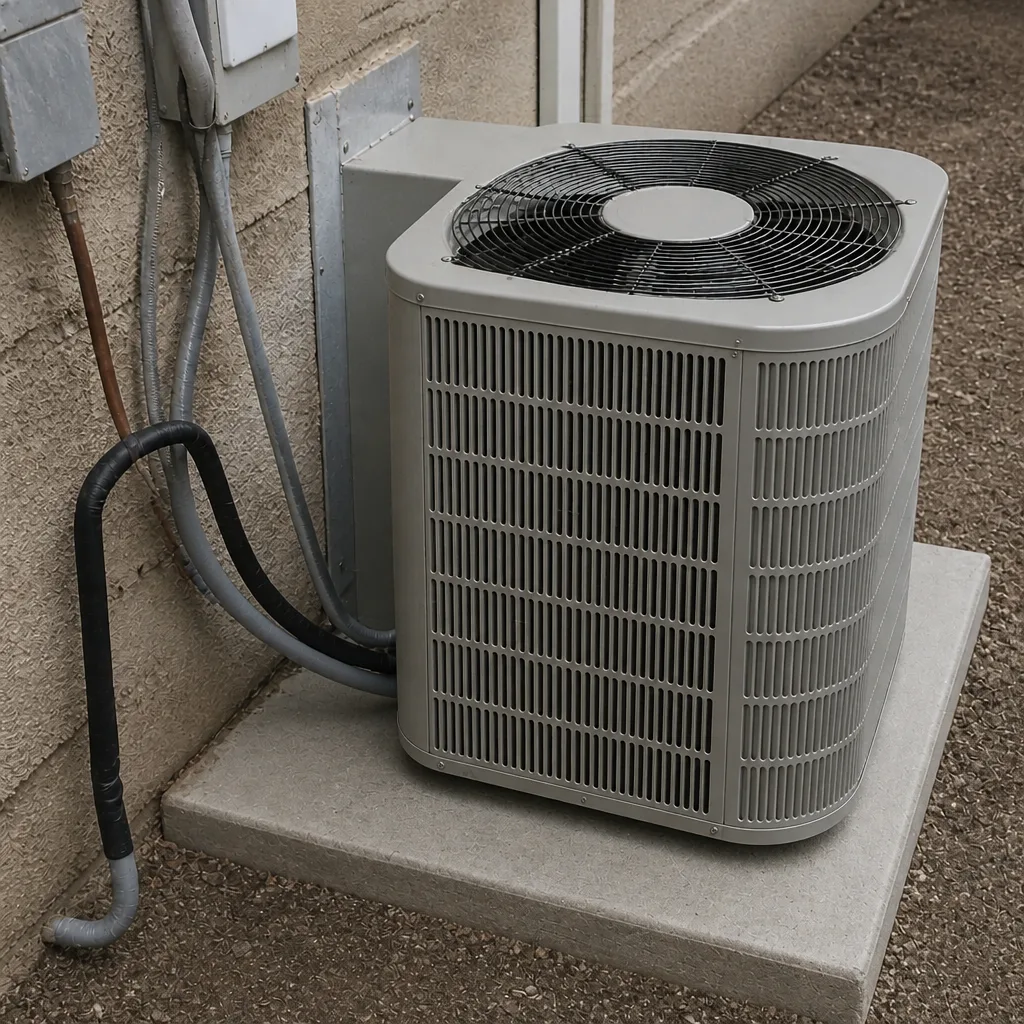 After
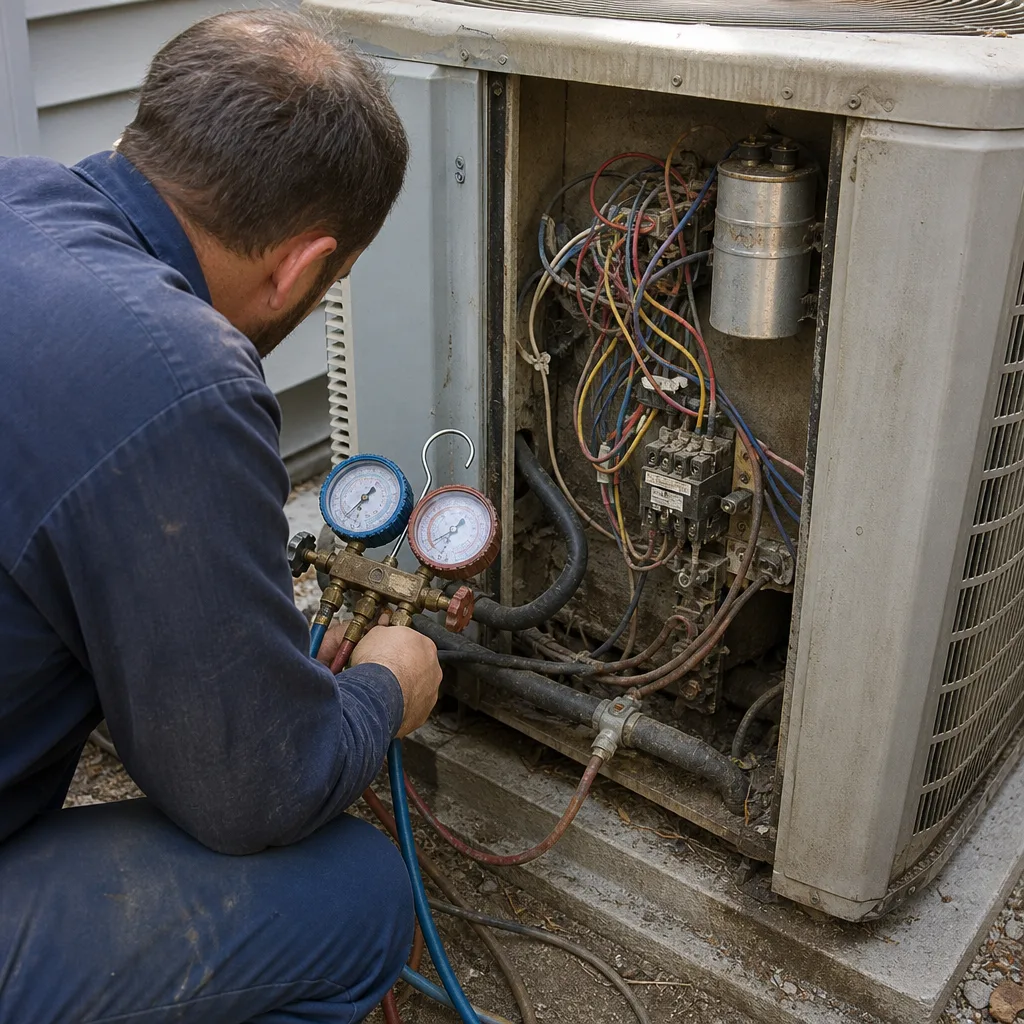 Before
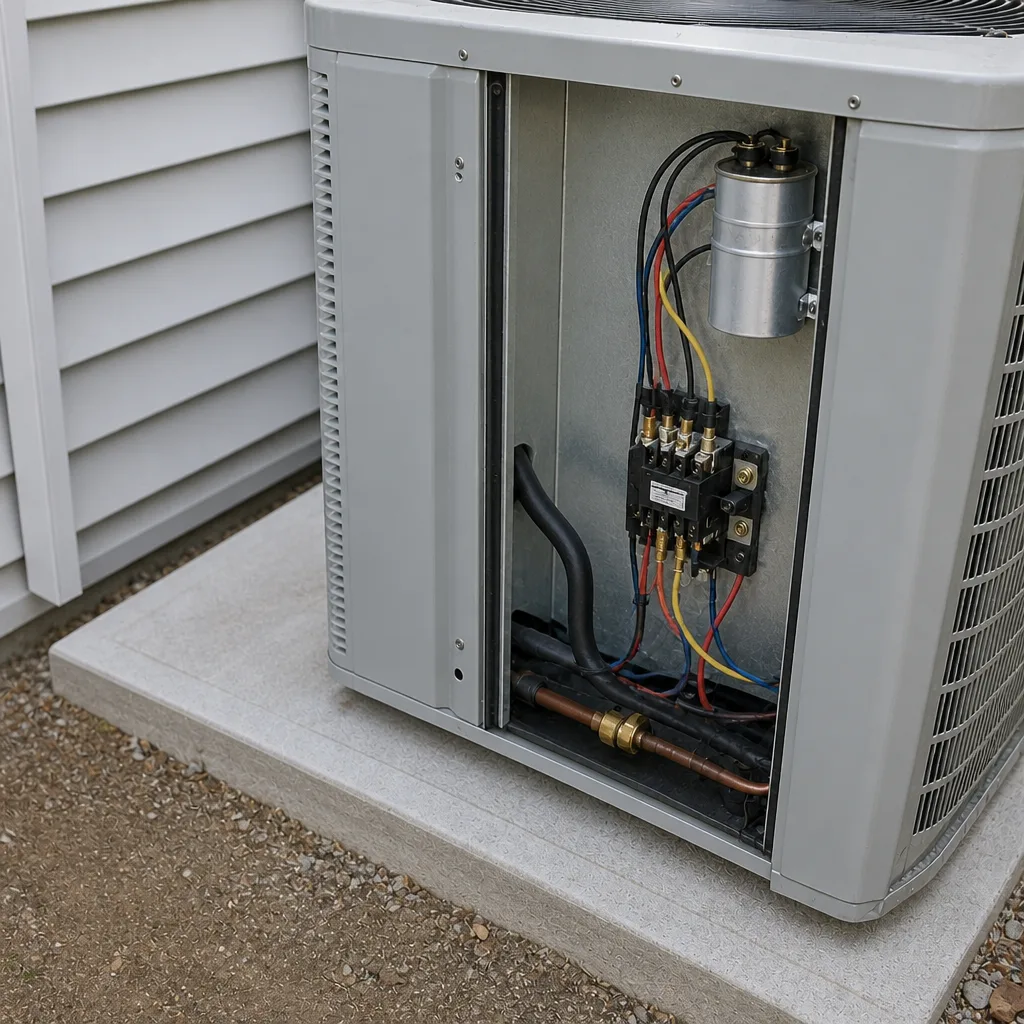 After
When to Call a Professional
Call a professional any time you’re not sure the problem is minor. More specifically: the thermostat is calling for cool and nothing runs; a breaker trips repeatedly; the rooftop unit is iced over in cooling season; you smell burning or refrigerant; you can hear the compressor trying to start and failing; or the space temperature has climbed more than 5 degrees above setpoint during business hours. Any of those, and it’s time. Don’t wait for a weekend. A commercial HVAC failure on Friday becomes a much more expensive job on Monday.
Ray’s Heating & Air Enterprise offers free estimates in Enterprise. We’ve been putting our name on commercial heating and cooling work in this community, and every job carries the 90-Day Done Right Promise. Call (844) 455-2034 and we’ll get someone out.
Frequently Asked Questions
A commercial diagnostic visit typically runs in the $150 to $350 range depending on time of day and rooftop access, and the repair is priced separately once we’ve seen the readings. After-hours calls cost more than daytime calls, so if the failure is caught by mid-afternoon, get it scheduled before close. Call (844) 455-2034 for an exact quote on your building; estimates are free.
Our phones are answered by a live person around the clock, including weekends, and we’ll tell you on the call what we can realistically do that night. What we won’t do is quote a repair before the unit’s been seen. Call (844) 455-2034 and we’ll talk through it.
Look up the contractor on the Nevada State Contractors Board website using the license number on their truck or invoice. The search takes about 90 seconds and tells you whether the license is active and matches the business name. If it doesn’t match, don’t let them touch the roof.
If the annual repair cost is more than 30 to 40 percent of a new unit and the unit is over 12 years old in Enterprise’s climate, replacement usually wins. If the compressor is healthy and we’re looking at a capacitor, a contactor, or a coil cleaning, repair wins every time. We test the capacitor before anyone says the word compressor, and you’ll see the readings before you see the invoice.
Rebates change by program and by season, and some are only available for qualifying efficiency tiers. We’ll walk you through what applies to your building when we write the estimate, not after the install. Call (844) 455-2034 to start that conversation.
You need a timestamped log of when the failure started, the space temperature at the time, photos of thermostats and the equipment, product or specimen temperatures, and the contractor’s service records. The service records are why it matters that your contractor gives you a written invoice every time. Ask for one without hesitation.
The Bottom Line
The differences that matter on a commercial HVAC call in Enterprise come down to speed, documentation, and who’s on the other end of the phone. Document first, protect the product and the people, do not climb the roof, and verify the license before a wrench comes out. When you have to decide between a service contract and time-and-materials, match it to your building’s real risk, not to what a brochure says. And read your lease’s HVAC clause once before you need it. That one step alone saves Enterprise business owners real money every year. If you want a second set of eyes on a quote, we don’t charge for that. Call (844) 455-2034 and we’ll take a look.
Ray’s Heating & Air Enterprise keeps the phones live around the clock, and every job carries the 90-Day Done Right Promise in writing. Call (844) 455-2034 for a free estimate on your commercial building in Enterprise.
Written by the team at Ray’s Heating & Air Enterprise.