
Last updated November 17, 2026
 AC repair
 Furnace & heating
 Heat pumps
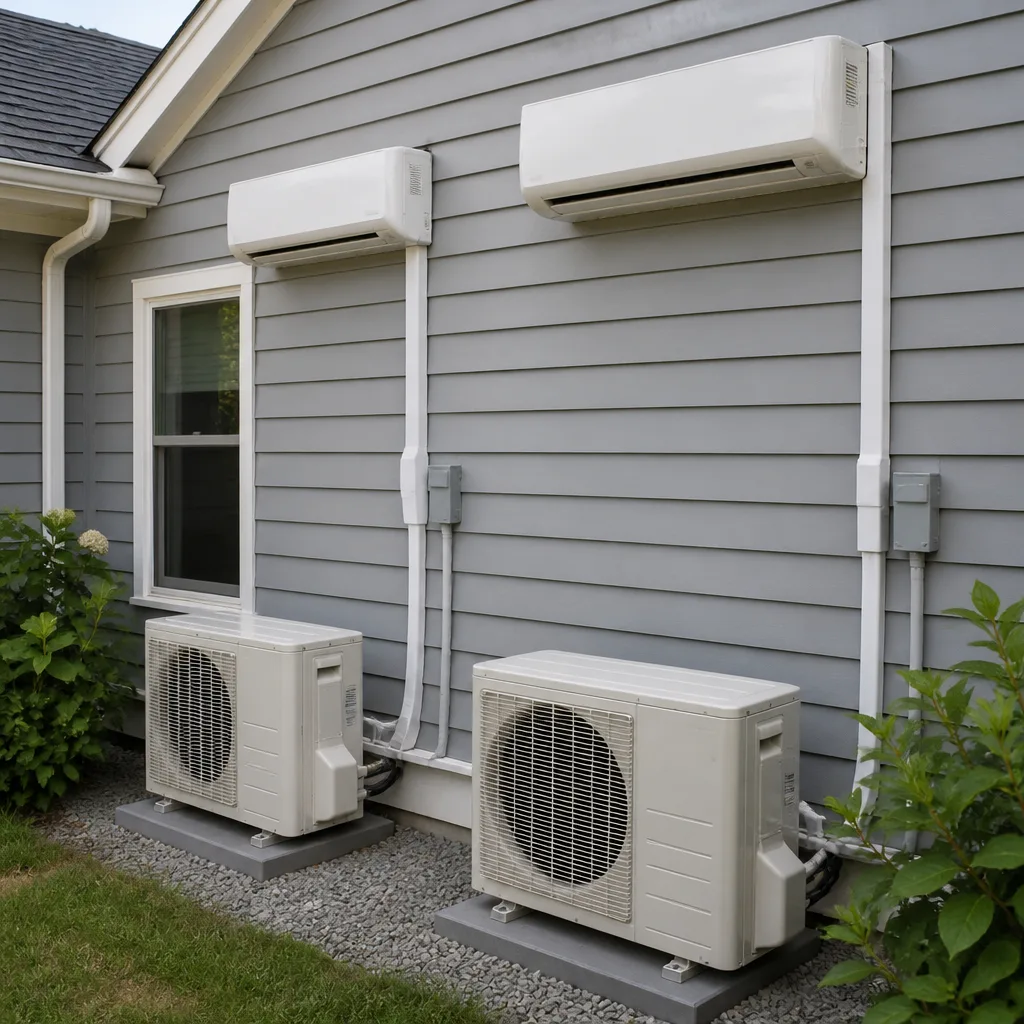 Ductless mini splits
 Carrier
 Trane
 Goodman
Seasonal tune-up and full diagnostic on your Carrier, Trane, or Goodman system - readings shown to you before any repair is proposed
Diagnosis first, numbers second - you approve the repair price before a single part goes in.
Get your free estimateHow Long Does Emergency & Commercial HVAC Take? Timelines and What to Expect
The tech who tells you “we’ll have you running by end of day” is usually right. Unless the part you need is a Bryant economizer control board. Then end of day turns into end of the week, maybe longer, and nobody told you to ask about it when the call started. That gap between the promise and the reality is where commercial HVAC projects go sideways. This guide is written from Enterprise, where we’ve watched a lot of business owners plan around an optimistic verbal estimate and pay for it in lost operating hours. What follows is the real timeline map: what’s fast, what drags, and what to ask before the truck pulls in.
Quick Answer
Most commercial HVAC emergency calls in Enterprise get a same-day diagnostic and a fix within 2 to 6 hours if the part is on the truck or at a local supplier. Repairs that need a specialty part shipped from out of state typically run 3 to 7 business days. Planned maintenance visits run 1 to 2 hours. Any job requiring a Clark County permit adds roughly 5 to 15 business days before the work can legally start.
Styles & brands we work with
- AC repair
- Furnace & heating
- Heat pumps
- Ductless mini splits
- Carrier
- Trane
- Goodman
Table of Contents
- Emergency Calls vs. Planned Maintenance: Why the Gap Matters
- Parts Lead Times in Clark County: Truck, Local Supplier, or Shipped
- Permit Timelines for Commercial HVAC in Clark County
- Setting Up Temporary Cooling or Heating During a Long Repair
- What a Reasonable Repair Timeline Looks Like in Writing
- Timeline by Job Type: A Realistic Range
- Why Enterprise Commercial Systems Behave Differently
Emergency Calls vs. Planned Maintenance: Why the Gap Matters
A planned maintenance visit and a true emergency call are not the same job with a different arrival time. They’re different in scope, urgency, and how much the building has to stop functioning. That difference matters most for customer-facing businesses where a dead system means closed doors, not a slightly warm office.
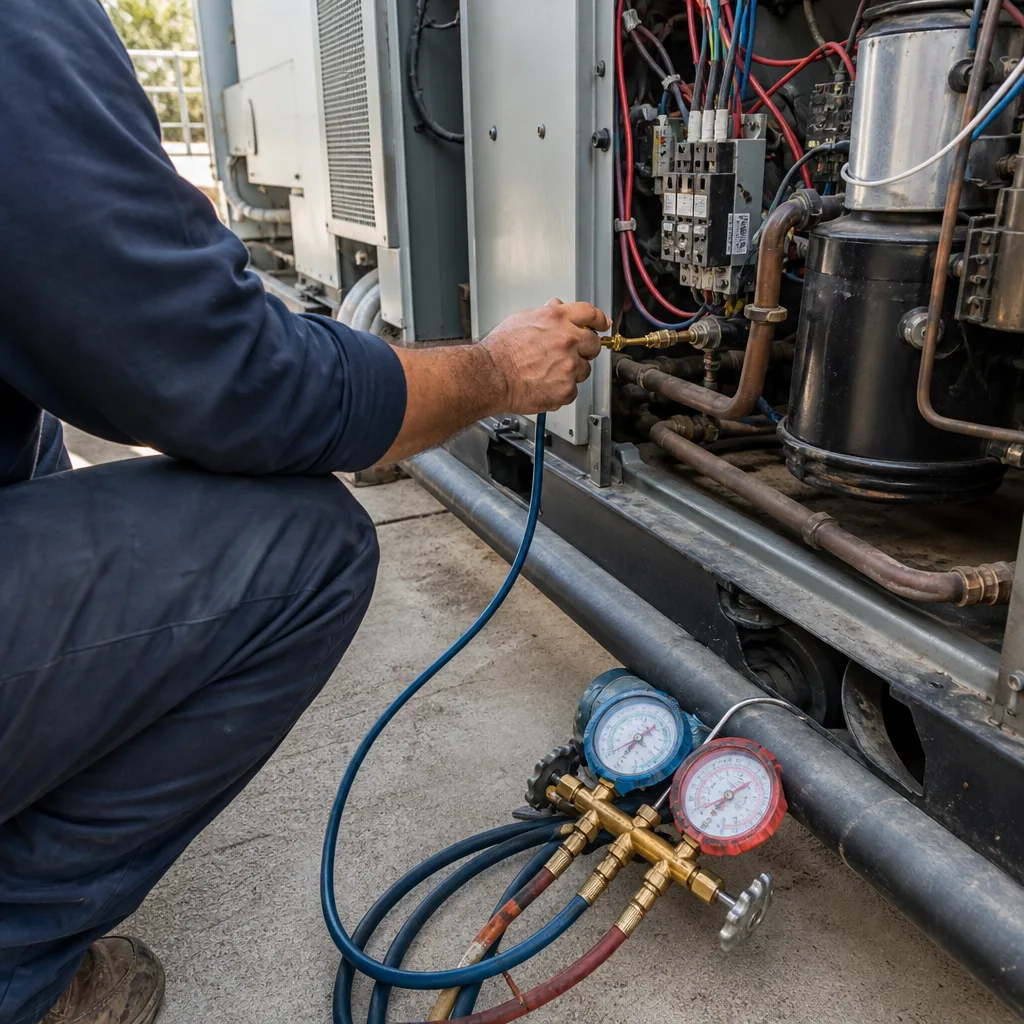
A planned maintenance visit is scheduled, predictable, and short. Ray shows up, pulls panel readings, tests the capacitor before anyone says the word compressor, checks refrigerant charge and airflow, and writes down what the readings actually said. That visit runs 1 to 2 hours for most rooftop units and split systems. You get a written record of what was found and what’s fading.
An emergency call is a different animal. The building is already uncomfortable or already down. Diagnostics still come first, but now the clock is running in the background and the decision window is compressed. From the moment the call comes in:
- Phone answered live, around the clock, and the problem gets triaged on the call so the right parts can start moving before the truck leaves.
- On-site diagnostic in most cases the same day, often within a few hours.
- Readings taken and shared with you before any part is ordered.
- Repair performed if the part is on the truck or at the local supplier.
- If the part has to ship in, temporary measures get set up and you get a real date, not a hopeful one.
Why the gap matters: a restaurant, clinic, or retail floor that loses its system in July is losing revenue by the hour. A business that planned maintenance in March pays for the visit instead. They’re the same building and often the same unit. The schedule is what changes.
Parts Lead Times in Clark County: Truck, Local Supplier, or Shipped
Nearly every timeline surprise in commercial HVAC traces back to the parts chain, not the labor. This is the piece most estimates leave out. Here’s the honest breakdown of how long parts take, sorted by where the part has to come from.
On the truck. Capacitors, contactors, common relays, fan motors, and standard thermostats for the major brands live in the truck’s inventory. When the failed part is one of these, the repair is one visit. Hours, not days. This is why Ray tests the capacitor before anyone reaches for the word compressor: a blown capacitor is a stocked part and an afternoon fix. A seized compressor is not.
At the local supplier. Common commercial parts that the truck doesn’t carry usually sit at a Clark County supplier. Motors for larger units, contactor kits, and standard control boards for Carrier, Trane, and Lennox equipment often clear same-day or next-morning. That adds a few hours, maybe a return trip.
Shipped from out of state. This is where the Bryant economizer control board problem lives. Specialty boards, oddball economizers, proprietary modules, and some OEM fan assemblies ship from Atlanta or another distribution hub. That’s when “end of day” quietly becomes three to seven business days. Sometimes longer if the part is backordered.
Ask the question up front: “Is this part on the truck, local, or shipping?” A straight answer there tells you more about your timeline than any verbal promise.
Permit Timelines for Commercial HVAC in Clark County
Clark County requires a permit for most commercial HVAC work that involves new equipment, major system replacement, or altered refrigerant lines. Like-for-like part swaps and repairs typically don’t need one. Anything that changes the system’s footprint, capacity, or electrical load usually does. That includes a straight unit replacement, a heat pump conversion, or adding a new split.
How long it adds depends on the county’s review load, and in practice most commercial HVAC permits in Enterprise clear in roughly 5 to 15 business days. Add time for plan review if the work is substantial. Add time for inspection scheduling after the install.
What happens if someone skips the permit? Nothing, until it surfaces. And it surfaces eventually: at a sale, an insurance claim, a fire inspection, or when a tenant improvement pulls records. The unpermitted unit becomes a problem the next owner inherits. Removal and re-permit can cost more than doing it correctly the first time, and the work gets redone by someone who will pull the permit.
Ask your contractor, directly: “Are you pulling the permit, and can I see the number?” A licensed installer will say yes without flinching. If the answer is vague, that’s the answer.
Setting Up Temporary Cooling or Heating During a Long Repair
When a repair is going to run past a day, the business still has to function. That’s a planning problem, not an HVAC problem, but the two overlap. A few realistic options for keeping operations moving:
- Portable spot coolers or heaters. Small units can carry a single office, server room, or customer-facing area. Rental houses in the Las Vegas valley stock these; they run on standard power.
- Rented rooftop or trailer-mounted units. For larger commercial spaces, temporary packaged units can be tied into ductwork or stand alone. These need power planning and a spot to sit.
- Zone shifting. If part of the building still has cooling, close off the failing zone and concentrate people in the surviving area.
- Adjust hours. A customer-facing business with no cooling in July can shift to early morning or evening hours and cut the exposure window.
- Protect sensitive equipment. Server rooms, medical storage, and refrigeration need first priority. Temporary cooling there is not a luxury.
We arrange temporary measures as part of a long-repair plan, so the business doesn’t lose days waiting on a part. The repair clock and the operating clock run side by side, not end to end.
What a Reasonable Repair Timeline Looks Like in Writing
Verbal estimates are the reason a lot of business owners get burned. “We’ll get you taken care of this week” is not a timeline. It’s a mood. What belongs in a real service agreement is specific enough that you can hold someone to it.
Here’s what Ray puts in writing, and what a vague estimate leaves out:
- Diagnostic findings from actual readings. Pressures, temps, electrical values, and what they said. Not a guess.
- The specific part or parts needed, with source and lead time. “On truck, today” vs. “shipping from Atlanta, 4 to 6 business days” are very different commitments.
- Labor scope. What gets opened, what gets replaced, what gets tested on the way out.
- Permit status. Whether a permit is required and who’s pulling it.
- Price, in numbers. Upfront pricing based on those readings, before any work begins. Not a phone quote that grows at the door.
- Contingency. What happens if a second problem shows up mid-repair. How the price changes, if it changes at all.
A vague verbal estimate leaves you exposed to every one of those going sideways. A written one holds up. Every job also carries the 90-Day Done Right Promise in writing: if it isn’t done right, one call brings Ray back.
Timeline by Job Type: A Realistic Range
Here’s the range across the job types we handle most in Enterprise. This is what to actually plan around, not the optimistic version.
- Emergency diagnostic visit: same day in almost all cases. Arrival window depends on call volume, but the phone is answered live around the clock and calls are triaged straight through.
- Emergency repair, part on truck: 2 to 6 hours on-site, same visit. Most common repairs (capacitor, contactor, common control failure) land here.
- Emergency repair, local supplier part: 4 to 24 hours. One return trip, usually.
- Emergency repair, shipped specialty part: 3 to 7 business days, sometimes longer. Temporary cooling or heating set up in the meantime.
- Planned maintenance visit: 1 to 2 hours per unit. Written readings delivered.
- Commercial system replacement: permit first (5 to 15 business days), then install scheduling, then install (1 to 3 days for most units), then final inspection.
- Heat pump conversion or new commercial split: permit and install timeline similar to replacement, plus a refrigerant line and electrical scope.
If your job involves any equipment change, the permit calendar runs before the install calendar. That’s the piece that surprises business owners most, and the piece that’s easiest to plan for if someone says it up front.
Why Enterprise Commercial Systems Behave Differently
Enterprise has its own patterns, and they shape timelines. The desert heat is the first factor: units here run more hours per year than units in most of the country. That means parts wear faster, compressors run hotter, and commercial systems reach end-of-life sooner. It also means summer emergencies stack up, so the parts supply chain gets stressed precisely when demand peaks. A capacitor that’s stocked in April can be backordered in July.
The second factor is the building stock. Enterprise has a mix of newer commercial shells, older strip centers, and light industrial, and the older buildings often carry equipment that’s been retrofitted once or twice. Nonstandard configurations take longer to diagnose and longer to source parts for. That’s not a complaint, it’s a planning reality.
For businesses that want the full picture on repair, install, and heat pump scope, our guides walk through the system side: Ray’s Heating & Air Enterprise home, AC repair and installation in Enterprise, heating and furnace service in Enterprise, and heat pump and mini split work in Enterprise. The timelines on those pages and the timelines here line up, because they’re describing the same chain: parts, permits, and people.
Common Mistakes to Avoid
- Accepting a verbal “end of day” promise without asking where the part is. On truck, local, or shipped is the question. The answer changes the timeline by a week.
- Assuming a like-for-like swap doesn’t need a permit. Sometimes it doesn’t, sometimes it does, and “the installer said it was fine” is not a defense at a future sale or insurance claim.
- Waiting for the failure before planning downtime. A business that runs a March maintenance visit and a July emergency is not the same customer experience.
- Not asking about temporary cooling when the part is shipping. A week of operating without cooling in Enterprise summer can cost more than the repair.
- Hiring a crew that isn’t the one that will come back. Rotating subcontractors who’ve never seen your system reset the diagnostic clock every visit. Continuity is worth money on repeat problems.
- Ignoring the second opinion option. A Free Second Opinion on any written estimate costs nothing and occasionally catches a wrong diagnosis before it becomes a bigger invoice.
- Letting a phone quote stand as the final price. Get the readings and the numbers in writing before any work begins. Anything else leaves room for the number to grow at the door.
See the difference
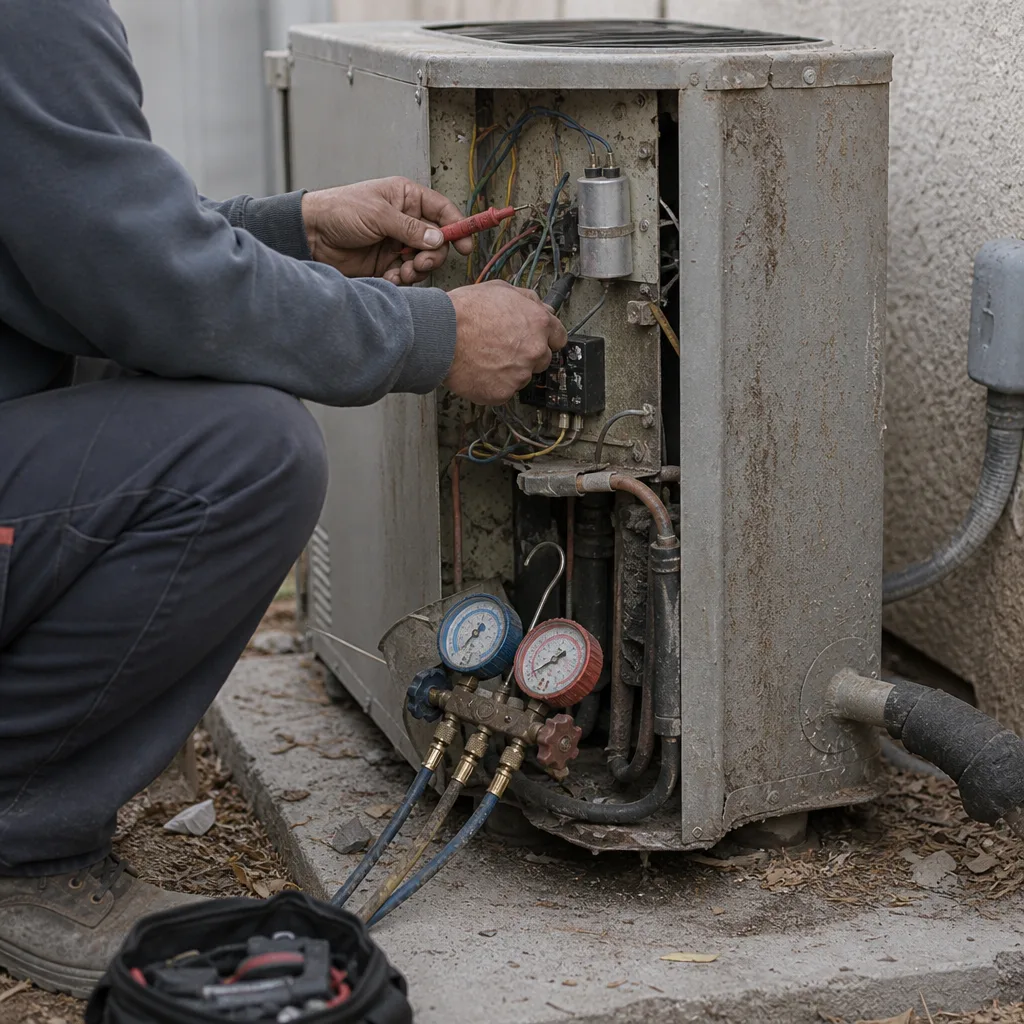 Before
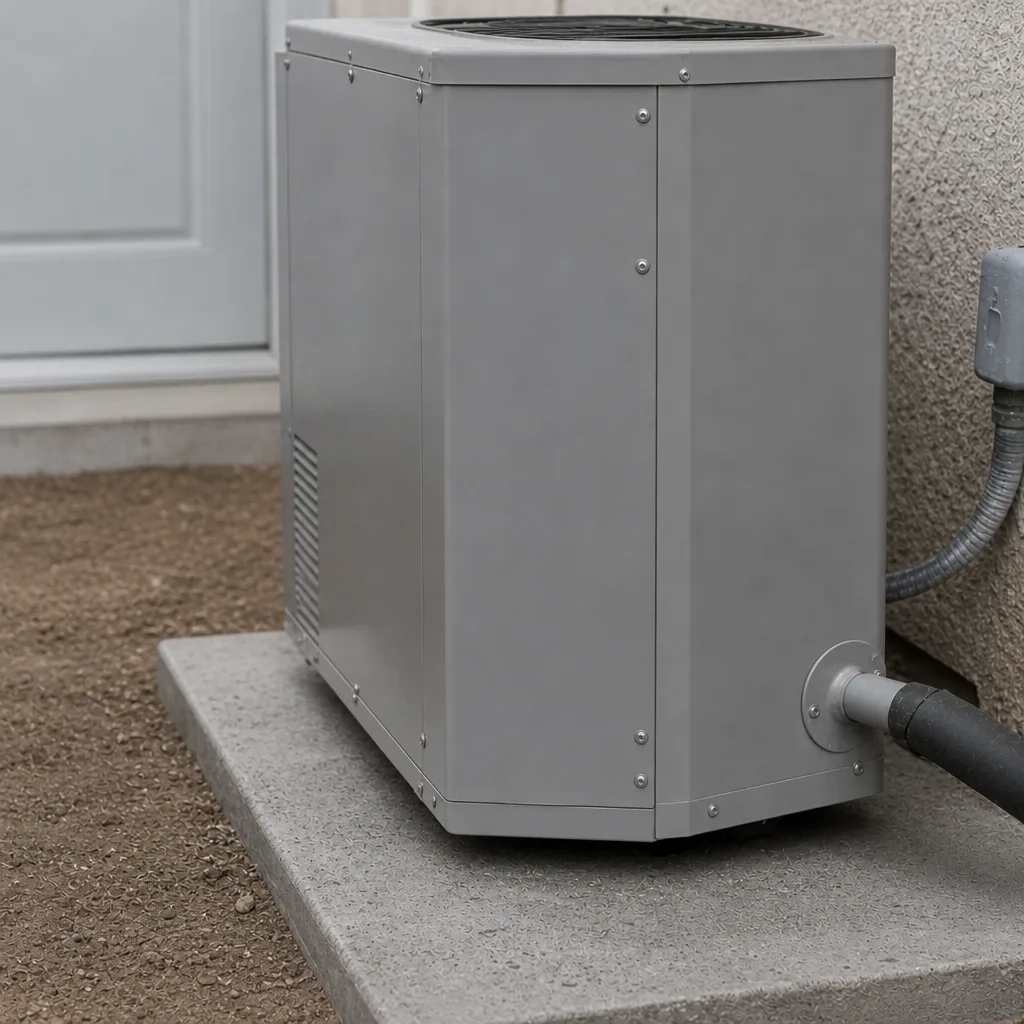 After
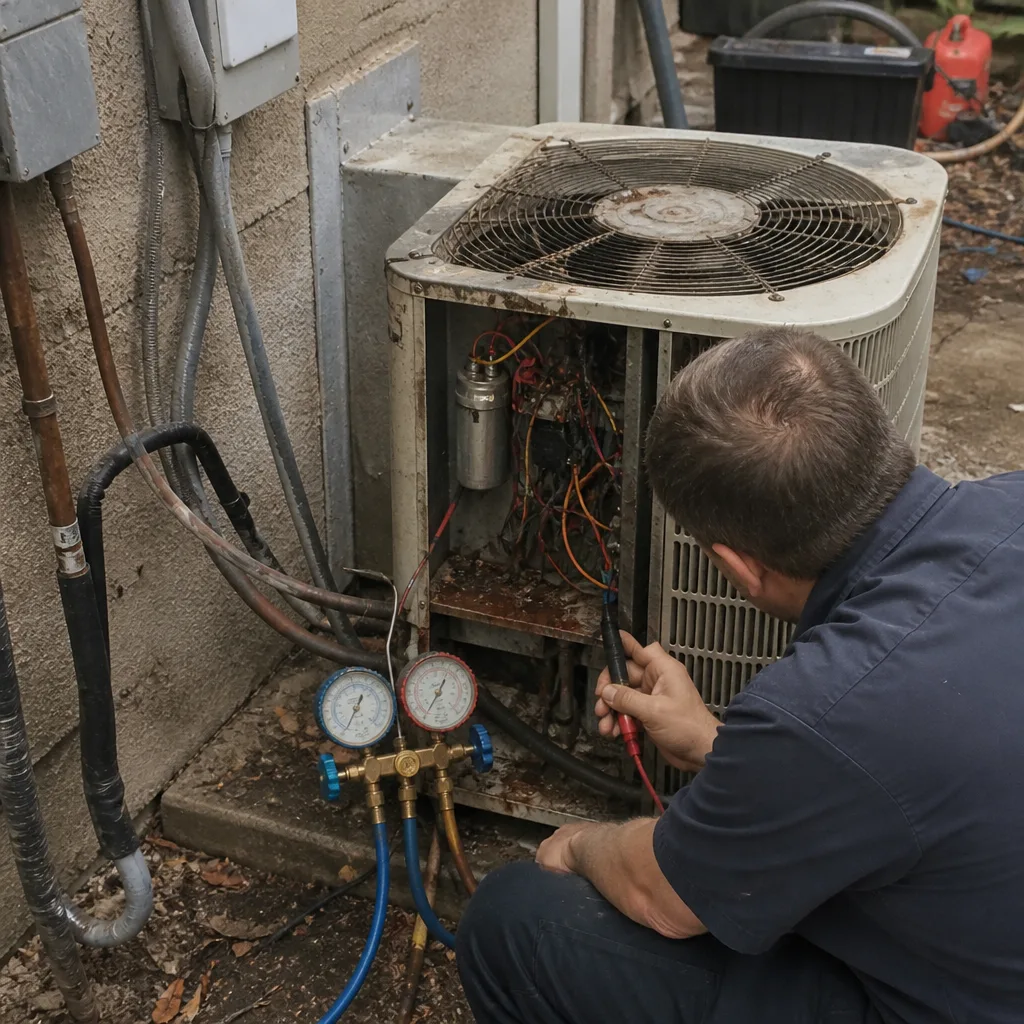 Before
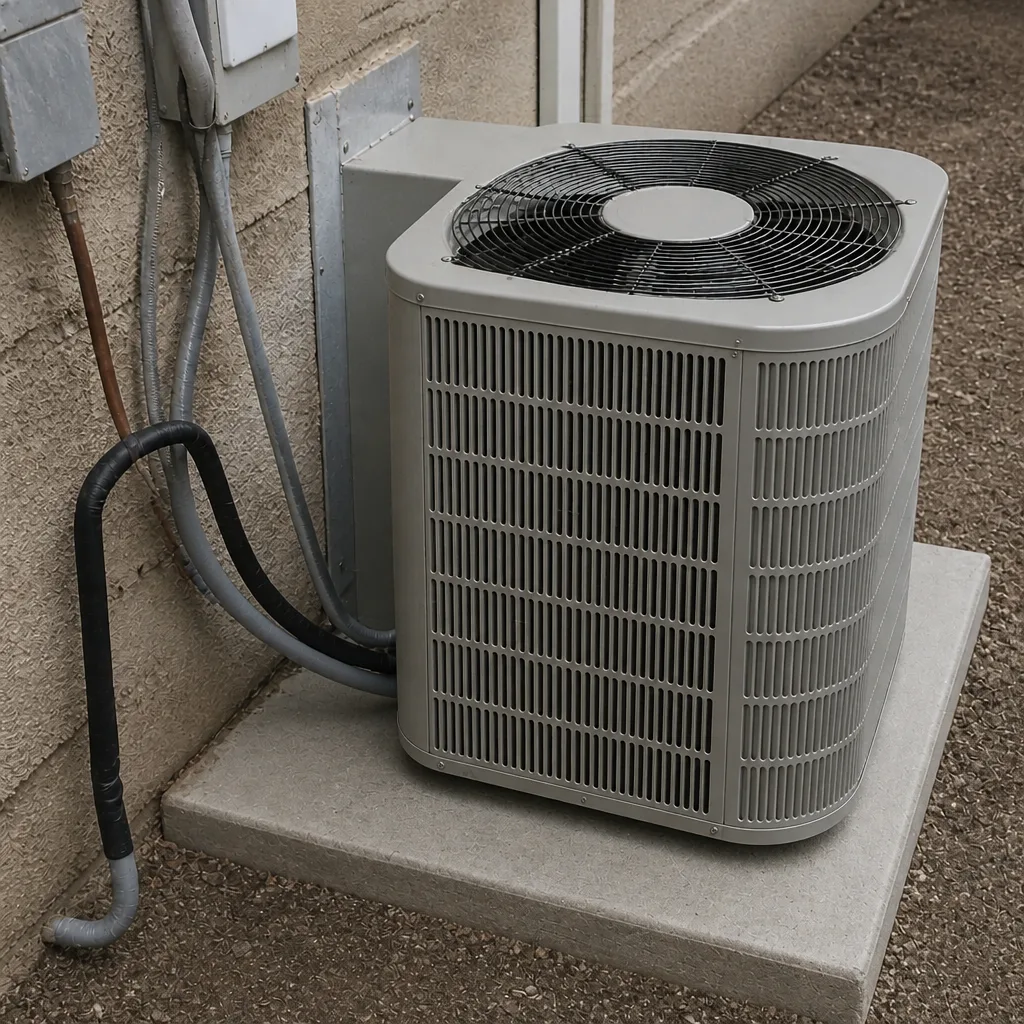 After
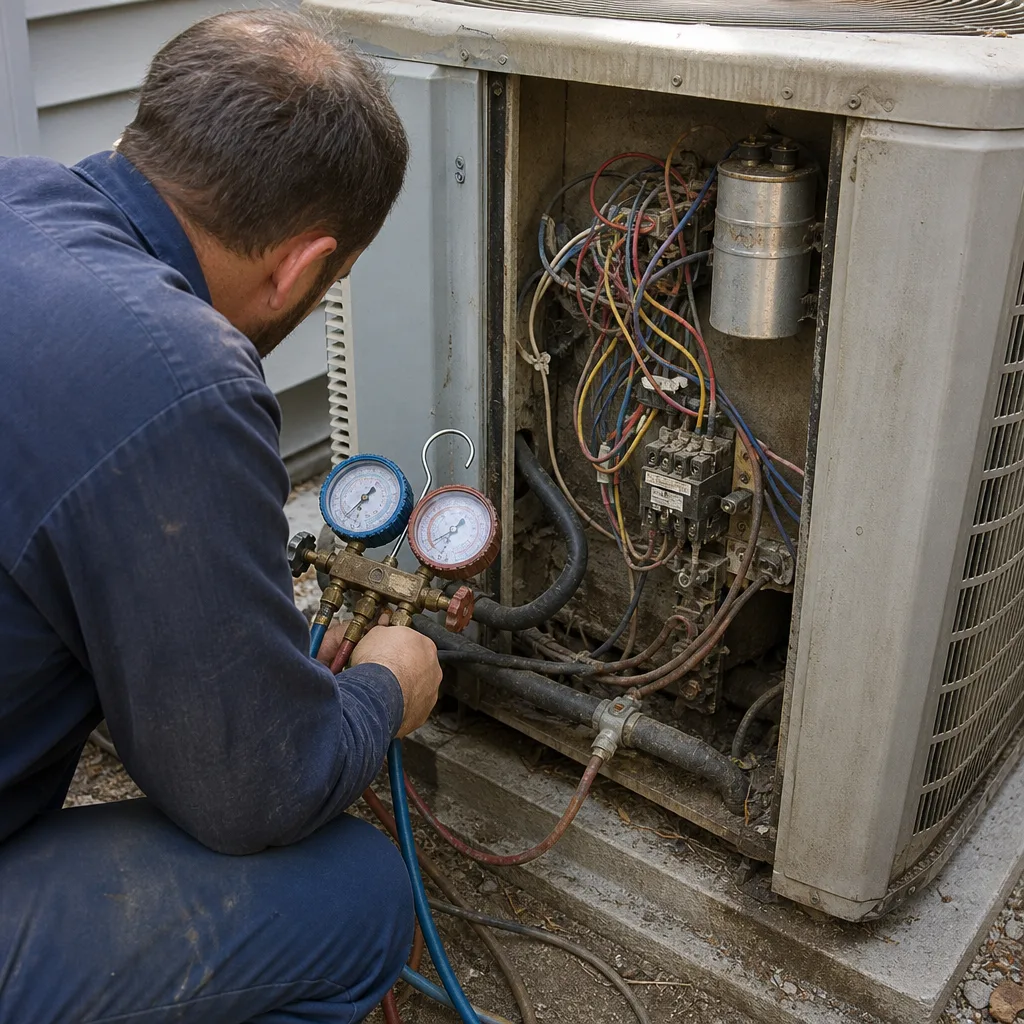 Before
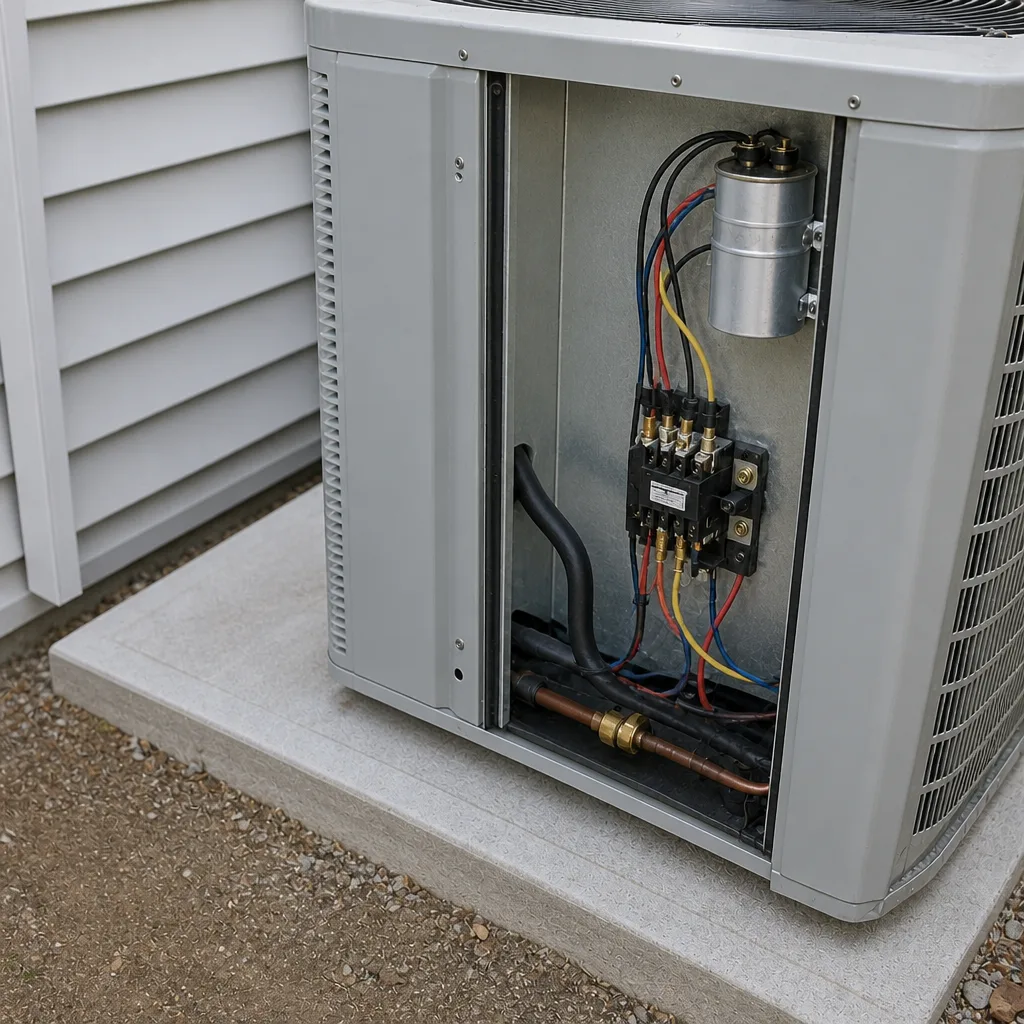 After
When to Call a Professional
Some HVAC problems are DIY-adjacent; commercial HVAC rarely is. Call a professional if the system is completely down or cycling on and off, if you hear a compressor short-cycling or see ice building on the lines, if a breaker keeps tripping when the unit tries to start, or if the building has lost cooling in the middle of a heat wave. Call immediately if you smell gas or burning at the unit, if a rooftop disconnect is hot to touch, or if refrigerant is visibly leaking. High-voltage equipment and pressurized refrigerant are not things to poke at. Trained hands, right tools, done once. Ray’s Heating & Air Enterprise offers free estimates in Enterprise, call (844) 455-2034.
Frequently Asked Questions
Most real emergencies run 2 to 6 hours on-site if the part is on the truck or at a local supplier, and same-day arrival is the norm. If the part has to ship in, expect 3 to 7 business days, with temporary cooling or heating arranged in the meantime. Call (844) 455-2034 for an exact quote; estimates are free.
New equipment, replacements, major system changes, and any work that alters the electrical or refrigerant scope typically need a Clark County permit, and the review usually adds 5 to 15 business days. Repairs and like-for-like part swaps usually don’t. Skipping the permit becomes a problem at the next sale, insurance claim, or inspection. Ask your contractor to show the permit number.
Yes, in most cases, using portable spot coolers or heaters for a single zone, or rented temporary packaged units for a larger space. We set these up as part of a long-repair plan so the business keeps functioning while the part arrives. Ask about it when the shipping timeline is confirmed.
Brand matters mostly through parts distribution. Carrier, Trane, and Lennox commercial parts are widely stocked locally, so most repairs stay in the same-day range. Proprietary boards, specialty economizers, and oddball OEM components ship from out of state regardless of brand. The lead time question is about the part, not the badge.
A planned maintenance visit is scheduled, 1 to 2 hours, and delivers a written record of readings. An emergency call is unscheduled, triaged, and diagnostic in the same visit. Same building, same unit, different calendar. The maintenance visit costs less and heads off most of the emergencies.
Always written, always based on readings, always before any work begins. The estimate includes the specific part needed and its source, the labor scope, the permit status if applicable, and the price. The 90-Day Done Right Promise goes on the job in writing too. Get the numbers on paper, call (844) 455-2034.
The Bottom Line
The commercial HVAC timeline is mostly about parts and permits, not labor. A stocked capacitor is an afternoon. A Bryant economizer board from Atlanta is a week. A Clark County permit is 5 to 15 business days before the install calendar even starts. Plan around those three variables and the rest falls into place. A written estimate with a part source, a permit status, and a set of readings will protect you from the phone quote that grows at the door. In Enterprise, that’s the difference between a repair and a month of fires. When you’re ready to put real numbers against your system, we’re a phone call away.
Call (844) 455-2034 for a free estimate. Phones are answered by a live person around the clock, every day. Current standing offers: $40 off any repair over $200, a Free Second Opinion on any written estimate, No Trip Charge inside the county, and a Senior and Veteran 10% discount.
Written by the team at Ray’s Heating & Air Enterprise.