
Last updated November 17, 2026
 AC repair
 Furnace & heating
 Heat pumps
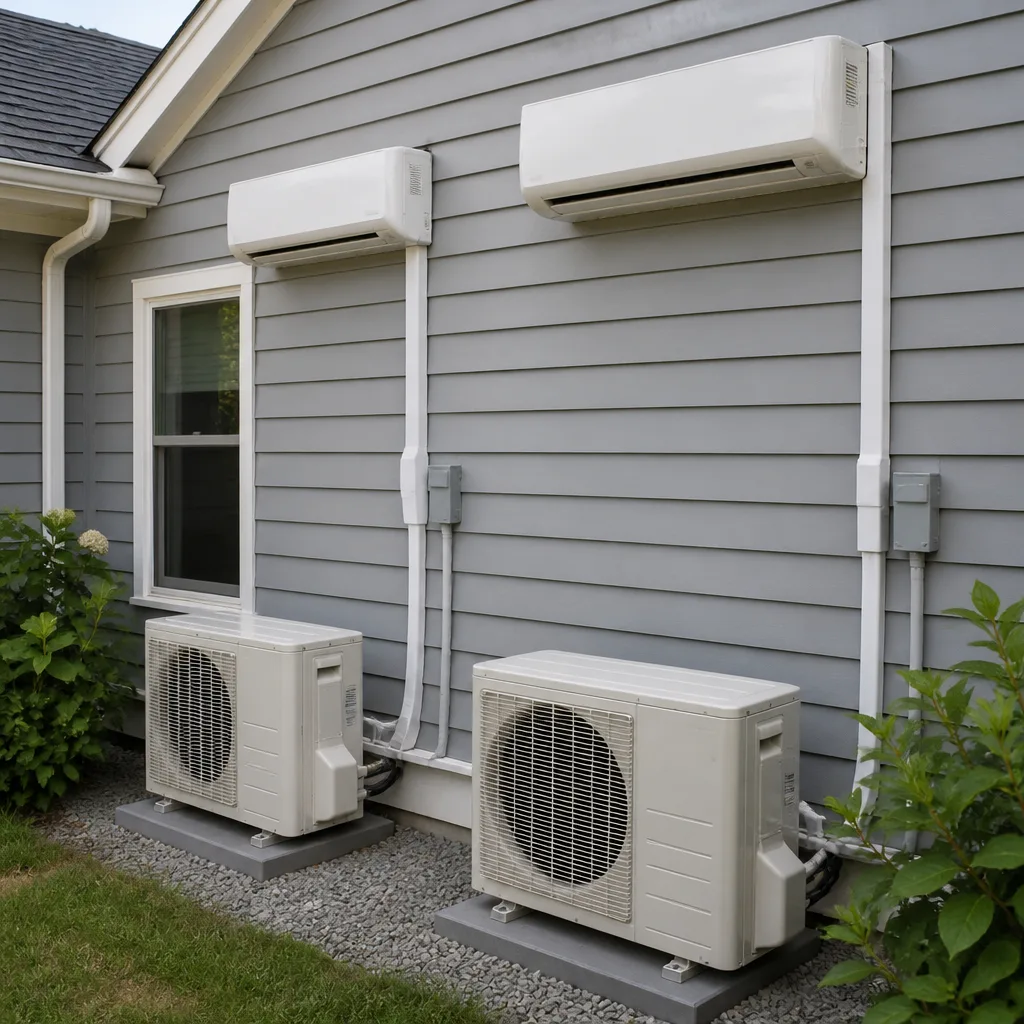 Ductless mini splits
 Carrier
 Trane
 Goodman
Seasonal tune-up and full diagnostic on your Carrier, Trane, or Goodman system - readings shown to you before any repair is proposed
Diagnosis first, numbers second - you approve the repair price before a single part goes in.
Get your free estimateAir Quality & Ventilation Warning Signs Every Homeowner Should Know
If everyone in the house feels better after a few hours outside but worse within an hour of coming home, that’s not a coincidence. That’s a data point your HVAC system is handing you. The tell is the pattern: headaches, scratchy throats, and “allergies” that clear up the moment you leave for the day and come back with a vengeance when you walk in the door. In our experience across Enterprise, this is the single most-missed sign of a ventilation problem, because it looks exactly like seasonal allergies until you notice the timing. This guide names the specific signals that mean your system is failing, not your sinuses, and it tells you which ones you can watch and which ones mean shut it down and call today.
Quick Answer
The most reliable warning signs of failing ventilation and indoor air quality are a “better away from home, worse at home” symptom pattern, visible dust lines on supply registers, musty or burning-dust smells, pressure symptoms like doors that won’t stay put, and unusual condensation. Mild signals like dust lines are a watch-and-schedule item. Musty smells, sharp chemical odors, or a burning smell on a unit that hasn’t run in months are a stop-and-call item, because they can point to moisture, combustion problems, or a blower that needs eyes on it before it runs again.
Styles & brands we work with
- AC repair
- Furnace & heating
- Heat pumps
- Ductless mini splits
- Carrier
- Trane
- Goodman
Table of Contents
- The “Everyone Feels Fine at the Cabin” Pattern
- Visual Cues Desert Homes Give You
- What Each Smell Is Telling You
- Pressure Imbalance Symptoms Most Homeowners Misread
- Watch It, or Shut It Down and Call Today?
- Why Filters, Humidity, and Duct Sealing Matter More in the Desert
- A Simple Walkthrough You Can Do This Weekend
- Common Mistakes to Avoid
The “Everyone Feels Fine at the Cabin” Pattern
We’ve listened to a lot of homeowners describe a version of this. The family takes a weekend trip, everyone feels great, and within an hour of being back in the house the sneezing, headaches, or dry cough return. The instinct is to blame the outdoors, or the dry air, or getting older. But the timing is the tell.
Seasonal allergies follow the season. Building-related symptoms follow the building. If your symptoms track your address and not the calendar, that’s worth writing down. Keep a short log for a week: when symptoms start, where you were in the house, and whether they ease away from home. That simple record is more useful to us than a vague memory of “feeling stuffy sometimes.”
Here’s how to separate the two:
- Allergies: worse outdoors or on high-pollen days, respond to antihistamines, ease up after a good rain. Symptoms follow the weather.
- Building-related: worse after an hour inside, tied to specific rooms or floors, clear up completely away from home, and return when you walk back in. Symptoms follow the house.
The cabin test works because the cabin has a different air system. If the cabin makes everyone feel better, the problem is likely in your home, not your lungs. When this pattern shows up alongside any of the visual or smell clues below, it’s worth calling us to look at the whole system, because in Enterprise we see plenty of 20th-century homes where the ventilation was never updated for the way families live now.
Visual Cues Desert Homes Give You
Desert homes leave a paper trail. The fine dust that blows across Enterprise in spring doesn’t just settle on the porch furniture; it finds every weak point in the duct system and settles where it can. In our experience, the visual signs below are the easiest to spot and the hardest to ignore once you know what you’re looking at.
- Dust lines on supply registers. Dark streaks or rings around the slats of a supply register mean air is leaking around the duct collar or the register isn’t sealing to the drywall. In a desert, that’s an invitation for dust, and it’s a sign your system is pulling conditioned air from the attic.
- Efflorescence near return vents. A white, powdery deposit on nearby drywall or baseboard is a mineral crust left behind by moisture wicking through the wall. It’s a moisture signal, not a dirt signal, and moisture is the thing you don’t want near a return vent.
- Discoloration on ceiling tiles or drywall near diffusers. A faint brown ring on the ceiling around a supply diffuser often means condensation is forming on the cold duct or diffuser and dripping over time. Look closely on a summer day.
- Dust on the return grille itself. A return grille packed with dust is a filter calling for help. If you’ve got a return grille you can’t get to easily (behind a closet or in a hallway ceiling), it’s easy to forget for years.
- Rust or corrosion at duct connections. Metal flaking or pitting where ducts connect is moisture getting where it shouldn’t be.
We’ve seen all of these in Enterprise on the same house, more than once. Any single one is worth a look. Two or more together, and it’s worth a real evaluation, because the small visual signals often add up to a genuine leakage or humidity problem inside the walls.
What Each Smell Is Telling You
Your nose can be a more reliable diagnostic tool than a lot of people give it credit for. Different smells point to different problems, and being able to name what you’re smelling helps a technician find the cause faster. Here’s the short version of what we listen for when a homeowner describes an odor.
- Musty or “wet basement” smell: a moisture problem. In the desert, it’s often not rainwater but condensation, a clogged condensate drain, or an evaporator coil that isn’t draining. Airflow across a wet coil can push that smell through the entire house.
- Burning dust: a long-idle unit firing up for the first time in months. The dust that settles on the heat exchanger or electric elements burns off when it runs. A faint one-time burn-off is normal on first startup; a smell that lingers past a few days is not.
- Sharp, chemical, or rotten-egg smell: stop reading and call. A sharp odor near a gas furnace or gas water heater can be a combustion leak, and in the desert, an idle furnace can hide a problem all summer. If you smell something electrical or sickly sweet near the equipment, treat it as a safety issue and get a professional out. Do not try to open the panel and troubleshoot it yourself; high-voltage components and gas lines are not a homeowner repair.
- Exhaust-fume smell indoors: a possible backdraft. It can point to a blocked vent, a pressure problem, or an exhaust fan pulling combustion gases into the house. This is a shut-it-down-and-call scenario, not a watch-it scenario.
If you smell the sharp or rotten-egg variety, get everyone outside, and don’t run light switches or the furnace. Then call the gas utility and us. That’s not us being dramatic; it’s the standard and it’s the safe answer. For the musty or burning-dust smells, call us to schedule an evaluation and we’ll read the system rather than guess.
Pressure Imbalance Symptoms Most Homeowners Misread
Your HVAC system is a pressure machine, even if you never think about it that way. When a house has been sealed tight and the system isn’t moving air properly, you feel it in odd ways: doors, condensation, and room-by-room temperature differences. These are the signs that get misread the most.
- Doors that won’t stay open or closed. A door that swings shut on its own, or drifts open, can be a sign of a pressure difference between rooms. Same for a door that’s hard to latch until the system is off.
- Condensation in unusual places. Water on a window frame in a mild desert month, drops on a duct, or a cold supply register that sweats: all are pressure and humidity clues, not just plumbing.
- Uneven room temperatures. A bedroom that runs ten degrees hotter than the living room in summer often points to duct leakage, a bend or crush in a duct run, or a return that isn’t pulling right.
- Whistling or whooshing at a grille. A supply or return that whistles is usually undersized or restricted, and the system is forcing air through a gap that’s too small.
We’ve heard homeowners in Enterprise describe these as “just how the house is.” It isn’t. In a well-balanced system, a door opens and stays where you put it, and the rooms you spend time in hold a steady temperature. When you feel the difference, call for a walkthrough. Our team has up to 24 years of experience and can read this kind of thing in one visit, and the goal for a balanced, efficient system is a conversation about airflow, not a sales pitch.
Watch It, or Shut It Down and Call Today?
Ray has a simple way of sorting this, and it’s the triage logic we use on every call. Two columns: the “watch it and schedule a look” column, and the “shut it down and call me right now” column. Knowing which column a symptom belongs in keeps you from either panicking over a dust line or ignoring a gas smell.
Watch-and-schedule signals:
- Dust lines on supply registers, or a filter that’s overdue.
- A faint one-time burning-dust smell on first startup of the season, that clears in a day.
- Mild condensation on a cold duct.
- Uneven room temperatures or a slightly stubborn bedroom.
- Doors that drift but no other symptoms.
Shut-it-down-and-call-today signals:
- Sharp, chemical, or rotten-egg smell near gas equipment.
- Exhaust-fume smell anywhere indoors.
- Visible soot, scorching, or melted plastic near the furnace or panel.
- Musty smell that intensified quickly, with visible water or efflorescence.
- Any smell of hot plastic or electrical burning, or a breaker that trips repeatedly. High-voltage wiring is not a homeowner repair; call us and we’ll handle the panel safely.
Ten years of watching a slow-moving symptom is time you can spend on the yard. The shut-it-down list is different: it’s the stuff that warrants turning the equipment off and getting a professional there immediately. If you’re on the watch list and you’ve got a written estimate from another company, take advantage of our free second opinion before you spend. The number is (844) 455-2034, and a live person answers, day or night.
Why Filters, Humidity, and Duct Sealing Matter More in the Desert
Here’s the part most guides skip. In the desert, the humidity problem is inverted from what people expect. Your house air is dry most of the year, but the air handling equipment sees moisture anyway: a wet evaporator coil, a condensate pan, a drain line, and cool ductwork running through a hot attic all create condensate. That means the desert is a filter-and-humidity problem disguised as a plain dust problem.
Filters matter more than most folks realize, because a dirty filter on a dusty spring in Enterprise reduces airflow, and reduced airflow causes everything downstream to age faster: the blower, the coil, and the compressor. We recommend checking the filter monthly in spring and changing it at the manufacturer’s interval the rest of the year, and keeping a second filter on hand so a dirty one doesn’t become a week of waiting.
Duct sealing is the other lever. Leaky ducts in an attic pull hot, dusty attic air into your rooms, and they pull return air in from wherever the leaks are. Basic duct sealing is one of the highest-value improvements you can make in an Enterprise home, and it usually shows up as a real difference in comfort and in the dust line over the supply. If you’re due for a system replacement, a room-by-room load calculation is the right starting point, and a new system from a brand like Rheem, York, or Bryant, sized and vented correctly, will behave better than the old one did. A new heat pump or mini-split installed without a load calculation is the same mistake in newer packaging.
If your system is older and struggling, we handle everything from a same-day AC repair to a full installation. Some of that work lives on our Ray’s Heating & Air Enterprise home page; the details of a proper install live on AC Repair & Installation in Enterprise and Heating & Furnace in Enterprise. If you’re thinking about ductless or ducted efficiency upgrades, our Heat Pump & Mini Split in Enterprise page is the place to start.
A Simple Walkthrough You Can Do This Weekend
You don’t need a tool bag to spot the big stuff. Here’s the walkthrough we’d do if we were standing in your hallway, and you can do the same thing with a flashlight and ten minutes.
- Walk the supply registers. Shine light across each one. Note dust lines, discoloration, rust, or whistling.
- Walk the returns. Look for powder (efflorescence), water stains, and a filter you’ve forgotten.
- Look up at the ceiling around diffusers on a cooling day. Any ring or drip means condensation is talking to you.
- Test the doors. Open and close each one with the system running. A door that fights you, or drifts, is a pressure clue.
- Smell the closets and the utility room. A musty or sharp smell may show up in a closet before the living room.
- Check the filter and the condensate pan. A wet pan with standing water or a clogged drain line is a call-us item.
Write down what you find with a date. If two or more items show up, that’s an evaluation. If any of the shut-it-down signals are on your list, stop and call first.
Common Mistakes to Avoid
- Blaming allergies when the timing says otherwise. If symptoms clear up away from home and return within an hour, the house is the better suspect than the pollen.
- Ignoring the dust line around the supply. In a dusty desert climate, that streak is a leak, and leaks pull in outside air that carries dust and pollen with it.
- Treating a musty smell with an air freshener. You’re covering a moisture problem, and the wet coil or drain is still there.
- Chalking door drift up to “an old house.” It’s a pressure imbalance clue, and in Enterprise, tight modern houses can have more of it than older ones.
- Opening the furnace or electrical panel to “just have a look.” High-voltage wiring and gas lines are a professional’s job, and a mistake there is not a small one.
- Assuming a new system fixes poor ventilation. If the ducts leak and the returns aren’t right, the new equipment inherits the old pressure problem.
- Waiting on a small symptom until it’s a big repair. A filter or a condensate drain caught this month is a much smaller job than a blower or coil found six months late.
See the difference
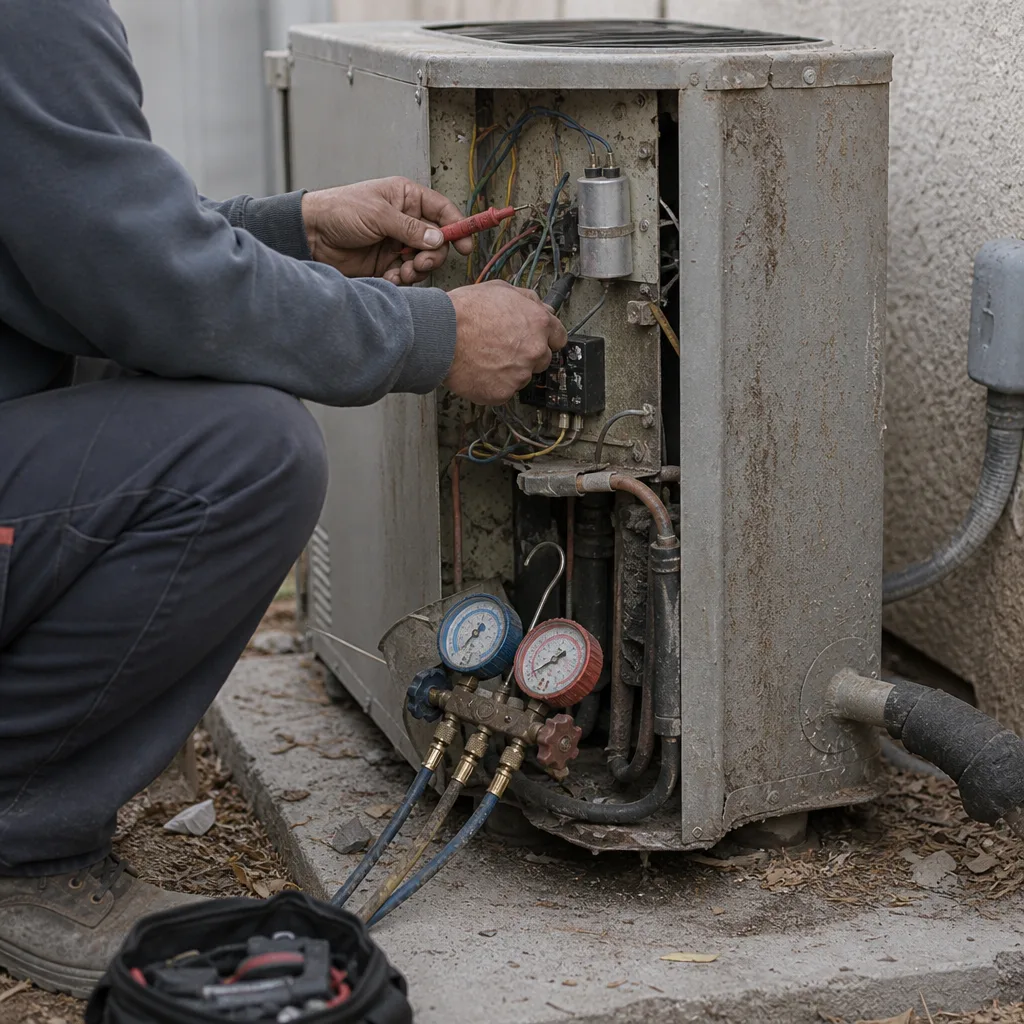 Before
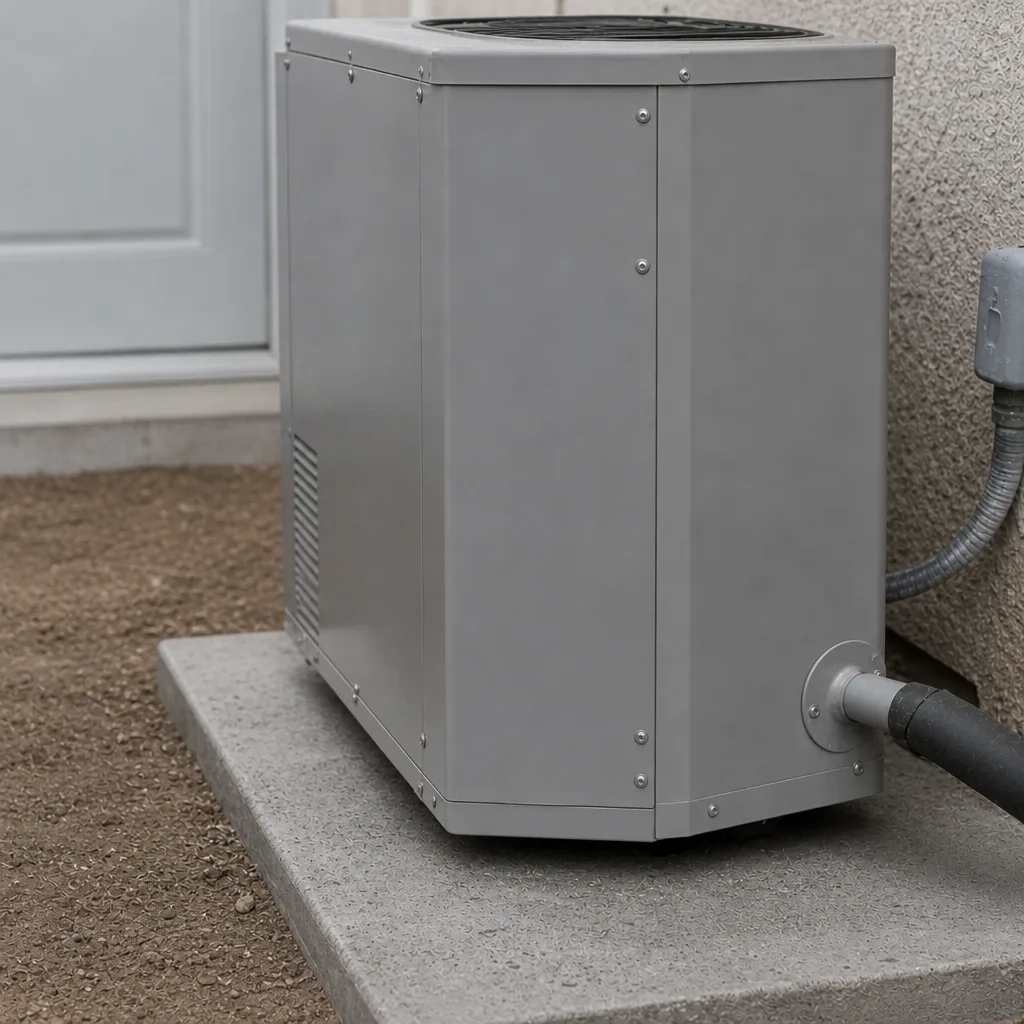 After
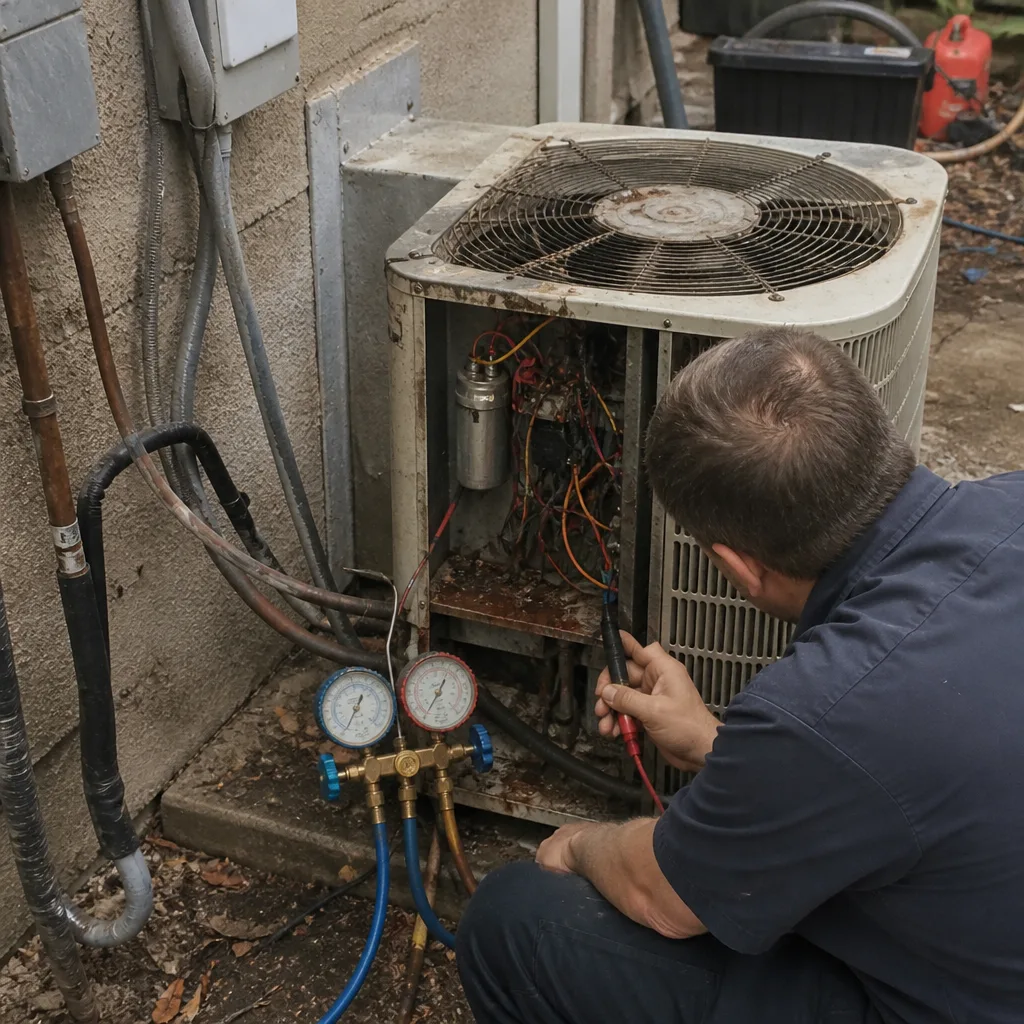 Before
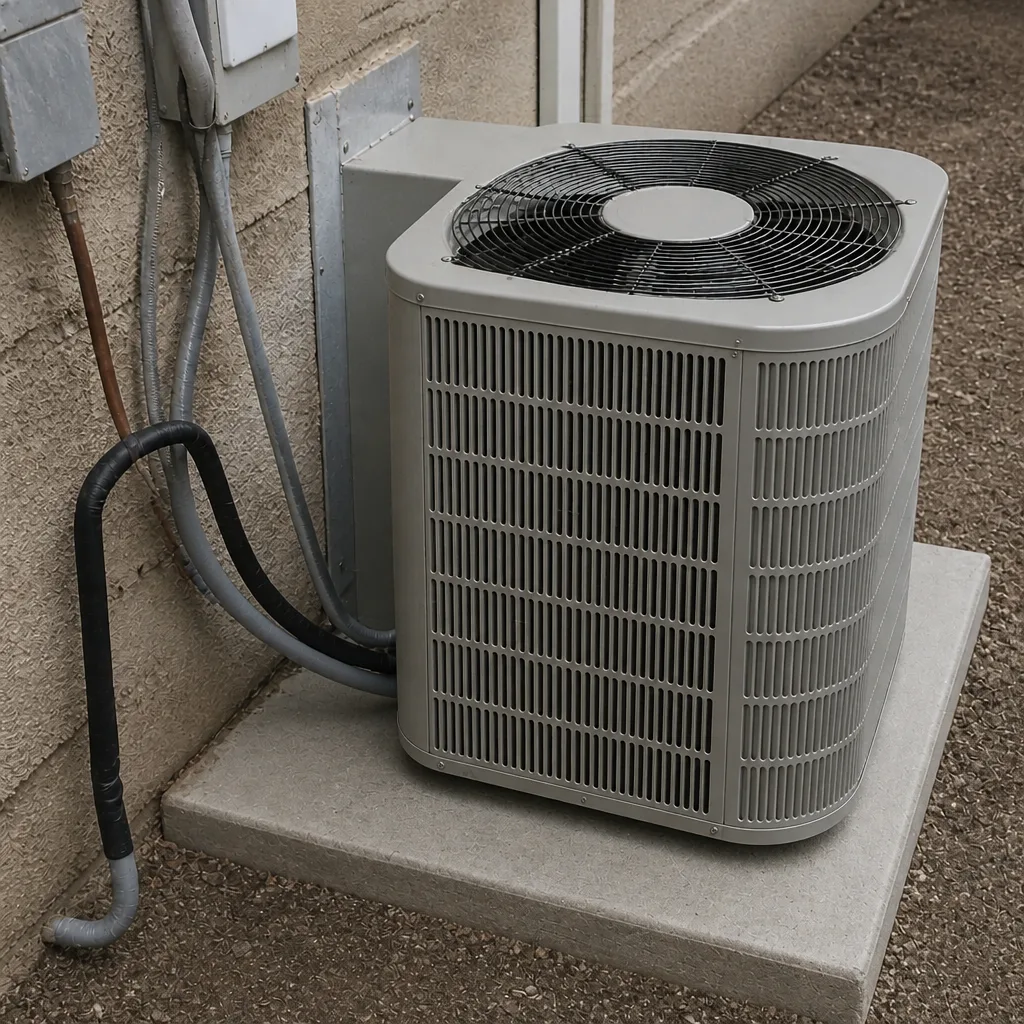 After
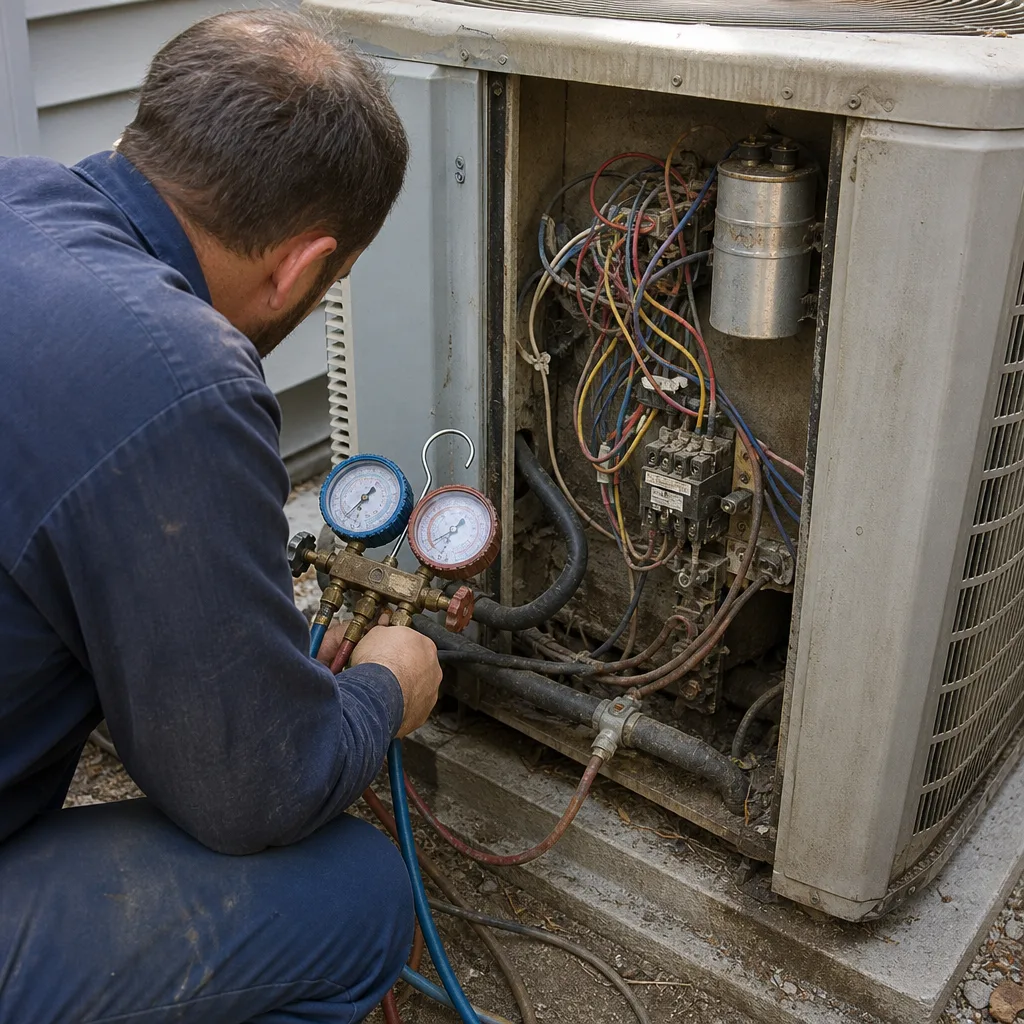 Before
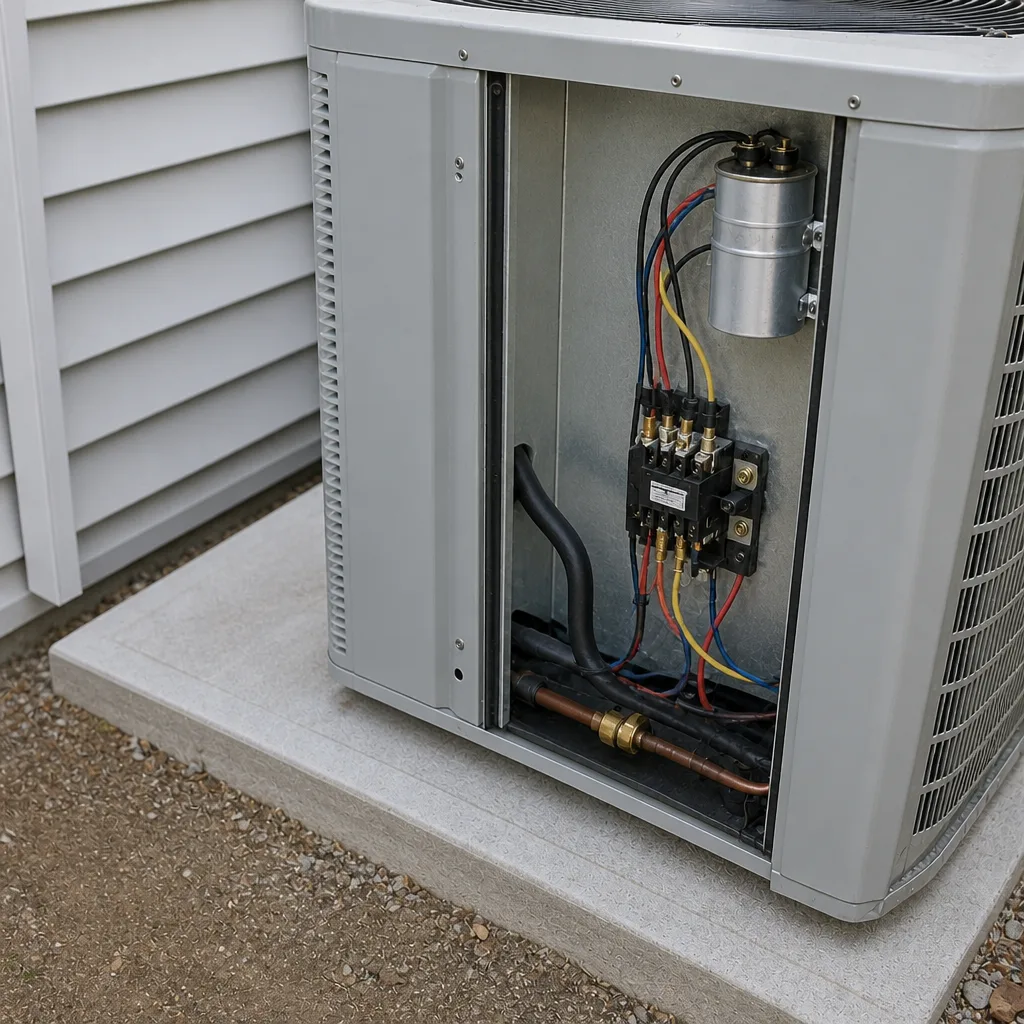 After
When to Call a Professional
Call us when a smell is sharp, chemical, or rotten-egg, or when you see soot, scorching, or melted plastic near the equipment. Call when the musty smell is getting worse and you see water, efflorescence, or a wet pan. Call when two or more visual signs show up on the same walkthrough, or when the “better away from home” pattern has been going on for more than a week or two and you’re ready to stop guessing. Call for the door-drift and room-temperature complaints that never get better. High-voltage, gas, and combustion work isn’t a homeowner fix, so don’t try it. Ray’s Heating & Air Enterprise offers free estimates in Enterprise. Call (844) 455-2034 and a live person will answer, day or night.
Frequently Asked Questions
The first signs are usually the “better away from home, worse at home” symptom pattern, a dust line on a supply register, and a faint musty or burning-dust smell. Any one of those is a reason to schedule a look, and the earlier you catch it, the smaller the repair.
A faint burning-dust smell on first startup after a few idle months is usually normal and clears within a day. If it lingers, or if it smells sharp or electrical, shut the system down and call, because that’s no longer a dust burn-off. For a free estimate on an air-quality evaluation, call (844) 455-2034.
That pattern usually means something in the home is affecting you, not the outdoors. Seasonal allergies track the season, and building-related symptoms track the building, so keep a short log and compare the timing. If the symptoms follow the house, that’s your data point.
A musty smell points to a moisture problem, often a wet evaporator coil, a clogged condensate drain, or a leak where the ducts run. In the desert, it’s rarely rainwater. It’s usually equipment moisture, and it should get looked at before the wet spot gets worse.
A door that drifts or won’t latch can be a pressure imbalance symptom, which is often a duct or return problem. It doesn’t always mean a failing system, but it’s worth a walkthrough, especially alongside uneven temperatures or a whistling grille.
Yes, and we offer one on any written estimate at no charge. A second look is a normal and reasonable step, and it’s one of the ways we earn trust. Call (844) 455-2034 and a live person will answer and set it up.
The Bottom Line
Bad indoor air rarely arrives with a bang. It shows up as a headache that clears up outside, a dust line on a register, a door that drifts, or a smell you’ve been explaining away. The pattern is the clue: symptoms that follow the house and not the season. Sort what you find into two columns, watch-and-schedule versus shut-it-down-and-call-today. The sharp, chemical, rotten-egg, exhaust, and electrical-burning items go in the call-now column every time. The rest deserve a real evaluation with readings first, numbers second, and a plan you can actually act on. In Enterprise, we’re one call away and a live person answers around the clock. Backed by our 90-Day Done Right Promise in writing, and that’s the whole idea: if it’s not done right, we make it right. Call (844) 455-2034 for a free estimate today.
Written by the team at Ray’s Heating & Air Enterprise.