
Last updated November 17, 2026
 Heat pumps
 AC repair
 Furnace & heating
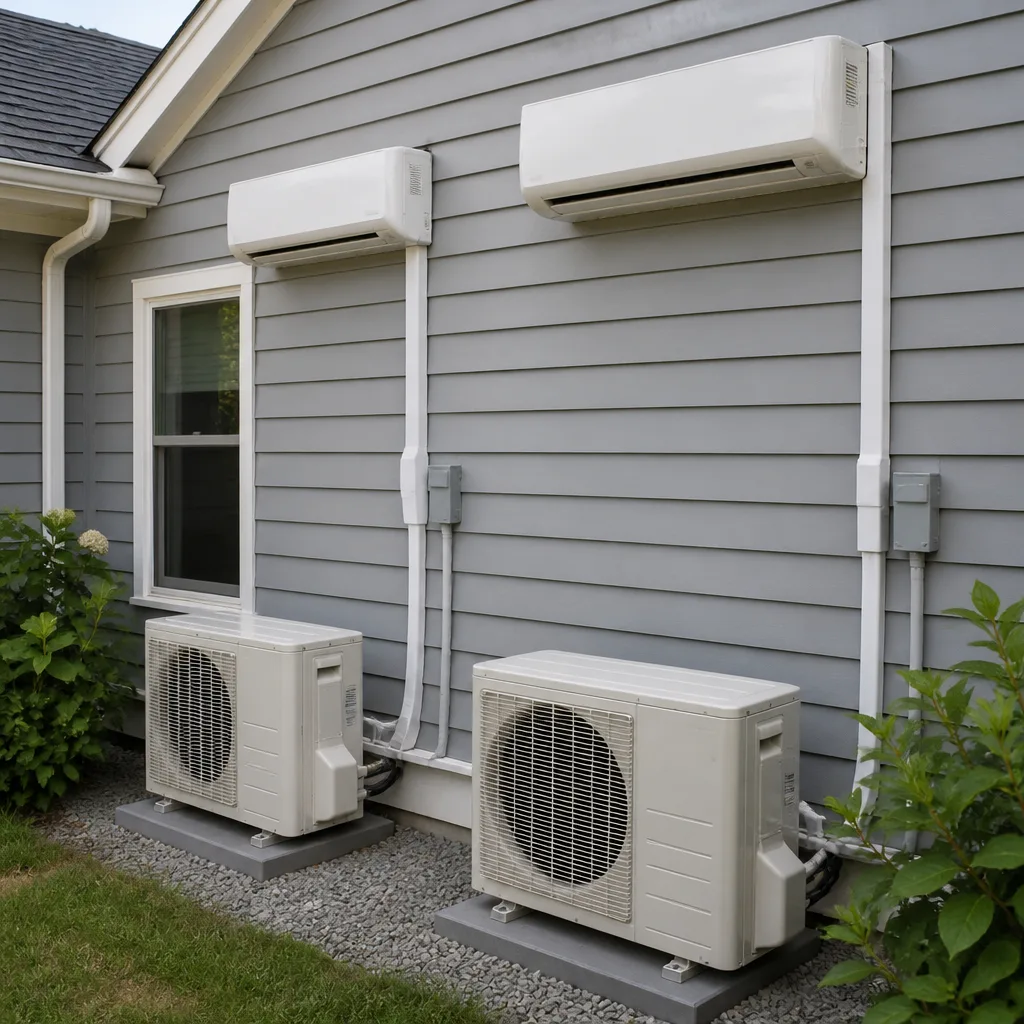 Ductless mini splits
 Carrier
 Trane
 Goodman
Seasonal tune-up and full diagnostic on your Carrier, Trane, or Goodman system - readings shown to you before any repair is proposed
Diagnosis first, numbers second - you approve the repair price before a single part goes in.
Get your free estimateThe Complete Heat Pump & Mini Split Guide for Enterprise Homeowners
Heat pumps lose capacity in cold weather. That’s the line you’ve probably heard, and it’s mostly true below about 35°F. So here’s the part nobody tells you: Enterprise, NV averages a winter low around 34°F, and you’ll see maybe six nights a year that dip that far. The other 359 days, a heat pump in Enterprise runs cheaper than a gas furnace and cools your house in the same box. This guide covers what that actually means for your wallet, your house, and your NV Energy bill, because generic national advice does not fit a desert suburb where it’s 105°F in July and 34°F on a January night.
Quick Answer
For most Enterprise homeowners, a ducted heat pump is the better long-term pick over a gas furnace and separate AC, because the winter here is mild enough that the cold-weather penalty rarely bites, and you replace two systems with one. A ductless mini split makes more sense when you’re heating and cooling a converted garage, a home addition, or one or two rooms without ductwork. Mini splits cost more per square foot of coverage, but they skip the duct losses and let you zone the space. Which one you pick depends on your ducts, your layout, and whether gas is already in the house.
Styles & brands we work with
- AC repair
- Furnace & heating
- Heat pumps
- Ductless mini splits
- Carrier
- Trane
- Goodman
Table of Contents
- Does cold weather actually kill heat pump performance in Enterprise?
- Ducted heat pump vs. ductless mini split: which fits your Enterprise house?
- NV Energy rebates and federal tax credits in 2026
- The 10-year cost of a heat pump vs. a gas furnace in Enterprise
- The converted garage and home addition problem
- Why sizing and load calculation matter more than brand
- Keeping a heat pump alive through a desert summer
Does cold weather actually kill heat pump performance in Enterprise?
Short answer: not in Enterprise. Heat pump efficiency does drop as outside air gets colder, because the system is moving heat against a bigger temperature difference. Standard heat pumps start to struggle around 25°F to 30°F, and cold-climate models keep working well below that. The City of Henderson records Enterprise as one of the warmer parts of the Las Vegas Valley, and the winter averages here are gentle. You’ll get a handful of cold snaps, then it’s back to 60s by February.
What does hurt a heat pump in Enterprise is the summer, not the winter. When it’s 108°F for a week straight, your system is working against a huge temperature difference on the cooling side, and that’s where a poorly sized or poorly maintained unit fails. In our experience, most heat pump emergencies in Enterprise happen in July and August, not January.
Here’s how the numbers stack up for our climate:
- Enterprise average winter low: around 34°F
- Nights below freezing: about six per year
- Summer highs: regularly 104°F to 108°F
- Days above 100°F: well over 70 annually
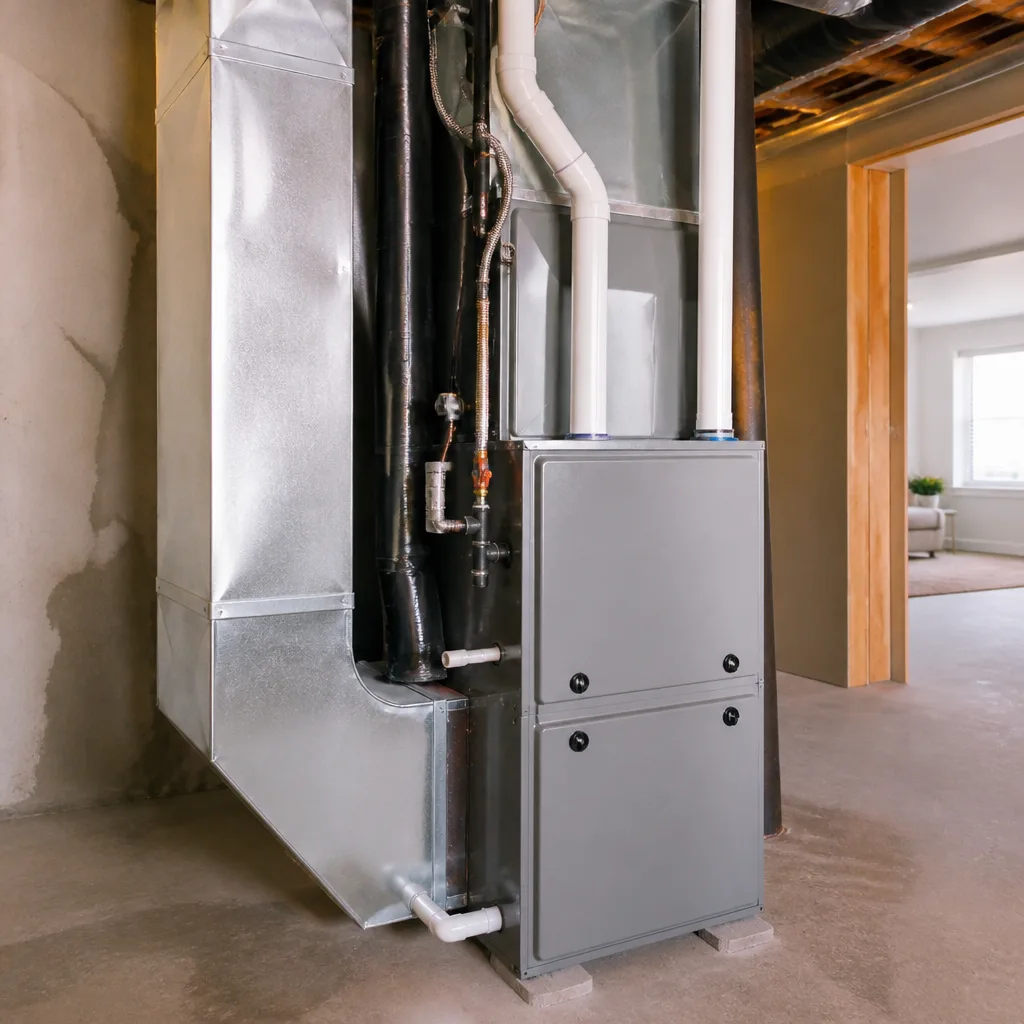
If you already have gas in the house and you’re nervous about the occasional sub-30 cold snap, a dual-fuel setup (heat pump plus a gas furnace as backup) is a legitimate option. But it costs more and it’s usually overkill for Enterprise. The insulation and air sealing in your house will affect your comfort and your bill more than the cold-snap math does. If your furnace is on its last legs, the heating and furnace service page covers how to tell.
Ducted heat pump vs. ductless mini split: which fits your Enterprise house?
Both heat and cool. Both run on electricity. The difference is ductwork, and that’s really the deciding question.
Ducted heat pump
A ducted heat pump is a direct replacement for the gas furnace and AC combo most Enterprise homes already have. One outdoor unit, one indoor air handler, connected to the existing ducts. It heats and cools the whole house from the same registers. If your ductwork is in decent shape, this is the simplest swap and the lowest upfront cost.
Downside: duct losses. In a typical home, 20% to 30% of the conditioned air leaks out of the ducts before it reaches your rooms. In a garage-adjacent closet or a hot attic in Enterprise, that number runs higher. If your ducts are old flex run through a 140°F attic in August, you’re paying to cool the attic.
Ductless mini split
A mini split skips the ducts entirely. One outdoor condenser connects to one or more wall, ceiling, or floor cassettes. Each cassette controls its own zone. Efficiency is higher because there are no ducts to lose air through, and you can cool one room without cooling the whole house.
Downside: cost per room. A single-zone mini split covers one space. Doing a whole 2,000-square-foot Enterprise house with mini splits usually costs more than a ducted heat pump, and you’ll have a cassette on every wall, which some folks don’t want.
Which fits your Enterprise home
- 1990s and 2000s tract homes in Enterprise and the surrounding subdivisions: ducted heat pump is almost always the answer. The ducts are already there.
- Converted garages, room additions, casitas: mini split, hands down. More on this below.
- Older homes with undersized or damaged ducts: mini split for the trouble rooms, ducted for the rest, or mini splits throughout if the ducts are past saving.
- Sunroom or enclosed patio: single-zone mini split.
If you want to see the full menu of options, the heat pump and mini split page has the install details. For a standard swap-out, the difference between a well-installed Bryant or American Standard heat pump and a poorly installed one is bigger than the difference between the two brands. The install matters.
NV Energy rebates and federal tax credits in 2026
Rebate programs change. Every year. Sometimes mid-year. So treat what’s below as a starting point, not a promise, and have whoever quotes your job confirm the current amounts in writing before you sign anything. Ray confirms rebate amounts before any quote goes out, because we’ve seen homeowners get burned by a contractor who quoted 2023 numbers in 2025.
That said, here’s the landscape as we understand it right now:
NV Energy rebates
- NV Energy has run heat pump rebates through its residential efficiency program for years, and the amounts have moved up and down depending on the program cycle and whether you’re replacing a gas furnace or an electric resistance system.
- Rebates are typically larger when you’re replacing an older, less efficient system with a qualifying high-efficiency heat pump.
- Some programs require an energy audit or a specific efficiency tier (SEER2/HSPF2) to qualify. The equipment has to hit the number.
- Mini split rebates exist but are usually smaller and may be capped by the number of zones.
Federal tax credits
The federal energy efficiency credit for qualifying heat pumps has been part of the tax code in recent years. The credit amount, the efficiency threshold, and the annual cap depend on the tax year and the equipment installed. It’s a credit, not a rebate – you claim it on your taxes, and you need the manufacturer’s certification paperwork. Your tax professional should confirm your eligibility. We’ll hand you the documentation.
How to stack them
- Get a written quote from a licensed contractor that lists the exact equipment model numbers.
- Verify the SEER2 and HSPF2 ratings meet both NV Energy’s program tier and the federal credit threshold.
- Have the contractor confirm, in writing, the current NV Energy rebate amount for that equipment.
- Keep the manufacturer’s certification statement and your invoice for tax filing.
- Submit the NV Energy rebate paperwork within the program’s deadline – it’s usually time-limited after install.
It’s also worth saying plainly: we don’t promise a specific rebate number. We confirm it before you commit. That’s the honest way to do it.
The 10-year cost of a heat pump vs. a gas furnace in Enterprise
This is where the math gets interesting and where national articles get it wrong, because they quote national averages instead of Nevada rates. Here’s how the total cost of ownership actually breaks down in the Enterprise utility market.
Rough numbers, for a standard 3-ton system in a 1,800-square-foot Enterprise home:
- Heat pump installation (ducted): typically $8,000 to $15,000 depending on efficiency tier, brand, and whether ducts need work
- Gas furnace + separate AC installation: typically $7,000 to $13,000 combined
- Mini split installation (single zone): typically $4,000 to $8,000 installed
- Mini split installation (multi-zone, 3-4 heads): typically $12,000 to $20,000
So the gas + AC combo is sometimes cheaper up front, sometimes a wash, depending on the equipment. But the install price is only the first cost. Over ten years, the operating side tells the story:
- Cooling: roughly a tie. Both a heat pump and a standalone AC run on electricity and their cooling efficiency is comparable. Heat pumps sometimes win because they’re variable-speed, but not always.
- Heating: heat pump wins in Enterprise. A heat pump moves heat instead of burning gas to make it, so for every unit of electricity you put in, you get two to four units of heat out. A furnace tops out near 96% efficiency. That’s a big gap on your NV Energy bill in January and February.
- Gas service charge: if you drop the furnace entirely, you can often drop the gas meter and its monthly service charge. That’s a real number over ten years.
- Maintenance: roughly a wash, but two systems (furnace + AC) means two tune-up bills a year instead of one.
- Rebates: the heat pump usually gets more rebate and tax credit money than a gas furnace does, which widens the gap.
Where a furnace wins: if gas is cheap in your specific area, if your house is very large, or if you’ve got a furnace that’s fine and just need a new AC. In those cases, replacing the AC alone is the honest call. See the AC repair and installation page for those scenarios.
The converted garage and home addition problem
If you’ve driven through Enterprise, you’ve seen it: the garage that’s now a gym or a guest room, the bedroom addition over what used to be a patio, the casita built for a parent. None of these have proper ducts, and running ducts into them means cutting the house open.
A multi-zone mini split handles this better than any ducted solution. One outdoor unit, up to four or five indoor cassettes, each controlled by its own remote or thermostat. The converted garage gets a wall cassette. The addition gets another. The main house stays on its existing system, untouched.
What you need to know about a multi-zone in Enterprise specifically:
- Each indoor head needs a clear path to the outdoor unit for the line set. Running lines through the attic is common; running them on an exterior wall is also fine, and it’s less invasive if the attic is packed.
- The outdoor condenser needs its own physical space with airflow. Don’t tuck it into a corner against a block wall in full sun. In an Enterprise summer, its efficiency drops fast if it can’t breathe.
- Zones should match how the rooms are used, not just square footage. The guest room that gets used 12 nights a year should be one zone, not lumped in with the kitchen.
- Multi-zone systems are harder to size than single-zone. Done wrong, one zone freezes while another overheats. This is where the load calculation matters most.
We’ve put a lot of these into homes around Enterprise and the surrounding neighborhoods, and the pattern is consistent: when the zoning is right, owners tell us they run one room in the evening instead of cooling the whole house, and the NV Energy bill reflects it.
Why sizing and load calculation matter more than brand
You can install the best Carrier heat pump on the market and get a mediocre result if it’s sized wrong. Oversized systems short-cycle – they blast cold air, hit the setpoint, and shut off, never removing the humidity. In Enterprise, where humidity is low anyway, the bigger problem is wear and tear from all that start-stop cycling, plus hot and cold spots.
Undersized systems never keep up on a 108°F day. You’ll call someone in August either way.
A proper load calculation looks at:
- Square footage of conditioned space
- Window area, orientation, and glazing type (west-facing glass in Enterprise is brutal)
- Insulation levels, including attic insulation
- Duct condition and location (attic ducts in a desert attic, versus in a vented crawl)
- Air infiltration – how leaky the house is
- Number of occupants and any internal heat sources
This is called a Manual J calculation, or a load calc. Ask for it. Any installer who sizes a heat pump by window-peeking and doing rough math in their head is guessing. The good ones run the numbers, then pick the equipment.
For brands: Trane, Carrier, Bryant, and American Standard all make solid equipment, and we service them all. What matters more is the installer, the sealed ducts, the correctly sized return air, and the charge verification (refrigerant measured by superheat or subcool, not guessed). A well-installed Goodman will outlast a badly installed Trane every time.
Keeping a heat pump alive through a desert summer
Heat pumps fail less from cold and more from heat, in our experience. Here’s the routine that gets one through an Enterprise summer:
- Change the filter every 30 to 60 days during cooling season. Desert dust is real. A clogged filter starves the system and raises your NV Energy bill before it kills anything.
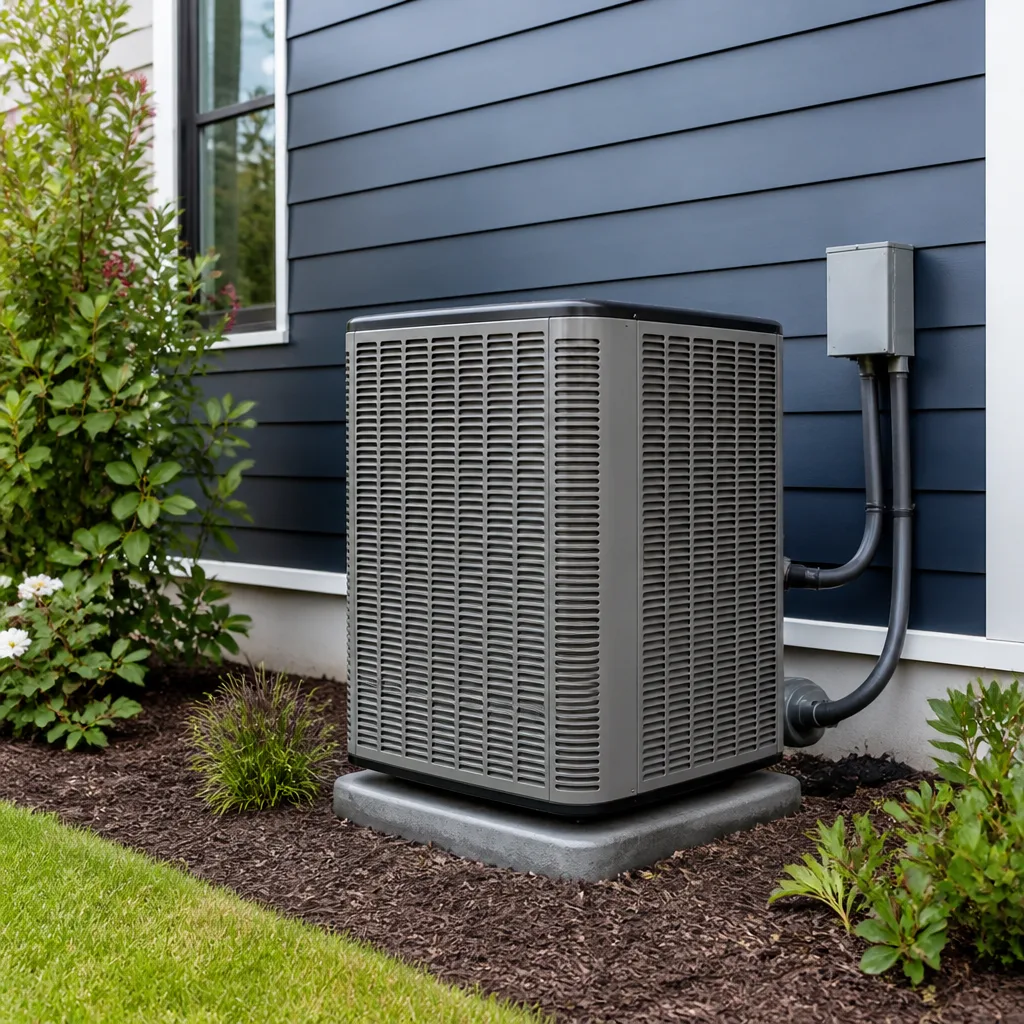
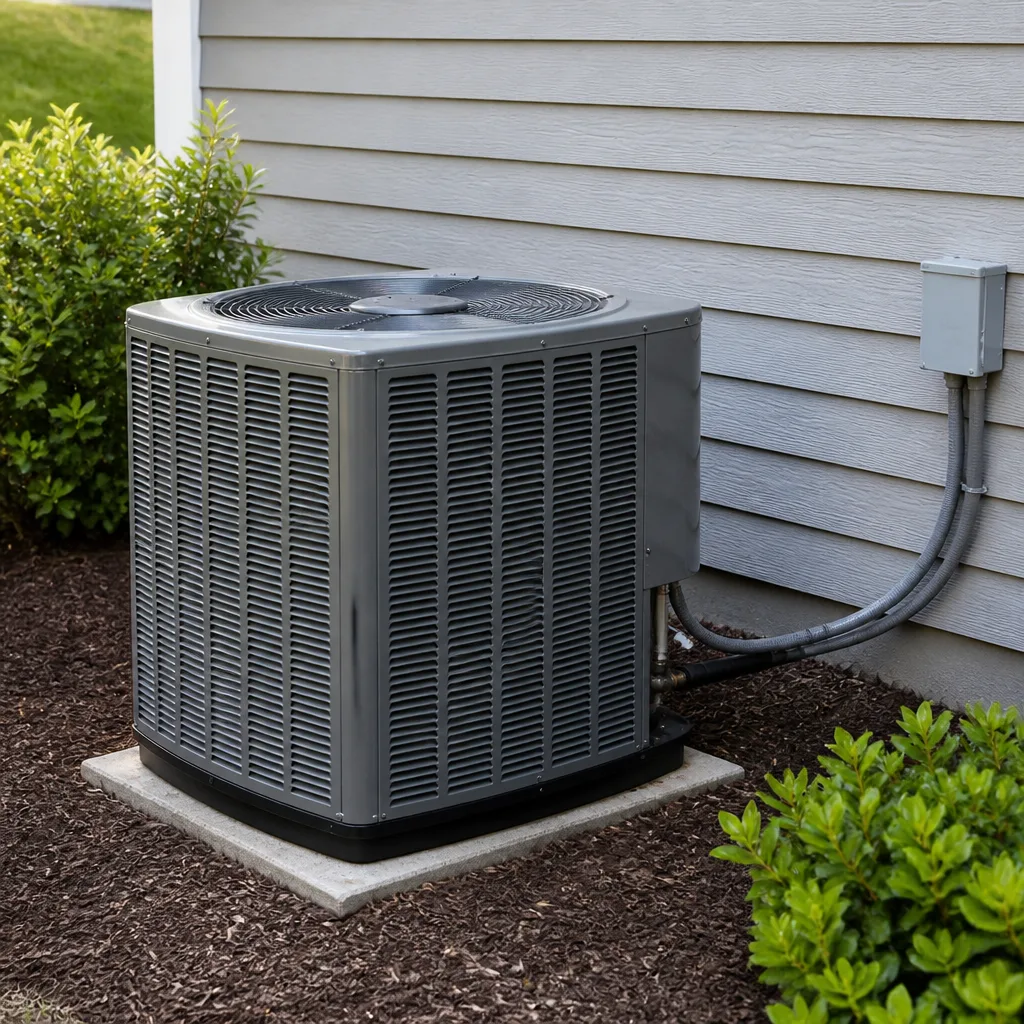
- Clear the outdoor unit. Remove the tumbleweeds, leaves, and whatever else has blown against it. Give it at least two feet of clearance on all sides.
- Rinse the coil gently. Spring, before the first heat wave. A garden hose on the outdoor coil, no pressure washer.
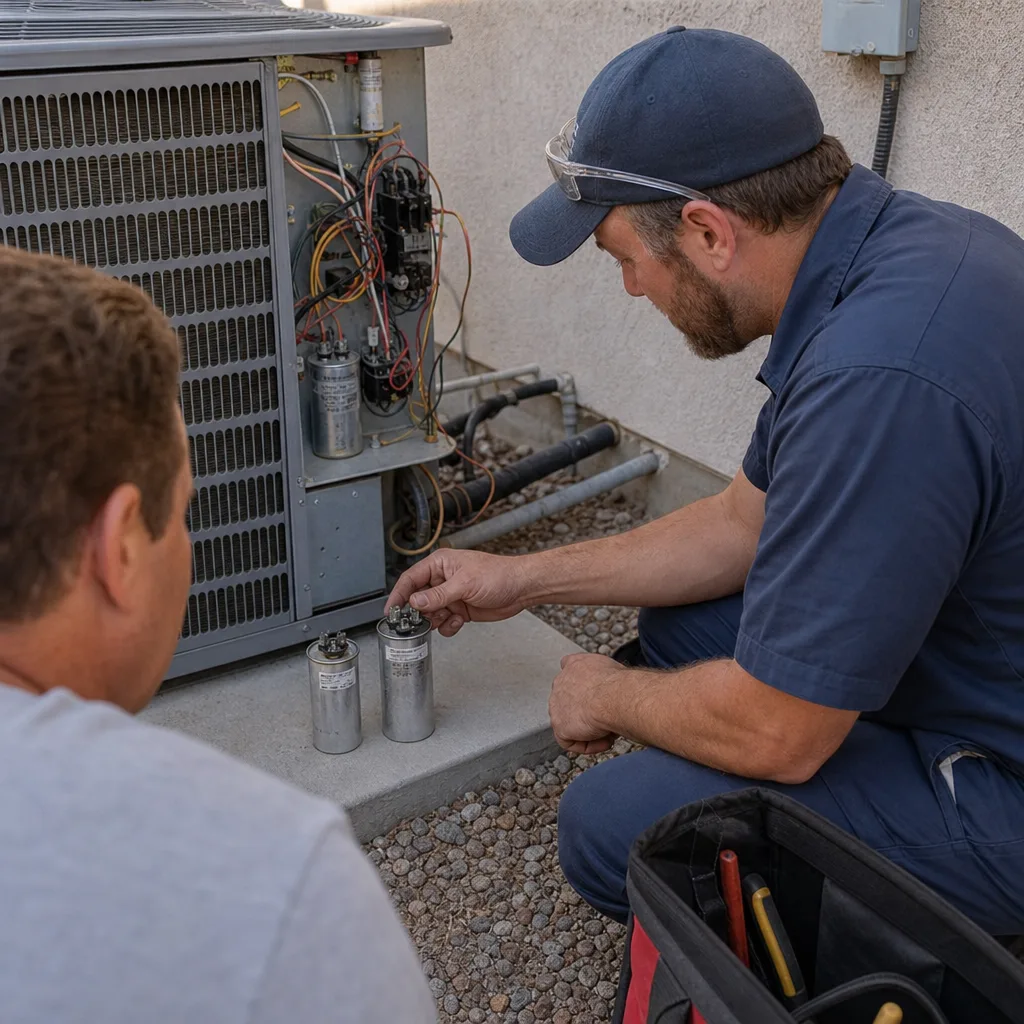
- Get a tune-up in spring. We check the refrigerant charge, test the capacitor, inspect electrical connections, and clear the condensate drain. Capacitor testing first is not a marketing line – a bad capacitor is one of the most common reasons a system won’t start, and it costs far less to replace than a compressor.
- Check the heat pump’s defrost cycle in winter. Heat pumps defrost the outdoor coil periodically. If it ices up and stays iced, that’s a service call, not a wait-and-see.
One more: in Enterprise, the outdoor unit lives in sun and dust. If it’s on the west side of the house with no shade, consider a shade screen – not a cover, airflow matters. It’ll last longer. When something does break, our Ray’s Heating & Air Enterprise home page has the emergency contact path.
Common Mistakes to Avoid
- Sizing by square footage alone. Two 1,800-square-foot houses in Enterprise can need 2-ton and 3-ton systems respectively, depending on window orientation and insulation. Get the load calc.
- Replacing a heat pump with a furnace just because gas is familiar. If your existing ducts are good and the heat pump failed at 15 years, the honest replacement is usually another heat pump. Running the numbers will tell you.
- Assuming every rebate quote is current. Programs change. Ask for the rebate amount in writing, confirmed on the date of the quote. Anyone who brushes that off is cutting corners.
- Putting the mini split condenser where it can’t breathe. Tucked against a block wall in the sun, in Enterprise in July, kills efficiency and shortens the unit’s life.
- Skipping the permit. A heat pump or mini split install is a permitted mechanical job in Enterprise. Unpermitted work can bite you at resale, and the warranty can be voided.
- Hiring a phone quote. If someone quotes a number on the phone without seeing the house, the number will change. Every time.
- Ignoring the ducts. Putting a great heat pump on bad ducts is like putting premium gas in a car with a blown head gasket.
See the difference
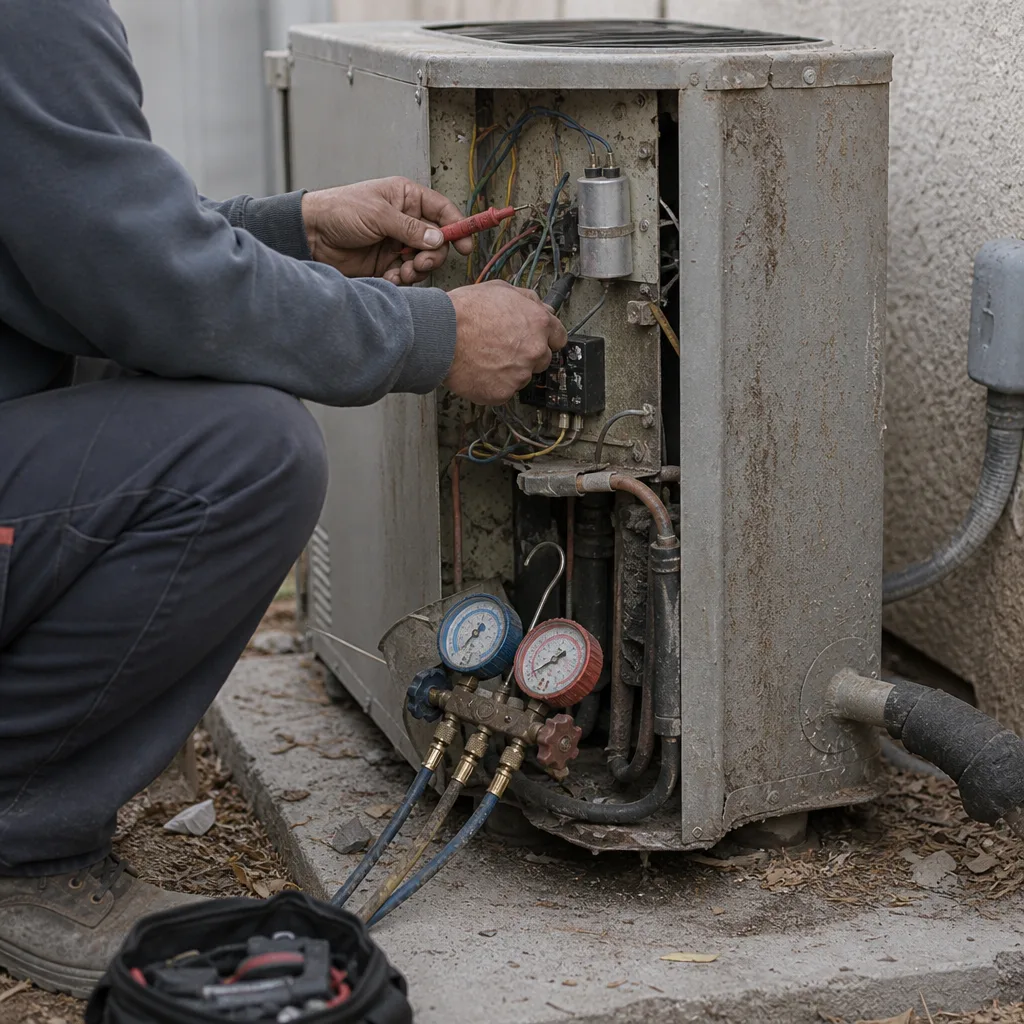 Before
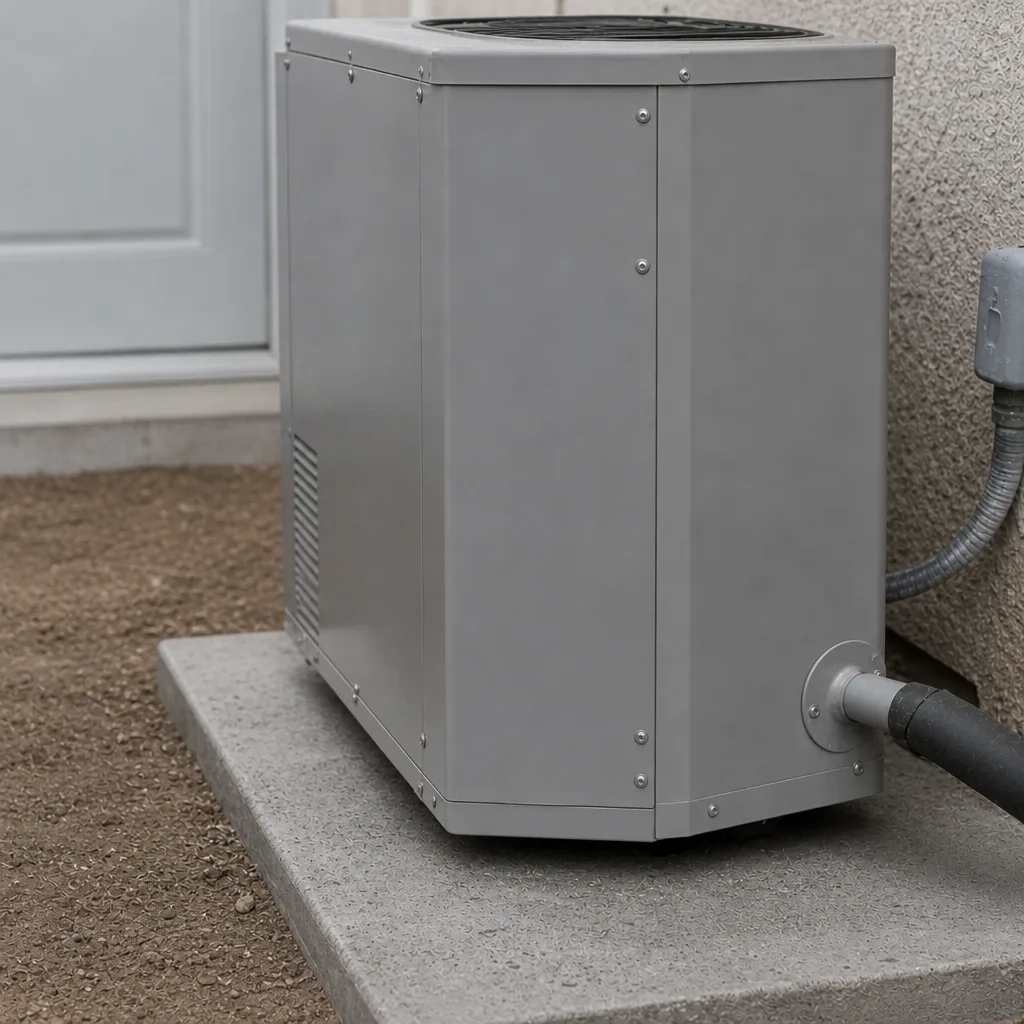 After
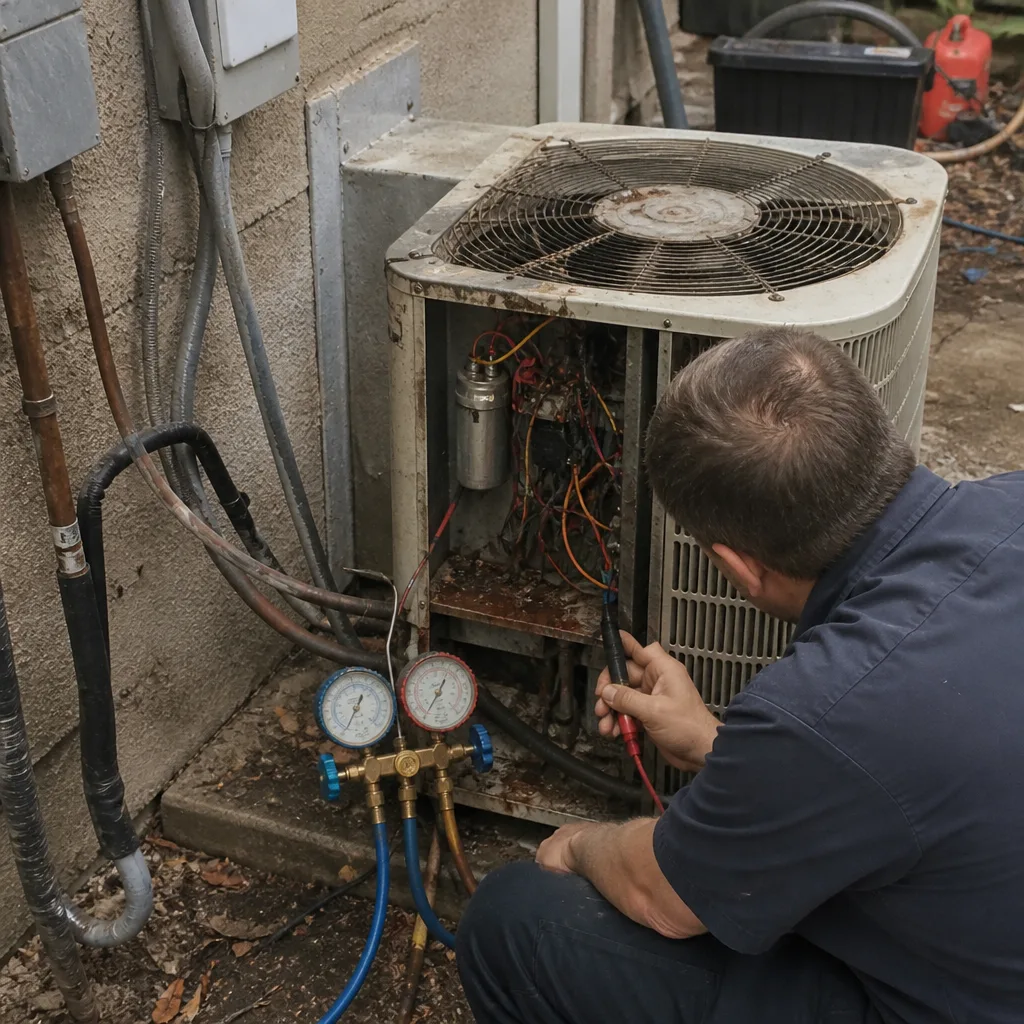 Before
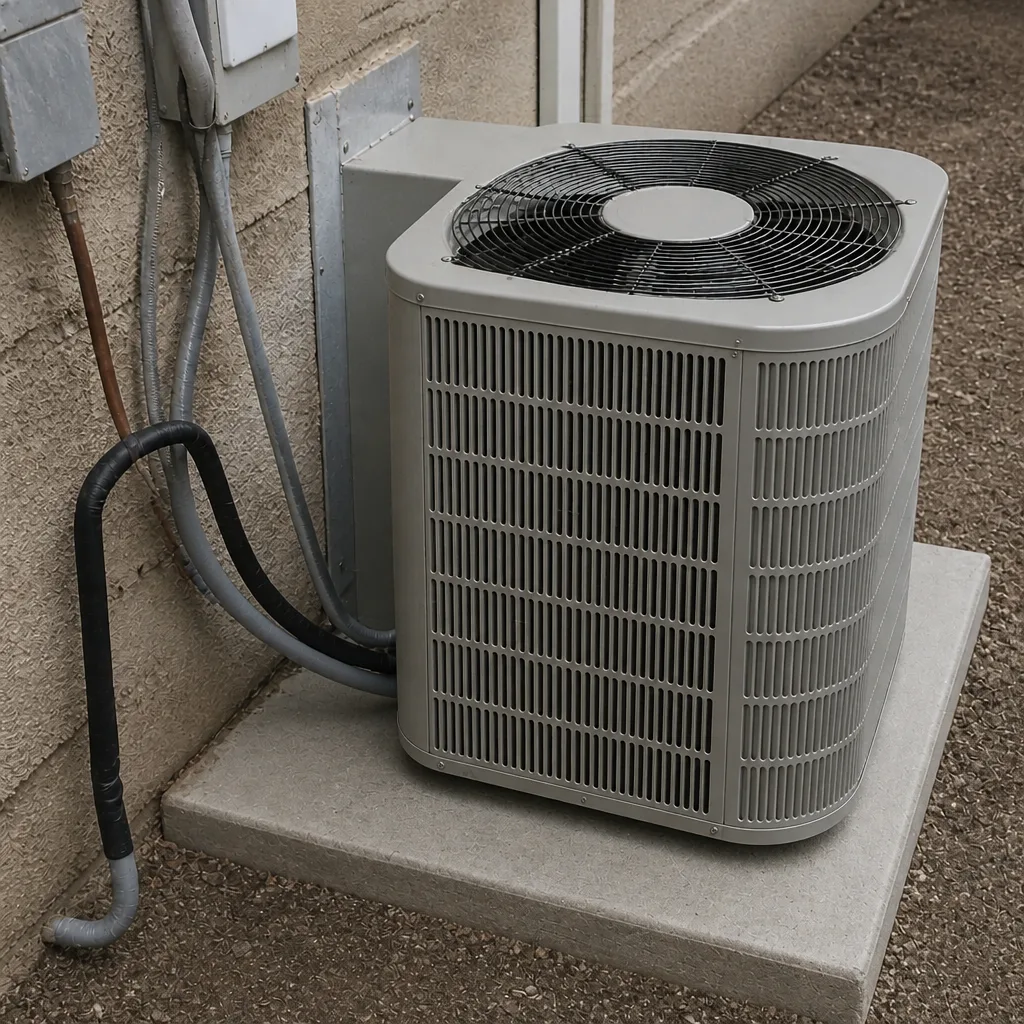 After
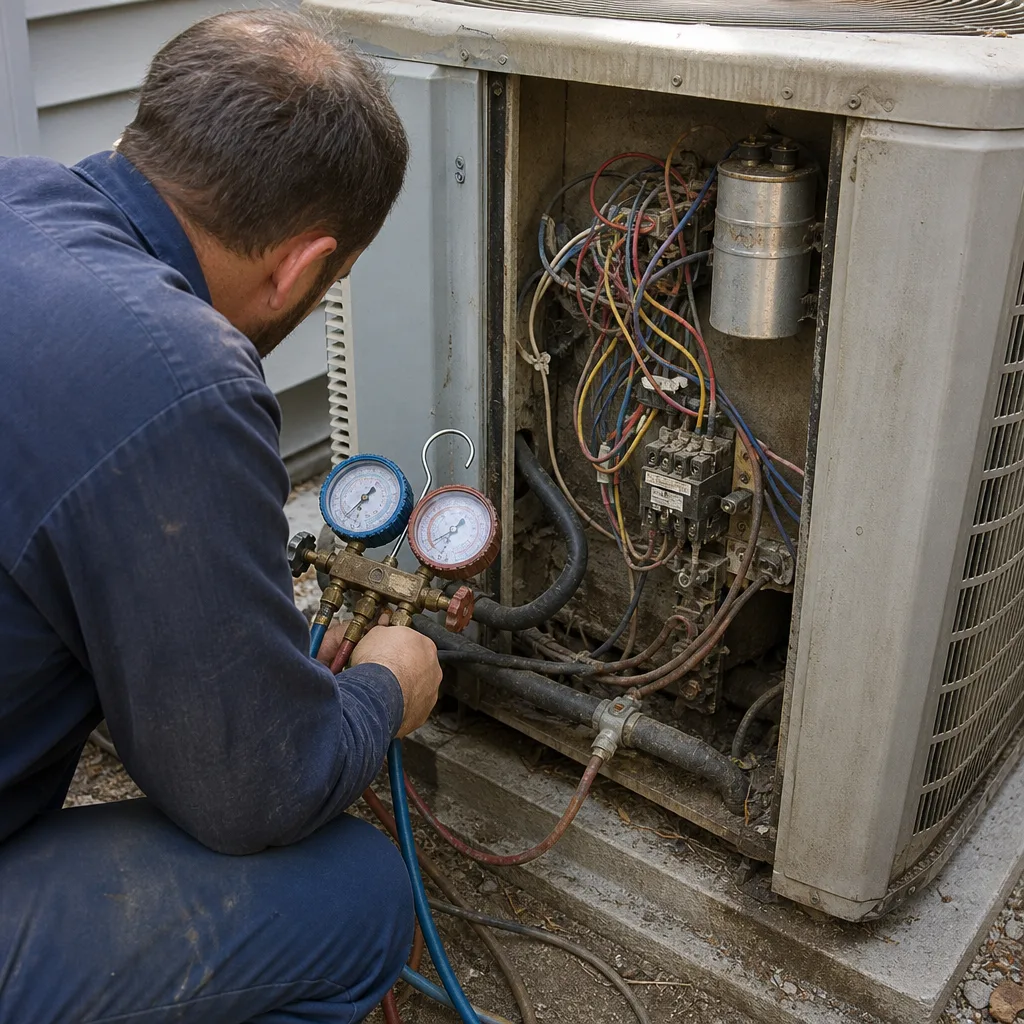 Before
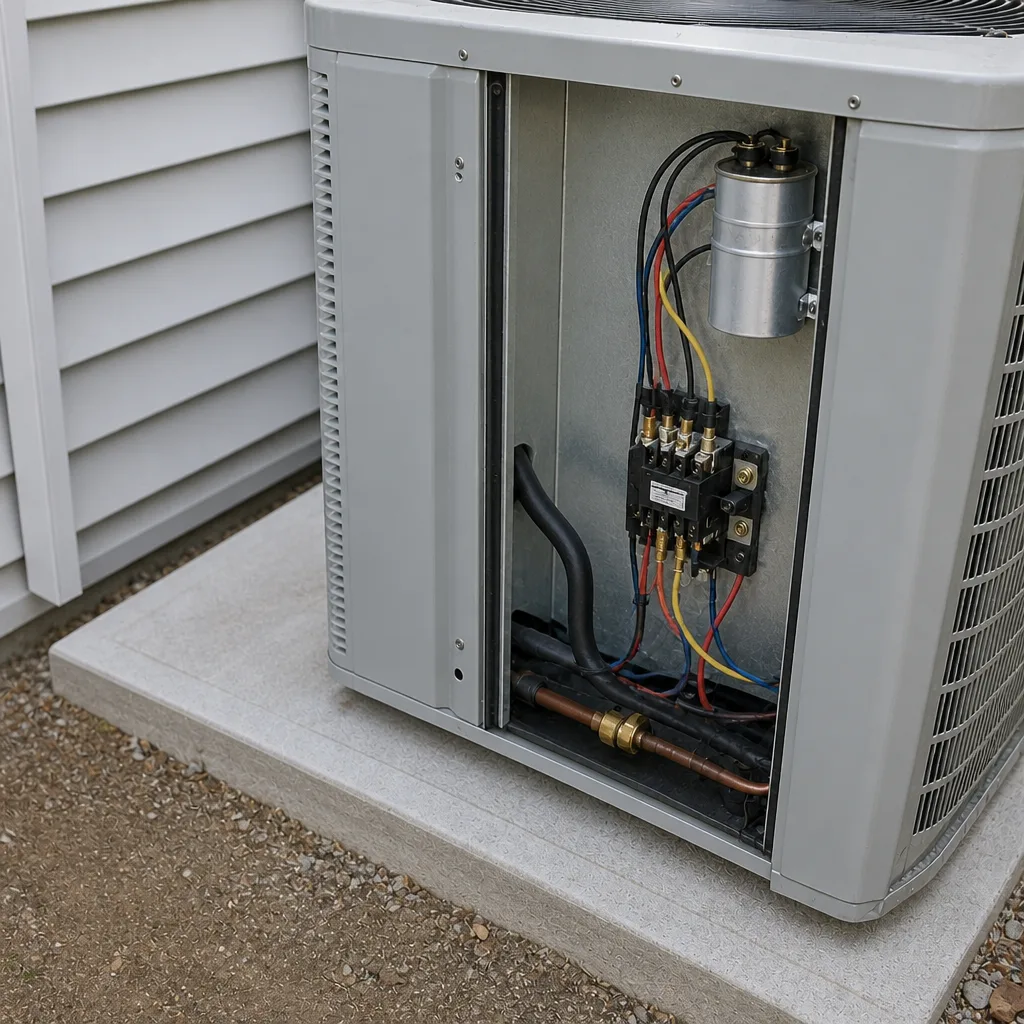 After
When to Call a Professional
Call when the system stops heating or cooling and the filter isn’t the problem. Call when you hear a banging or grinding from the outdoor unit, or when the breaker trips more than once. Call when the heat pump ices up and doesn’t defrost in winter, or when your July bill jumps 40% with no change in usage. Call before you buy anything if you’re considering a heat pump or mini split – the sizing question needs a real answer, not a phone guess. Ray’s Heating & Air Enterprise offers free estimates in Enterprise. Call (844) 455-2034. The phone gets answered by a live person, and the free second-opinion offer on any written estimate stands if you’ve already got one in hand.
Frequently Asked Questions
For a whole-house replacement in Enterprise, a ducted heat pump is usually the better fit because the ducts already exist and you replace the furnace and AC with one system. A mini split is better when the space can’t be ducted (converted garage, addition, sunroom) or when you want independent zone control. The right answer depends on your ducts and layout, not on which technology is newer.
Yes, because Enterprise winters are mild. The average winter low is around 34°F and you’ll get roughly six nights a year below freezing. A standard heat pump handles that easily. If you want extra margin, a cold-climate-rated heat pump or a dual-fuel setup with a furnace backup covers the rare cold snap. Call (844) 455-2034 for an exact quote on either configuration – estimates are free.
A ducted heat pump install in Enterprise typically runs $8,000 to $15,000 depending on the efficiency tier, brand, and whether ductwork needs repair. A single-zone mini split typically runs $4,000 to $8,000 installed, and a 3-4 zone multi-zone system typically runs $12,000 to $20,000. Call (844) 455-2034 for an exact number after a site visit – free estimate, no trip charge inside the county.
NV Energy has run heat pump rebates through its residential efficiency program, and the federal energy efficiency tax credit has applied to qualifying equipment in recent years. The amounts change, and eligibility depends on the equipment’s SEER2 and HSPF2 ratings and the tax year. We confirm current amounts before any quote and give you the manufacturer’s certification paperwork. Call (844) 455-2034 to check what’s available right now.
Under about $1,500 in repair on a system under 12 years old, repair usually wins. Past 15 years, or if the repair is a compressor on an aging unit, replacement is usually the better money. We test the capacitor and check the readings before anyone says the word compressor, so you get a straight answer. Call (844) 455-2034 for a free second opinion on any written estimate.
Yes, and it’s the most common reason Enterprise homeowners call us about mini splits. One outdoor unit can drive up to four or five indoor cassettes, so the garage, the addition, and the main house can all run on their own zones. Sizing matters here, since one zone can freeze while another overheats if it’s done wrong. Call (844) 455-2034 for a free estimate.
The Bottom Line
In Enterprise, the cold-weather objection to heat pumps mostly doesn’t apply. Roughly six nights a year dip near freezing, and the other 359 days a heat pump runs cheaper than gas and cools your house in the same box. A ducted heat pump is the right move for most whole-house replacements, and a mini split is the right move for the converted garage, the addition, and the rooms the ducts can’t reach. Get the load calculation. Confirm the current NV Energy rebate and federal credit in writing before you sign. Drive the ten-year operating cost, not just the install price, because that’s where the math actually separates. And if you’ve got a quote in hand and you’re not sure, we’ll give you a second opinion for free. Call (844) 455-2034. Ray will be there himself.
Written by the team at Ray’s Heating & Air Enterprise.