
 AC repair
 Furnace & heating
 Heat pumps
 Ductless mini splits
 Carrier
 Trane
 Goodman
Seasonal tune-up and full diagnostic on your Carrier, Trane, or Goodman system - readings shown to you before any repair is proposed
Diagnosis first, numbers second - you approve the repair price before a single part goes in.
Get your free estimateAmerican Standard Capacitor Replacement: The Enterprise Owner’s Guide
We replace failed American Standard capacitors in Enterprise, and most jobs run $150 – $320 installed when it’s a single run or start capacitor on a residential condensing unit. If both the fan and compressor capacitors are gone, or the contactor is scorched alongside them, you’re closer to the $300 – $450 end. Ray answers the phone live around the clock, and same-day is common when the call comes in before mid-afternoon. Most Enterprise owners find out the hard way: the AC runs but the house won’t cool, the outdoor fan sits still while the compressor hums, or the unit clicks and trips the breaker within a minute of starting. That hum-and-click pattern is a capacitor, nine times out of ten.
Key Takeaways
- American Standard units in Enterprise typically need one of two capacitor types, and getting the microfarad rating wrong is the number one premature-failure cause we see.
- Installed cost lands between $150 and $450 depending on how many capacitors are replaced and whether wiring or the contactor needs attention.
- Diagnosis comes first: we test the capacitor before anyone says the word compressor.
- Capacitor life in Southern Nevada heat is shorter than the national average because of sustained summer load and attic-installed air handlers.
Which American Standard Models This Applies To
American Standard residential condensers and air handlers use the same basic capacitor architecture across the Silver, Gold, and Platinum series, and the older Heritage and Allegiance lines. What changes is the spec on the label, not the concept. Your unit will have either a dual run capacitor (round, three terminals labeled HERM, FAN, C) or a single run capacitor for the fan or compressor alone, plus a start capacitor or hard-start kit on some models. The microfarad (µF) values on the old part must match the new one within American Standard’s tolerance of about 6%, and the voltage rating must meet or exceed the original, usually 370V or 440V. Here is the compatibility gotcha that matters most: American Standard’s factory-specified values differ from the “universal” replacement many parts counters hand out. A universal 440V unit wired for the wrong µF combination on a 2-ton Heritage condenser will run, but the compressor pulls higher amps and dies early. We cross the label against the model plate every time. Aftermarket equivalents from Titan Pro or AmRad are fine if the spec matches; genuine American Standard parts cost more for the same function. We’re an independent service provider, not affiliated with American Standard, so there’s no reason for us to push OEM if an equivalent is correct.
Styles & brands we work with
- AC repair
- Furnace & heating
- Heat pumps
- Ductless mini splits
- Carrier
- Trane
- Goodman
Signs Your American Standard Capacitor Replacement Is Failing
Capacitors don’t always die cleanly. A failing one can limp along for weeks while it taxes the compressor. Here’s what Enterprise homeowners report, and the cause behind each:
- The outdoor fan won’t spin, but you hear a hum from the unit. The fan capacitor section has lost capacitance, so the motor stalls instead of starting. The compressor runs without airflow and overheats within minutes.
- The compressor hums then trips the breaker or the internal overload. The compressor run capacitor is weak, so the motor can’t develop starting torque. That cycling is what shortens compressor life.
- The unit starts, then shuts off after 30 to 60 seconds. Often a bulged or leaking capacitor that reads half its rated µF on a meter. Visual inspection alone misses this; a tester catches it.
- Your AC cools weaker each week through June and July. A drifting capacitor reduces motor efficiency before it fails outright. In Enterprise’s heat, a slightly weak capacitor shows up fast because the system runs near-constant.
- A click-click-click from the condenser with nothing starting. The capacitor, contactor, or both are shot. We test both before quoting, because a scorched contactor often accompanies a failed capacitor.
Replacement Cost & What’s Included
Single capacitor replacement in Enterprise typically falls between $150 and $320 installed, and the wider AC repair range across all our work runs $150 – $650. What drives the difference: how many capacitors, whether it’s a dual run or separate start/fan setup, ease of access (attic air handlers cost more than ground-level condensers), and whether wiring, the contactor, or the disconnect needs attention. Ray’s works upfront pricing, and you see the readings before you see a number: the meter reading on your old capacitor, then the quote. The 90-Day Done Right Promise is stamped on the job in writing, and one call brings Ray back if anything isn’t right. We don’t claim to stock parts or carry them on a truck; we source the correct spec for your American Standard model.
See the difference
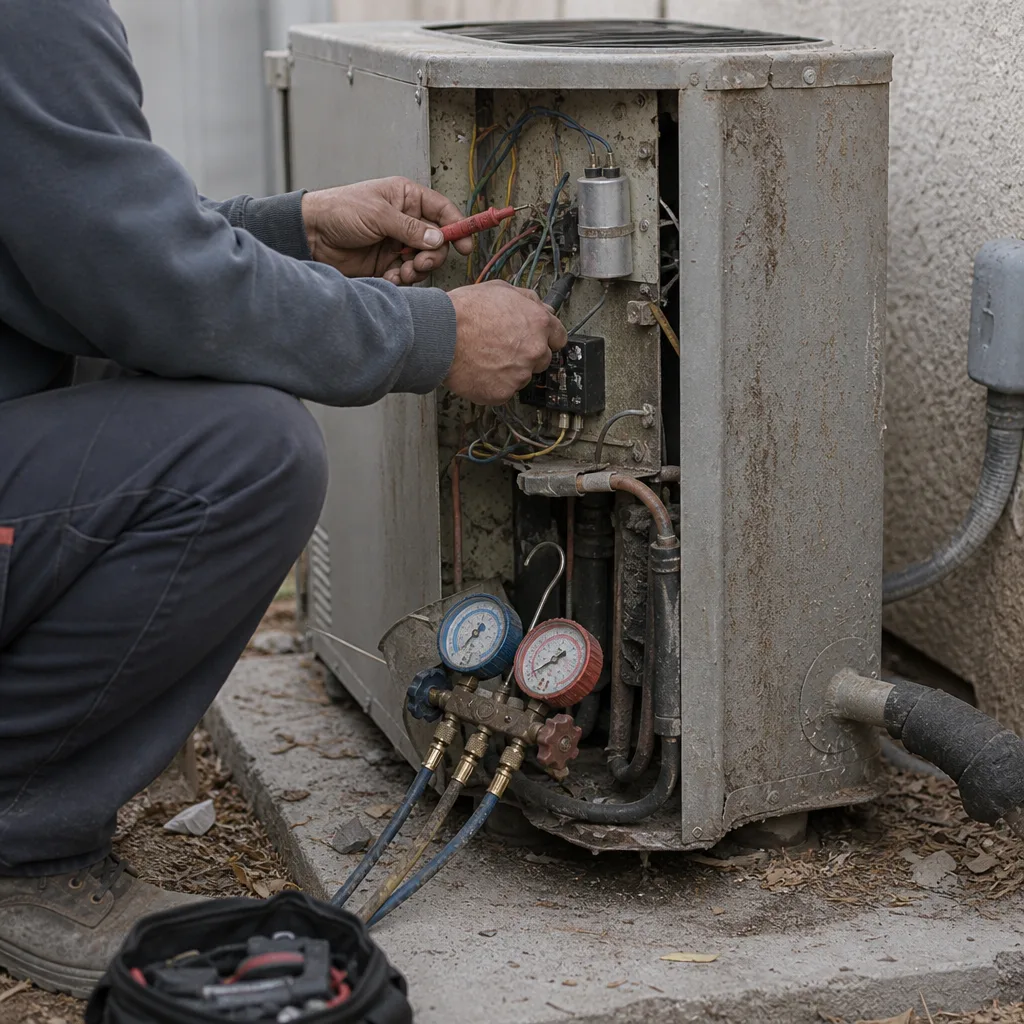 Before
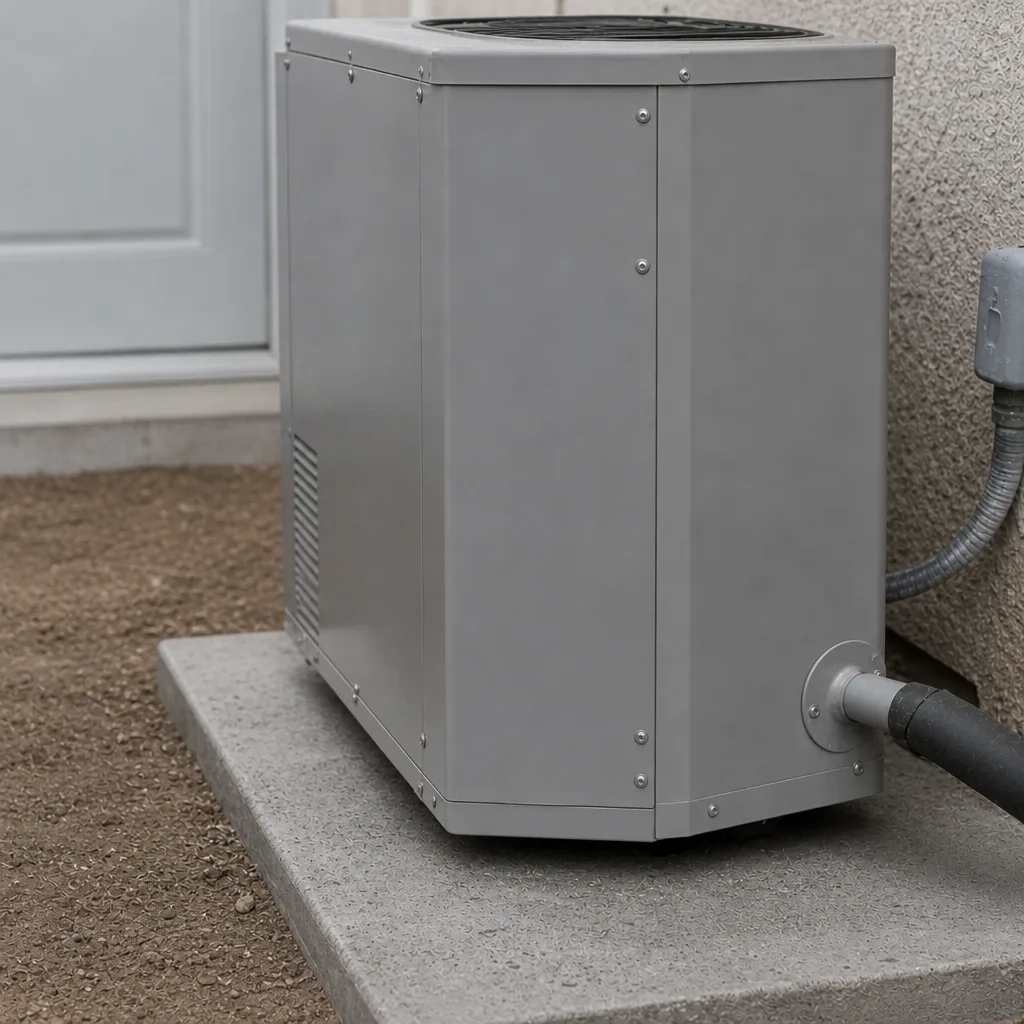 After
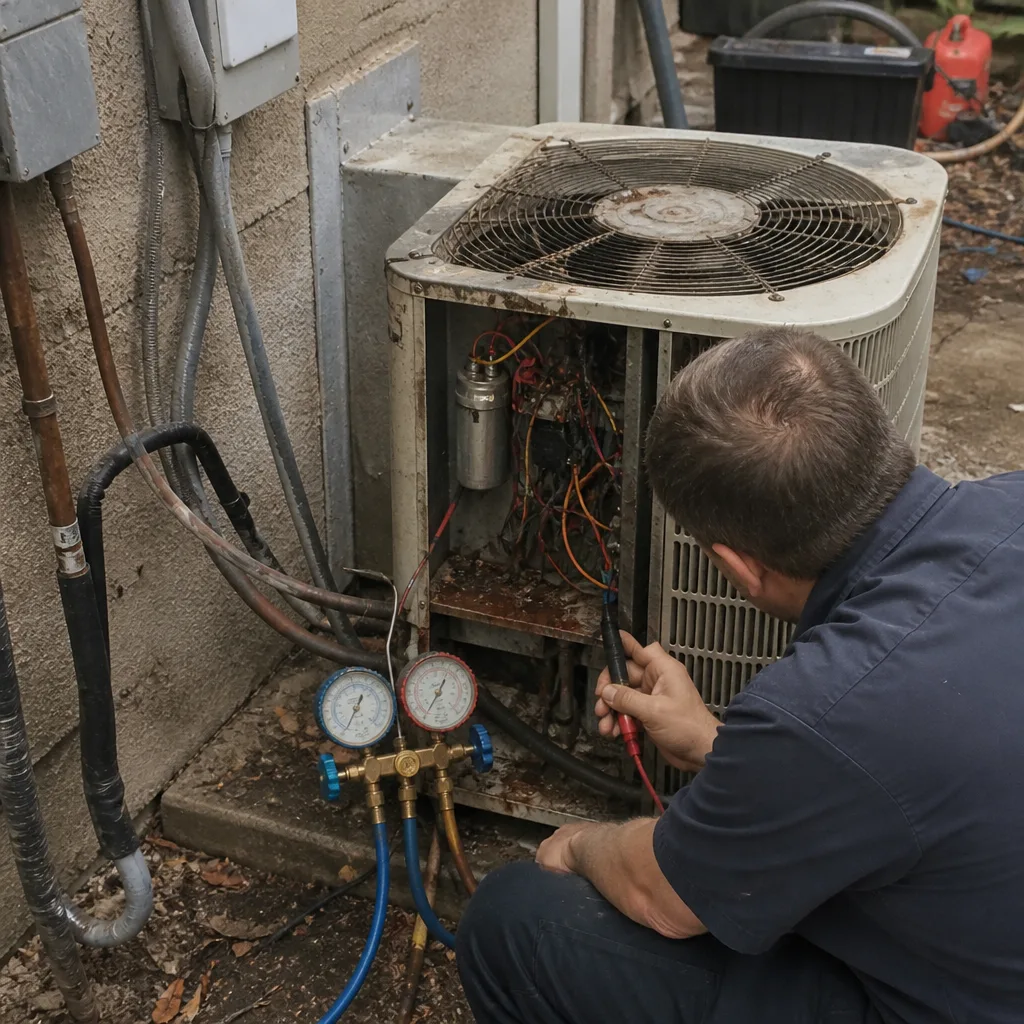 Before
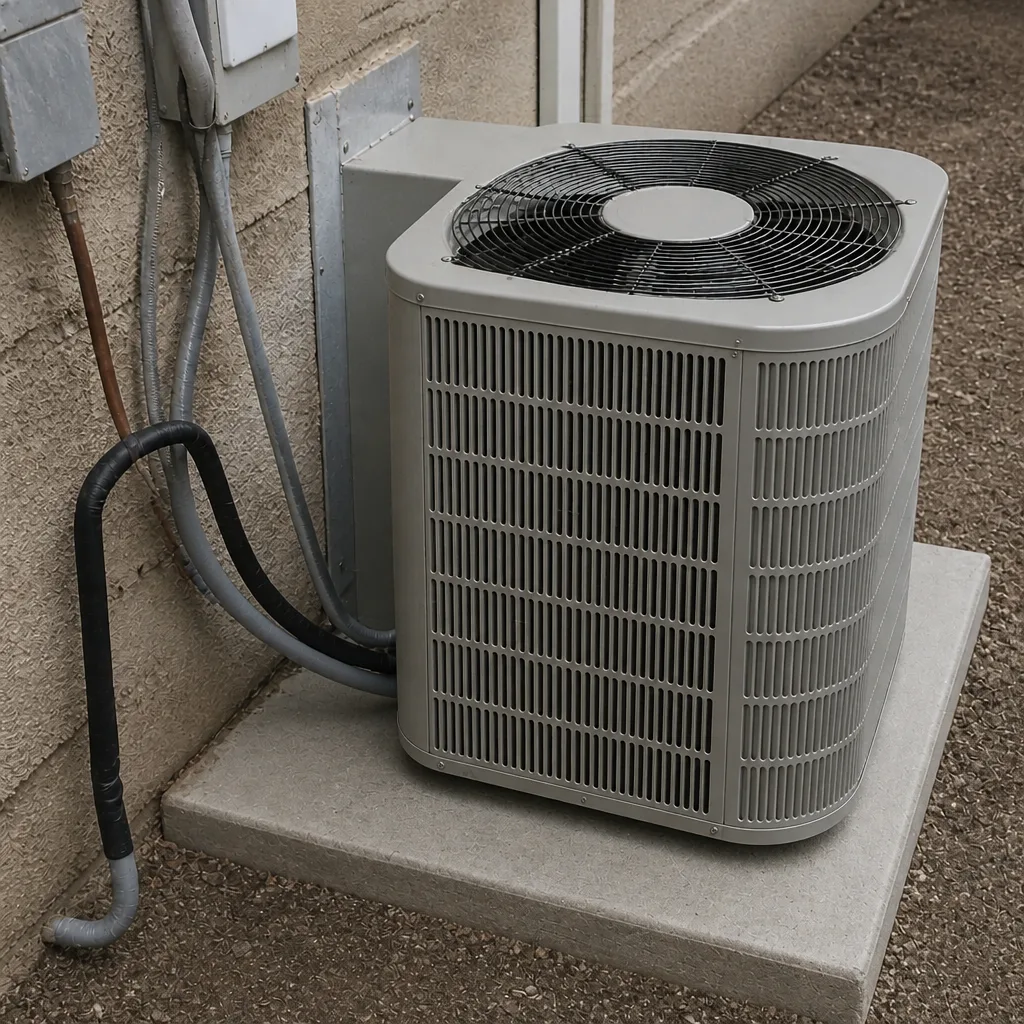 After
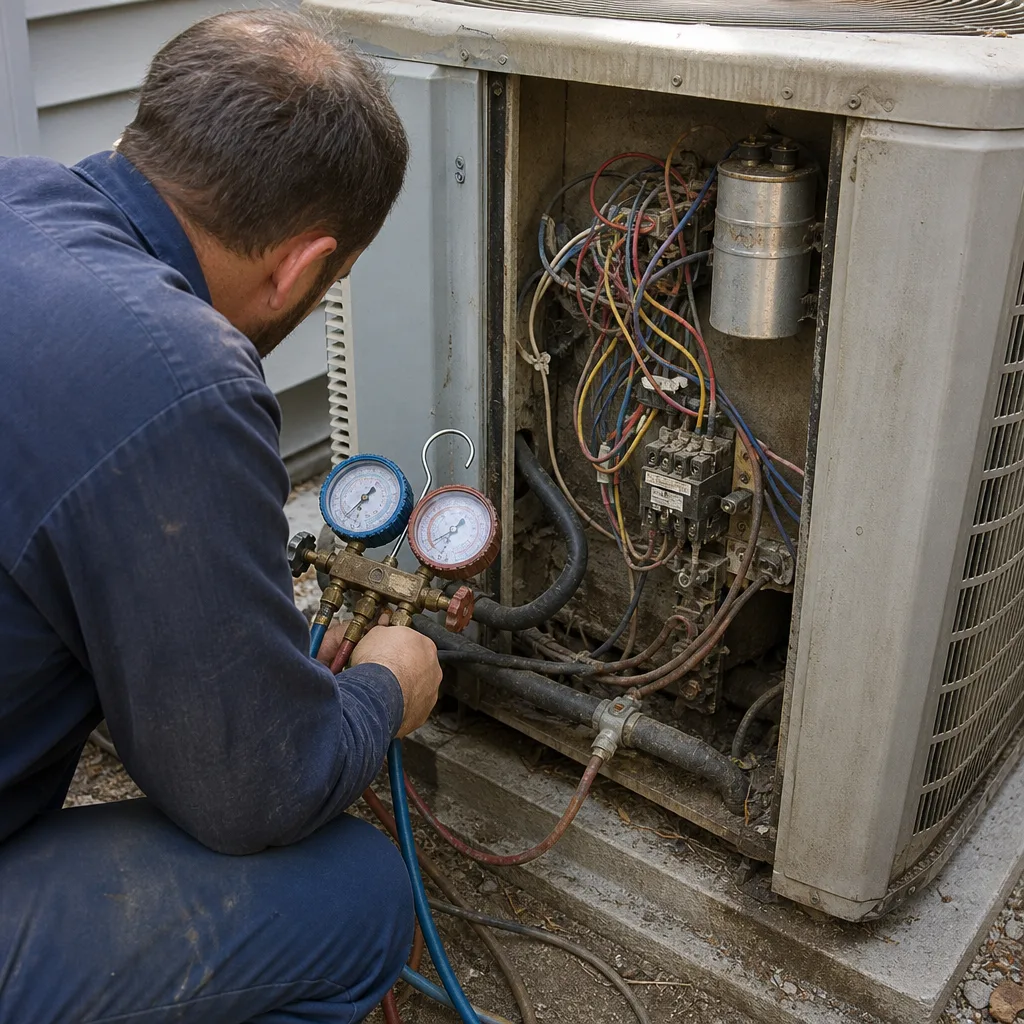 Before
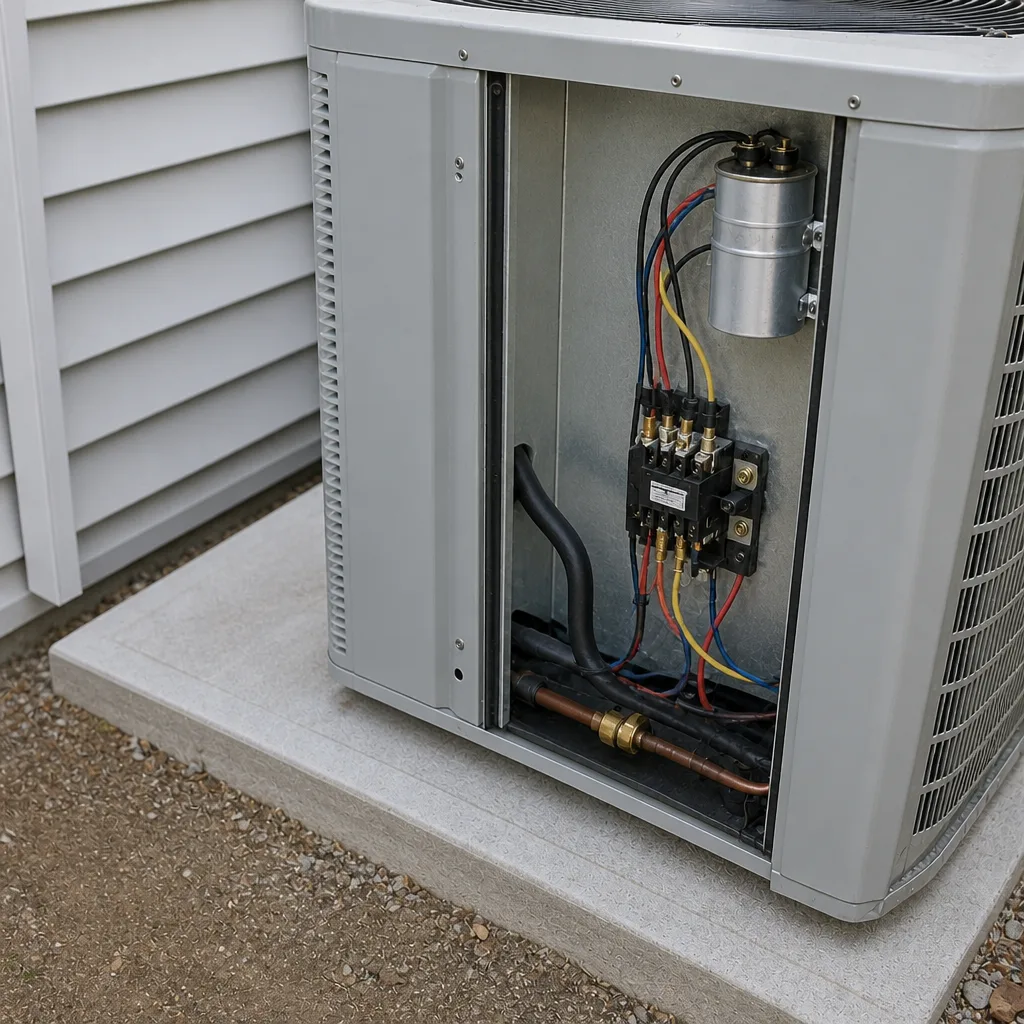 After
DIY or Call Us?
You can safely check two things yourself: whether the outdoor fan spins when the thermostat calls for cooling, and whether the breaker tripped. Beyond that, stop. Capacitors hold a lethal charge even with the disconnect pulled, and the 240-volt circuit feeding the condenser doesn’t care that the unit’s shut off at the thermostat. Discharging a capacitor requires a proper resistor and meter, not a screwdriver. Getting the µF wrong means a compressor that fails within a season instead of a capacitor that lasts years. In Enterprise, we’ve seen homeowners chase the compressor first when the readings pointed to a $40 part. Call (844) 455-2034 and we’ll test before we say anything else.
FAQs
Three to seven years is typical for a residential American Standard capacitor in Enterprise, and we lean toward the shorter end in attic-installed air handlers because attic temperatures push 130°F or more in July. Capacitors degrade faster under sustained heat and constant runtime, both of which describe a Southern Nevada summer.
No. A capacitor is a sealed component and cannot be recharged, resealed, or repaired; it gets replaced. What we do check is whether the underlying problem ran deeper: if a weakened capacitor already stressed the compressor, we tell you plainly before quoting, and you see the compressor’s amp draw alongside the capacitor reading.
A single capacitor replacement usually takes under an hour from arrival, including the test and a cooling check afterward. A dual run capacitor with access issues takes a bit longer, and if the contactor or wiring needs attention, plan closer to two hours.
We read the model and serial plate on your unit, verify the µF and voltage spec against the factory value for that model, and source a genuine American Standard part or a spec-matched equivalent like AmRad or Titan Pro. We don’t guess at the counter, and we don’t install a universal replacement that doesn’t match your model’s rating.
Call Ray’s Heating & Air Enterprise
If your American Standard isn’t cooling and you suspect the capacitor, call (844) 455-2034 for a free estimate. Ray answers the phone himself, day or night, and you’ll get readings first and numbers second. The 90-Day Done Right Promise goes on every job in writing. We also work on Carrier, Trane, and Lennox, and answer live around the clock.
Written by the team at Ray’s Heating & Air Enterprise, serving Enterprise and nearby areas.