
 Goodman
 AC repair
 Furnace & heating
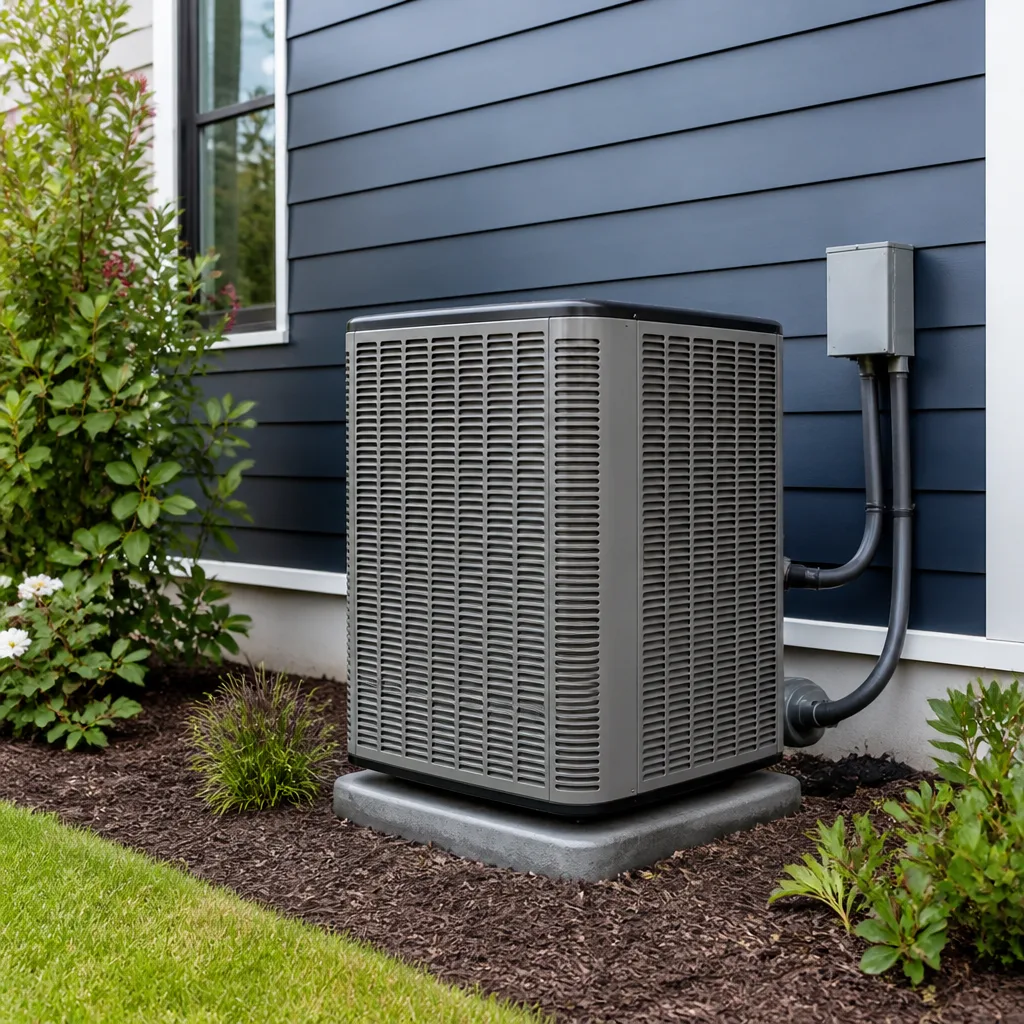 Heat pumps
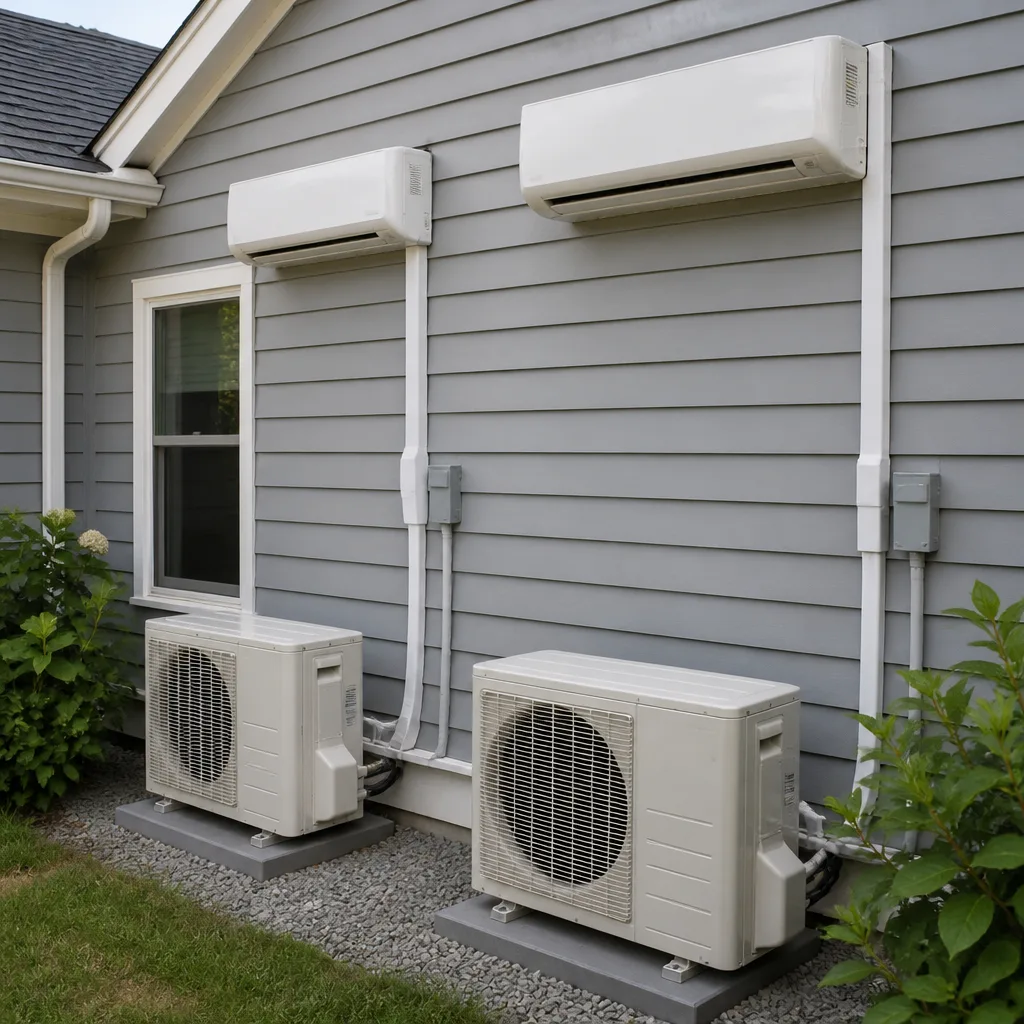 Ductless mini splits
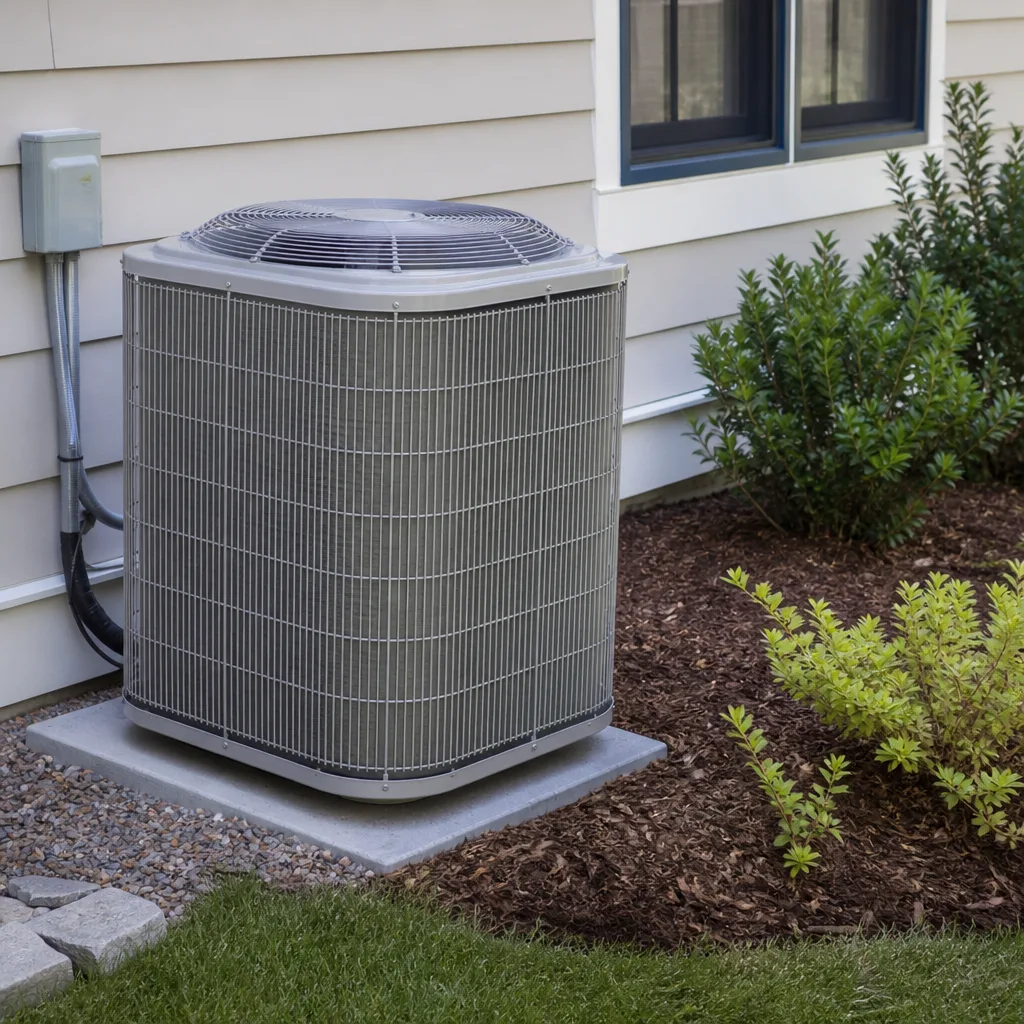 Carrier
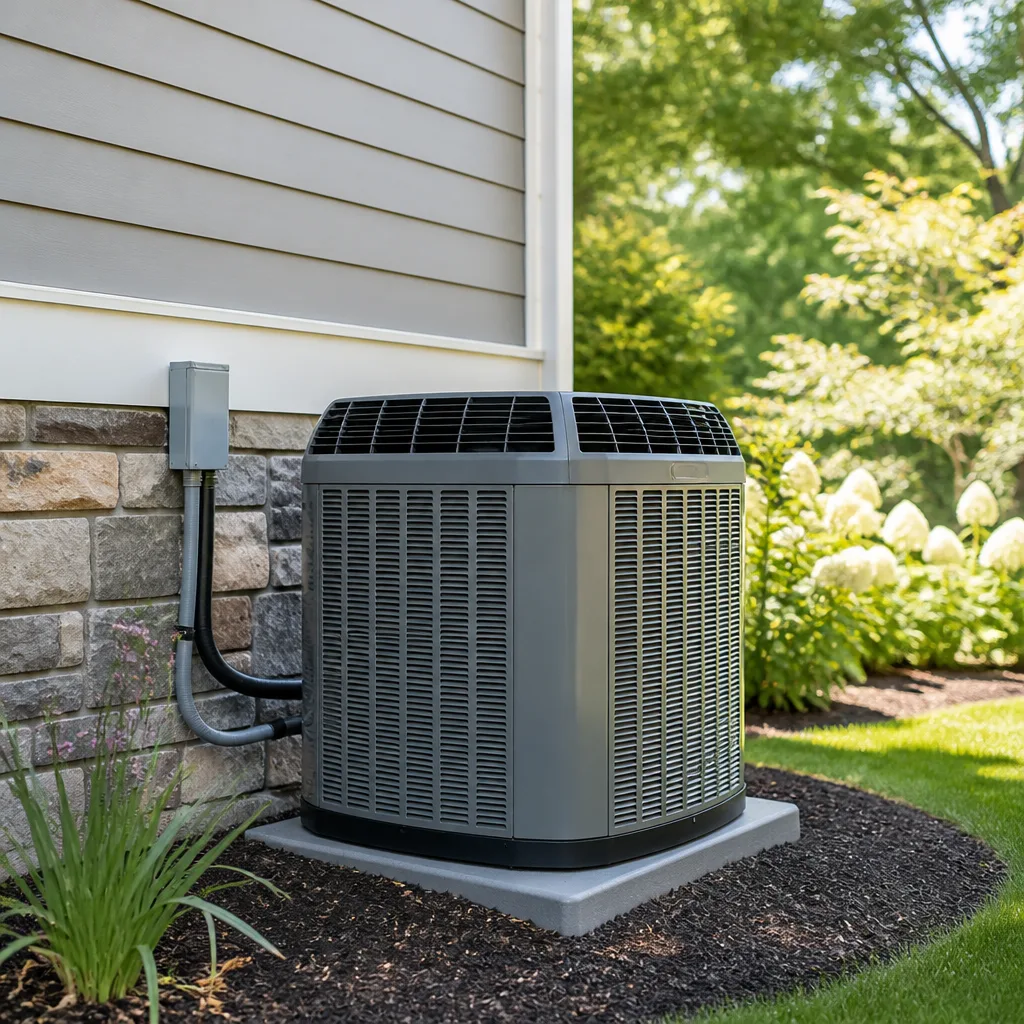 Trane
Seasonal tune-up and full diagnostic on your Carrier, Trane, or Goodman system - readings shown to you before any repair is proposed
Diagnosis first, numbers second - you approve the repair price before a single part goes in.
Get your free estimateGoodman Capacitor Replacement: The Enterprise Owner’s Guide
Replacing a failed capacitor on a Goodman system here in Enterprise typically runs $150 – $320 installed, and we can usually get to you the same day because it’s a quick, straightforward job once we’ve confirmed the part is actually the problem. A bad capacitor is one of the most common reasons an AC stops starting or a unit that hums but won’t kick over. Most Enterprise owners find out when the house isn’t cooling, the outside unit is buzzing but the fan never spins, or the compressor tries to start and quits after a few seconds. Diagnosis is the whole game here, and that starts with testing.
Which Goodman Models This Applies To
Goodman has used run capacitors across its whole residential line for decades – the GSX, GSZ, and GSC condenser series, the Amana-branded cousins, and the split systems with air handlers labeled ARUF or ASPF. The capacitor’s job is the same in all of them, but the part isn’t universal. You’ll find start capacitors on some older single-stage units and dual run capacitors (two values in one can) on most of the newer condensers, and those are not interchangeable.
To match the right part, the specs live on the capacitor’s own label: the microfarad rating (written 35/5 MFD, for example) and the voltage rating, usually 370V or 440V. A dual run capacitor carries two MFD numbers – one for the compressor, one for the fan – and you must match both. Bumping the microfarad rating “up a little” to make it fit is a common mistake that strains the compressor motor. The voltage rating can go up safely; it cannot go down. On Goodman equipment specifically, we see fractional-horsepower condensing fans that want a 5 MFD fan section where a homeowner grabbed a 7.5 because it was on the shelf. Check the label, not the box.
On the OEM-versus-aftermarket question, a quality aftermarket capacitor (Titan Pro, AmRad) is a fine choice and often more available than a Goodman-branded one. We install what the label calls for, and we tell you which one we’re putting in and why. We’re an independent service provider, not affiliated with Goodman, so we source the correct replacement rather than pushing a brand.
Styles & brands we work with
- AC repair
- Furnace & heating
- Heat pumps
- Ductless mini splits
- Carrier
- Trane
- Goodman
Signs Your Goodman Capacitor Replacement Is Failing
Here’s what tends to send folks in Enterprise reaching for the phone, and what’s actually going on underneath each one:
- The outside fan won’t spin, but the compressor hums. The fan section of a dual run capacitor has failed, so the motor has no starting torque and just sits there buzzing. This is the classic weak-capacitor call.
- The compressor tries to start and trips off within seconds. The compressor section of the capacitor has dropped below spec, so the compressor can’t build the torque to run and the overload cuts it out. Repeated attempts wear the compressor.
- The unit clicks and hums but nothing turns. Often a start capacitor that’s gone open, or a run capacitor that’s reading far under its rated MFD. Your ears are telling you the truth.
- The top of the capacitor is domed or bulging. That’s a capacitor that has failed internally. If it’s bulging, it’s done, and it’s time for a replacement, not a recharge.
- Intermittent starting in the desert heat. A capacitor on its way out can still start the unit on a cool morning but fail by mid-afternoon when the Enterprise heat pushes the condenser hard. Heat accelerates the failure, which is why we see more of these calls in July than in January.
One thing worth knowing: a capacitor that reads even a little low on its MFD rating can look fine and still be the culprit. That’s why Ray tests it with a meter and shows you the reading before anyone says the word “compressor.” Readings first, numbers second.
See the difference
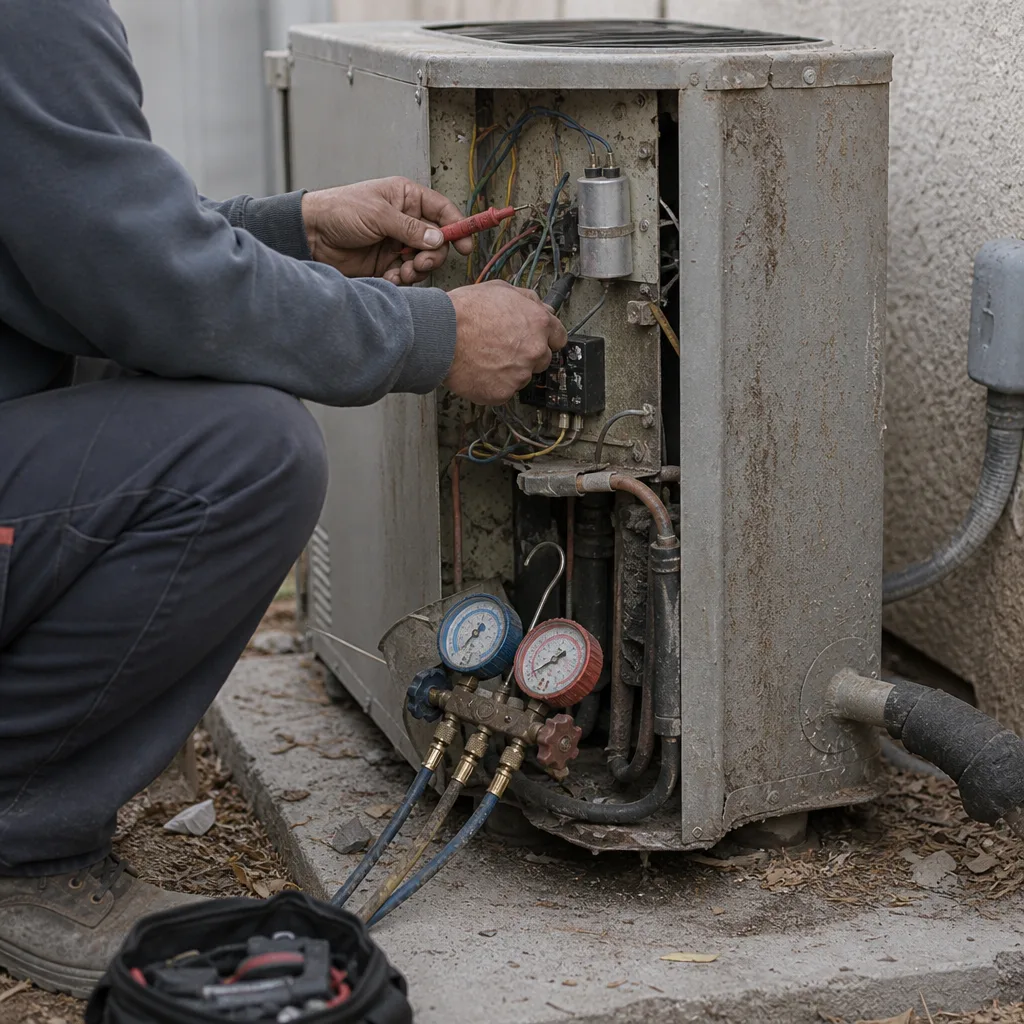 Before
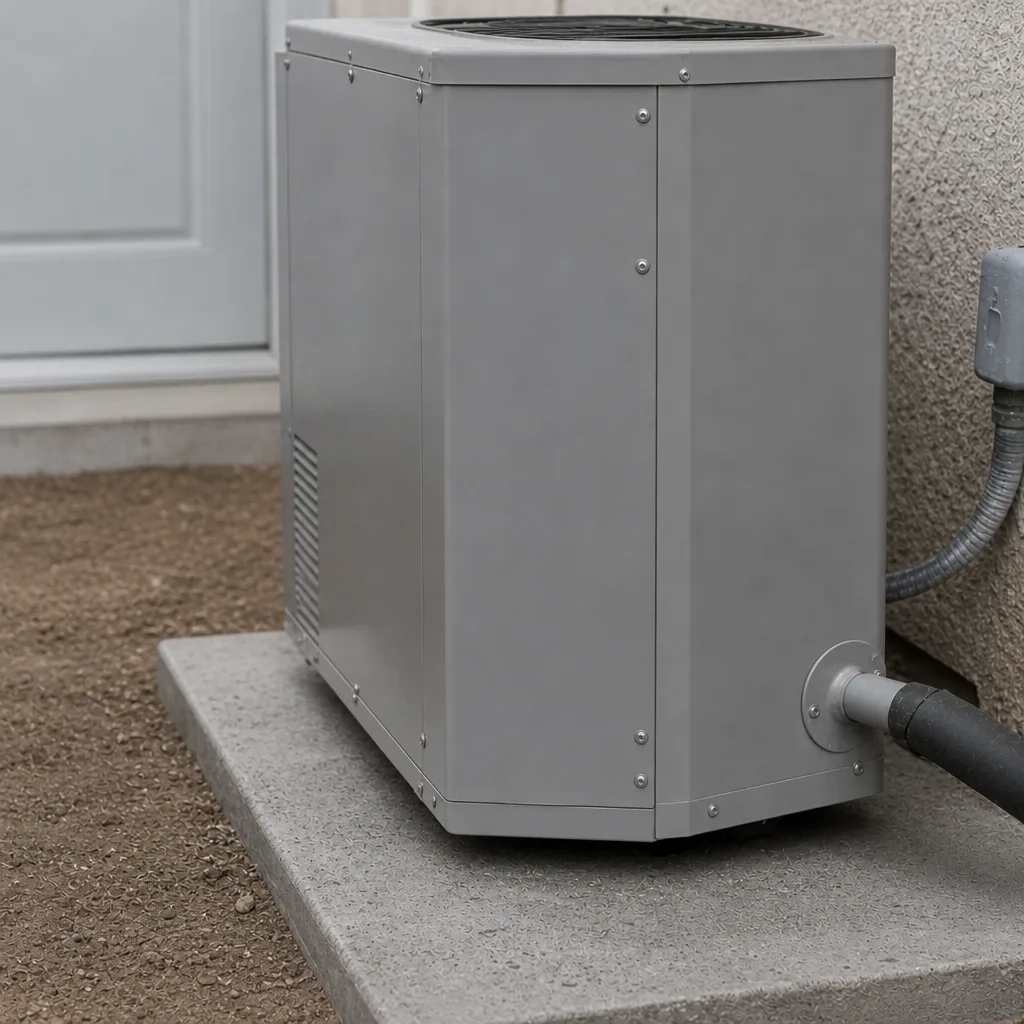 After
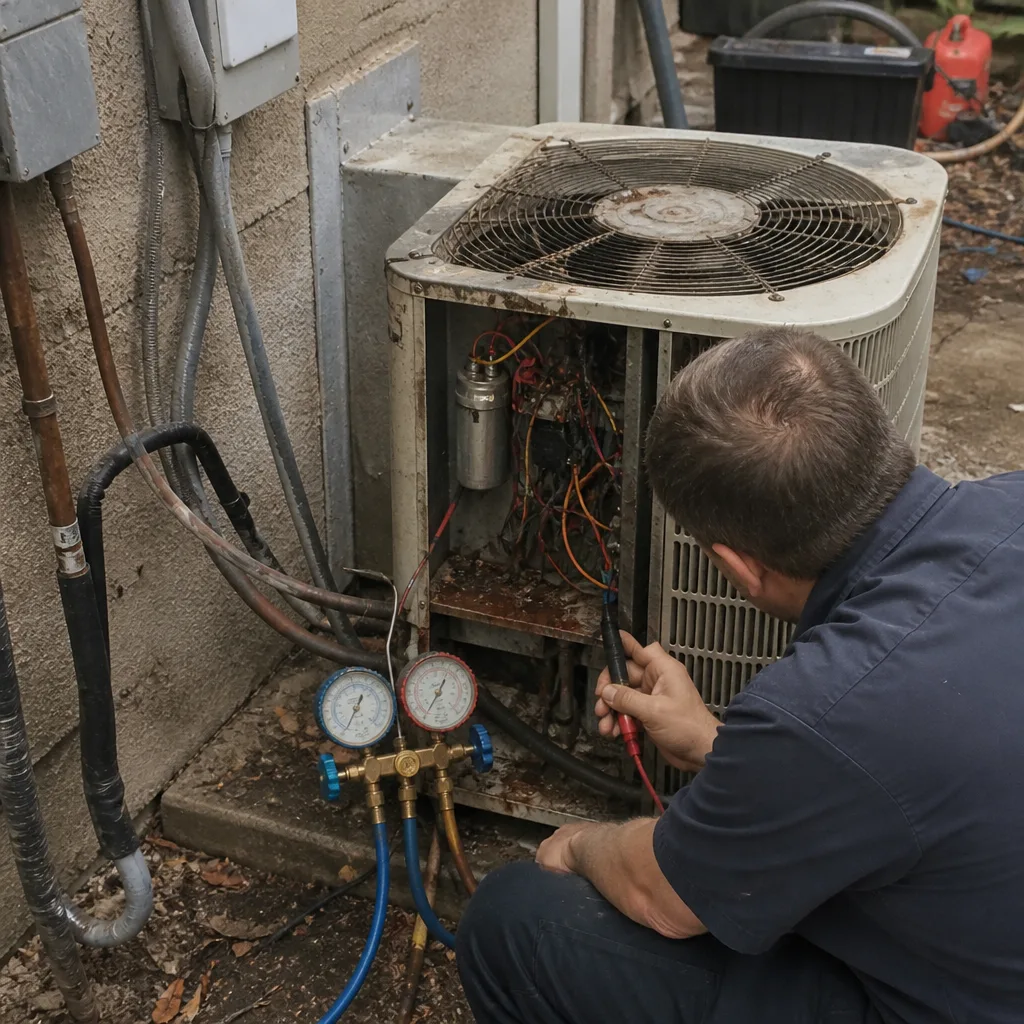 Before
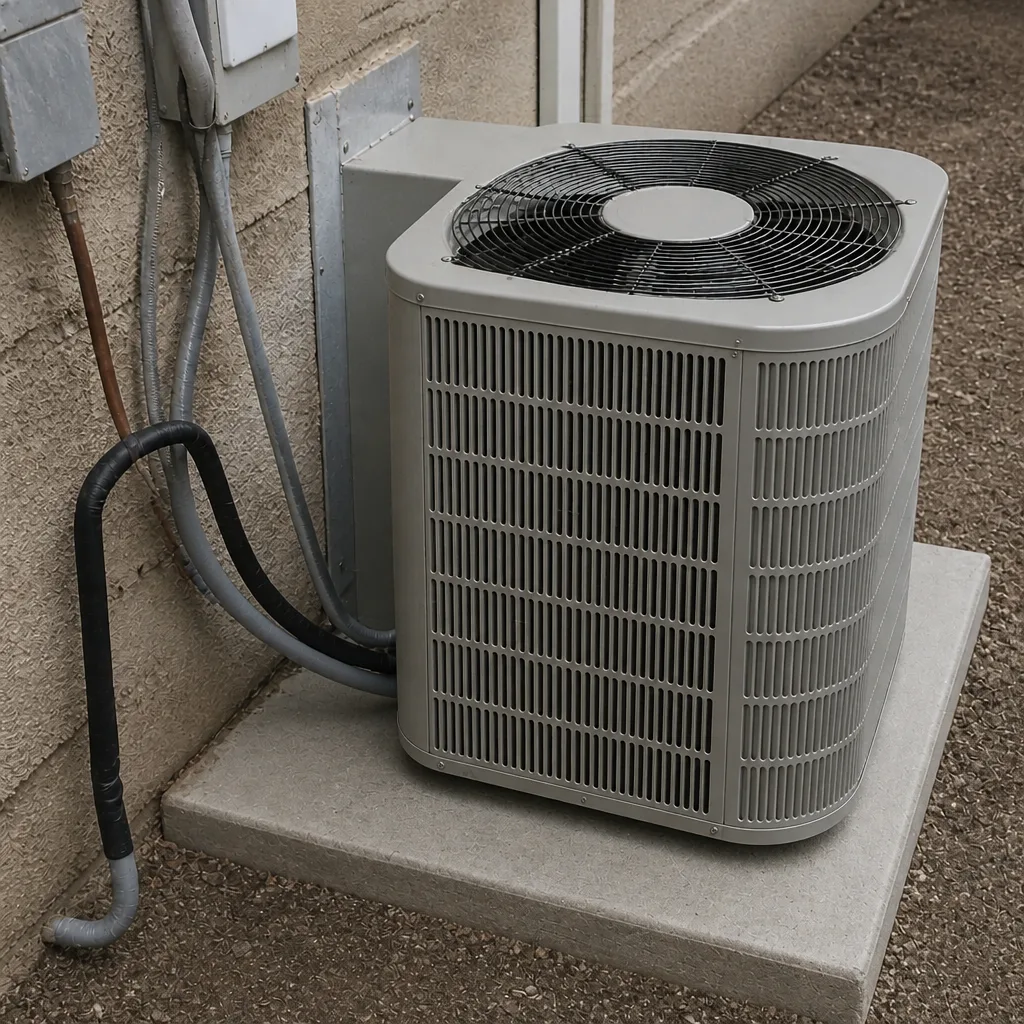 After
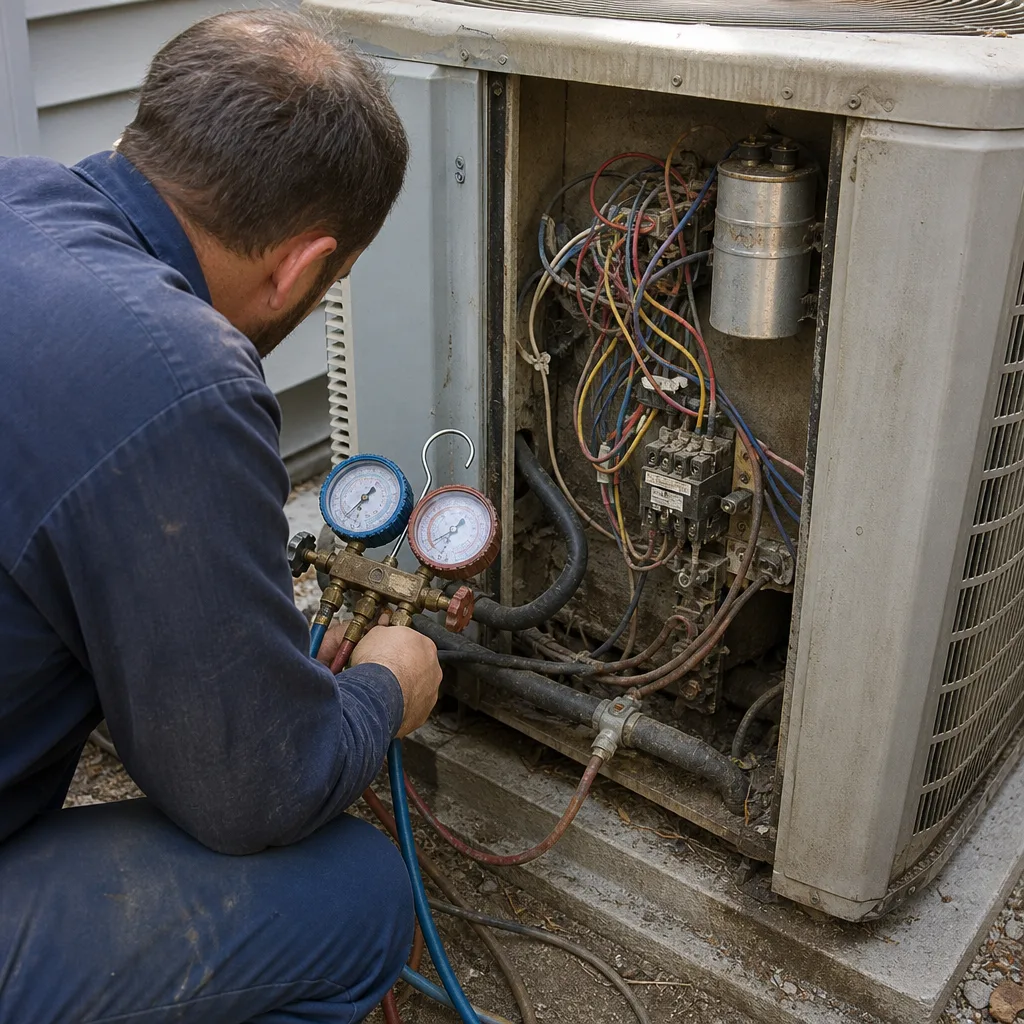 Before
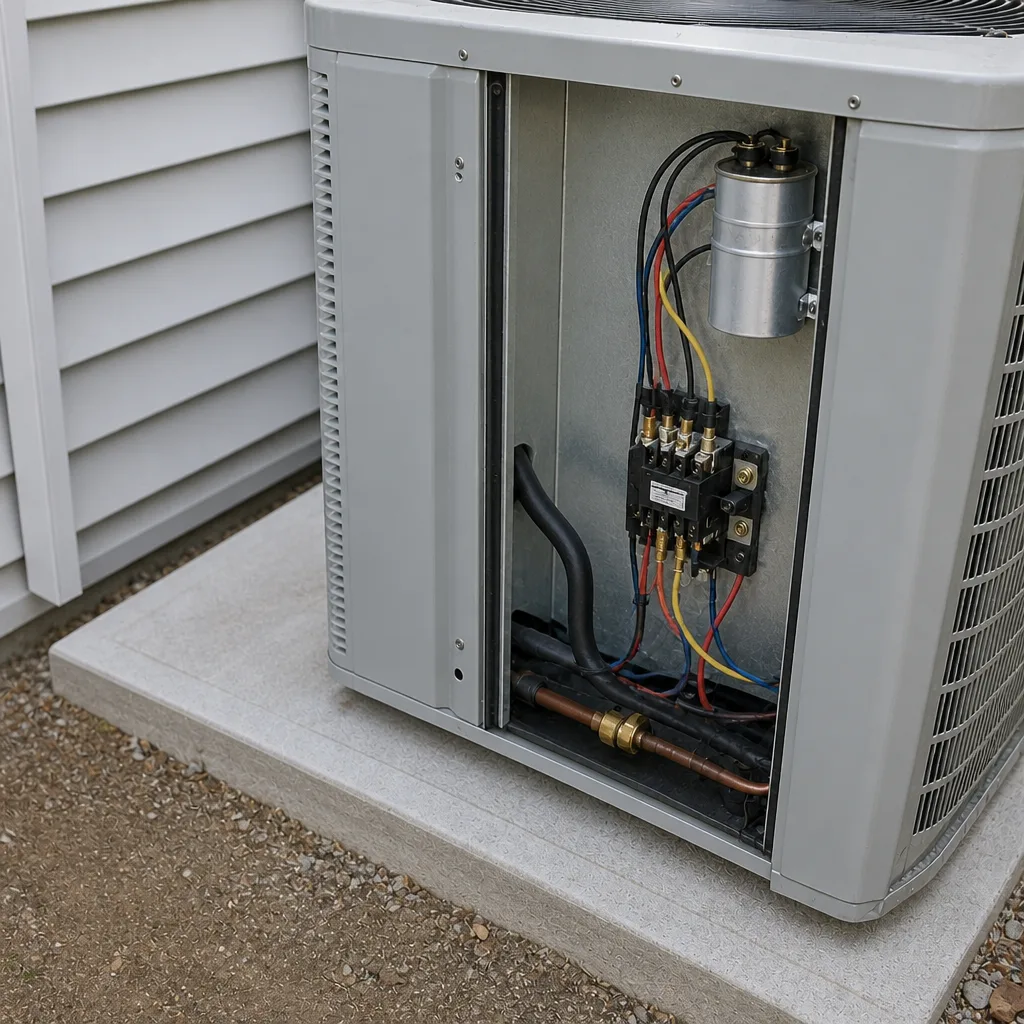 After
Replacement Cost & What’s Included
For Enterprise, a Goodman capacitor replacement lands in the $150 – $320 installed range. That covers the diagnostic – testing the capacitor and confirming it’s the actual problem – the correct replacement part, the labor, and a check that the system starts and runs clean afterward. It’s a small part, and it’s a quick job, so the price should reflect that.
What drives the range: whether it’s a single run capacitor or a dual, whether a start-assist kit is involved, and how hard it is to get at the part on your particular condenser. Sometimes a failed capacitor is the whole story. Sometimes it’s a symptom of a motor drawing too much current, or a compressor that’s on its way out, and we tell you that honestly instead of just swapping the part and leaving. Every job comes with the 90-Day Done Right Promise in writing: if it’s not done right, one call brings Ray back. You see the readings and the numbers before any work begins.
DIY or Call Us?
We’ll be straight with you. A capacitor swap is not a job to tackle on your own. The capacitor holds a charge even after the power is off, and touching the terminals the wrong way can knock you flat or worse. You also have to shut the disconnect correctly and confirm the charge is bled off with a meter before you touch anything – you can’t do that by feel. Getting the MFD and voltage match wrong, or wiring a dual capacitor back on the wrong terminals, can damage the compressor or the fan motor and turn a $200 job into a much bigger one.
What you can safely do is look: shut off the thermostat and the breaker, eyeball the capacitor for a bulged top or burnt wiring, and note the model and capacitor label. Then call us and let Ray test it and match the part. Phones get answered by a live person, and for a Goodman capacitor replacement in Enterprise we’re usually there the same day. Call (844) 455-2034 – the diagnostic and estimate are free.
FAQs
A typical run capacitor lasts five to ten years in this climate, and often toward the shorter end because of the summer heat driving the condenser hard. High head pressure and constant run cycles shorten the life, so a capacitor that fails in year four here isn’t unusual. If your system is past the five-year mark and you’re on your second failure, it’s worth asking whether it’s time for a full checkup rather than another single-part call.
No. A failed capacitor is a sealed component and can’t be repaired. Any attempt to refill or rebuild one isn’t safe and won’t hold. The fix is a straight replacement with a part that matches your Goodman’s MFD and voltage ratings – that’s it.
The physical capacitor replacement itself takes about 15 to 30 minutes once the correct part is matched and on hand. The bigger part of the visit is the diagnosis: confirming the capacitor is the actual problem and not a motor or compressor issue masking as one. That’s why we test before we quote.
We match the part to your Goodman’s label – exact MFD and voltage – and source either a Goodman-compatible replacement or a quality aftermarket equivalent like Titan Pro or AmRad that meets the same spec. We tell you which one it is before it goes in, so you’re never surprised by the part or the price. Call (844) 455-2034 for a free estimate and same-day service in Enterprise.
Written by the team at Ray’s Heating & Air Enterprise, serving Enterprise and nearby areas.