
 Carrier
 AC repair
 Furnace & heating
 Heat pumps
 Ductless mini splits
 Trane
 Goodman
Seasonal tune-up and full diagnostic on your Carrier, Trane, or Goodman system - readings shown to you before any repair is proposed
Diagnosis first, numbers second - you approve the repair price before a single part goes in.
Get your free estimateCarrier Capacitor Replacement: The Enterprise Owner’s Guide
We replace Carrier-compatible run capacitors for Enterprise homeowners, and most jobs land between $150 and $650 installed as part of an AC repair call. When every condition is right for the unit, we can often do it the same day you call. If your Carrier unit hums, won’t start, or shuts off after a few minutes of cooling, the run capacitor is the first thing we test, and it’s the most common electrical failure we find on Carrier condensers in this town.
Your system tells us what’s wrong. We listen first. Here’s the pattern we see in Enterprise: the house warms up faster than it used to, the outdoor unit hums but the fan won’t spin, or you hear a click and nothing happens. All three point at the same part. This page walks you through how Carrier capacitors are matched, priced honestly, and swapped fast.
Key Takeaways
- Carrier run capacitors fail on a predictable curve in the desert, often sooner than the sticker lifespan.
- We test the capacitor before anyone says the word compressor.
- You’ll see readings first, numbers second, before any work begins.
- The 90-Day Done Right Promise backs the repair in writing.
Which Carrier Models This Applies To
Carrier run capacitors show up across the whole residential line, from the older builder-grade 24ABB and 24ACC condensers still cooling a lot of Enterprise homes to the newer 24ANB Infinity and 24SPA performance series, plus Carrier’s variable-speed units where there’s more than one capacitor in the cabinet. There’s no single “Carrier capacitor” you can grab off a shelf. Each condenser is built around a specific microfarad (µF) rating, a voltage rating, and a physical can size, usually one of a handful of oval or round shapes.
To match the right part, we read the rating label inside the electrical panel of your condenser: the µF value, the ±6% or ±10% tolerance, the voltage (370V or 440V are the common ones), and the terminal layout. A dual-run capacitor carries two ratings, often something like 45/5 µF, which feeds both the compressor and the condenser fan. Get either number wrong and the part runs hot and dies early.
Here’s the compatibility gotcha we run into constantly in Enterprise: Carrier changed capacitor mounting and can diameter on some of its later production runs. A part with the right µF reading can still be the wrong physical fit, and the wrong can size means the wiring bends and the terminals stress. We don’t guess. We pull the old part, check the label, and match it exactly.
When it comes to OEM versus aftermarket, Carrier-sourced capacitors are fine, and quality aftermarket equivalents from U.S. makers are fine too. We won’t sell you a cheap import can that dies in a year. The choice comes down to what’s available and what fits the unit correctly, and we’ll tell you which and why before you say yes. Ray’s Heating & Air Enterprise is an independent service provider, not affiliated with Carrier. We also work on Trane and Lennox systems, so we see how the same part behaves across brands.
Styles & brands we work with
- AC repair
- Furnace & heating
- Heat pumps
- Ductless mini splits
- Carrier
- Trane
- Goodman
Signs Your Carrier Capacitor Replacement Is Failing
The run capacitor gives the compressor and condenser fan motor the extra starting jolt and keeps their voltage steady once they’re running. When it weakens, the whole unit stumbles. These are the symptoms Enterprise owners describe most:
- The outdoor fan won’t spin but the compressor hums. The fan half of your dual-run capacitor has failed, so the motor can’t get moving and the compressor overheats trying to cool without airflow.
- Click, then nothing. You hear the contactor pull in and the system shuts right back off. That’s the compressor or fan trying to start and tripping, often because the capacitor can’t deliver the boost.
- Unit runs a few minutes, then stops and restarts. A weak capacitor causes short cycling under load, and the system never finishes a full cooling cycle, so your house stays warmer than the thermostat says.
- Higher electric bills with the same habits. A failing capacitor pushes the compressor to draw more current, and that shows up on your bill before it shows up as a breakdown.
- A bulging can or oily residue at the top. The capacitor is physically telling you it’s near the end. The top is domed, or there’s a crust of leaked electrolyte. That one needs attention now, before it takes the compressor with it.
Any of these on a Carrier condenser and the capacitor is where we look first. It’s the cheapest part to rule out and the most common failure we find.
Replacement Cost & What’s Included
For Enterprise, a Carrier capacitor replacement typically falls inside our $150 – $650 AC repair range, and the exact number depends on the part, the model, and any testing the unit needs before we swap it. Here’s how that range shakes out:
- Part cost: a standard dual-run capacitor is the lower end; multiple capacitors, odd ratings, or a hard-to-source can push it higher.
- Diagnostic and testing: we meter the capacitor, check the compressor windings, and confirm the fan motor is pulling the right amps before we touch anything.
- Labor: pulling the electrical panel, discharging safely, swapping the can, and verifying the new part under load.
- Verification: we test the system after the swap so you know it runs and holds, not just that the part was changed.
You’ll see readings first, numbers second. We test the capacitor before anyone says the word compressor, because a failed capacitor is cheap and a failed compressor is not. Every job we do carries the 90-Day Done Right Promise in writing, and if something isn’t right, one call brings Ray back.
See the difference
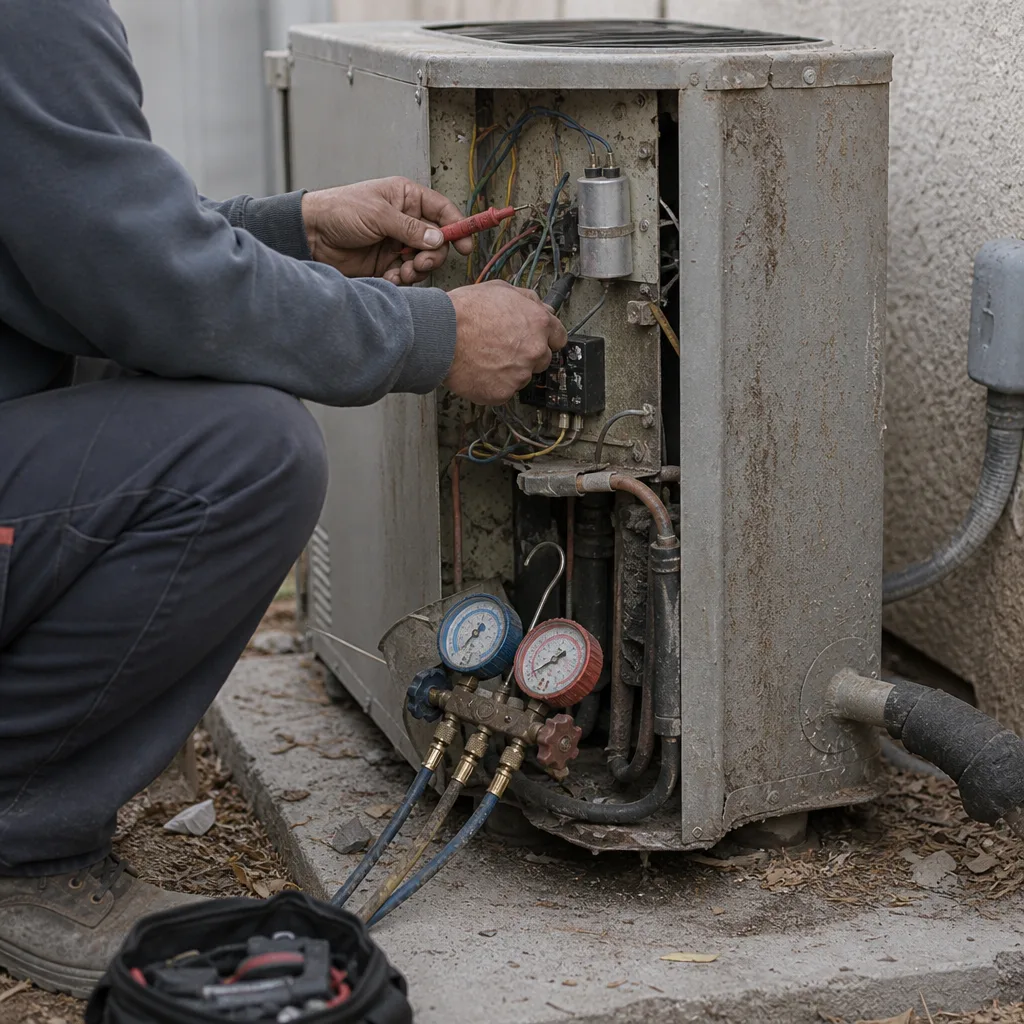 Before
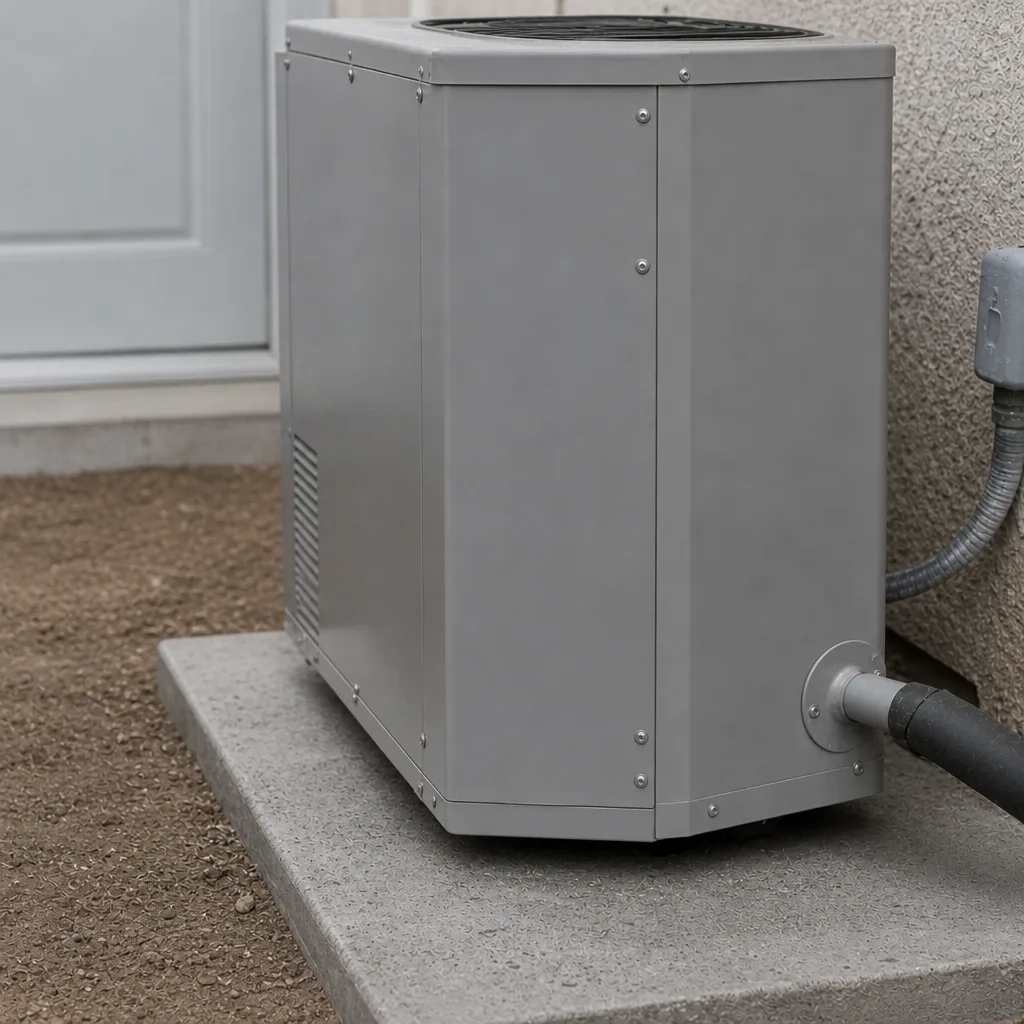 After
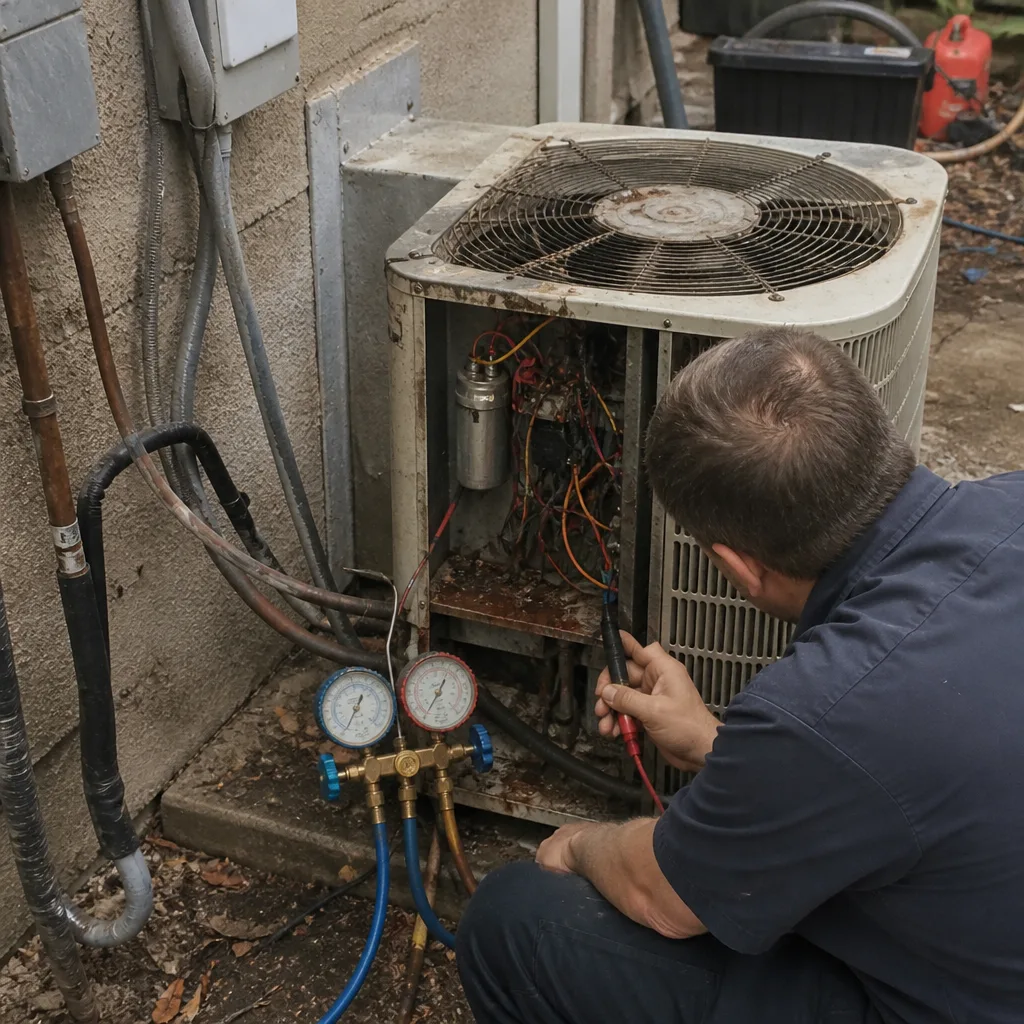 Before
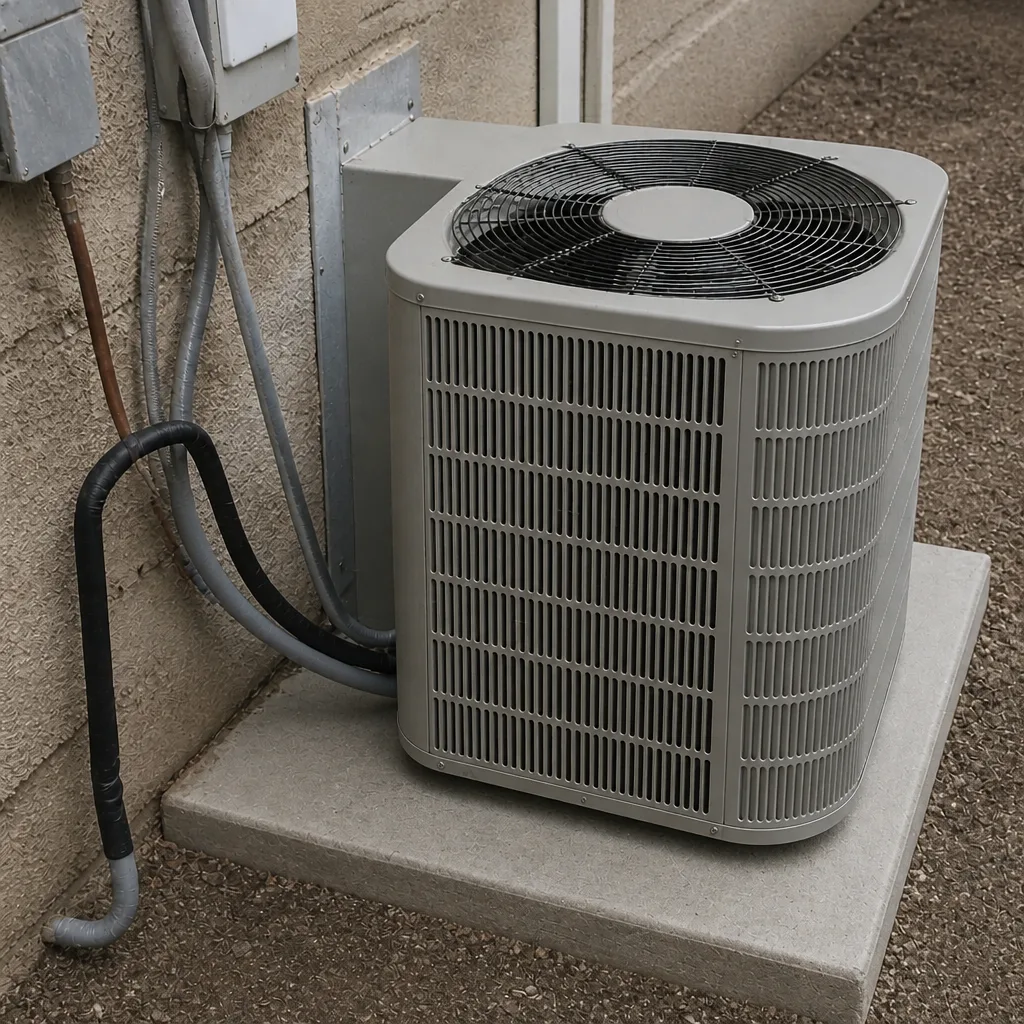 After
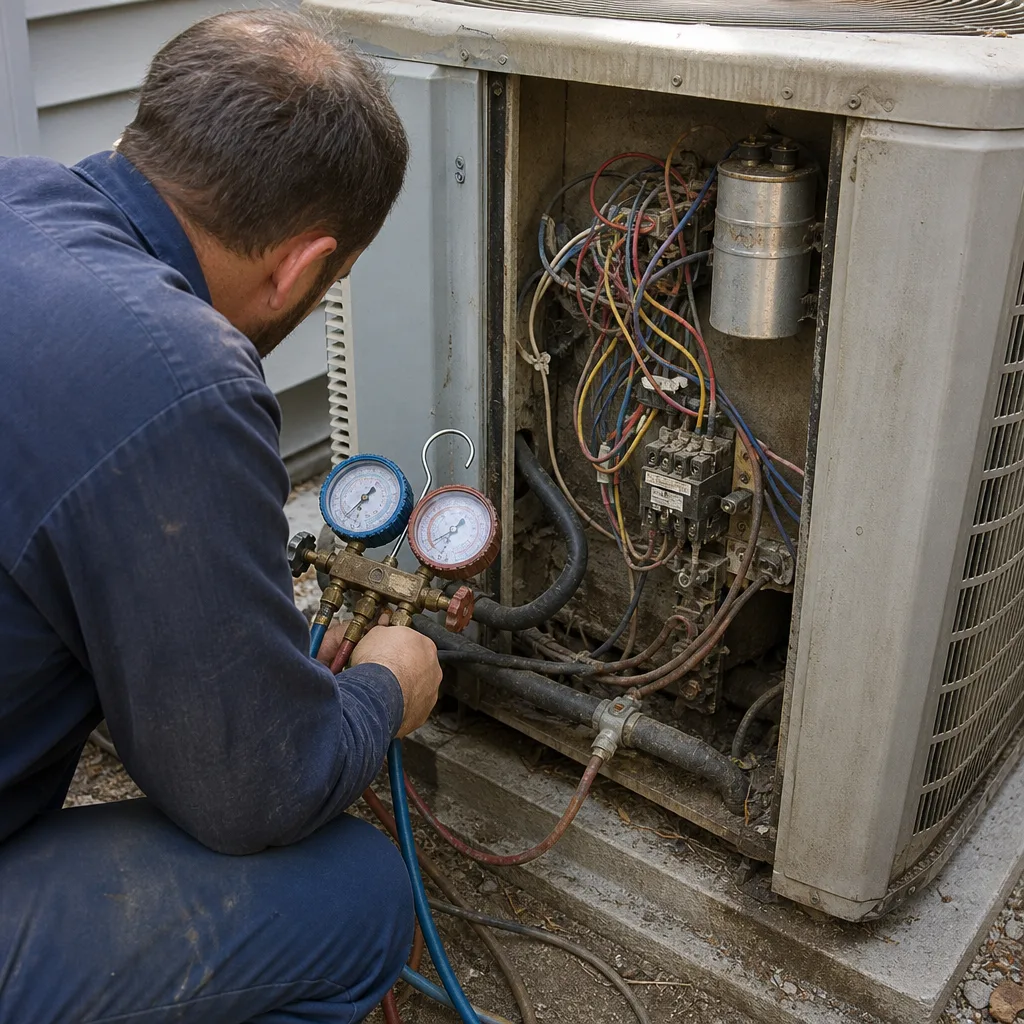 Before
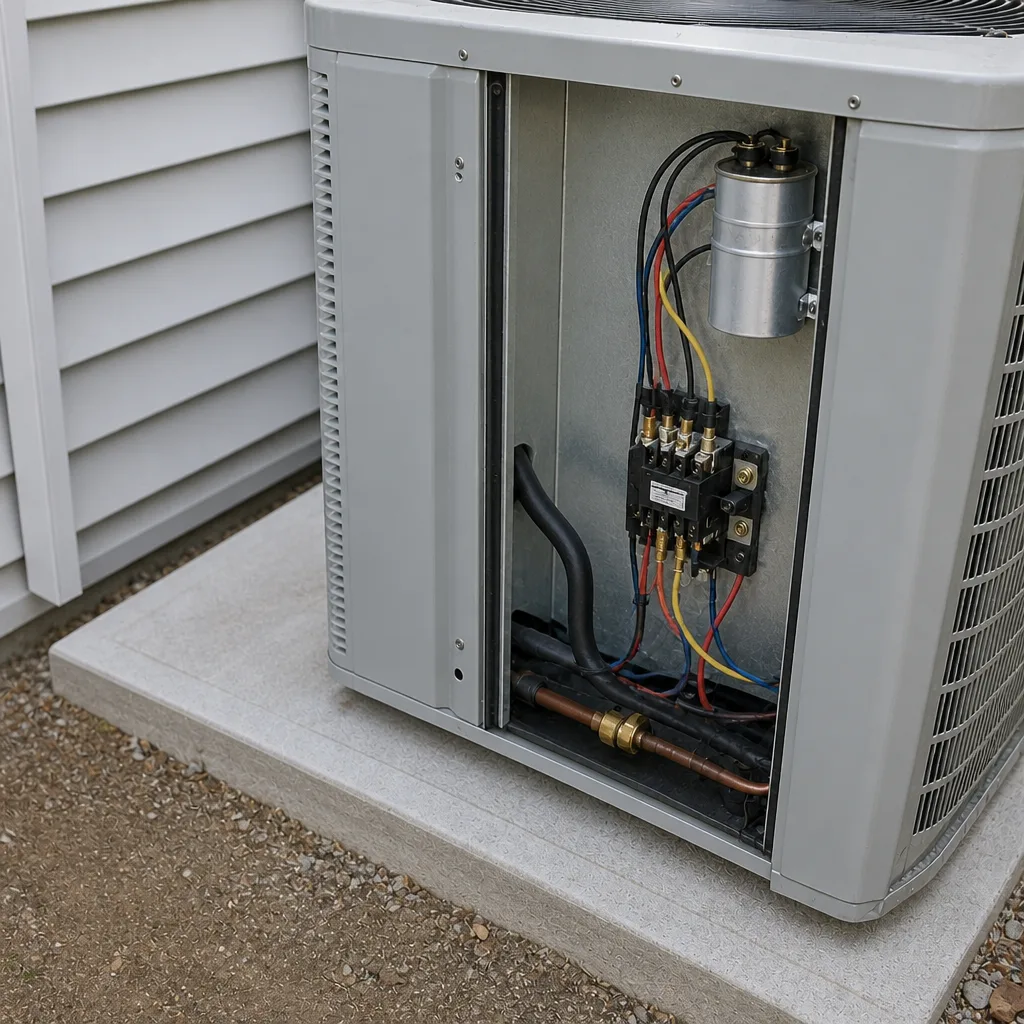 After
DIY or Call Us?
Here’s where we won’t soften it. A capacitor holds a charge even with the unit’s breaker off, and that stored energy can deliver a nasty shock. If you don’t know how to discharge it safely and confirm zero voltage with a meter, don’t reach in. We’re not trying to scare you off, we’re telling you the truth of the part.
What you can safely do from the outside: confirm the outdoor unit is powered, listen for the hum-or-click pattern, and look at the electrical panel through the side access for a bulging top or a shiny leak. Read the rating label so you have the model number ready for your call. That’s it. The swap itself is a job for someone who knows what voltage is sitting in that can. If your Carrier unit is doing any of the things on this page, call (844) 455-2034. We’ll test the capacitor first and tell you straight what’s wrong.
FAQs
A Carrier run capacitor usually lasts somewhere between a few years and the better part of a decade, and in Enterprise’s heat the shorter end is common. Our summers push the condenser and its electrical parts harder than a mild climate does, and capacitors age faster when they’re baking. We’ve pulled plenty of cans on this town’s roofs and side yards that failed well before their sticker suggested they would. That’s a big reason the part is on our shortlist for any no-cool call. Call (844) 455-2034 to have yours tested before it takes the compressor with it.
No. A run capacitor isn’t a serviceable part, so replacement is the only fix that actually lasts. Once the can bulges or leaks electrolyte, or the µF reading has drifted well outside its tolerance, the part is done. Trying to limp it along just puts more wear on the compressor and fan motor. Replacement is the straightforward, honest answer, and it’s usually the smaller line on your bill. Ask us to show you the readings before we swap it. Call (844) 455-2034 for a free estimate.
The swap is usually under an hour once we’ve diagnosed it, and the whole visit runs longer because we test the motor and compressor before and after. In most Enterprise homes the part is the fast part; the careful part is confirming the new capacitor holds under load and the system runs the way it should. We’d rather spend the extra minutes testing than leave you guessing. Call (844) 455-2034 and we’ll get you on the schedule.
We read your Carrier unit’s rating label and match the exact µF, voltage, tolerance, and physical size, then source the part from a supplier we trust, OEM or a quality aftermarket equivalent. We don’t carry a stock of parts on a truck and we won’t guess at a fit: the right can is confirmed against the label before it goes in. If the part needs to be ordered for an unusual rating, we’ll tell you the timeline up front. Call (844) 455-2034 for a free estimate, and we’ll take it from there.
Reach Ray’s Heating & Air Enterprise
Our phones are answered by a live person around the clock, every day, and Ray answers his own phone at two in the morning when it’s his turn. You’ll see the same background-checked, uniformed tech visit after visit, not a rotating crew who’s never seen your system. We’ve been locally owned and owner-operated since 2002, we publish our address and license number for anyone to check, and we service all major brands. If your Carrier unit is humming, clicking, or short-cycling, call (844) 455-2034 for a free estimate. Ray’s Heating & Air Enterprise covers Enterprise and the nearby areas, and we’ll test that capacitor before anyone says the word compressor.
Written by the team at Ray’s Heating & Air Enterprise, serving Enterprise and nearby areas.